“The chalkline, once drawn, is a boundary, not a path.”
— Early in the book, the narrator reflects on the nature of rules and choices.

Sign in to track this book
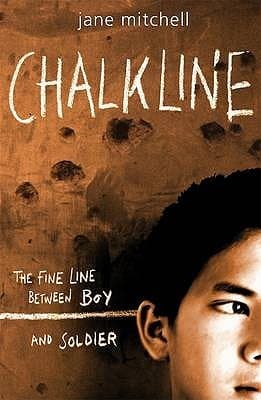
Indoctrinated into a brutal militia, a boy soldier's descent towards an irreversible act of violence is met with the desperate, unwavering love of a family determined to reclaim the son they remember.
Rafiq, a young boy, enjoys a simple life in his village, helping his father, Baba, with farming and spending time with his younger brother, Adil, and sister, Zara. His mother, Amma, cares for the family. The village is remote, but news of the growing conflict in the region, particularly the presence of 'the cause' and its followers, starts to filter in. Rafiq is a curious and impressionable boy, often listening to the stories and rumors that circulate among the men. His family tries to shield him from the worst of it, emphasizing peace and family.
A charismatic preacher, Maulana, arrives in Rafiq's village, delivering powerful sermons that captivate many of the villagers, especially the younger men. Maulana speaks of the purity of their faith, the injustice they face, and the glory of defending their land and beliefs against perceived enemies. Rafiq, drawn in by the preacher's impassioned words and the sense of purpose he offers, attends these gatherings more frequently, much to the quiet concern of his parents. The Maulana's message slowly starts to take root in Rafiq's impressionable mind, offering an escape from the mundane and a promise of significance.
Under the influence of Maulana and his followers, Rafiq's behavior begins to change. He spends less time with his family, often skipping his chores to attend the preacher's sessions or meet with the older boys who are now openly discussing joining the cause. He starts to parrot the slogans and beliefs he hears, seeing the world in stark black and white terms. His parents, particularly Baba, try to reason with him, reminding him of his responsibilities and the dangers of such extremism, but Rafiq dismisses their concerns, viewing them as old-fashioned and lacking understanding of the 'true' path.
Driven by idealism, a desire for belonging, and the promise of glory, Rafiq decides to leave his family and join the 'cause'. He departs with a group of other young men and boys from his village, heading to a remote training camp. The separation is painful for his family, especially Amma, but Rafiq is convinced he is doing the right thing. At the camp, he is immediately immersed in a harsh, disciplined environment, where indoctrination intensifies, and military training begins. The camp becomes his new reality, severing his ties to his past life.
Life in the training camp is brutal. Rafiq is subjected to physical conditioning, weapons training, and relentless ideological indoctrination. The trainers reinforce the teachings of Maulana, dehumanizing the 'enemy' and glorifying martyrdom. Rafiq learns to handle a rifle, participate in drills, and suppress his emotions. He witnesses violence and becomes desensitized to it, slowly losing his childhood innocence. The camaraderie with his fellow recruits, albeit forged in a harsh environment, gives him a sense of belonging and purpose, further solidifying his commitment to the cause. He is given a new name, shedding his old identity.
After weeks of training, Rafiq and his unit are sent on their first mission. The experience is terrifying and chaotic, a stark contrast to the controlled environment of the training camp. He witnesses the horrors of combat, the fear, the pain, and the loss of life. While he performs his duties, the reality of what he is doing begins to chip away at the rigid ideology he has been fed. He is forced to confront the direct consequences of the violence he has been trained to inflict, and the image of the 'enemy' becomes less abstract and more human.
As Rafiq continues to participate in missions, the violence and suffering take a toll. He starts to have flashbacks and nightmares, memories of his family and his peaceful village life resurfacing. These memories, particularly of his younger siblings, Adil and Zara, create a conflict within him, clashing with the ruthless ideology he has adopted. He sees the fear in the eyes of others, and sometimes, a flicker of humanity in the 'enemy'. These moments of doubt are dangerous, and he tries to suppress them, but they persist, challenging the absolute certainty he once felt.
Back in the village, Rafiq's family never gives up hope. Baba and Amma, with the help of a brave old woman, a former neighbor, try to send messages to Rafiq through an informal network of sympathetic villagers and traders who move between the conflict zones. They want him to know they remember him, they love him, and they want him to come home. These messages are risky to transmit and even riskier for Rafiq to receive, but his family believes that the bonds of love and family are stronger than any ideology.
Rafiq's unit is assigned to a mission that involves a brutal act against a civilian target, designed to instill terror and make a statement. The plan is to attack a marketplace or a school, causing maximum casualties. Rafiq is given a specific role in this operation. The full horror of the intended act dawns on him, and the last vestiges of his childhood conscience scream against it. He sees the faces of his own family in the potential victims, and the indoctrination begins to crumble under the weight of this moral crisis.
Just before the planned attack, Rafiq receives one of the messages from his family – a small, familiar object or a simple phrase that reminds him powerfully of his past self and their unwavering love. This, combined with the extreme nature of the impending atrocity, pushes him to a breaking point. He looks at the weapon in his hand, then at the innocent people, and the boy he once was re-emerges. He makes a snap decision, a desperate act of defiance against the cause he had once embraced, choosing redemption over atrocity.
Rafiq's decision prevents the full scale of the planned atrocity, though it puts him in grave danger. The immediate aftermath is chaotic, and he is forced to flee or is apprehended. The exact outcome of his defiance is left somewhat open, but the narrative implies a path towards a potential reunion with his family and a long, difficult journey of healing and reintegration. His family, though still anxious, holds onto the hope that the boy they knew, the boy who chose humanity, is finally on his way back home.
The Protagonist
From an innocent boy, he is molded into a ruthless child soldier, only to reclaim his humanity in a critical moment of moral decision.
The Supporting
He endures the pain of his son's indoctrination and departure, holding onto hope and actively seeking a way to bring Rafiq home.
The Supporting
She suffers the loss of her son to extremism but remains a steadfast symbol of love and memory, actively working for his return.
The Supporting
He remains a static symbol of the innocent past, serving as a beacon for Rafiq's eventual return.
The Supporting
She remains a static symbol of the innocent past, serving as a beacon for Rafiq's eventual return.
The Antagonist
He remains a static force of manipulation and indoctrination, successfully converting many young men to his cause.
The Supporting
She acts as a catalyst for Rafiq's redemption, facilitating the communication that reminds him of his true self.
The Supporting
They remain static figures of authority, focused solely on the training and deployment of child soldiers.
The central theme of 'Chalkline' is the tragic loss of Rafiq's childhood innocence. He begins as a typical village boy, but is systematically stripped of his naivete through indoctrination and exposure to violence. The training camp and combat experiences force him to shed his former self, replacing it with the hardened exterior of a child soldier. This theme is conveyed through his memories of his younger siblings, Adil and Zara, who represent the purity and peace he leaves behind, and whose images haunt him as he commits acts of violence.
“He looked at the rifle in his hands, then at his calloused fingers, and wondered how they had ever held a kite string.”
The novel shows how easily impressionable minds, especially those of children, can be manipulated by charismatic figures and extremist ideologies. Maulana's sermons twist religious and nationalistic sentiments to recruit young boys like Rafiq. The training camp further solidifies this indoctrination through repetition, isolation, and the dehumanization of the 'enemy'. This theme explores the psychological mechanisms that transform ordinary children into instruments of violence, showing the danger of unchallenged rhetoric and the construction of 'us vs. them' narratives.
“The Maulana's words were like honey, sweet and sticky, making everything else seem bland and wrong.”
Despite Rafiq's transformation, the unwavering love and memory of his family is a powerful counterforce to the indoctrination. His parents, Baba and Amma, never give up on him, actively seeking to remind him of who he truly is. The small messages and memories they send become important in Rafiq's moment of crisis, pulling him back from the brink of committing an atrocity. This theme emphasizes the enduring strength of familial bonds and the possibility of redemption, suggesting that even in the darkest circumstances, love can offer a path back to humanity.
“They remembered the boy he was, when he could no longer recognize himself.”
A theme is Rafiq's struggle with moral choice, particularly as he is faced with participating in a heinous act. The story builds towards a moment where Rafiq must choose between following orders to commit an atrocity and reclaiming his humanity. This choice is fraught with danger and personal cost, but it signifies his reawakening conscience. The theme explores the weight of individual responsibility, even for those coerced into violence, and the impact of a single decision on one's destiny and identity.
“The chalkline was not just on the ground, but drawn across his soul, demanding a choice.”
A potent symbol representing division, choice, and a point of no return.
The 'chalkline' of the title is a recurring symbolic device. It literally represents boundaries and divisions, often used in military or training contexts to mark a line that should not be crossed. Metaphorically, it signifies the stark choices Rafiq faces: the line between innocence and violence, between family and 'the cause', and ultimately, between humanity and atrocity. It embodies the point of no return for Rafiq, but also the line he must consciously refuse to cross to reclaim his true self. It's a visual metaphor for his internal and external conflicts.
A narrative technique used to highlight Rafiq's internal conflict and the remnants of his past.
As Rafiq becomes more deeply involved in the conflict, the narrative frequently employs flashbacks and vivid memories of his family and village life. These serve to contrast his current brutal reality with his innocent past, creating an internal struggle within him. The memories of Adil and Zara, in particular, are powerful reminders of the humanity and love he has forsaken. This device allows the reader to understand the boy Rafiq once was and to witness the slow erosion, and eventual reawakening, of his conscience.
A character archetype used to embody the seductive power of extremist ideology.
Maulana functions as a classic charismatic antagonist, a figure whose persuasive rhetoric and perceived authority draw vulnerable individuals like Rafiq into a destructive path. He doesn't wield physical power directly over Rafiq in the same way a commander does, but his ideological influence is profound. This device highlights how ideas, when presented compellingly and tapping into existing grievances, can be more potent and dangerous than brute force, initiating the tragic transformation of the protagonist.
Small, everyday items that become powerful symbols of connection and memory.
Throughout the story, and particularly towards the climax, small, mundane objects or simple phrases from Rafiq's past life are sent to him by his family. These are not grand gestures but familiar, intimate tokens – perhaps a piece of fabric, a drawing, or a specific saying. These items act as powerful symbolic anchors to his former identity and family love, cutting through the layers of indoctrination. They are the tangible manifestations of his family's unwavering memory and serve as the final catalyst for his moral awakening.
“The chalkline, once drawn, is a boundary, not a path.”
— Early in the book, the narrator reflects on the nature of rules and choices.
“Some truths are best left smudged, like old pencil marks on a school desk.”
— A character contemplates revealing a difficult truth to a loved one.
“Memory isn't a photograph; it's a painting, constantly being retouched with new light and shadow.”
— The protagonist struggles with conflicting recollections of a past event.
“It's easier to forgive a stranger than it is to forgive the person who knows your flaws by heart.”
— A character grapples with a betrayal by a close friend.
“The quietest moments often hold the loudest revelations.”
— During a period of introspection, a character has a significant realization.
“We build our lives on assumptions, and then we're surprised when the foundations crack.”
— The protagonist confronts the crumbling of their perceived reality.
“Every secret kept is a stone carried, and eventually, the weight becomes unbearable.”
— A character is burdened by a long-held secret.
“Love isn't about perfect lines, but about embracing the beautiful, messy smudges.”
— A couple navigates the imperfections of their relationship.
“Sometimes, the hardest thing to do is to step outside the line you've always believed defined you.”
— A character makes a brave decision to change their life's direction.
“The past is a stubborn ghost, always lingering in the corners of the present.”
— Flashbacks and past events heavily influence current actions.
“Hope is a fragile thing, easily erased, but stubbornly redrawn.”
— Amidst despair, a character finds a glimmer of optimism.
“We all carry our own chalklines, invisible to others, but fiercely felt within.”
— The narrator reflects on the personal boundaries and beliefs individuals hold.
“The truth doesn't always set you free; sometimes it just redraws your prison.”
— A character learns a painful truth that confines them further.
“It's not the fall that breaks you, but the refusal to get back up, even if it's outside the lines.”
— A character faces a major setback but finds the strength to persevere.
Ready to see how well you understood this book? Take our interactive quiz with 10 questions.