BookBrief
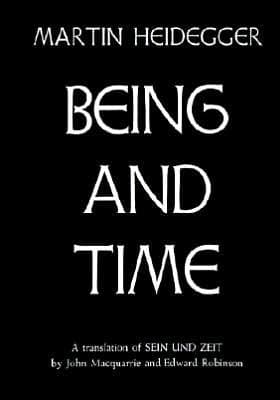
Being and Time cover
Archivist's Choice

Being and Time

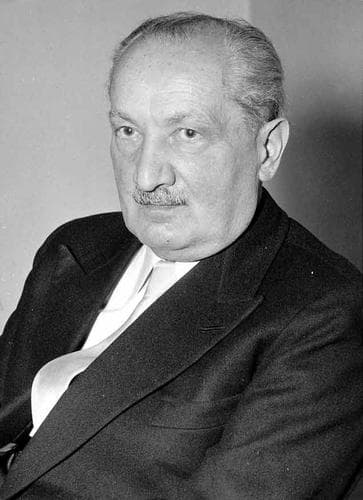
Martin Heidegger (1927)

Genre

Psychology / Science / Philosophy

Reading Time

1000+ min

Key Themes

See below

Track Your Reading

Sign in to track this book

Heidegger's major work redefines existence, showing that being human means facing our mortality, thrown into a world of care, anxiety, and the constant need to live authentically.

Core Idea

Heidegger's "Being and Time" explores the meaning of Being itself. It does this by analyzing human existence, which he calls "Dasein" (Being-there), rather than examining objects. Dasein uniquely relates to its own Being, understanding itself through its possibilities and its limited lifespan. The book uncovers Dasein's essential parts, such as Care (Sorge), time, being-in-the-world, and facing death. These are not accidental but make up Dasein's very nature. Heidegger argues that time is the basic way we understand Being.
Reading time
1000+ min
Difficulty
Hard
✓ Read this if...
You are a philosophy student or scholar interested in existentialism, phenomenology, or fundamental ontology, and are prepared for a rigorous, dense, and influential philosophical text that redefines the study of Being.
✗ Skip this if...
You are looking for an easy introduction to philosophy, a self-help guide, or a book with a clear, linear narrative. This book is notoriously difficult and requires significant prior philosophical background and patience.

Core idea

The central argument and framework that powers the entire book.

Heidegger's "Being and Time" explores the meaning of Being itself. It does this by analyzing human existence, which he calls "Dasein" (Being-there), rather than examining objects. Dasein uniquely relates to its own Being, understanding itself through its possibilities and its limited lifespan. The book uncovers Dasein's essential parts, such as Care (Sorge), time, being-in-the-world, and facing death. These are not accidental but make up Dasein's very nature. Heidegger argues that time is the basic way we understand Being.

At a glance

Reading time

1000+ min

Difficulty

Hard

Read this if...

You are a philosophy student or scholar interested in existentialism, phenomenology, or fundamental ontology, and are prepared for a rigorous, dense, and influential philosophical text that redefines the study of Being.

Skip this if...

You are looking for an easy introduction to philosophy, a self-help guide, or a book with a clear, linear narrative. This book is notoriously difficult and requires significant prior philosophical background and patience.

Key Takeaways

1

Dasein: The Being-There

Human existence is fundamentally characterized by its 'there-ness' in the world.

Quote

The 'essence' of Dasein lies in its existence.

Heidegger uses 'Dasein' for human being, showing that human existence is not just another 'thing.' Instead, its nature is to exist in a specific way. Dasein is always 'being-in-the-world,' meaning our existence is tied to and shaped by our interaction with the world. This 'being-there' is not just a place but active involvement, an understanding of oneself and the world. Dasein is unique because its own being matters to it; it cares about its existence and always looks to its possibilities. This self-awareness and concern for its own ...

Supporting evidence

Heidegger's entire analytical framework for Dasein, contrasting it with traditional philosophical subjects (e.g., 'man' or 'consciousness') by focusing on its existential structure rather than its substance.

Apply this

Reflect on how your identity and understanding of yourself are shaped not just by internal thoughts but by your active engagement with your environment, relationships, and projects. Recognize that your 'being' is always unfolding in relation to the world, not in isolation.

daseinbeing-in-the-worldexistence
2

Care: The Fundamental Structure of Dasein

The unity of Dasein's being is constituted by 'care' (Sorge).

Quote

The being of Dasein is care.

Heidegger says 'care' (Sorge) is the basic structure that connects all parts of Dasein's existence. Care is not just a feeling but Dasein's fundamental way of being. It includes Dasein's 'ahead-of-itself' (planning for possibilities), its 'being-already-in-the-world' (its given situation), and its 'being-alongside' (dealing with things in the world). This means Dasein is always concerned with its own being, its future, and its relationships with the world and others. Care drives Dasein's use of tools, its self-understanding, and its d...

Supporting evidence

Heidegger's analysis of the three structural moments of care: 'ahead-of-itself' (projection), 'being-already-in-a-world' (facticity), and 'being-alongside' (falling).

Apply this

Understand your motivations and anxieties as manifestations of 'care.' Recognize that your future-oriented planning, your past experiences, and your present interactions with objects and people are all unified by a fundamental concern for your existence and possibilities.

caresorgetemporalityfacticity
3

Authenticity vs. Inauthenticity

Dasein can choose to live either as its own self or as 'the One' (das Man).

Quote

Authentic being-one's-Self does not rest upon an exceptional condition of the subject, but is the existential modification of the 'they' (das Man).

Heidegger separates authentic and inauthentic ways of existing. Inauthenticity, or 'falling,' describes Dasein's tendency to lose itself in the 'they' (das Man)—the anonymous public, everyday rules, the way 'one' does things. In this state, Dasein avoids responsibility for its own being and possibilities, instead taking on the possibilities and interpretations of the 'they.' Authenticity, in contrast, means Dasein takes ownership of its own existence, faces its limited time, and chooses its own possibilities. It is not about being uni...

Supporting evidence

Heidegger's detailed analysis of 'falling' into the 'they-self' (das Man-selbst) through idle talk, curiosity, and ambiguity, contrasted with the 'call of conscience' that summons Dasein to its ownmost possibilities.

Apply this

Regularly question whether your decisions, beliefs, and aspirations are genuinely your own, or if they are largely dictated by societal norms, expectations, or the opinions of others. Strive to make choices that resonate with your deepest sense of self and responsibility, even when uncomfortable.

authenticityinauthenticitydas-manfalling
4

Being-towards-Death

Death is Dasein's ownmost, non-relational, and certain possibility.

Quote

Death is the possibility of the absolute impossibility of Dasein.

For Heidegger, death is not just an event at life's end but a basic part of Dasein's being. 'Being-towards-death' means Dasein always anticipates its own end. This possibility is 'ownmost' (no one can die for you), 'non-relational' (it isolates Dasein), 'certain' (it will happen), and 'indefinite' (its timing is unknown). Facing this ultimate possibility authentically reveals Dasein's full existence and allows for true self-possession. Inauthentically, Dasein avoids death by blending into the anonymity of the 'they,' treating death as...

Supporting evidence

Heidegger's discussion of 'anticipatory resoluteness' (Vorlaufen), where Dasein authentically takes hold of its own finitude, contrasting it with the inauthentic 'fleeing in the face of death' characteristic of the 'they'.

Apply this

Instead of viewing death as a distant, terrifying end, consider how its inevitability shapes your present choices and priorities. Allow the awareness of your finitude to clarify what truly matters, motivating you to live more fully and authentically in the time you have.

deathfinitudebeing-towards-deathanticipatory-resoluteness
5

Temporality: The Horizon of Being

Dasein's being is fundamentally temporal, unifying past, present, and future.

Quote

Dasein's Being is to be understood as temporality.

Heidegger argues that time is the fundamental meaning of Dasein's being, not just something it has. Dasein is not simply 'in time' but is time. Its existence is a unity of future (planning possibilities), past (its given situation, what it already is), and present (the moment of action). These three 'ecstases' of time are not separate but intertwine to form Dasein's whole existence. Authentic temporality means Dasein exists resolutely into its future, acknowledges its past, and makes firm choices in the present. This challenges the ...

Supporting evidence

The entire second division of 'Being and Time' is dedicated to establishing temporality as the 'transcendental horizon for the question of Being,' linking the three ecstases (future, past, present) to Dasein's structural moments of care.

Apply this

Recognize that your past experiences (facticity), future aspirations (projection), and present decisions are not isolated but deeply interconnected. Practice 'anticipatory resoluteness' by making choices in the present that genuinely align with your future possibilities, informed by your past.

temporalityecstases-of-timefuturepastpresent
6

Thrownness and Projection

Dasein is 'thrown' into existence and constantly 'projects' possibilities for itself.

Quote

Dasein is its thrown possibility.

'Thrownness' (Geworfenheit) means Dasein simply finds itself existing in a particular world, with specific circumstances and a given history, without choosing these conditions. We are 'thrown' into a world we did not create. Despite this, Dasein always 'projects' (Entwurf) itself into future possibilities. This projection is not a conscious plan but a basic part of Dasein's being-ahead-of-itself. It constantly understands itself through what it can be. This interaction between thrownness (our given situation) and projection (our possi...

Supporting evidence

Heidegger's analysis of facticity as 'thrownness' into a world, and the existential understanding (Verstehen) as Dasein's projecting of its being onto possibilities.

Apply this

Acknowledge the circumstances and limitations you were 'thrown' into (family, culture, historical period) without letting them define your entire future. Simultaneously, actively envision and pursue possibilities for yourself, understanding that your choices shape who you become, despite your given starting point.

thrownnessgeworfenheitprojectionentwurffacticity
7

The World as Equipment

We encounter the world primarily through its 'readiness-to-hand' as tools for our projects.

Quote

The being of entities encountered in the world is equipmentality.

Heidegger challenges the traditional view of the world as a collection of objective 'things' (present-at-hand, Vorhandenheit) to observe. Instead, he says Dasein mostly encounters things in the world as 'equipment' (Zeug). These are 'ready-to-hand' (Zuhandenheit), meaning they are understood by their use within Dasein's plans. A hammer is understood as 'for hammering,' not just as wood and metal. This 'referential totality' of equipment makes up the 'worldhood of the world.' Only when equipment breaks or becomes unusable does it becom...

Supporting evidence

Heidegger's famous example of the hammer: we don't first perceive its physical properties, but its 'hammering-ness.' Only when it breaks do we notice its 'present-at-hand' qualities.

Apply this

Pay attention to how you interact with objects in your daily life. Notice how your phone is primarily 'for communicating' or 'for browsing,' rather than just a collection of glass and circuits. This understanding can deepen your appreciation for the interconnectedness of your actions and environment.

equipmentreadiness-to-handpresent-at-handworldhood
8

Guilt and Conscience

Guilt is an existential structure, not just a moral failing, tied to Dasein's 'nullity'.

Quote

Being guilty means: being the basis of a nullity.

Heidegger reinterprets 'guilt' not as a moral wrong but as a basic structure of Dasein. Dasein is 'guilty' because it is always 'the basis of a nullity'—it is always incomplete, has unchosen possibilities, and its thrownness means it is not its own origin. Dasein is 'indebted' to its own being. The 'call of conscience' is not moral judgment but an appeal from Dasein's authentic self, telling it to take responsibility for its being-guilty, for its own possibilities and limits. This call is silent, not spoken, and it makes Dasein indivi...

Supporting evidence

Heidegger's argument that Dasein's being-guilty is rooted in its thrownness (not having chosen its own 'basis') and its projecting (always leaving behind possibilities, thus being a 'basis of nullity').

Apply this

When experiencing feelings of guilt or regret, consider them not just as personal failings but as signals from your authentic self. Use these feelings as an opportunity to reflect on unchosen possibilities and to take greater responsibility for your choices and future direction.

guiltconsciencenullitycall-of-conscience
9

The Everyday and Publicness

Dasein mostly exists in an inauthentic, public mode of 'averageness'.

Quote

In this everydayness, Dasein is dispersed in the 'they'.

Heidegger emphasizes that Dasein's main way of existing is 'everydayness' (Alltäglichkeit). This involves being immersed in the 'they' (das Man) and its public nature. In this mode, Dasein lives by the anonymous rules, opinions, and interpretations of 'everyone.' It engages in 'idle talk' (Gerede), where understanding is shallow; 'curiosity' (Neugier), a restless search for newness without true understanding; and 'ambiguity' (Zweideutigkeit), where everything seems understood but nothing truly is. This publicness offers comfortable an...

Supporting evidence

Heidegger's detailed descriptions of idle talk, curiosity, and ambiguity as modes of fallenness into the 'they', illustrating how Dasein avoids confronting its ownmost being.

Apply this

Become critically aware of how much your thoughts, actions, and beliefs are shaped by public opinion, social media trends, or the 'way things are done.' Actively seek to distinguish between genuinely held convictions and those passively adopted from the anonymous 'they.'

everydaynesspublicnessidle-talkcuriosityambiguity
10

Understanding as Existential

Understanding is Dasein's fundamental way of being, not just a cognitive act.

Quote

Understanding is the existential being of Dasein's own potentiality-for-being.

Unlike traditional philosophy, Heidegger does not see 'understanding' (Verstehen) as just a mental ability or process of grasping ideas. Instead, understanding is a basic part of Dasein itself. To be Dasein is to understand. This means Dasein's being is always an understanding of its own possibilities and its being-in-the-world. Understanding is tied to Dasein's projection into its future, its ability to grasp the 'for-the-sake-of-which' of its actions and the 'in-order-to' of equipment. It is a fundamental, practical way Dasein clari...

Supporting evidence

Heidegger's argument that understanding is not a 'knowledge' but a 'can-be' (Seinkönnen), intrinsically tied to Dasein's projecting of its possibilities, and that even the most basic use of equipment involves a form of understanding.

Apply this

Recognize that your 'understanding' of a situation, a tool, or even yourself is not just an intellectual exercise but a fundamental aspect of your engagement and existence. When you 'understand' something, you are not just acquiring information, but opening up new possibilities for action and being.

understandingverstehenexistential-understandingpotentiality-for-being

Critical analysis

Notable Quotes

The 'essence' of Dasein lies in its existence.

Heidegger's fundamental assertion about human being.

Dasein is a being for whom, in its being, its being is an issue.

Defining characteristic of Dasein's self-relation.

Care (Sorge) is the basic constitution of Dasein's being.

Introducing 'Care' as the holistic structure of Dasein.

Being-in-the-world is an essential state of Dasein itself.

Emphasizing the inherent situatedness of human existence.

The world is that 'wherein' Dasein as being-in lives.

Clarifying the nature of the 'world' not as a container, but as a context for Dasein.

Death is the possibility of the absolute impossibility of Dasein.

Heidegger's profound definition of death as Dasein's ownmost potentiality.

Authenticity is the possibility of Dasein to be itself.

Contrasting authentic self-being with inauthentic 'they-self'.

Temporality is the meaning of the Being of Dasein.

Connecting Dasein's existence intrinsically to time.

The Self of everyday Dasein is the they-self (Das Man-Selbst).

Description of inauthentic existence where one is absorbed in the anonymous 'they'.

Anxiety (Angst) discloses Dasein as being-in-the-world, to itself as thrown possibility.

Explaining anxiety as a fundamental mood revealing Dasein's thrownness and freedom.

Science is a way of being-in-the-world, a way of Dasein's being.

Situating scientific inquiry within the broader context of Dasein's existence.

The ready-to-hand (Zuhandenheit) is the ontological-categorical determination of entities encountered in concernful circumspection.

Distinguishing the practical, tool-like way things show up in the world from mere presence.

Conscience (Gewissen) is the call of Care.

Interpreting conscience as Dasein's call to its ownmost potentiality-for-being.

To be historical means to be resolute.

Connecting Dasein's authentic temporality to its resolute embrace of its thrownness and possibilities.

Quiz

Test Your Knowledge

Ready to see how well you understood this book? Take our interactive quiz with 10 questions.

10
Questions
~5
Minutes
?
Best Score

Key Questions (FAQ)

Heidegger's central argument is an inquiry into the meaning of Being (Sein), which he approaches through an analysis of Dasein, the human being, as the entity for whom Being is an issue. He aims to re-pose the question of Being, which he believes has been forgotten in Western metaphysics.

About the author