
Biography coming soon.
Archivist's Choice
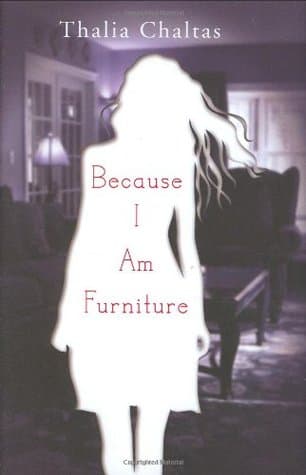
Because I Am Furniture
Thalia Chaltas (2009)
Genre
Psychology / Young Adult
Reading Time
12 Minutes
Key Themes
See below
Track Your Reading
Sign in to track this book
Anke, a silent witness to her father's abuse, finds her voice on the volleyball court, transforming from invisible furniture to a player ready to fight for her family.
Synopsis
Anke lives in a house dominated by her father's unpredictable and violent abuse, directed at her brother and sister while she remains an 'invisible' witness, feeling like furniture. This coping mechanism, however, threatens to erase her entirely. Her life begins to shift when she joins the school volleyball team. Initially, the physical exhaustion offers a welcome distraction, but as she integrates into the team, Anke starts to build a fragile sense of self-worth. Learning to confidently call out "Mine!" on the court becomes a pivotal moment, as she discovers a voice she didn't realize she possessed, allowing her to feel seen and heard for the first time. This newfound confidence and voice ignite a hope within Anke that she might one day be strong enough to challenge the abuse at home and rescue her family, including herself.
Difficulty
Medium
Pacing
Moderate
Mood
Hopeful, intense, introspective, empowering
Plot Summary
The Invisible Witness
Anke introduces her family and the terrifying abuse her father, Papa, inflicts on her older brother, Erik, and older sister, Katrin. Anke describes herself as 'furniture,' an invisible observer never directly targeted by Papa's rage, but deeply affected by witnessing it. She recounts specific incidents of Papa's physical and verbal assaults, detailing the aftermath and the family's silent coping. Anke's mother often tries to mediate or protect, but her efforts fail against Papa's unpredictable violence. The siblings live in constant fear, and Anke's thoughts reveal her desperate wish to disappear completely to avoid acknowledging the horrors around her.
The First Glimmer of Self
Anke's only friend, Jessica, is a small link to the outside world. Jessica is enthusiastic and outgoing, a contrast to Anke's withdrawn nature. Jessica encourages Anke to try out for the school's volleyball team, seeing potential in Anke that Anke herself cannot. Anke initially resists, plagued by self-doubt and the fear of drawing attention to herself, both at school and from her father. She also worries about the time commitment and how it might impact her ability to remain invisible at home. Despite her anxieties, Jessica's encouragement sparks a tiny bit of curiosity and possibility within Anke.
The Tryouts and the Coach
Anke reluctantly attends the volleyball tryouts, feeling out of place and overwhelmed by the other girls' confidence and skill. She describes her awkwardness and lack of experience, convinced she will fail. Coach Miller, however, notices something in Anke—perhaps her quiet determination or undeveloped potential. During the drills, Anke struggles with basic movements and calls, her voice barely a whisper. Despite her perceived shortcomings, Coach Miller sees past Anke's shyness and offers her a spot on the team, much to Anke's shock and a hesitant hope. This acceptance is a significant turning point, offering Anke a world outside her abusive home.
Finding a Voice, Literally
As Anke begins practices, she struggles with the team's requirement to call out 'Mine!' when going for a ball. This simple act of asserting ownership and presence is incredibly difficult for her, as she has spent her life trying to be unseen and unheard. Coach Miller and her teammates gently push her to be louder. One day, during an intense drill, Anke, out of instinct, finally lets out a loud, clear 'Mine!' The sound surprises her as much as it does her teammates. This moment is empowering, as it means her first conscious act of taking up space and using her voice, even if only on the volleyball court. It's a small victory that resonates deeply within her.
The Team as a Family
Anke slowly integrates into the volleyball team, finding a sense of camaraderie and acceptance she has never experienced before. Her teammates, especially Jessica, are supportive and patient. They teach her the game, laugh with her, and include her. Team practices become a refuge, a place where Anke can focus on something other than the fear and tension at home. The shared effort, the wins and losses, and the mutual encouragement create a deep sense of belonging. Anke starts to feel like a valued team member, a stark contrast to her isolated existence as 'furniture' within her own family.
Small Victories and Growing Confidence
As the volleyball season progresses, Anke's skills visibly improve. She becomes more agile, more strategic, and her 'Mine!' calls become more natural and assertive. This growing competence on the court directly translates into a subtle but significant boost in her self-confidence off the court. She starts to hold her head a little higher, make eye contact more easily, and even speak up more often in school. The physical exhaustion from practice is a welcome relief, replacing the mental exhaustion of constant vigilance at home. Anke begins to realize that she is capable of more than she ever imagined, slowly shedding her 'furniture' persona.
The Home Front Remains
While Anke finds solace and strength in volleyball, her home life remains unchanged. Papa's abuse continues, targeting Erik and Katrin with undiminished ferocity. Anke still witnesses these incidents, and the fear and helplessness she feels are ever-present. The contrast between her empowering experiences on the court and the oppressive atmosphere at home becomes more jarring. She grapples with guilt for finding joy while her siblings suffer, and the thought of speaking up at home, while now a possibility, still seems insurmountable. The fear of Papa's retaliation keeps her largely silent in her own house.
A Brother's Plea
Erik, bearing the brunt of Papa's physical abuse, becomes increasingly withdrawn and desperate. He shows signs of deep emotional distress, and Anke observes his suffering with growing alarm. One evening, after a brutal attack from Papa, Erik, in a moment of vulnerability, confides in Anke. He expresses his despair and a faint plea for help, or at least for someone to acknowledge his pain. This direct appeal from her brother shatters Anke's 'furniture' defense mechanism, forcing her to confront her own complicity in silence and making her realize that her newfound voice on the court needs to extend to her home.
Imagining a Different Future
Inspired by Erik's plea and her own growing strength, Anke begins to imagine a different future, one where she is not just an observer but an active protector. She starts to mentally rehearse scenarios where she intervenes, where her voice, once a whisper, becomes loud enough to stop Papa's abuse. These fantasies are tentative at first, but with each successful 'Mine!' on the court and each moment of team camaraderie, they gain more substance. She realizes that her personal growth in volleyball isn't just for herself; it's a tool she might be able to wield to rescue her siblings and, ultimately, herself from the cycle of violence.
The First Step Towards Intervention
The novel concludes with Anke taking a small first step towards breaking her silence at home. While not a dramatic confrontation, it is a significant internal shift and an external action that signals her change. Perhaps she makes eye contact with Katrin during an incident, or she places a reassuring hand on Erik's arm, or she offers a quiet word of comfort that she would never have dared before. This act, however subtle, shows that the 'furniture' has found its voice and is beginning to move, showing her determination to no longer be a passive witness but an active participant in her family's future, even if the full rescue is still a long road ahead.
Principal Figures
Anke
The Protagonist
Anke transforms from a silent, invisible observer to a young woman who finds her voice and the courage to imagine protecting her family, moving from passive witness to active participant.
Papa
The Antagonist
Papa remains a static force of abuse throughout the narrative, serving as the catalyst for Anke's internal struggle and eventual growth.
Mama
The Supporting
Mama remains largely static, a figure of maternal concern overshadowed by her own fear and powerlessness within the abusive dynamic.
Erik
The Supporting
Erik's arc shows a descent into deeper despair due to the abuse, culminating in a silent plea that spurs Anke into action.
Katrin
The Supporting
Katrin's arc remains largely consistent, demonstrating the pervasive and long-term effects of domestic abuse on a child's psyche.
Jessica
The Supporting
Jessica serves as a consistent source of positive influence and friendship, acting as a catalyst for Anke's initial steps towards self-empowerment.
Coach Miller
The Supporting
Coach Miller acts as a mentor figure, providing the structure and encouragement necessary for Anke to develop her voice and confidence.
Themes & Insights
The Power of Voice and Self-Assertion
Central to Anke's journey is finding and using her voice. For years, Anke has been silent and invisible, a coping mechanism against her father's abuse. Her inability to speak up or call out is a direct manifestation of her suppressed self. Volleyball, specifically the command 'Mine!', forces her to literally use her voice and assert her presence. This act of vocalization becomes symbolic of her growing self-worth and her eventual desire to speak up against the abuse at home, transforming her from a passive witness into a potential agent of change.
“When I yell 'Mine!' for the first time, it's like a piece of me, a piece I didn't know was missing, snaps into place. It's not just about the ball; it's about me.”
Invisibility and Witnessing Abuse
The novel explores the psychological impact of being an invisible witness to domestic abuse. Anke's self-identification as 'furniture' highlights her strategy of blending into the background to avoid her father's wrath. While she isn't directly abused, the constant witnessing of her siblings' suffering inflicts its own trauma. This theme examines the guilt, helplessness, and emotional numbness that can arise from such a position, and the difficulty in breaking free from the role of passive observer, even when the desire for intervention grows strong.
“I am furniture. I am a lamp, a chair, a table. I am not seen. I am not heard. I am not touched. I am not hurt. Not directly. But the splinters get everywhere.”
The Search for Belonging and Identity
Anke's journey is also a quest for belonging and a stable sense of identity outside her abusive home. Within her family, her identity is defined by her role as 'furniture' and her fear. The volleyball team offers her an alternative community where she is seen, valued, and accepted for who she is and who she is becoming. This sense of belonging provides a foundation for her self-esteem, allowing her to explore an identity beyond her trauma and to realize her own capabilities and worth, fostering a sense of self that can eventually challenge the oppressive environment at home.
“On the court, I am not furniture. I am part of something. I am Anke, and I am needed.”
Resilience and Hope in the Face of Trauma
Despite the trauma of her home life, Anke shows resilience and a growing sense of hope. Her decision to join the volleyball team, her persistence in learning the game, and her eventual transformation from a silent observer to a girl with a voice all show the human spirit's capacity to find light in darkness. The novel suggests that even in oppressive circumstances, external support (like Jessica and Coach Miller) and internal drive can lead to personal growth and the courage to envision a better future, not just for oneself but for others.
“Maybe the voice I'm finding on the court, the one that yells 'Mine!', can be loud enough one day to rescue everyone at home. Even me.”
The Cycle of Abuse and Breaking Free
The novel explores the devastating cycle of domestic abuse and the immense difficulty of breaking free from it. Anke's family is trapped in a pattern of violence and fear, with her mother's ineffectual attempts to mediate and her siblings' various coping. Anke's journey to find her voice represents the first step towards disrupting this cycle. It highlights the internal struggle required to challenge established power dynamics and the courage needed to move from passive endurance to active resistance, offering a glimmer of hope that the cycle can, indeed, be broken.
“Every time Papa yells, every time he hits, a little piece of us breaks off. But maybe, just maybe, I can start picking up the pieces.”
Plot Devices & Literary Techniques
First-Person Narrative
Anke's internal monologue provides intimate access to her trauma.
The story is told entirely from Anke's first-person perspective, allowing readers direct access to her thoughts, fears, and emotional journey. This narrative choice emphasizes Anke's internal world, her coping mechanisms, and her gradual transformation. It immerses the reader in her experience of being an invisible witness to abuse, highlighting her isolation and the profound impact of her home environment on her psychological state. The intimacy of her voice makes her eventual breakthroughs all the more powerful and resonant.
Symbolism of 'Furniture'
Represents Anke's chosen invisibility and dehumanization.
Anke frequently refers to herself as 'furniture,' symbolizing her attempt to become invisible and unnoticed in her abusive home. This metaphor encapsulates her coping mechanism of emotional detachment and physical stillness to avoid her father's wrath. It highlights her dehumanization and her perceived lack of agency. As Anke gains confidence and finds her voice through volleyball, this 'furniture' identity begins to erode, representing her rehumanization and her shift from passive object to active subject in her own life.
Symbolism of 'Mine!'
Represents Anke's newfound voice, ownership, and self-assertion.
The act of yelling 'Mine!' on the volleyball court is a potent symbol of Anke's burgeoning self-assertion and the finding of her voice. Initially, she struggles with this command, reflecting her inability to take up space or claim ownership in her life. Mastering 'Mine!' signifies her growth in confidence, her ability to make herself heard, and her willingness to be seen. It becomes a literal and metaphorical declaration of her presence and her right to exist, directly contrasting with her 'furniture' persona and offering a pathway to challenging the silence at home.
Contrast Between Home and Court
Highlights Anke's dual existence and the court as a refuge.
The novel vividly contrasts the oppressive, fearful atmosphere of Anke's home with the supportive, empowering environment of the volleyball court. Her home is a place of silence, tension, and unpredictable violence, where Anke strives for invisibility. The court, conversely, is a space of teamwork, vocalization, and physical exertion, where she is seen, encouraged, and finds a sense of belonging. This stark juxtaposition underscores the transformative power of the court as a refuge and a catalyst for Anke's personal growth and emotional healing, showcasing her dual existence.
Critical analysis
Notable Quotes
Quiz
Test Your Knowledge
Ready to see how well you understood this book? Take our interactive quiz with 10 questions.
10
Questions
~5
Minutes
?
Best Score
Key Questions (FAQ)
'Because I Am Furniture' tells the story of Anke, a teenager who feels invisible and unheard as she witnesses her father's abuse towards her siblings. Her life begins to change when she joins the school volleyball team, finding a sense of self and a voice through the sport.
Similar books

The Secret Daily Teachings
Rhonda Byrne
4.3

The Science of Self-Control
Menno Henselmans
4.3

The Unabridged Journals of Sylvia Plath
Sylvia Plath
4.3

The Social Animal
Elliot Aronson
4.3

The Power of Myth
Joseph Campbell
4.3

The Sane Society
Erich Fromm
4.3

The Schopenhauer Cure
Irvin D. Yalom
4.2

The Secret of Nightingale Wood
Lucy Strange
4.2