“It's not my fault. It's not my fault. It's not my fault.”
— Emma repeats this to herself after the assault, grappling with victim-blaming and self-doubt.

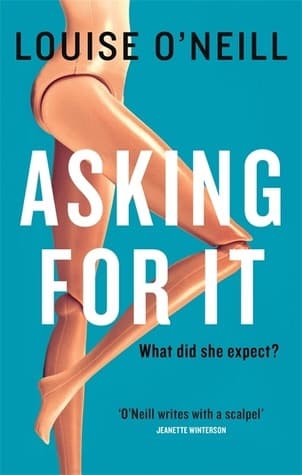
Louise O'Neill (2015)
Genre
Psychology / Young Adult
Reading Time
450 min
Key Themes
See below
Sign in to track this book
After a night she can't remember, 18-year-old Emma wakes to find her small Irish town consumed by explicit photos and a horrifying truth, forcing her to confront a community that would rather protect its heroes than believe her pain.
Eighteen-year-old Emma O'Donovan lives in the small town of Ballyfrann, Ireland. She is liked for her beauty, charm, and outgoing personality. Her life involves her friends, Louise and Maeve, her older brother, Conor, and her on-again, off-again relationship with rugby player, Robbie. Emma likes attention and social approval, often posting on social media and enjoying her peers' admiration. As summer begins, Emma feels happy, not knowing the events about to happen that will change her life and show the darker side of her town.
One Saturday night, Emma goes to a party at Niall's house, a popular spot for young people. She drinks a lot, wanting to have fun and keep her social image. With her friends and many admiring boys, Emma flirts and dances. As the night goes on, her memory becomes hazy from the alcohol. She remembers bits: being with Robbie, dancing, laughing, then confusion. Her last clear memory is with Robbie; after that, everything blurs, hinting at the traumatic events to come.
Emma wakes up the next morning on her front porch, disoriented and in pain. She does not remember how she got there or what happened after the party. Her clothes are torn, and she has bruises. Her mother finds her and is worried. As Emma tries to remember, her phone gets many notifications. Disturbing rumors and explicit photographs from the party are online, showing Emma in compromising positions with multiple boys, including the town's rugby players, Robbie and his friends. The photos quickly spread, and Emma realizes the entire town knows what happened, even if she doesn't.
The time after the party brings public humiliation and exclusion for Emma. Her friends, Louise and Maeve, struggle to react, often distancing themselves. Her brother, Conor, becomes protective but also struggles to understand. The town, instead of supporting her, largely blames Emma, questioning her choices, clothes, and drinking. Comments like 'she was asking for it' become common. The boys involved, especially Robbie and his friends, are rugby players in Ballyfrann, and the community does not want to believe they could be responsible. Emma's parents are upset but also deal with their own ideas, making it hard for Emma to find comfort or justice.
Emma's mother, who eventually understands the situation's seriousness despite her initial shock and shame, encourages Emma to report the assault to the Gardaí (Irish police). The process is difficult and intrusive, requiring Emma to recall her fragmented memories and have a forensic examination. The Gardaí interview the boys, who mostly deny wrongdoing, claiming Emma was willing or they were too drunk to remember. The community's loyalty to the rugby team makes the investigation hard, as witnesses do not want to cooperate, and public opinion stays with the accused, further isolating Emma.
The case goes to trial, making Emma's life a public event. The defense lawyers question Emma's past behavior, social media posts, clothing, and drinking, trying to make her seem promiscuous and responsible. The explicit photos are used against her, shaming and traumatizing her more. The boys, clean-cut and supported by the town, say they are innocent. The courtroom becomes a place where Emma's character is attacked, and the idea of consent is twisted. Media attention is intense, with headlines and social media discussions feeding the victim-blaming idea, making it almost impossible for Emma to have peace or privacy.
Despite Emma's testimony and the photos, the jury finds the accused boys not guilty. The decision shocks Emma and her family. The town, mostly relieved, celebrates the acquittal, confirming the idea that Emma was to blame. Emma is devastated, feeling betrayed by the justice system and her community. The verdict confirms the public's view that she 'was asking for it,' and she becomes more of an outcast. The emotional impact on Emma is huge, causing depression, anxiety, and a loss of her self-confidence. The trauma of the assault is made worse by the trial and the community's judgment.
After the trial, Emma becomes deeply depressed. She withdraws from her friends, family, and school, unable to live her old life. The constant stares, whispers, and online abuse make her feel like an outcast in her own town. She has nightmares, panic attacks, and self-harms, fighting feelings of shame, guilt, and worthlessness. Her personality is replaced by emptiness and despair. Her relationships with Louise and Maeve break, and even her relationship with her parents becomes strained as they struggle to understand and support her, leaving Emma feeling alone and without hope.
In her despair, Emma slowly finds small bits of hope. She starts seeing a therapist, who helps her process her trauma and understand she is not to blame. She also starts connecting with online communities of survivors, realizing she is not alone. While healing is slow and hard, Emma begins to reclaim parts of her identity. She starts to understand that her worth does not come from others' opinions or what happened to her. This shift begins her journey towards self-acceptance and strength, moving past Ballyfrann's judgment.
As Emma heals, she finds new strength and a desire to speak out. She starts to use her voice, first in therapy and online, then carefully with a few trusted people. She begins to challenge the silence and victim-blaming that allowed her assault and the injustice. While she may not get the legal justice she deserved, Emma's journey becomes one of personal strength. She starts to understand the wider societal issues and decides her experience, though painful, can help bring change, refusing to let her trauma define or silence her.
The Protagonist
From a seemingly carefree and adored young woman, Emma descends into trauma and despair after her assault, eventually finding the courage to seek healing and speak out against victim-blaming.
The Antagonist
Remains largely static, benefiting from community loyalty and avoiding accountability for his actions.
The Supporting
Struggles between loyalty to Emma and fear of social ostracization, ultimately failing to provide consistent support.
The Supporting
Initially a close friend, she completely abandons Emma under social pressure, demonstrating a lack of loyalty.
The Supporting
Moves from initial shock and anger to a more understanding and fiercely protective stance towards Emma.
The Supporting
Initially struggles with shame and denial, but eventually becomes Emma's strongest and most empathetic supporter.
The Supporting
Struggles to process and support Emma, often retreating emotionally, but remains present in her life.
The Antagonist
Remains unrepentant and is acquitted, highlighting the lack of accountability.
The Antagonist
Remains unrepentant and is acquitted, benefiting from the community's bias.
This is the main theme, exploring how society, especially a small community like Ballyfrann, blames victims of sexual assault instead of the attackers. Emma's experience shows this: her clothes, drinking, and past relationships are examined and used against her, while the boys' status as 'heroes' protects them. The online comments, town gossip, and even the legal system's questioning of her character all contribute to a culture where Emma is shamed for being assaulted, not supported. This theme shows the psychological impact on survivors and the problems in getting justice.
“'She was asking for it.'”
The novel examines the complexities of consent. Emma's inability to remember the full night, plus her intoxication, raises questions about whether she could have consented. The boys' defense relies on the idea that her previous flirtations or lack of an explicit 'no' meant consent, showing a misunderstanding of what willing, enthusiastic consent is. The story shows that not saying 'no' is not 'yes,' and that intoxication severely limits one's ability to consent, emphasizing the importance of bodily autonomy.
“'No means no. But what if you can't say no?'”
Before the assault, Emma's identity relies on external approval—her beauty, popularity, and social media presence. The trauma takes away this external self, making her face who she is without others' admiration. Her journey becomes one of rebuilding her self-worth from within, separate from public judgment or her past image. The novel explores the psychological damage when identity is broken and the hard process of finding strength and value in oneself despite outside circumstances and labels.
“'I wasn't Emma anymore. I was just... what happened to me.'”
Ballyfrann, first shown as a close community, shows its darker side as it betrays Emma. The town's loyalty to its rugby players and its unwillingness to face difficult truths lead to Emma's harsh exclusion. Friends distance themselves, adults whisper, and the justice system fails her, all influenced by the community's biases. This theme shows how collective denial and the desire to protect a town's 'good name' can cause more trauma to an individual, showing the impact of community silence.
“'The town had chosen its side, and it wasn't mine.'”
Social media plays a damaging role in the novel. The explicit photos of Emma online increase her humiliation, making her assault a public event. It helps spread gossip and victim-blaming, letting anonymous users add to her shaming. The constant online presence, before and after the assault, shows how digital platforms can connect people but also be used to cause psychological harm, making it impossible for Emma to escape judgment and trauma.
“'Every phone was a weapon, every screen a mirror reflecting my shame.'”
Provides intimate access to Emma's internal struggle and trauma.
The novel is told entirely from Emma O'Donovan's first-person perspective. This device is crucial for immersing the reader in her psychological experience, allowing for an intimate understanding of her confusion, pain, and eventual healing. It highlights her fragmented memories, her internal monologue of self-blame, and her struggle to reconcile her past self with her traumatized present. By presenting the story through Emma's eyes, the author powerfully conveys the subjective reality of sexual assault and its aftermath, ensuring the reader feels her isolation and the injustice she faces, making her journey of reclamation deeply personal and impactful.
Reflects the psychological impact of trauma and intoxication on memory.
Emma's memory of the night of the assault is deliberately fragmented and non-linear, a direct consequence of her intoxication and the trauma she experienced. The narrative does not provide a clear, linear account of the events, instead offering flashes and painful recollections as Emma tries to piece together what happened. This device accurately portrays the psychological reality of trauma, where memories can be suppressed or disjointed. It also forces the reader to experience Emma's confusion and the difficulty of reconstructing events when crucial information is missing, emphasizing the challenges faced by survivors in seeking justice.
Illustrates the pervasive nature of public shaming and victim-blaming.
Throughout the novel, excerpts of social media posts, comments, and news headlines are interspersed with Emma's narrative. This device serves to underscore the pervasive and damaging role of online platforms in amplifying victim-blaming and public shaming. It shows how rapidly rumors spread, how easily people can judge from behind a screen, and how impossible it is for Emma to escape the constant scrutiny and abuse. These inserts act as a chilling Greek chorus, reflecting the collective voice of the community and the dehumanizing effect of online discourse on survivors of sexual assault.
Represents the insular, patriarchal nature of small-town communities.
The small, close-knit Irish town of Ballyfrann functions as a powerful symbol. Initially appearing idyllic, it quickly becomes a suffocating, judgmental environment that prioritizes its 'heroes' (the rugby players) over the well-being of a young woman. Ballyfrann represents the broader societal structures that enable rape culture and victim-blaming, highlighting how community loyalty, traditional values, and a reluctance to challenge established norms can lead to profound injustice. The town's collective betrayal of Emma underscores the difficulty of seeking justice in such environments and the deep-seated cultural issues at play.
“It's not my fault. It's not my fault. It's not my fault.”
— Emma repeats this to herself after the assault, grappling with victim-blaming and self-doubt.
“I am a slut. I am a whore. I am a bitch. I am a liar. I am a drunk. I am a tease. I am a nothing.”
— Emma internalizes the cruel labels society places on her after the incident.
“They didn't ask for it, but they were asking for it.”
— Reflecting the contradictory and harmful attitudes toward sexual assault victims.
“I don't want to be the girl who was raped. I want to be the girl who survived.”
— Emma's struggle with identity and reclaiming her sense of self after trauma.
“It's easier to believe that I deserved it than to accept that the world is this cruel.”
— Emma's psychological coping mechanism to make sense of the injustice.
“Silence is a form of consent.”
— A critique of how societal silence enables perpetrators and shames victims.
“I am not a victim. I am a survivor.”
— Emma's journey toward empowerment and reframing her narrative.
“The truth doesn't set you free; it just makes you realize how trapped you are.”
— Emma's realization about the harsh realities of speaking out about assault.
“We are all complicit in the culture that allows this to happen.”
— A broader commentary on societal responsibility in perpetuating rape culture.
“My body is not a crime scene.”
— Emma's assertion against the objectification and scrutiny of her body post-assault.
“Sometimes the hardest person to forgive is yourself.”
— Emma's struggle with self-forgiveness and guilt after the assault.
“They took everything from me, but they can't take my voice.”
— Emma finding strength in speaking out despite the trauma.
“Rape isn't about sex; it's about power.”
— A key insight into the dynamics of sexual assault explored in the book.
“I am more than what happened to me.”
— Emma's affirmation to separate her identity from the assault.
Ready to see how well you understood this book? Take our interactive quiz with 10 questions.

Rhonda Byrne
4.3

Menno Henselmans
4.3
Sylvia Plath
4.3

Elliot Aronson
4.3

Joseph Campbell
4.3
Erich Fromm
4.3
Irvin D. Yalom
4.2

Lucy Strange
4.2