BookBrief
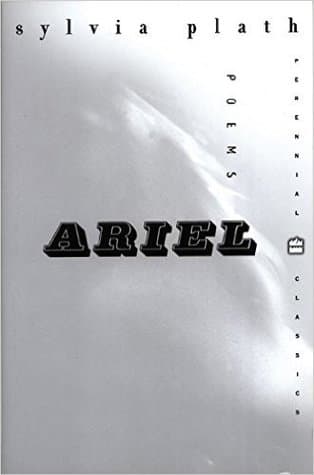
Ariel cover
Archivist's Choice

Ariel

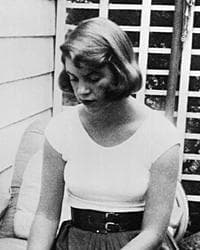
Sylvia Plath (1965)

Genre

Psychology

Reading Time

12 Minutes

Key Themes

See below

Track Your Reading

Sign in to track this book

Sylvia Plath's posthumous collection, Ariel, unleashes raw emotion and direct introspection, confirming her as a poet of deep psychological insight and lasting power.

Synopsis

Sylvia Plath's 'Ariel' is a posthumously published collection of poems written in the months leading up to her death in 1963. The collection is celebrated for its raw emotional intensity, vivid imagery, and exploration of themes such as death, nature, identity, and domesticity. Plath's distinctive voice, characterized by its sharp intellect and profound vulnerability, takes center stage as she grapples with personal suffering, societal pressures, and the complexities of the human psyche. The poems are often confessional, drawing heavily from her personal experiences, yet they transcend the individual to touch upon universal aspects of the human condition.
Difficulty
Medium
Pacing
Moderate
Mood
Introspective, intense, melancholic, powerful, raw, psychological

Plot Summary

Morning Song

The poem begins with a child's birth, using stark, almost clinical images like 'new statue' and 'fat gold watch.' The mother, the speaker, feels detached, seeing the baby as separate from herself. She notes its vulnerability and constant demands. Nature imagery, such as 'cloud' and 'sea,' suggests both the overwhelming nature of motherhood and a deep connection forming. Despite initial alienation, a protective instinct appears, showing a major shift in the mother's identity and her new, inescapable bond with her child.

The Applicant

This poem is a sharp satire on marriage and the commercialization of human relationships. A speaker, acting as an interviewer, asks an 'applicant' (likely a man) about his needs and wants, promising a 'suitable' partner. This partner, a 'living doll,' is presented as a ready-made answer to loneliness, a compliant figure for domestic and emotional roles. The language is sharp and cynical, revealing the superficial and transactional aspects often beneath societal pressure to marry. It criticizes how women are reduced to objects for male comfort, showing the emptiness of such arrangements.

Lady Lazarus

Lady Lazarus, the speaker, declares her repeated ability to rise from death, like a phoenix. This resurrection is a performance, a show for an audience, including 'Dr. Frankenstein' and 'Herr God, Herr Lucifer.' She describes the physical and emotional toll of these events, using stark, provocative Holocaust-related images, turning her suffering into power. The poem is a furious statement of agency, a refusal to be a victim, and a warning to those who caused her pain. She threatens to consume her oppressors, asserting a terrifying, vengeful strength.

Ariel

The poem describes an intense, almost mystical horseback ride at dawn. The speaker merges with the horse, Ariel, in a powerful, accelerating motion that goes beyond the physical world. Images of natural beauty and violent energy mix as the ride becomes a flight, a pursuit of something beyond human reach. The boundaries between rider, horse, and environment disappear. The experience ends in ecstatic release and potential self-annihilation, with the speaker becoming a 'red eye, the cauldron of morning,' shedding earthly limits and moving toward a sun-like oblivion. It is a journey of both liberation and terrifying surrender.

Daddy

The speaker addresses her dead father, whom she describes as a 'black shoe' and a 'Nazi.' The poem is a raw, intense look at a daughter's fight to escape her father's suffocating memory. She portrays him as an authoritarian, a 'panzer-man' who cast a long, dark shadow over her life. The speaker also links her father with her husband, suggesting a pattern of oppressive male figures. Through vivid, often disturbing images, she tries to get rid of his ghost, declaring her freedom from his psychological hold, even if it means breaking a deep, painful bond.

Medusa

The poem explores a tense, suffocating relationship, likely with the speaker's mother, using the Medusa myth as a central image. The 'Medusa' figure is an invasive, all-consuming entity, described with images of tentacles, jellyfish, and a 'green bell' that constantly rings in the speaker's ear. This figure's presence is inescapable, turning everything to stone and preventing the speaker's independence. The speaker feels trapped and infected by this relationship, unable to escape its pervasive influence, showing themes of psychological entanglement and the difficulty of becoming an individual within a toxic bond.

Nick and the Candlestick

The speaker watches her infant son, Nick, in the dim light of a candlestick, surrounded by deep darkness and cold. The outside world is bleak and desolate, emphasizing the child's vulnerability. The baby, however, is a source of unexpected warmth and life, a 'starfish' in the 'cold sea' of the room. The speaker, dealing with her own inner turmoil, finds a moment of fragile connection and a glimmer of hope in her child's innocent presence. The candlestick's flame symbolizes a precarious light against encroaching despair, representing a desperate clinging to life and love.

Fever 103°

The speaker describes a high fever as a transformative, almost spiritual experience. The intense heat and delirium lead to vivid hallucinations, blurring the lines between pain, purity, and transcendence. She imagines shedding her physical body, becoming 'pure acetylene' and rising like a 'hot spirit.' The fever is a cleansing fire, burning away impurities and past grievances, including references to infidelity ('the sin you committed'). This intense physical and mental state becomes a path to heightened awareness, a painful yet purifying journey toward a new, unburdened self, suggesting a desire for absolute freedom and innocence.

Purdah

The poem presents a woman living under a 'purdah,' a veil or curtain, symbolizing her confinement and the suppression of her true identity. She appears submissive and domesticated, a 'housewife' doing her duties, but this outward appearance hides a powerful, untamed inner self. Images of a 'lioness' and 'fists' suggest a coiled strength waiting to be released. The speaker expects a dramatic unveiling, a moment when she will break free from constraints and show her formidable nature, shattering expectations. It is a poem about hidden power, suppressed rage, and the promise of a violent, liberating transformation.

Edge

The poem portrays a woman's body, 'perfected' in death, with her two children lying beside her, as if returned to the 'white stomachs' of stone. The imagery is stark, cold, and deeply disturbing, suggesting a final, absolute surrender to ultimate peace. The woman's nakedness is 'Greek,' evoking classical sculpture, a frozen, timeless beauty. The 'moon' is an indifferent observer, watching the tragic scene. The children are 'stones,' lifeless, completing a tableau of ultimate stillness and finality. It is a chilling contemplation of death as a form of perfection and ultimate rest.

Paralytic

The poem focuses on paralysis, on the gap between an active mind and an unresponsive body. The speaker describes physical immobility and the feeling of being trapped within one's own flesh, comparing the body to a 'stone' or a 'broken statue.' Despite physical limits, the mind remains aware, observing surroundings and recalling memories. There is deep isolation and helplessness, as the person depends on others for basic needs. The poem explores the dignity and indignity of such a state, and the lasting power of the internal world despite external constraints.

Contusion

The poem focuses on a small, seemingly minor bruise, but expands its meaning to include deeper, pervasive pain and vulnerability. The bruise is described in vivid, almost microscopic detail, its colors shifting and darkening. It becomes a metaphor for hidden injuries, emotional wounds that are not immediately visible but deeply felt. The 'blue' and 'yellow' hues suggest a world tinged with sadness and sickness. The poem implies that even small physical marks can reflect a deeper, internal suffering, and that pain, once inflicted, lingers and spreads, staining existence.

Kindness

The speaker is deeply skeptical of 'kindness,' seeing it not as good but as intrusive, deceptive, and ultimately suffocating. Kindness is a 'fat pink' presence, a deceptive 'sweet talker' that offers false comfort. It is linked to domesticity and conventional expectations, which the speaker finds oppressive. The poem suggests that true kindness can be a form of control, masking indifference or even ill will. The speaker prefers honesty, even if harsh, over the soft lies of conventional pleasantries, showing a desire for authenticity over superficial comfort.

A Life

The poem reflects sadly on a life that feels incomplete and isolated. The speaker observes the world from a detached perspective, noting time passing and experiences accumulating without a true sense of connection or purpose. Images of 'windows,' 'walls,' and 'empty rooms' emphasize confinement and emotional distance. There is a longing for something more, a yearning for genuine engagement that remains unfulfilled. The poem conveys quiet despair, a recognition of life's fleeting nature and the lasting solitude that can accompany even rich experiences, leaving behind a lingering sense of loss.

Words

The poem reflects on words, seeing them as entities that gain a life of their own once spoken or written. Words are 'axes' and 'hooves,' suggesting both their destructive potential and their relentless, unstoppable momentum. They echo and reverberate, leaving lasting impressions long after their source is gone. The speaker considers the legacy of her own words, recognizing their power to shape reality and endure beyond her physical presence. It is a poignant acknowledgment of the poet's craft, the burden of language, and how words can both wound and immortalize.

Principal Figures

The Speaker (Various Personae)

The Protagonist

The speaker undergoes a journey from intense suffering and confinement to moments of ecstatic liberation and defiant self-assertion, often culminating in a tragic, yet powerful, acceptance of mortality.

The Father

The Antagonist/Symbolic Figure

Though deceased, his symbolic power is gradually confronted and, in some poems, violently rejected by the speaker, moving from an internalized oppressor to a figure the speaker actively attempts to cast out.

The Husband/Lover

The Antagonist/Symbolic Figure

Initially a figure of love or desire, he transforms into an antagonist through acts of betrayal, ultimately becoming a symbol to be cast off in the speaker's pursuit of liberation.

The Child/Children

The Supporting

The children remain largely innocent figures, serving as catalysts for the speaker's reflections on motherhood, love, and mortality, sometimes representing hope, other times profound vulnerability.

Ariel (The Horse)

The Symbolic Figure

Ariel remains a constant symbol of wild, liberating force, serving as a catalyst for the speaker's journey towards transcendence and self-dissolution.

Lady Lazarus

The Protagonist/Persona

Lady Lazarus's arc is one of repeated death and defiant resurrection, moving from victimhood to an empowered, almost monstrous, avenger.

Medusa (The Mother Figure)

The Antagonist/Symbolic Figure

Medusa's role is consistently that of an invasive, suffocating presence from whom the speaker struggles, often unsuccessfully, to break free.

The Applicant

The Supporting/Symbolic Figure

The Applicant remains a static representation of a societal archetype, serving as the recipient of the 'perfect' spouse package, without personal development.

The 'Living Doll'

The Supporting/Symbolic Figure

The 'Living Doll' is a static symbol of societal expectations for women in marriage, without an arc of her own, existing solely as a product.

The Moon

The Symbolic Figure

The Moon remains a consistent, detached symbolic presence, reflecting the speaker's feelings of isolation and the cold indifference of the universe.

Themes & Insights

Death and Rebirth

This theme is central to 'Ariel,' appearing as physical death, psychological destruction, and subsequent, often painful, rebirth. Poems like 'Lady Lazarus' explicitly show repeated resurrections, turning suffering into defiance. Death is sometimes a desired escape from pain ('Edge'), or a necessary step to a pure state ('Fever 103°'). This cycle explores the speaker's intense struggles with suicidal thoughts, but also her fierce will to survive and redefine herself after trauma. It suggests that destruction can lead to a more authentic, though terrifying, existence.

Out of the ash / I rise with my red hair / And I eat men like air.

Lady Lazarus

Identity and Self-Assertion

The collection deeply explores the speaker's fight to create and assert her identity against oppressive external forces and inner conflicts. This includes breaking free from patriarchal figures ('Daddy'), suffocating maternal bonds ('Medusa'), and societal expectations ('The Applicant'). The speaker often uses raw, aggressive language to declare independence, even if it means embracing a darker, more vengeful self. Moments of ecstatic release, like the ride in 'Ariel,' are fleeting but powerful mergers with a wild, unconstrained self, showing a constant tension between conformity and a fierce desire for authentic, unbridled selfhood.

I am too pure for you or anyone.

Fever 103°

Feminine Experience and Motherhood

Plath's poems offer a direct, often unsettling, portrayal of the feminine experience, especially motherhood. 'Morning Song' captures the complex, sometimes detached, emotions of a new mother, challenging idealized views of maternal bliss. Other poems explore societal pressures and confinements on women ('Purdah,' 'The Applicant'). The collection examines the psychological toll of relationships, betrayal, and the struggle for agency within domestic and romantic spheres. It shows the vulnerability and immense strength in women's lives, often linking personal suffering with broader critiques of gender roles and expectations.

I'm no more your mother / Than the cloud that distills a mirror to reflect its own slow / Effacement at the wind's hand.

Morning Song

Trauma and Psychological Pain

Psychological pain and trauma are pervasive themes, both as subject matter and as the force behind the speaker's intense emotional world. The poems vividly depict despair, rage, paranoia, and mental anguish, often drawing on personal experiences of depression and suicidal thoughts. Images of confinement, suffocation, and physical mutilation show internal torment. The collection directly addresses the raw, visceral reality of mental suffering, making it clear to the reader. This exploration turns personal agony into a powerful, universal statement of the human capacity for pain and resilience.

Every woman adores a Fascist, / The boot in the face, the brute / Brute heart of a brute like you.

Daddy

Nature and the Body

Nature in 'Ariel' is rarely peaceful; instead, it often mirrors or intensifies the speaker's internal states. It can be a source of wild, exhilarating freedom (the poem 'Ariel'), but also a cold, indifferent force ('Moon,' 'Edge'). The human body is often shown as a place of pain, confinement, and transformation. It is both a vessel for suffering (fever, paralysis) and a way to express defiance and power. Plath uses visceral, physical imagery to ground abstract emotions, making the psychological concrete and immediate. The merging of the body with nature often means profound loss or ecstatic liberation.

Stasis in darkness. / Then the substanceless blue / Pour of tor and distances.

Ariel

Language and Art

The collection, as poetry, explores the power and limits of language itself. Poems like 'Words' directly address how language takes on a life of its own, echoing and shaping reality even after the speaker is gone. Plath's carefully crafted, often violent, and innovative use of imagery and metaphor shows a deep awareness of poetry's ability to turn personal experience into art. Writing becomes a way to assert control, process trauma, and create a lasting legacy. It is both a tool for self-expression and a testament to the enduring power of art.

Words dry and riderless, / The indefatigable hooves.

Words

Plot Devices & Literary Techniques

Confessional Tone

Direct, raw, and often autobiographical disclosure of personal experience.

The confessional tone is paramount in 'Ariel,' characterized by the speaker's direct and often shocking revelation of intensely personal emotions, psychological states, and traumatic experiences. Plath employs a first-person voice that blurs the lines between the poet and the persona, inviting the reader into her deepest anxieties, angers, and despairs. This device creates a sense of intimacy and immediacy, making the poems feel like direct, unfiltered cries from the soul. It challenges traditional notions of poetic detachment, establishing a powerful connection between the speaker's internal world and the reader's own emotional landscape, even if it sometimes feels uncomfortably invasive.

Vivid and Visceral Imagery

Sensory details that are often disturbing, physical, and highly evocative.

Plath's poetry is renowned for its vivid and often visceral imagery, which appeals powerfully to the senses and frequently evokes feelings of discomfort or shock. She uses stark, physical descriptions of the body, nature, and everyday objects to convey profound psychological states. Examples include comparing an infant to a 'fat gold watch,' a father to a 'black shoe,' or a fever to 'pure acetylene.' This device makes abstract emotions tangible and immediate, creating a powerful, often disturbing, sensory experience for the reader. The imagery is not merely descriptive but functions as a direct conduit for the speaker's intense internal world, making her pain and ecstasy palpable.

Mythological and Historical Allusion

References to myths, history, and archetypes to deepen meaning and universalize personal experience.

Plath frequently employs mythological and historical allusions to enrich her personal narratives and give them universal resonance. Figures like Lady Lazarus (alluding to the biblical Lazarus and possibly Jewish concentration camp victims), Medusa, and even the name 'Ariel' (from Shakespeare's 'The Tempest') elevate individual suffering to archetypal levels. These allusions allow Plath to tap into established narratives of suffering, power, and transformation, lending her personal experiences a broader cultural and historical weight. They provide a framework through which to understand the speaker's struggles with patriarchal figures, oppressive forces, and the cycle of death and rebirth, making the intensely personal feel tragically universal.

Persona

The adoption of distinct voices or characters to explore different facets of the self.

Rather than a singular, consistent 'I,' Plath often adopts distinct personas within 'Ariel' to explore various facets of her psychological landscape. 'Lady Lazarus' is a defiant, resurrected performer; the speaker in 'Daddy' is a daughter grappling with a tyrannical father; the speaker in 'Morning Song' is a new mother. These personas allow Plath to inhabit and articulate extreme emotional states and experiences without being solely confined to a strictly autobiographical reading. This device provides a kind of psychological distance and artistic freedom, enabling a more intense and complex exploration of identity, rage, vulnerability, and power, transforming personal suffering into dramatic art.

Repetition and Anaphora

The deliberate use of repeated words or phrases for emphasis and emotional intensity.

Plath frequently uses repetition and anaphora (the repetition of a word or phrase at the beginning of successive clauses) to build emotional intensity, create a sense of incantation, and emphasize key themes. In 'Daddy,' the repeated 'You' and 'I' statements, along with phrases like 'black shoe' and 'barely knew,' create a hypnotic, almost obsessive rhythm that underscores the speaker's fixation and her desperate attempt to break free. This device reinforces the psychological turmoil and the speaker's relentless grappling with her past. It also lends a ritualistic quality to the poems, intensifying their impact and making the speaker's assertions more forceful and memorable.

Critical analysis

Notable Quotes

Quiz

Test Your Knowledge

Ready to see how well you understood this book? Take our interactive quiz with 10 questions.

10
Questions
~5
Minutes
?
Best Score

Key Questions (FAQ)

Ariel is a collection of poems by Sylvia Plath, published posthumously in 1966. The poems are known for their intense emotional honesty, exploring themes of death, rebirth, identity, and female rage.

About the author

Sylvia Plath

Sylvia Plath was an American poet, novelist, and short story writer. She is credited with advancing the genre of confessional poetry and is best known for two of her published collections, The Colossus and Other Poems (1960) and Ariel (1965), as well as The Bell Jar, a semi-autobiographical novel published shortly before her suicide in 1963. The Collected Poems was published in 1981, which included previously unpublished works. For this collection Plath was awarded a Pulitzer Prize in Poetry in 1982, making her the fourth to receive this honour posthumously.