“The greatest joy which can enter into a good mind is that which arises from the consciousness of a good action.”
— Reflecting on virtuous deeds and inner satisfaction.


Sign in to track this book
In 18th-century London, the good but naive Amelia faces constant misfortune, betrayal, and the moral lapses of her charming but careless husband, Booth, as they seek a peaceful home life.
The novel begins with Captain William Booth in a debtors' prison, the Gatehouse, after being arrested for an assault in self-defense. He means well but lacks strong will, often gambling and making bad money choices. While in prison, he regrets his troubles and being away from his wife, Amelia. He remembers their early time together, her constant beauty and goodness, and their many challenges. Booth's fellow prisoners include a thoughtful clergyman, Dr. Harrison, and a morally unclear lawyer, Mr. Robinson, who offer different views on law and right and wrong. Booth feels guilty about the pain his actions cause Amelia and their children, always fearing her reaction and others' judgment.
Amelia, despite her own poor health and the family's bad money situation, visits Booth in prison. Her presence immediately cheers him, and her calm, good nature contrasts sharply with the prison's dirt and moral decay. She brings their children, showing the family's struggles even more. Amelia's steady love and support are clear as she manages to get Booth released, pawning her own valuable items and dealing with his creditors, though the exact details are not fully given. Her actions show her cleverness and deep commitment to her husband, even when he has brought them to the edge of ruin. Booth is deeply touched by her sacrifice, but his good intentions often give way to his usual weaknesses.
After Booth's release, the family moves to a small, simple room in London, trying to live on their reduced income. However, Booth's careless nature quickly leads them into more debt. He often falls back into gambling and spending time with bad people, much to Amelia's distress. Their poverty makes them open to various kinds of exploitation and false accusations. Amelia, despite her worsening health and constant worries, continues to run the household and protect her children, always trying to keep up some appearance of respectability. She endures advances from predatory men, including Colonel James and Lord Trent, who are drawn to her beauty and goodness, further showing her risky position in society.
Colonel James, a seemingly friendly acquaintance from Booth's past, reappears and offers Booth money and the promise of a military position. However, James's true goals are bad; he strongly desires Amelia. He tries to win her over with subtle flattery and by quietly making Booth look bad. Amelia, though trusting at first, gradually sees his evil plans. She firmly rejects his advances, keeping her goodness and loyalty to Booth, even as James's plots create more tension and suspicion within their already strained home. Booth, fooled by James's apparent generosity, mostly stays unaware of his friend's betrayal.
During his first time in prison, Booth had an affair with a fellow prisoner, Miss Mathews, a woman with loose morals. This past mistake gradually comes out, mostly through others' schemes and Booth's own confessions. The news deeply hurts Amelia, not only because of the betrayal but also because it confirms her fears about Booth's weakness for temptation. Despite her pain, Amelia's natural goodness and deep love for Booth lead her to forgive him, though the event leaves a lasting mark on their relationship and highlights Booth's moral weakness. Miss Mathews herself is shown as manipulative, further complicating Booth's situation and reputation.
Dr. Harrison, the wise and good clergyman, becomes a significant moral guide for the Booths. He often gives Booth good advice, encouraging him to be moderate, responsible, and faithful, though Booth often struggles to follow it. Meanwhile, Lord Trent, another powerful and corrupt nobleman, becomes obsessed with Amelia and constantly pursues her. His attempts to seduce her are more open and threatening than Colonel James's, involving bribes and threats. Amelia's firm resistance to both Lord Trent and Colonel James highlights her strong moral integrity and the constant dangers faced by good women in a corrupt society. Her strength against such powerful enemies shows her strong character.
Booth's gambling and growing debts lead to his re-arrest and imprisonment, this time in the more serious Serjeant's Inn. This second jailing makes him even more despondent, and he begins to question his own moral fiber and the chance for change. He thinks about his past mistakes with more regret but still struggles with self-pity. Amelia, despite her own exhaustion and constant pressure, again takes on the burden of getting him released and protecting their children. Her tireless efforts to appeal to creditors and influential people show her strong spirit and her role as the family's main support. Booth's repeated failures highlight Amelia's consistent goodness.
A key moment happens when Mr. Robinson, the lawyer Booth met in the Gatehouse, visits him in Serjeant's Inn. Robinson, now feeling regretful, confesses to a complex plot planned by Colonel James and Miss Mathews to ruin Booth and get to Amelia. He reveals that James had paid him to lie and create false evidence against Booth, and that Miss Mathews had willingly joined the scheme, driven by jealousy and malice. This confession shows how deeply Booth has been betrayed and clears his name of some of the more serious accusations. It also starts to change Booth's view, forcing him to face the true nature of his 'friends' and the extent of Amelia's steady loyalty.
At the same time as Robinson's confession, a lost will is found, showing that Amelia is the rightful heir to a large fortune from her deceased mother. This inheritance had been hidden by her wicked sister and brother-in-law, Mrs. and Mr. James (Colonel James's relatives). The discovery of this fortune is a sudden solution, giving the Booth family the financial security they have so desperately needed throughout the novel. It not only frees Booth from his debts and the threat of more jail time but also allows them to live a comfortable and respectable life, finally rewarding Amelia for her lasting goodness and suffering. The discovery brings justice to Amelia and exposes her relatives' greed.
With Amelia's inheritance secured, Booth truly changes for good. He finally follows Dr. Harrison's advice, giving up gambling, heavy drinking, and his questionable friends. The family leaves London's corrupt influences and moves to a peaceful country home. Booth devotes himself to his family, his faith, and a life of quiet goodness. Amelia, no longer burdened by poverty and threats, finds happiness and security. The novel ends with the Booths living a happy and good life, showing that even a man with Booth's weaknesses can be reformed through the steady love of a good woman and having money, allowing goodness to finally win over vice and hardship.
The Protagonist
Amelia endures immense suffering and temptation but remains consistently virtuous, ultimately being rewarded for her unwavering goodness.
The Protagonist
Booth undergoes a journey of repeated failures and eventual redemption, finally reforming his character and embracing virtue after enduring significant suffering.
The Supporting
Dr. Harrison remains a consistent figure of moral rectitude, his wisdom eventually guiding Booth to reformation.
The Antagonist
Colonel James consistently acts as a villain, his treachery eventually exposed but without significant personal consequence within the narrative's resolution.
The Supporting
Miss Mathews acts as a catalyst for trouble, her past actions and present malice contributing to Booth's misfortunes.
The Supporting
Mr. Robinson transitions from a morally compromised accomplice to a repentant truth-teller, facilitating Booth's eventual vindication.
The Antagonist
Lord Trent remains a persistent threat to Amelia's virtue, his efforts ultimately thwarted by her steadfastness.
The Mentioned
Her deceit is ultimately exposed, and Amelia's rightful inheritance is restored.
The novel carefully looks at what real goodness means, comparing Amelia's natural virtue with Booth's shaky morals and others' hypocrisy. Amelia's goodness is not just about avoiding bad things but about active kindness, forgiveness, and steady loyalty when facing extreme suffering. Her beauty is always linked to her inner goodness, making her attractive to both good and bad characters. Booth's journey, in contrast, shows that good intentions are not enough; real goodness needs strength of will and consistent moral action, as Dr. Harrison repeatedly advises. The novel suggests that while goodness may suffer, it eventually wins.
“For true goodness is that alone which can please us with the reflection of our past actions, can make us despise the little accidents of life, and can give us a lively hope and assurance of a future reward.”
Fielding strongly condemns the bad effects of carelessness, especially gambling, heavy drinking, and spending time with immoral people. Captain Booth's repeated misfortunes—jail, financial ruin, and emotional distress for his family—are almost entirely due to his lack of self-control and poor judgment. The novel shows how one bad habit can lead to another, creating a downward spiral. London society's corrupting influence, with its temptations and predatory individuals like Colonel James and Lord Trent, makes these dangers worse. Ultimately, the story promotes carefulness, moderation, and a disciplined life as key for stability and happiness.
“A good name is better than a precious ointment; and riches are not always to the wise, nor the battle to the strong.”
The novel criticizes 18th-century London society and its systems, especially the legal system. Prisons are shown as places of moral decay and injustice, where the poor and innocent suffer alongside serious criminals. Lawyers like Mr. Robinson are shown to be easily corrupted, making up evidence for personal gain. Noblemen and powerful men, such as Lord Trent and Colonel James, misuse their positions to exploit the vulnerable, showing that wealth and status often allow bad behavior rather than good. Fielding highlights how justice is often denied to those without influence or money, making the Booths' struggles even more moving.
“The law, in its majestic equality, forbids rich and poor alike to sleep under bridges, to beg in the streets, and to steal bread.”
Amelia's steady love and great capacity for forgiveness are central to the novel's hopeful message. Despite Booth's repeated betrayals, financial recklessness, and moral failures, Amelia consistently forgives him, offering steady support and never giving up hope for his change. Her love acts as a constant moral anchor, even when Booth strays. It is her lasting affection and sacrifice that ultimately inspire Booth to a real and lasting change of heart. The novel suggests that true love is not blind but a powerful force that can reform even the most flawed people, if they are willing to accept and change.
“Such a wife as Amelia was not to be bought by all the treasures of the East. She was a blessing which the richest could not purchase, and which the poorest might enjoy.”
A repeated idea is the sharp difference between how things look on the outside and what is real on the inside. Characters like Colonel James and Miss Mathews at first seem helpful or charming, only to show their true malicious and dishonest natures. Booth himself often puts on a brave face while struggling with guilt and weakness inside. Conversely, Amelia's quiet goodness is sometimes overlooked or misjudged by a superficial society. The novel constantly pushes the reader to look past surface impressions and see true character, showing how easily vice can pretend to be virtue and how hard it can be to tell real goodness from clever deception.
“The world, indeed, is a great masquerade, where we often mistake the vizards of some for their faces, and the faces of others for vizards.”
The sudden discovery of Amelia's inheritance provides an unexpected resolution to the family's financial woes.
The discovery of Amelia's long-lost inheritance, suppressed by her relatives, serves as a classic deus ex machina. This plot device abruptly resolves the seemingly insurmountable financial and legal challenges facing the Booth family, allowing them to escape poverty and the corrupting influences of London. While it provides a satisfying happy ending, it is an external force rather than a direct consequence of the characters' actions (beyond Amelia's enduring virtue). It allows Fielding to reward virtue and punish vice without relying solely on a naturalistic progression of events, ensuring a moral conclusion.
A repentant lawyer reveals the intricate conspiracy against Booth, driving a major turning point.
Mr. Robinson's confession is a pivotal plot device that unravels much of the mystery and malice surrounding Booth's misfortunes. His detailed account of Colonel James's and Miss Mathews's conspiracy, including fabricated evidence and false testimonies, clears Booth's name and exposes the true villains. This confession serves to vindicate Booth, explain previous confusing events, and finally open Booth's eyes to the treachery of his 'friends.' It provides crucial exposition and propels the narrative towards its resolution by clarifying the true nature of the threats the Booths faced.
Repeated incarcerations serve as moments of reflection and potential moral transformation for Booth.
Booth's repeated imprisonments, first in the Gatehouse and later in Serjeant's Inn, function as a narrative crucible. These periods of confinement force him to confront his past mistakes, reflect on his moral failings, and experience the harsh realities of a corrupt legal system. While he initially struggles to learn from these experiences, each incarceration brings him closer to genuine remorse and a desire for reformation. It is within these confined spaces that he encounters characters like Dr. Harrison and Mr. Robinson, who significantly influence his eventual moral awakening, making prison a setting for both suffering and potential redemption.
Characters who embody ideal virtues, serving as a standard against which others are judged.
Amelia and Dr. Harrison function as moral exemplars in the novel. Amelia consistently displays unwavering virtue, loyalty, forgiveness, and resilience, setting a high moral standard for womanhood. Dr. Harrison embodies Christian wisdom, prudence, and charity, offering sound moral guidance. These characters serve as benchmarks against which Captain Booth's moral weaknesses and the depravity of characters like Colonel James and Lord Trent are measured. Their consistent goodness highlights the novel's thematic focus on true virtue and provides a clear moral compass for both the characters within the story and the reader.
“The greatest joy which can enter into a good mind is that which arises from the consciousness of a good action.”
— Reflecting on virtuous deeds and inner satisfaction.
“Sure there is no greater wickedness in a man than to betray the trust of a woman.”
— Lamenting the treachery of men towards women.
“For as the world is a stage, so on this stage every man must play a part.”
— A common theatrical metaphor applied to life's roles.
“Prosperity discovers not only our friends, but our enemies.”
— Observing how wealth reveals true relationships.
“A good conscience is to the soul what health is to the body.”
— Comparing the importance of a clear conscience to physical well-being.
“The only way to preserve our innocence is to avoid temptation.”
— Discussing the preservation of moral purity.
“Adversity is the trial of principle. Without it a man hardly knows whether he is honest or not.”
— Highlighting the role of hardship in revealing true character.
“For what is the world but a great prison, where many are confined, and all are miserable.”
— A bleak reflection on the human condition.
“Malice and envy are the only passions which are strong enough to overcome the love of money.”
— Discussing powerful human motivations.
“True happiness consists in a good conscience and a good name.”
— Defining the components of genuine happiness.
“The greatest pleasure of life is love.”
— A straightforward declaration about the supreme joy.
“It is a great misfortune for a man to be of too good a heart.”
— Suggesting that excessive kindness can be a disadvantage in the world.
“There is no more certain sign of a narrow mind than to be addicted to one particular set of opinions.”
— Criticizing intellectual rigidity and dogmatism.
“The seeds of every crime are sown in the human heart.”
— A philosophical observation on the origin of wrongdoing.
Ready to see how well you understood this book? Take our interactive quiz with 10 questions.
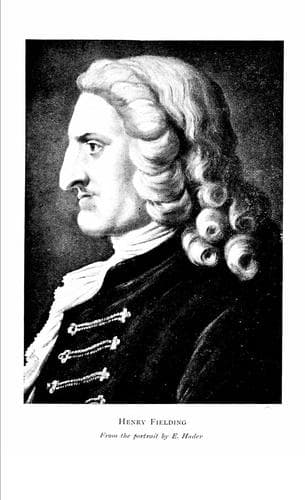
Henry Fielding was an English writer and magistrate known for the use of humour and satire in his works. His 1749 comic novel The History of Tom Jones, a Foundling was a seminal work in the genre. Along with Samuel Richardson, Fielding is seen as the founder of the traditional English novel. He also played an important role in the history of law enforcement in the United Kingdom, using his authority as a magistrate to found the Bow Street Runners, London's first professional police force.