“The impossible could not have happened, therefore the impossible must be possible in spite of appearances.”
— Poirot reflecting on the nature of the crime and the seemingly impossible locked-room scenario.


Agatha Christie (2019)
Genre
General
Reading Time
240 min
Key Themes
See below
Sign in to track this book
A luxurious snowbound train becomes a locked-room tomb for a murdered tycoon, forcing Hercule Poirot to untangle a dozen motives among a car full of strangers before the killer strikes again.
Hercule Poirot, after solving a case for the French military in Aleppo, Syria, is going back to London. He plans to take the Taurus Express, but a last-minute telegram calls him back to London. The train is unusually full. On the Taurus Express, he meets Colonel Arbuthnot and Mary Debenham. In Istanbul, Poirot learns that the Simplon Orient Express is fully booked, which is odd for the season. However, his old friend, Monsieur Bouc, a director of the Compagnie Internationale des Wagons-Lits, gets him a berth in the Calais coach. Poirot watches the diverse passengers, including the loud American, Samuel Ratchett, and his secretary, Hector MacQueen.
Soon after boarding the Orient Express, Samuel Ratchett, an unpleasant American millionaire, approaches Poirot. Ratchett tells Poirot he has received threatening letters and fears for his life, believing someone on the train wants to kill him. He offers Poirot a lot of money to be his bodyguard. Poirot, finding Ratchett's manner disagreeable and sensing meanness, politely declines, saying he does not like Ratchett's face. Ratchett seems frustrated and continues to appear anxious that evening, making Poirot more curious about the train's strange mood.
During the night, the Orient Express gets stuck in a deep snowdrift in Yugoslavia, cutting it off. Poirot is disturbed several times. He hears a groan from Ratchett's compartment, then a loud thump. He also hears voices and a woman's scream. The next morning, Monsieur Bouc tells Poirot that Samuel Ratchett has been murdered. The door to Ratchett's compartment was locked from the inside, and the window was open, suggesting the killer left that way. Ratchett has been stabbed twelve times, some wounds deep and forceful, others shallow, which could mean multiple attackers or one killer with varying strength. The train's isolation means the murderer is still on board.
Since the train is isolated and Yugoslavian police cannot be reached right away, Monsieur Bouc and Dr. Constantine (the train's doctor) ask Poirot to lead the investigation. Poirot, at first unsure because he refused to work for Ratchett, agrees, recognizing the unique challenge and the need for justice. He stresses the need for complete secrecy and thoroughness. The three men start by examining the crime scene, carefully noting details of Ratchett's compartment, the body's position, the wounds, and any items left, such as a pipe cleaner, a lady's handkerchief, and a partly burned note mentioning 'Daisy Armstrong'.
Poirot soon learns that 'Samuel Ratchett' is Cassetti, an infamous American gangster responsible for the kidnapping and murder of Daisy Armstrong, a young child, years earlier. Cassetti used his money and power to avoid justice in America, which led to the suicide of Daisy's mother, Mrs. Armstrong, who was pregnant, and the death of her father, Colonel Armstrong. The governess, Miss Freebody, was wrongly accused and committed suicide, as did the chauffeur. This news changes the murder's motive from robbery or personal fight to a complex act of revenge for a terrible crime that ruined many lives. Poirot realizes that everyone connected to the Armstrong tragedy had a strong reason to see Cassetti punished.
Poirot interviews each of the twelve passengers from the Calais coach, as well as Ratchett's valet and secretary, and the train conductor. He listens to their alibis, observations, and reactions. The passengers include Princess Dragomiroff, a Russian princess; Hector MacQueen, Ratchett's secretary; Masterman, Ratchett's valet; Mrs. Hubbard, an American; Colonel Arbuthnot, a British officer; Mary Debenham, a governess; Greta Ohlsson, a Swedish missionary; Antonio Foscarelli, an Italian car salesman; Cyrus Hardman, a private detective; Hildegarde Schmidt, Princess Dragomiroff's maid; Count and Countess Andrenyi, Hungarian nobility; and Pierre Michel, the train conductor. Each interview shows inconsistencies and suspicious details, making it hard to find one killer.
Poirot collects several clues: a burned note showing Ratchett's true identity as Cassetti, a lady's handkerchief with the initial 'H', a pipe cleaner, a button from a Wagon Lit conductor's uniform, and a scarlet kimono. He also finds a small, expensive bottle of sleeping medicine in Ratchett's compartment. The different types of Ratchett's stab wounds, some deep, others shallow, suggest two different murderers or one killer with unusual methods. Many passengers give seemingly good alibis, but Poirot's sharp eye spots small differences in their stories, such as Mrs. Hubbard's repeated claims of a man in her compartment, and Mary Debenham's calm manner despite the situation.
Through investigation, Poirot begins to uncover the connections among the passengers. He finds that almost everyone on the train has a direct or indirect link to the Armstrong family or the events of Daisy Armstrong's kidnapping and murder. For example, Masterman was Colonel Armstrong's valet, MacQueen was the District Attorney's son who handled the case, Miss Debenham was Daisy's governess, Greta Ohlsson was Daisy's nursemaid, Princess Dragomiroff was Mrs. Armstrong's godmother, and Mrs. Hubbard is Linda Arden, Mrs. Armstrong's mother. This confirms Poirot's idea that the murder was a planned act of group revenge.
With all the evidence and hidden connections found, Poirot gathers Monsieur Bouc and Dr. Constantine to share his findings. He offers two possible solutions. The first, simpler solution, suggests that a stranger boarded the train, murdered Ratchett, and escaped through the snow. This explanation, however, does not account for the many conflicting clues and the passengers' shared motives. The second, more complex solution, is the truth: a carefully planned, group act of revenge. Poirot explains that the twelve passengers, representing individuals affected by the Armstrong tragedy, conspired to murder Cassetti, each delivering a stab wound.
Poirot reveals that the passengers acted together as a jury and executioner for Samuel Ratchett/Cassetti. Each of the twelve, including the conductor Pierre Michel, had a personal connection to the Armstrong family and delivered one of the twelve stab wounds. The different wounds, the locked compartment, and the planted clues were all part of their plan to confuse investigators and create the idea of a single, unknown killer. Faced with the choice of turning in twelve otherwise innocent people who had delivered justice for a man who escaped it, Poirot, Monsieur Bouc, and Dr. Constantine agree to present the first, simpler solution to the Yugoslavian police, allowing the true perpetrators to go free, believing that justice, in this unique situation, has been served.
The Protagonist
Poirot starts as a detached observer but is drawn into a morally ambiguous case that challenges his strict sense of justice, ultimately choosing compassion over strict legalism.
The Victim/Antagonist
Ratchett's arc is complete before the story begins, as his past crimes directly lead to his demise, making him a static character whose past actions define the present conflict.
The Supporting
Bouc transitions from a concerned company director to a participant in a morally ambiguous decision, prioritizing a form of justice over strict legality.
The Supporting
Dr. Constantine serves as a medical expert, his role evolving from initial examination to complicity in the final moral decision.
The Supporting/Conspirator
Mary maintains a facade of professionalism until her true identity and motive are revealed, showing her deep commitment to avenging Daisy Armstrong.
The Supporting/Conspirator
Mrs. Hubbard's initial portrayal as a nuisance transforms into the revelation of her true identity as the vengeful and brilliant leader of the conspiracy.
The Supporting/Conspirator
The Princess maintains her regal demeanor while secretly participating in the collective act of justice, showcasing her unwavering loyalty and sense of morality.
The Supporting/Conspirator
Colonel Arbuthnot's seemingly straightforward military persona conceals his profound loyalty and commitment to avenging his friend, Colonel Armstrong.
The Supporting/Conspirator
MacQueen's initial subservient role as Ratchett's secretary is revealed to be a cover for his deep-seated vengeance and active participation in the murder.
The Supporting/Conspirator
Greta's seemingly innocent and timid nature hides her profound grief and determination to avenge the child she cared for, culminating in her participation in the murder.
The Supporting/Conspirator
Pierre Michel's professional facade conceals a profound personal grief and a thirst for justice, revealed as he actively participates in the revenge plot.
The novel's main idea is the conflict between legal justice and moral justice. Samuel Ratchett (Cassetti) avoided legal punishment for his crimes in the Armstrong case due to his wealth. This failure of the legal system leads the twelve conspirators to take action, creating their own form of 'justice'. Poirot faces the choice of upholding the law by exposing the murderers or allowing a group act of revenge, which he privately believes served a higher form of justice, to go unpunished. The conclusion, where Poirot gives a false solution, shows this tension.
“''The law has been circumvented. It has been cheated by a clever man. Now justice has been done.'”
The plot is driven by revenge. Each of the twelve conspirators has a direct or indirect link to the Armstrong case and suffered greatly because of Cassetti's actions. Their group motive is not personal gain, but a strong desire for payback against the man who ruined so many lives. The different stab wounds symbolize each person's act of revenge, a shared ritual to punish a man who escaped the law. Mrs. Hubbard (Linda Arden) plans this act, motivated by her grief as Daisy's grandmother.
“''In fact, it was a crime of pure vengeance. Not a very pretty thing, vengeance. But understandable.'”
The novel has much deception and many hidden identities. Samuel Ratchett is Cassetti. Almost every passenger on the train is not who they seem, either by name, job, or behavior. Mary Debenham, Mrs. Hubbard (Linda Arden), Colonel Arbuthnot, and others are all pretending to hide their true connections to the Armstrong family and their part in the murder plan. Poirot's investigation mostly involves removing these layers of deception to uncover the passengers' true identities and motives, showing how people can create elaborate fronts.
“''You see, my friend, there are moments when one has to choose between two evils.'”
This idea is central to the murder's unique solution. Instead of one killer, Poirot finds a group act, a 'jury' of twelve people each taking part in Ratchett's death. This challenges the usual idea of individual guilt in crime. The conspirators, though from different backgrounds, are united by a shared trauma and a common goal. Their coordinated effort shows the power of group action when driven by a shared feeling of injustice, blurring the lines of individual responsibility and creating a unique moral problem for the detective.
“''One must look at the facts. And the facts, my friend, are very curious. Twelve people, all with a reason to hate this man.'”
Poirot, with his careful nature and love for order, faces a crime that seems messy in how it happened (many stab wounds, confusing clues) but perfectly planned. The snowdrift that stops the train creates an isolated, disordered setting, but within this disorder, a highly organized and planned murder occurs. Poirot's task is to bring order to this scene, even if the resulting 'order' (the truth of the twelve murderers) challenges his own sense of justice and legal rules. The final decision to give a simpler, false solution is a way to restore some order to the world.
“''It is my business to provide order out of chaos.'”
The classic setup where a murder occurs in an apparently inaccessible location.
The locked-room mystery is a fundamental plot device in 'Murder on the Orient Express'. Samuel Ratchett is found dead in his compartment, which is locked from the inside, and the window is open, suggesting an impossible escape through a snowdrift. This setup immediately creates an intense puzzle for Poirot, as it defies logical explanation and points to a killer who must still be among the confined group of passengers. The eventual solution reveals how the 'locked room' was cleverly faked, with the conspirators locking the door from the outside and then using a key, or simply locking it after the 'last' stab, making it appear impossible.
Misleading clues deliberately placed to divert the investigation.
Christie masterfully uses multiple red herrings to confuse both Poirot and the reader. Examples include the pipe cleaner found in Ratchett's compartment, the lady's handkerchief with the initial 'H', the button from a Wagon Lit uniform, and the scarlet kimono discovered in Poirot's own luggage. Each of these clues appears to point to a single, distinct perpetrator or suggest a simple motive, but they are all either planted or misinterpreted initially to throw investigators off the scent. The open window in Ratchett's compartment, suggesting an escape, is another significant red herring, designed to make the idea of an outside killer plausible.
A natural event that isolates the train and its passengers.
The snowdrift is a crucial plot device that serves to physically isolate the Orient Express. This isolation is essential for the plot to function, as it ensures that the murderer (or murderers) must still be on the train, eliminating the possibility of an external killer. It creates a contained environment, heightening the tension and forcing Poirot to solve the case with only the available resources and witnesses. Without the snowdrift, local police would have been involved immediately, and the elaborate, collective revenge plot might not have been able to unfold or remain concealed as effectively.
A prior, unresolved crime that provides the central motive for the current murder.
The Armstrong case is not just a backstory; it is the entire motivational engine of the plot. The brutal kidnapping and murder of young Daisy Armstrong, and the subsequent suicides and deaths of her family members and wrongly accused staff, provide the powerful and universal motive for the collective revenge against Cassetti (Ratchett). By slowly revealing the details of this past tragedy and the connections of each passenger to it, Christie builds a compelling ethical dilemma. The Armstrong case transforms a seemingly random murder into an act of profound, if extralegal, justice.
Symbolic representation of the twelve conspirators as a jury delivering justice.
The 'twelve jurors' motif is a powerful symbolic device that underpins the entire solution. There are twelve passengers, each with a direct connection to the Armstrong tragedy, and twelve stab wounds on Ratchett's body. This number is deliberately chosen to evoke the image of a jury, suggesting that the conspirators have collectively tried and condemned Cassetti, carrying out a form of vigilante justice when the legal system failed. This device emphasizes the theme of justice versus law and highlights the collective nature of the crime, making the ending morally ambiguous and thought-provoking.
“The impossible could not have happened, therefore the impossible must be possible in spite of appearances.”
— Poirot reflecting on the nature of the crime and the seemingly impossible locked-room scenario.
“If you want to play a game, you must know the rules.”
— Poirot explaining the necessity of understanding the criminal's methods and motives.
“The little grey cells, my friend, they are what count.”
— Poirot frequently refers to his brainpower as 'little grey cells' when he is about to solve a puzzle.
“I like order and method. I like to have everything arranged.”
— Poirot's personal philosophy, which extends to his investigative approach.
“In fact, I very much doubt if there is any man who is not a murderer at heart.”
— Poirot contemplating the darker side of human nature and the potential for violence within everyone.
“There are two solutions, and I shall put them both before you.”
— Poirot presenting his final findings to M. Bouc and Dr. Constantine, offering two possible scenarios.
“The truth, however ugly in itself, is always beautiful and pure in its own nature.”
— Poirot's unwavering belief in the importance of uncovering the truth, regardless of its implications.
“Every one of these people, at some time or another, had a motive for hating Ratchett.”
— Poirot realizing the widespread animosity towards the victim, Samuel Ratchett (Cassetti).
“Logic, my dear Hastings, is a poor guide when one is dealing with the human heart.”
— Though not directly said by Poirot in this book, this sentiment about human emotion overriding pure logic is a recurring theme in Christie's work and highly relevant to the solution of MOTOE.
“The body was lying on its back, the arms flung out, the knees drawn up.”
— The initial description of the victim, Samuel Ratchett, after he is discovered murdered.
“It is not for me to judge. I am only interested in facts.”
— Poirot asserting his role as an impartial investigator, focusing on evidence rather than moral judgment.
“The case is a very curious one. I have never met with one like it.”
— Poirot expressing his initial assessment of the complexity and uniqueness of the murder.
“One sees and yet one does not see. One observes and yet one does not observe.”
— Poirot highlighting the difference between merely looking and truly perceiving details, a key aspect of detection.
“When a crime is committed, there are always two questions: Who did it? And why?”
— Poirot outlining the fundamental questions at the heart of any criminal investigation.
Ready to see how well you understood this book? Take our interactive quiz with 10 questions.
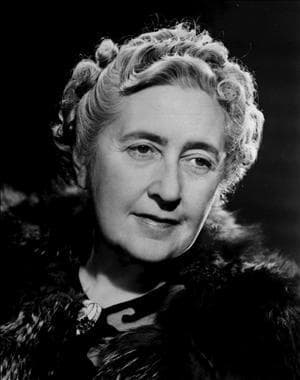
Dame Agatha Mary Clarissa Christie, Lady Mallowan, was an English writer known for her 66 detective novels and 14 short story collections, particularly those revolving around fictional detectives Hercule Poirot and Miss Marple. She also wrote the world's longest-running play, the murder mystery The Mousetrap, which has been performed in the West End since 1952. A writer during the "Golden Age of Detective Fiction", Christie has been called the "Queen of Crime". She also wrote six novels under the pseudonym Mary Westmacott. In 1971, she was made a Dame (DBE) by Queen Elizabeth II for her contributions to literature. Guinness World Records lists Christie as the best-selling fiction writer of all time, her novels having sold more than two billion copies.