“Sometimes I think I was born with a written prescription for chocolate.”
— Clara's lighthearted self-assessment of her coping mechanism.

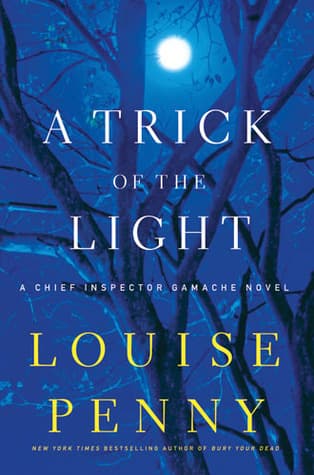
Louise Penny (2011)
Genre
Psychology / Young Adult
Reading Time
450 min
Key Themes
See below
Sign in to track this book
In the quiet village of Three Pines, a celebrated artist's garden becomes a crime scene when a woman is found dead during her solo exhibition, leading Chief Inspector Gamache to uncover deceptions in the art world where truth is often hidden.
The novel begins with Clara Morrow, an artist from Three Pines, getting ready for her solo exhibition's grand opening in Montréal. Her husband, Peter, a once-famous artist now struggling, is distant and critical. Villagers, including Olivier and Gabri, Ruth Zardo, Myrna Landers, and Reine-Marie Gamache, support Clara. But the celebration ends when a body is found in Clara's garden in Three Pines – Lillian Dyson, a former art critic and friend of Clara's, dead among the flowers. Chief Inspector Armand Gamache and his team are called to investigate this murder.
Chief Inspector Armand Gamache, with Jean-Guy Beauvoir and Isabelle Lacoste, arrives in Three Pines. The quiet village is again the scene of a murder. Gamache immediately notices the complex relationships in the community, especially the tension around Clara's new success and Peter's clear jealousy. The initial scene examination shows no obvious weapon, and Lillian's body has signs of being hit. Gamache interviews the villagers, who all knew Lillian, and each offers a different view of her, showing her often critical and sometimes cruel nature.
As the investigation continues, Gamache and his team start to uncover Lillian Dyson's complicated past. She was a controversial figure in the art world, known for her sharp, often harsh, critiques. It becomes clear that Lillian had a long, complex relationship with Clara, first as a mentor, then a rival. She had also recently been working on a book about art, which many thought would contain damaging information about artists, including Peter Morrow. The team learns that Lillian was good at finding people's weaknesses and using them, making a long list of possible enemies in Three Pines and the wider art community.
Peter Morrow's behavior becomes more erratic and suspicious. His jealousy of Clara's success is obvious, a sharp contrast to his own failing career. He makes several negative comments about Clara's art and their marriage, and his alibi for the murder is weak. Gamache sees the deep problems in the Morrows' marriage, noting how Peter seems to actively ruin Clara's moments of triumph. This makes Peter a main suspect, as Lillian Dyson had also criticized his work and was rumored to be including damaging information about him in her upcoming book.
Clara's art, especially the paintings at her Montreal exhibition, become important to the investigation. Gamache and Beauvoir study the pieces, looking for clues or hidden meanings. Lillian Dyson, as an art critic, greatly influenced Clara's early career, and their relationship was a constant mix of admiration and rivalry. The team discovers that Lillian had been particularly critical of Peter's work, which added to his resentment. The themes of light and shadow, truth and illusion, in Clara's paintings, seem to reflect the deceptive nature of the murder, where nothing is quite as it appears.
A big clue appears when Lillian Dyson's diary is found. More than just critical notes, the diary shows a more vulnerable, thoughtful Lillian, one who struggled with her own insecurities and a strong desire for recognition. The diary also has entries hinting at a secret from Clara's past, specifically about an early painting Lillian believed was not entirely Clara's own. This revelation questions Clara's artistic honesty and provides a new reason for someone to silence Lillian before her book or diary could expose this secret.
The focus shifts to an early painting by Clara, which Lillian's diary suggested was problematic. Gamache and his team carefully investigate its origins. It is revealed that the painting, a striking portrait, was a joint effort by Clara and her husband, Peter, from their student days. However, Peter had done most of the work, and Clara had taken sole credit for it, a deception that had bothered her for years. This secret, if exposed by Lillian, would not only hurt Clara's reputation but also confirm Peter's long-held bitterness and feeling of artistic betrayal.
Gamache, having put together the puzzle pieces, sets up a series of subtle confrontations. He understands that Lillian Dyson's murder was not a crime of passion but a desperate attempt to protect a reputation and a career. The revelation about the shared painting and Clara's long-held secret becomes the key. The killer is Peter Morrow, driven by years of resentment, professional jealousy, and Lillian's impending exposure of Clara's artistic deception. He had confronted Lillian in the garden, and in a fit of rage, hit her, leading to her death.
Peter Morrow confesses to Lillian's murder. His reason was a complex mix of professional jealousy, feeling overshadowed by Clara's success, and wanting to stop Lillian from exposing the truth about their collaborative painting from years ago. He felt that Lillian was about to take away Clara's hard-won fame and, in doing so, further lessen his own legacy. The confession brings great sadness and shock to Clara and the community. Clara must face her own part in the deception and its terrible impact on her husband, leading to a deep re-evaluation of her life and art.
After Peter's confession, Three Pines deals with the tragedy. The village's perfect appearance is again broken, showing the complex, often painful, human emotions beneath. Clara Morrow, devastated by the loss and betrayal, begins the slow process of healing and self-discovery. She must accept her husband's crime and her own past deceptions. Gamache thinks about truth and illusion, and how a 'trick of the light' can hide dark realities. The novel ends with Clara starting to paint again, perhaps finding a new, more honest path for her art and her life.
The Protagonist
Gamache's arc in this novel reinforces his wisdom and his ability to see the 'tricks of the light,' solidifying his role as a moral anchor.
The Central Figure/Victim's Friend
Clara undergoes a profound transformation, confronting her past deceptions and the devastating consequences, leading to a new, more honest artistic and personal path.
The Antagonist/Killer
Peter's arc is one of tragic downfall, as his simmering resentments culminate in murder and his ultimate confession.
The Victim
As a murder victim, Lillian's character is revealed posthumously, evolving from a villainous critic to a more nuanced, tragic figure.
The Supporting
Beauvoir continues his journey of personal growth, battling his inner demons and deepening his professional bond with Gamache.
The Supporting
Ruth remains largely consistent, serving as a unique voice of wisdom and a source of comic relief and poignant truth.
The Supporting
Myrna's arc is subtle, as she continues to provide a stable, empathetic presence within the chaotic events of Three Pines.
The Supporting
Olivier's character remains consistent, providing a glimpse into the social dynamics of Three Pines.
The Supporting
Gabri's character remains consistent, serving as a stable counterpart to Olivier and a loyal member of the community.
This theme is important to the novel, showing how easily truth can be hidden by perception, self-deception, and lies. Lillian Dyson's murder is itself a 'trick of the light,' where initial appearances mislead. Clara's long-held secret about the co-authored painting, and Peter's resentment, show how one deception can harm relationships and lead to tragedy. Gamache constantly tries to tell the difference between what seems real and what is real, in both physical evidence and characters' emotions. The novel suggests that truth is often uncomfortable but needed for healing.
“And even when facts are slowly exposed, it is no longer clear to Gamache and his team if what they've found is the truth, or simply a trick of the light.”
Jealousy and resentment drive the story. Peter Morrow's deep envy of Clara's artistic success, along with his bitterness over her past deception about their shared painting, consumes him. His resentment grows over years, turning him into a critical and violent person. Lillian Dyson's critical nature also came from her own professional struggles and perhaps intellectual jealousy. The novel shows how these negative emotions, when not dealt with, can ruin relationships, destroy lives, and cause lasting harm.
“Behind every smile there lurks a sneer. Inside every sweet relationship there hides a broken heart.”
The world of art and its subjectivity is a significant background. The novel explores art's power to express deep truths, but also how it can be used for deception or become a source of intense competition. Lillian Dyson, as a critic, had great power to shape an artist's legacy, often with severe personal impact. Clara's struggle with her own artistic integrity and Peter's obsession with his fading legacy highlight the pressures artists face. The story questions who truly owns art, and whether an artist's personal life should affect how their work is seen. The novel suggests that true art must come from authenticity, even if it means facing painful truths.
“Art is a lie that makes us realize truth, at least the truth that is given us to understand.”
The novel looks at the complex nature of human relationships, especially in the close-knit community of Three Pines. The relationship between Clara and Peter, once loving, is shown to be broken by professional rivalry, unspoken resentments, and a shared secret. Lillian Dyson's connections with the villagers are equally complex, marked by friendship, mentorship, and sharp criticism. Gamache observes how even seemingly 'sweet relationships' can hide 'broken hearts' and hidden complaints. The story emphasizes that people are rarely simple, and their interactions are shaped by a lifetime of shared history, unspoken desires, and personal flaws.
“Hearts are broken. Sweet relationships are dead.”
A seemingly idyllic, remote village that frequently becomes the stage for murder.
The village of Three Pines serves as more than just a setting; it's a character in itself. Its isolation creates a sense of intimacy and a contained environment where secrets are difficult to keep, yet often deeply buried. The recurring murders in this otherwise peaceful place highlight the contrast between its outward appearance and the darker aspects of human nature that can fester within any community. This device allows for a focus on character dynamics and the slow unraveling of personal histories, as Gamache is forced to delve into the lives of a small, interconnected group.
Clara's paintings and the art world reflect the themes and characters of the story.
Art functions as a powerful plot device, not just as a backdrop but as a direct mirror to the characters' inner lives and the novel's themes. Clara's paintings, with their interplay of light and shadow, directly reflect the theme of truth and deception. The art world itself, with its critics, rivalries, and quest for legacy, provides a metaphorical framework for the jealousy and ambition that drive the plot. The investigation of the old, disputed painting is crucial to uncovering the central deception, making art integral to the mystery's resolution.
A posthumously discovered diary that reveals the victim's true nature and crucial secrets.
Lillian Dyson's diary is a classic plot device that provides vital exposition and character development for the victim. Initially, Lillian is perceived as a harsh, one-dimensional critic. However, her diary entries reveal a more complex, vulnerable woman, challenging the initial perceptions of her character. More importantly, the diary contains the key revelation about Clara's early painting, providing Gamache with the crucial information needed to understand the motive behind the murder and the deep-seated resentments within the Morrow marriage.
The strained relationship between Clara and Peter Morrow as a central source of conflict.
The Morrow's disintegrating marriage is a core plot device that fuels much of the narrative's tension and directly leads to the murder. The visible cracks in their relationship – Peter's overt jealousy, his critical remarks, and Clara's growing discomfort – serve as red herrings and clues. The long-held secret about their collaborative painting acts as the catalyst for Peter's rage and the ultimate motive for killing Lillian, who threatened to expose it. This device allows the novel to explore themes of resentment, betrayal, and the destructive power of professional rivalry within a personal relationship.
“Sometimes I think I was born with a written prescription for chocolate.”
— Clara's lighthearted self-assessment of her coping mechanism.
“It’s not what you look at that matters, it’s what you see.”
— A philosophical observation about perception, often attributed to Thoreau but relevant to the book's themes.
“The greatest trick the devil ever pulled was convincing the world he didn't exist.”
— A classic quote that resonates with the hidden aspects and deceptions in the story.
“Art is not a mirror held up to reality, but a hammer with which to shape it.”
— Clara's perspective on the power and purpose of her art.
“Every secret comes with a cost.”
— A recurring theme as characters grapple with the consequences of their hidden truths.
“The past is never dead. It’s not even past.”
— A Faulkner quote that applies to the lingering impact of past events on the present characters.
“We are all broken, that's how the light gets in.”
— A poignant reflection on vulnerability and the potential for beauty in imperfection.
“Sometimes the greatest kindness is to tell the truth, even when it hurts.”
— A difficult lesson learned about honesty and its impact on relationships.
“Grief is not a disorder, a disease or a sign of weakness. It is an emotional, physical and spiritual necessity, the price of love. The only cure for grief is to grieve.”
— A profound statement on the nature of grief, relevant to the emotional arcs of several characters.
“It takes courage to grow up and become who you really are.”
— A quote that speaks to the coming-of-age aspects and self-discovery within the narrative.
“There are wounds that never show on the body that are deeper and more hurtful than anything that bleeds.”
— Reflecting on the psychological and emotional scars carried by characters.
“Sometimes we hold onto things, not because they’re good for us, but because we’re afraid of what will happen if we let go.”
— Exploring the difficulty of letting go of past attachments or coping mechanisms.
“The only way out is through.”
— A reminder of the necessity of confronting difficulties rather than avoiding them.
“A lie can travel half way around the world while the truth is putting on its shoes.”
— Illustrating the speed and impact of misinformation compared to the slower process of uncovering truth.
Ready to see how well you understood this book? Take our interactive quiz with 10 questions.

Biography coming soon.

Rhonda Byrne
4.3

Menno Henselmans
4.3
Sylvia Plath
4.3
Elliot Aronson
4.3

Joseph Campbell
4.3
Erich Fromm
4.3
Irvin D. Yalom
4.2
Lucy Strange
4.2