BookBrief
A New Earth: Awakening to Your Life's Purpose cover
Archivist's Choice

A New Earth: Awakening to Your Life's Purpose

Eckhart Tolle (2005)

Genre

Psychology / Spirituality / Philosophy / Self-Help

Reading Time

12 Minutes

Key Themes

See below

Track Your Reading

Sign in to track this book

Eckhart Tolle guides readers to move past ego-driven suffering and embrace a spiritually awakened life, finding personal fulfillment and global peace.

Core Idea

Eckhart Tolle's "A New Earth" posits that humanity is on the cusp of a profound evolutionary leap, moving from an ego-driven state of consciousness to one rooted in presence and awakened awareness. He argues that the root cause of suffering, conflict, and environmental destruction lies in the identification with the 'ego,' a false sense of self created by the mind. Tolle proposes that by recognizing and disidentifying from the ego, individuals can access a deeper dimension of consciousness, which he calls 'presence' or 'being.' This awakening to one's true purpose, which is to be fully present and live in alignment with the universal intelligence, will not only transform personal lives but also usher in a new collective consciousness, leading to a more peaceful and sustainable world.
Difficulty
Medium

Core idea

The central argument and framework that powers the entire book.

Eckhart Tolle's "A New Earth" posits that humanity is on the cusp of a profound evolutionary leap, moving from an ego-driven state of consciousness to one rooted in presence and awakened awareness. He argues that the root cause of suffering, conflict, and environmental destruction lies in the identification with the 'ego,' a false sense of self created by the mind. Tolle proposes that by recognizing and disidentifying from the ego, individuals can access a deeper dimension of consciousness, which he calls 'presence' or 'being.' This awakening to one's true purpose, which is to be fully present and live in alignment with the universal intelligence, will not only transform personal lives but also usher in a new collective consciousness, leading to a more peaceful and sustainable world.

At a glance

Difficulty

Medium

Key Takeaways

1

The Ego's Tyranny

Understanding how our identification with the ego fuels suffering and dysfunction.

Quote

The primary cause of unhappiness is never the situation but your thoughts about it.

Tolle says human suffering comes from identifying with the ego. This false self is made of thoughts, emotions, and external things like possessions, status, roles, and beliefs. This ego-driven mind constantly seeks validation, control, and separation, which leads to ongoing dissatisfaction, conflict, and anxiety. The ego always feels it's 'not enough' and feeds the 'pain-body,' a collection of old emotional pain. Recognizing this identification is the first step toward freedom. It lets us observe the ego's actions instead of being con...

Supporting evidence

Tolle frequently uses the metaphor of 'the pain-body' to describe the energetic accumulation of past emotional trauma that the ego feeds on and perpetuates.

Apply this

Practice observing your thoughts and emotional reactions without judgment, recognizing them as products of the ego rather than your true self. Ask: 'What is the ego trying to gain or protect here?'
2

Awakening to Presence

The transformative power of living in the 'Now' as the antidote to ego-driven suffering.

Quote

The present moment is all you ever have. Make the Now the primary focus of your life.

The book's main solution to ego-identification is to wake up to the present moment. Tolle states that true consciousness, or 'presence,' exists outside of linear time (past and future), which are just mental ideas. By fully living in the 'Now,' we stop the ego's constant mental chatter, its focus on what was or will be, and its creation of problems that don't exist in the current moment. This state of presence is not just an intellectual idea but a felt experience of inner calm and openness. It lets us see reality directly, without th...

Supporting evidence

Tolle describes how focusing on sensory input (e.g., the feeling of breath, sounds, sights) can anchor one in the present moment, illustrating a practical technique for achieving presence.

Apply this

Consciously bring your attention to your breath, the sounds around you, or the sensations in your body throughout the day. When you find your mind wandering to past regrets or future anxieties, gently bring it back to the present.

3

Beyond Happiness and Unhappiness

Discovering a deeper state of joy and peace that transcends emotional dualities.

Quote

True happiness is not a state of mind, but a state of being.

Tolle argues that chasing 'happiness' through the ego is pointless. It always depends on outside events and eventually leads to unhappiness. Instead, he points to a deeper state of 'joy' or 'peace' that comes from within, regardless of outside conditions. This state is not an emotion but an underlying awareness, a basic part of our true nature that appears when the ego's hold lessens. It is a recognition of life's inherent aliveness and sacredness. This view challenges common ideas of well-being, suggesting that true fulfillment is no...

Supporting evidence

Tolle recounts how even in challenging situations, one can access an underlying peace by accepting the 'isness' of the moment, detaching from the mind's resistance.

Apply this

Instead of striving for happiness, practice acceptance of 'what is' in any given moment, even uncomfortable ones. Notice the underlying sense of aliveness that persists beneath emotional fluctuations.

4

The Purpose of Suffering

How suffering can be a catalyst for spiritual awakening and the dissolution of the ego.

Quote

All true suffering is caused by resistance to what is.

Tolle does not promote suffering, but he suggests it serves an evolutionary purpose: to awaken humanity. When the ego's control and gratification methods fail, and the pain-body becomes unbearable, it creates a turning point. This breakdown can force someone to question their ego-identification and look for a deeper truth beyond the mind's ideas. Suffering, especially intense suffering, can be a 'grace' that breaks the false self, opening a door to presence and conscious awareness. This idea can be difficult for some, as it redefines ...

Supporting evidence

Tolle's own spiritual awakening, detailed in 'The Power of Now,' began after a period of intense mental suffering, illustrating this principle directly.

Apply this

When facing difficult situations, instead of resisting or complaining, try to observe your internal reaction. Ask yourself if there's an opportunity for surrender and acceptance, rather than fighting against 'what is.'

5

Inner and Outer Purpose

Distinguishing between the universal purpose of awakening and individual life roles.

Quote

Your primary purpose is to be here, fully and consciously.

Tolle describes two kinds of purpose: inner and outer. The 'inner purpose' is the same for all humans: to awaken to consciousness, be fully present, and align with life's deeper intelligence. This is not something to achieve later but is available 'Now.' The 'outer purpose' refers to individual goals, roles, and actions in the world (e.g., career, relationships, creative projects). He stresses that the outer purpose becomes truly effective only when it aligns with and flows from the inner purpose. Without this alignment, external achi...

Supporting evidence

Tolle explains how an artist, for example, might create beautiful work from an egoic desire for fame, or from a deep inner wellspring of presence and creativity, with vastly different internal experiences.

Apply this

Before engaging in any activity, pause and consciously connect with your inner state. Ask: 'Am I doing this from a place of presence and alignment, or from egoic striving?'

6

Relationships as Spiritual Practice

How conscious relationships can accelerate awakening and dissolve the ego.

Quote

The most important spiritual practice is to be present in your relationships.

Tolle sees close relationships not just as sources of pleasure or companionship, but as strong drivers for spiritual growth. He explains how relationships often trigger the pain-body and reveal ego patterns (e.g., control, judgment, neediness). However, if both partners can use these triggers to observe their ego, practice presence, and take responsibility for their inner state instead of reacting unconsciously, the relationship becomes a spiritual practice. This means accepting the partner's 'otherness,' letting go of expectations, a...

Supporting evidence

Tolle describes how a partner's criticism can be met with an awareness of one's own triggered pain-body, rather than an automatic defensive reaction, leading to a conscious response instead of an unconscious one.

Apply this

In moments of conflict or tension in a relationship, pause before reacting. Observe the emotions and thoughts arising within you. Can you choose presence over egoic defense?

7

The Collective Awakening

Humanity's potential shift from egoic consciousness to a new Earth.

Quote

A new heaven and a new earth are not a hope but a certainty.

Tolle applies his individual teachings globally, suggesting humanity is at a turning point, undergoing a collective spiritual awakening. The ego's dysfunction, seen in global conflicts, environmental damage, and widespread suffering, is pushing humanity to a point where a basic shift in consciousness is becoming necessary for survival. He envisions a 'new Earth' emerging from enough individuals who awaken to presence, moving beyond their egoic patterns. This shift is an evolutionary need, leading to a more harmonious and conscious way...

Supporting evidence

Tolle points to the increasing awareness of ecological crises and global conflicts as evidence of the ego's destructive peak, which could catalyze a collective awakening.

Apply this

Recognize that your personal awakening contributes to the collective shift in consciousness. Engage in conscious actions that reflect your awakened state, however small they may seem.

8

The Inner Body as a Portal

Connecting with the energy field of the inner body to deepen presence.

Quote

Your body is the most incredible vehicle for awakening.

Beyond just observing thoughts, Tolle introduces connecting with the 'inner body' – the subtle energy field that animates the physical form. By focusing conscious attention on the body's sensations, one can bypass constant mental chatter and deepen their experience of presence. This practice grounds consciousness, anchors it in the 'Now,' and offers a direct way to the underlying 'Being' that is our true essence. He suggests the inner body is a direct link to the universal life force, and regular connection with it can dissolve the pa...

Supporting evidence

Tolle encourages regularly focusing on the feeling of aliveness in one's hands, feet, or the entire body as a means to disengage from thought and enter presence.

Apply this

Take a few minutes each day to close your eyes and feel the subtle energy or aliveness throughout your body, particularly in your hands and feet. Let your awareness rest there.

9

Beyond Form and Name

Recognizing our true identity as consciousness itself, prior to any manifestation.

Quote

You are not your thoughts, emotions, or identity. You are the awareness that is aware of them.

Tolle's ultimate teaching points to our true identity as formless consciousness, a deeper 'I Am' that comes before all mental and physical forms. The ego, in contrast, gets its identity from 'form' – thoughts, roles, possessions, and external labels. Awakening involves shifting from identifying with these temporary forms to recognizing oneself as the eternal, unchanging awareness that observes them. This 'unmanifested' dimension is the source of all life and creativity, and connecting with it brings a deep sense of peace and wholeness...

Supporting evidence

Tolle often uses the analogy of the 'space' in which all objects appear, suggesting that consciousness is the space in which all thoughts and forms arise.

Apply this

Practice disidentifying from your thoughts and emotions by simply observing them. Recognize that you are the awareness that is watching, not the thoughts themselves.

10

The Art of Conscious Doing

Bringing presence to everyday tasks, transforming them into spiritual practice.

Quote

Whatever you do, do it with attention. Do it with presence.

Tolle emphasizes that spiritual awakening is not just for meditation retreats or specific spiritual practices; it should be part of daily life. By bringing conscious attention – presence – to everyday tasks (e.g., washing dishes, walking, waiting in line), these activities become opportunities for deeper awareness. This 'conscious doing' keeps the mind from drifting into egoic thought patterns and anchors one in the present moment, giving even simple actions a sense of sacredness and purpose. This practical approach makes his philosop...

Supporting evidence

Tolle suggests that even a simple task like waiting can be an opportunity for presence, rather than a cause for impatience or frustration, by simply observing the waiting itself.

Apply this

Choose one routine daily activity (e.g., brushing your teeth, making coffee) and commit to doing it with full, conscious attention, noticing every sensation and movement.

Critical analysis

Notable Quotes

Quiz

Test Your Knowledge

Ready to see how well you understood this book? Take our interactive quiz with 10 questions.

10
Questions
~5
Minutes
?
Best Score

Key Questions (FAQ)

A New Earth's central message is about transcending our ego-based state of consciousness. Tolle argues that our attachment to the ego is the root cause of personal unhappiness and global conflict, and that awakening to a higher consciousness is the key to both individual fulfillment and world peace.

About the author

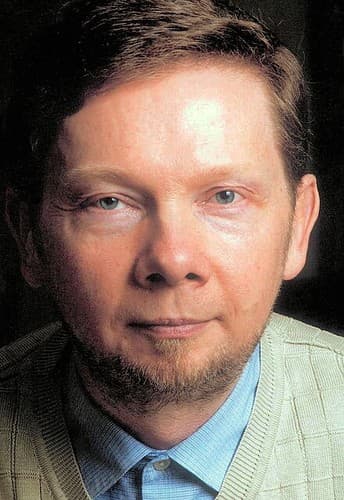
Eckhart Tolle

Eckhart Tolle is a spiritual teacher and author renowned for his profound insights into consciousness and personal transformation. His bestselling works, including "The Power of Now" and "A New Earth," have guided millions worldwide toward greater presence and inner peace. Tolle's teachings emphasize the importance of living in the present moment and transcending the ego for spiritual enlightenment.