“Sometimes, when you're afraid, you feel like you have to be mean to protect yourself. But it doesn't really protect you. It just makes you feel worse.”
— Julian's internal reflection on his past behavior towards Adam.

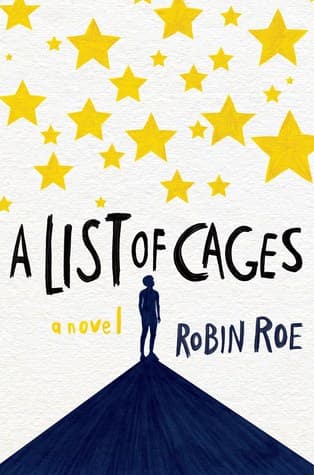
Robin Roe (2017)
Genre
Psychology / Young Adult
Reading Time
360 min
Key Themes
See below
Sign in to track this book
A well-meaning but impulsive senior with ADHD uncovers the dark secrets of his long-lost foster brother, Julian. Helping him could unravel both their lives.
Adam Blake, a senior with ADHD, is assigned as an aide for the school psychologist, Dr. Mann. Adam initially sees this as an easy period to text friends. However, Dr. Mann asks him to find a freshman, Julian, who has been missing appointments. Adam is surprised to find that this Julian is his former foster brother, whom he hasn't seen in five years. Their reunion is happy, with Adam remembering their close bond and Julian's gentle nature. Adam wants to reconnect with Julian, despite Julian's quietness and struggles.
As Adam and Julian spend more time together, Adam sees several concerning behaviors. Julian is unusually withdrawn, often anxious and tired. He frequently hides in the library during lunch, refusing to go to the cafeteria. Adam also notices Julian's attachment to children's picture books, which he reads repeatedly. Julian avoids direct questions about his home life and his current foster father, Russell. Adam's attempts to get Julian to open up are met with resistance, but he senses sadness and fear, increasing his concern.
The present-day story includes flashbacks to Adam and Julian's time together in foster care. These memories show their deep emotional connection. Adam, then a young boy, protected the younger, sensitive Julian. They shared stories, comforted each other, and found solace together. These flashbacks explain Adam's strong desire to help Julian now. The memories also contrast with Julian's current quiet state, showing the big change in his personality.
Adam's concerns grow when he sees physical signs of abuse on Julian, including bruises and a limp. Julian says these are accidents, but Adam knows he is lying. One day, Julian collapses in the hallway, clearly malnourished and exhausted. Adam takes him to the nurse's office, where Julian's physical condition is clear. Julian reluctantly admits his foster father, Russell, is abusive. But he is afraid of what will happen if he says too much, fearing for himself and for Russell's biological daughter, Tasha, who also lives there.
After the incident at school, Julian finally tells Adam the details of his life with Russell. He describes being locked in a closet for long periods, being beaten, starved, and forced to do humiliating tasks. Russell manipulates Julian, threatening Tasha if Julian ever tells about the abuse. Julian explains his fear of speaking out, believing that if he leaves, Tasha will face Russell's cruelty. This confession strengthens Adam's resolve to save Julian, but also shows how complex and dangerous their situation is.
Adam talks to Dr. Mann, carefully sharing his concerns about Julian without revealing all the abuse, respecting Julian's fear. Dr. Mann begins to investigate, but is limited by Julian's refusal to speak. Adam also confides in his friends, Charlie and Rebecca, who are supportive but unsure how to intervene without Julian's help. Adam realizes that official channels are too slow and that Julian's immediate safety is at risk. He starts to make his own plan, feeling responsible for his foster brother.
Adam, with Charlie and Rebecca's help, plans to get Julian out of Russell's house. They decide to create a diversion, allowing Adam to enter the house and get Julian. Charlie will create a loud disturbance outside to get Russell's attention, while Rebecca waits in the car as a lookout. Adam knows the house layout from Julian's descriptions and plans to act quickly. The tension builds as they finalize details, aware of the danger in confronting an abuser.
The night of the rescue, Adam carries out his plan. Charlie creates the diversion, drawing Russell outside. Adam slips into the house and finds Julian in the closet, very weak and scared. As Adam tries to lead Julian out, Russell re-enters the house. A fight happens between Adam and Russell. Adam, driven by adrenaline and his love for Julian, fights back against Russell, managing to stop him long enough to get Julian out of the house and into Rebecca's waiting car. The escape is difficult, leaving both boys shaken.
After the rescue, Julian goes to the hospital for medical care and then to a safe place. Russell is arrested, and child protective services get involved. Julian begins a long and difficult recovery. Adam stays by his side, visiting regularly and providing support. The legal process happens, bringing some justice. Julian slowly starts to heal, finding his voice again and processing the trauma he endured, with Adam as his constant support.
After recovery and therapy, Julian is placed with a new, loving foster family who know his past and want to help him. He continues to improve, slowly regaining confidence and a sense of safety. Adam remains a part of Julian's life, their bond stronger than ever. The novel ends with Julian looking towards a future where he can finally be himself, free from the abuse and fear, and Adam finding a deeper purpose in his life through his loyalty and love for his brother.
The Protagonist
Adam transforms from a somewhat carefree teenager to a mature, responsible young man willing to risk everything for his brother, finding purpose in his protective instincts.
The Protagonist
Julian slowly regains his voice and sense of self, moving from a state of profound fear and silence to beginning the process of healing and finding safety.
The Antagonist
Russell remains a static character, a force of evil, until his eventual capture and the termination of his abuse.
The Supporting
She moves from cautious observation to active investigation and support, facilitating official intervention.
The Supporting
Charlie's character develops from a typical high school student to someone willing to participate in a dangerous rescue for a friend.
The Supporting
Rebecca's arc mirrors Charlie's, moving from a typical friend to an active participant in a high-stakes rescue.
The Supporting
Tasha's situation is resolved indirectly through Julian's rescue and Russell's arrest, implying a safer future for her.
The Supporting
Her arc is largely static, providing a consistent loving presence for Adam.
The main theme is the strong bond between Adam and Julian. Despite years apart and Julian's trauma, Adam's love and loyalty never change. His decision to rescue Julian, even risking his own life, shows this theme. Flashbacks to their foster care days show how this bond formed, with Adam protecting Julian and comforting him. This theme shows that love can last through time and circumstances, providing strength and hope in difficult situations, as seen when Adam helps Julian escape.
““I’d known Julian for five years, but it felt like five minutes. He was the one person who understood me completely.””
The novel explores the effects of child abuse, both physical and psychological. Julian shows how trauma can lead to withdrawal, fear, self-blame, and a loss of identity. The descriptions of Russell's cruelty and Julian's coping—like his attachment to children's books and his attempts to protect Tasha—show the lasting scars left by abuse. The book reveals the hidden nature of such suffering and the courage victims need to heal.
““The thing about the cages was, they weren’t always made of bars. Sometimes they were made of fear.””
A theme is the difficulty and danger of speaking about abuse. Julian's fear of Russell, and his desire to protect Tasha, keep him from telling about his suffering for a long time. This shows how abusers manipulate victims, making it hard for them to get help. Adam's struggle to get Julian to confide in him and Julian's slow process of finding his voice show the psychological barriers to speaking out and the role of a trusted person in overcoming them.
““It was like there was a whole language I’d forgotten how to speak.””
The book questions traditional ideas of family, showing that blood ties do not guarantee love or safety. Adam and Julian, foster brothers, have a deeper, more loving bond than Julian has with his biological father or his abusive foster father, Russell. The contrast between Adam's supportive adoptive family and Julian's foster home shows that true family is built on care, protection, and acceptance, not just legal or biological connections. The story suggests that 'home' is a place of safety and love, not just a building.
““Family wasn’t always blood. Sometimes, it was the people who saved you.””
Alternating chapters between Adam and Julian's viewpoints.
The story is told through alternating first-person perspectives of Adam and Julian. This device allows readers to experience the present-day urgency of Adam's quest to save Julian, while simultaneously delving into Julian's traumatic past and his internal struggles. Adam's chapters provide the external action and his growing concern, while Julian's provide a raw, intimate look into the psychological toll of abuse, his memories, and his profound fear. This contrast creates a powerful emotional impact and builds suspense as the reader pieces together the full extent of Julian's suffering.
Interspersed memories of Adam and Julian's time in foster care.
Flashbacks are strategically placed throughout the narrative, depicting Adam and Julian's shared past in foster care before their separation. These memories serve several crucial functions: they establish the depth of their brotherhood, explain Adam's unwavering loyalty, and provide a stark contrast to Julian's current subdued state, highlighting the severity of the changes wrought by abuse. The flashbacks also offer moments of warmth and hope amidst the present-day darkness, reminding both characters and readers of the love that once existed and can be reclaimed.
Metaphorical and literal 'cages' representing confinement and trauma.
The concept of 'cages' is a central and recurring symbol. Literally, Julian is locked in a closet, a physical cage. Metaphorically, he is trapped by his fear, silence, and the psychological manipulation of Russell. The title itself, 'A List of Cages,' refers to the various forms of confinement Julian experiences. The symbol extends to Adam, who feels caged by his helplessness and the constraints of official systems. The overarching goal of the narrative is to break Julian free from these literal and metaphorical cages, signifying liberation and healing.
A symbolic comfort object for Julian and a window into his inner world.
Julian's constant reading and re-reading of children's picture books, particularly 'The Little Prince,' serves as a significant symbolic device. These books represent his lost innocence, his regression to a safer, simpler time, and his desperate need for comfort and escape from his brutal reality. They also act as a subtle form of communication; Adam recognizes their significance and uses them as a way to connect with Julian, understanding that Julian is trying to hold onto the gentle, imaginative part of himself that Russell tries to destroy.
“Sometimes, when you're afraid, you feel like you have to be mean to protect yourself. But it doesn't really protect you. It just makes you feel worse.”
— Julian's internal reflection on his past behavior towards Adam.
“The hardest part of being a hero is that no one ever knows what you did, or what it cost you.”
— Julian thinking about Adam's secret struggles.
“You don't get to choose what you remember. You only get to choose what you do with it.”
— Julian contemplating his traumatic memories and how to move forward.
“Sometimes the people who need help the most are the ones who push it away the hardest.”
— Julian observing Adam's initial resistance to his friendship.
“It's funny how you can live with someone for years and still not really know them.”
— Julian reflecting on his relationship with his uncle.
“Being lonely isn't about being alone. It's about feeling like no one understands you.”
— Adam's internal thoughts about his isolation.
“Hope is a dangerous thing. It can keep you going, but it can also break your heart.”
— Adam's cynical view on hope during his captivity.
“You can't save everyone. But you can save someone. And sometimes, that's enough.”
— Julian's realization about his limitations but also his impact.
“The past isn't a cage. It's a key. You can use it to unlock your future, or you can let it lock you in.”
— Julian's therapist's advice on dealing with trauma.
“Sometimes the bravest thing you can do is ask for help.”
— A recurring theme in the book as characters struggle with asking for support.
“Love isn't always easy. Sometimes it's the hardest thing you'll ever do.”
— Julian reflecting on his deep care for Adam and the difficulties involved.
“The world isn't always fair, but that doesn't mean you stop trying to make it better.”
— Julian's enduring optimism despite the injustices he faces.
“Secrets can eat you alive if you let them.”
— Adam's experience with the burden of his hidden abuse.
“You don't need to be perfect to be loved. You just need to be yourself.”
— Julian's unconditional acceptance of Adam.
Ready to see how well you understood this book? Take our interactive quiz with 10 questions.

Rhonda Byrne
4.3

Menno Henselmans
4.3
Sylvia Plath
4.3
Elliot Aronson
4.3

Joseph Campbell
4.3
Erich Fromm
4.3
Irvin D. Yalom
4.2
Lucy Strange
4.2