“The worst part of the disaster was the reconstruction. The worst part of the reconstruction was the memory.”
— Reflecting on the aftermath of the apocalypse and the psychological toll of rebuilding.

Sign in to track this book
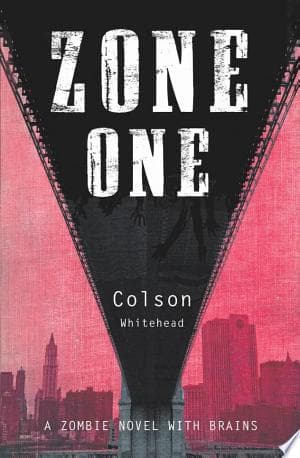
In post-pandemic New York, a civilian sweeper clears residual zombies and confronts the weight of a fallen world over three surreal days.
Mark Spitz, a 'sweeper' for the Provisional Government, arrives in Zone One, the quarantined lower Manhattan district south of Canal Street declared safe from the 'plague.' His unit, made up of himself, Gary, and Michelle, removes 'stragglers' – eliminating the remaining 'skels' (slow, traditional zombies) and 'stragglers' (catatonic, repetitive zombies) from buildings. The story immediately shows the post-apocalyptic routine: careful clearing of buildings, the constant threat of infection, and a strong sense of a lost past. Spitz's mind often goes to 'flashbacks,' memories of his pre-plague life and the initial chaos of the outbreak, as he moves through the quiet, ruined city.
As the unit clears apartments, Spitz finds various stragglers, each frozen in a simple pre-plague activity: a man watching television, a woman putting on makeup, a child playing with toys. These meetings are unsettling for Spitz, because stragglers are not aggressive. They are living reminders of the past, making him face the ordinary and sudden end of the world. He thinks about the Provisional Government's rules, the rebuilding propaganda, and the psychological impact on survivors, all of whom have 'Post-Apocalyptic Stress Disorder' (PASD). The 'removal' becomes a ritual separating the present from a past full of ghosts.
During his work, Spitz has intense flashbacks about his personal experience during the 'Last Night' and the 'Plague Years.' He remembers the quick spread of the infection, society's collapse, and his desperate escape from the city. These memories include his time in a refugee camp, being separated from his family, and the harsh realities of surviving in a world overrun by the infected. He recalls the 'Quarantine Zone' and the early, disorganized attempts to fight back. These mental trips show the trauma he carries and the big difference between the Provisional Government's hopeful talk and the grim reality of the world.
The relationships between Spitz, Gary, and Michelle are shown. Gary is practical and focused. Michelle often acts cynical and detached, making dark jokes. Spitz, as the leader, struggles with the responsibility, often feeling inadequate and taking in the grim nature of their work. They discuss the Provisional Government's 'Reconstruction' effort, the ambitious 'Operation Forward' to reclaim the mainland, and the constant mental burden of their job. Their shared survival and daily routine of killing the undead create a reluctant friendship, with moments of dark humor and deep silence.
As the three days pass, small signs of trouble appear. They find more skels than expected in 'cleared' areas, and radio communication with Fort Wonton, their base, becomes less reliable. Spitz also notices growing unease among other sweeper units. The carefully kept illusion of safety and control in Zone One, built by the Provisional Government, starts to break. These oddities are first dismissed as minor problems but add to growing tension and a clear sense of coming disaster, sharply contrasting with the government's hopeful statements.
On the third day, communication with Fort Wonton stops completely. The sweepers are left without orders, isolated in the dangerous, still-infected city. Panic spreads through the units as the command structure falls apart. Spitz and his unit, with others, try to understand the silence, guessing about a possible breach or a larger collapse. The sudden lack of contact shows their weakness and the Provisional Government's fragile authority, revealing how quickly order can turn into chaos again.
The worst fears come true when it becomes clear that the wall separating Zone One from the mainland has been breached. A large group of skels, far more numerous and aggressive than the 'stragglers' they had been clearing, pours into lower Manhattan. The Provisional Government's 'reclamation' project is a failure. The formerly 'safe' zone is now overrun, and the sweepers, trained for isolated encounters, cannot handle a full invasion. The built-up appearance of progress shatters, and the fight for survival becomes immediate and desperate.
In the chaos, the remaining sweeper units try to retreat and regroup. They fight brutally against the many skels. Many sweepers are overwhelmed and infected, their screams echoing through the ruined streets. Spitz, Gary, and Michelle get separated from other units, fighting their way through the increasing horror. The careful clearing they did days earlier is now a useless memory as the sheer number of undead overwhelms any resistance. The once-familiar streets become a maze of death and despair.
During the desperate fight, Spitz, Gary, and Michelle become separated. Michelle, clever but outmatched, makes a final stand. Her fate is grim but not clearly stated, leaving her end to the reader's imagination, though her death is implied. Spitz and Gary are left to navigate the increasing chaos, their unit broken, and their chances of survival quickly lessening. Michelle's loss shows the harsh reality of their situation and the high cost of the failed reclamation.
Spitz and Gary continue to fight, but the situation is hopeless. Gary is eventually overwhelmed and falls. Spitz, alone, is cornered, facing an unstoppable wave of skels. In his final moments, his mind is not filled with terror, but with a strange calm and a last, clear flashback to an ordinary pre-plague memory – perhaps a final act of psychological self-preservation. He accepts his fate, becoming another casualty in the failed attempt to reclaim the world. The novel ends with Spitz's coming death, the 'reconstruction' completely undone, and the bleak reality of the zombie apocalypse reasserted.
The Protagonist
Spitz begins as a numb, dutiful survivor and ends by accepting his inevitable demise, finding a strange peace in his final moments.
The Supporting
Gary remains a steady, pragmatic force until he is overwhelmed by the final zombie invasion.
The Supporting
Michelle maintains her cynical facade until her implied, brutal end, a testament to the overwhelming odds.
The Antagonist/Mentioned
Their authority and perceived control collapse entirely with the breach of Zone One.
The Supporting
His legend remains intact, but his ultimate fate is left ambiguous, perhaps to symbolize the fleeting nature of even the most skilled survivors.
The Mentioned
His grand plans unravel as Zone One falls, highlighting the futility of his efforts.
The Antagonist
Their numbers grow from a manageable threat to an overwhelming, civilization-ending horde.
The Antagonist/Plot Device
They remain static, unchanging reminders of the past until they are 'removed' or subsumed by the greater chaos.
The novel explores how survivors are haunted by their past. Mark Spitz's 'flashbacks' are central, always pulling him back to his pre-plague life and the terrible events of the 'Last Night.' These memories are not just nostalgic; they are a form of 'Post-Apocalyptic Stress Disorder' (PASD), a psychological burden that stops true adaptation to the new world. The 'stragglers' themselves show this theme, frozen in their pre-plague routines, acting as living reminders of a lost era. They force the sweepers to face the past directly with every 'removal.'
“He thought of the stragglers as the walking dead of the memory plague, each a monument to a forgotten habit.”
Colson Whitehead questions the human desire to bring order to chaos, even when it cannot last. The Provisional Government's 'Operation Forward' and the careful cleaning of Zone One are big attempts to rebuild civilization and show control. However, this order is weak and ultimately fake. The careful 'sweeping' of buildings, the propaganda, and the bureaucratic structures all fail when the wall is breached and the horde invades. The novel suggests that while humanity wants to return to normal, some disasters are too big to simply be 'reconstructed.'
“The Provisional Government was built on the premise that order could be restored, one room, one block, one zone at a time. It was a beautiful lie.”
The ruined landscape of Zone One is full of consumer culture waste: discarded products, brand names, and possessions that defined pre-plague life. The 'stragglers' often do consumer activities (watching TV, shopping), showing how ordinary yet widespread capitalism was before the fall. Spitz often thinks about these remnants, seeing the silliness and ultimate meaninglessness of these objects after the apocalypse. The novel uses these leftovers to comment on the values of the destroyed society and the superficiality of its obsessions.
“Every apartment was a mausoleum of consumer desire, a shrine to the things that had once mattered.”
The novel explores different human reactions to an existential crisis. From the Provisional Government's bureaucratic optimism to Gary's practical survivalism, Michelle's cynical humor, and Spitz's internal trauma, a range of human behavior is presented. It looks at the psychological cost of constant threat, the creation of new social structures (like the sweeper units), and the lasting questions of identity and purpose when civilization collapses. The portrayal of both 'skels' and 'stragglers' also reflects on different parts of humanity's potential for mindless destruction or sad, repetitive stillness.
“What was left of us was a collection of habits, a memory of a memory.”
A strong sense of absurdity fills the story. The sweepers do a seemingly endless job of clearing buildings, knowing that the threat is always there and possibly overwhelming. Spitz's flashbacks often show how trivial pre-plague worries were compared to the current horror. The very existence of 'stragglers' – catatonic zombies stuck in ordinary loops – is absurd and tragicomic. This theme highlights the existential questions survivors face: what is the point of rebuilding when the world can fall apart so easily, and what meaning can be found in a life defined by death and decay?
“It was a comedy of errors, except the errors were fatal and the punchline was always the same.”
Non-linear narrative technique revealing Spitz's past and the plague's onset.
Flashbacks are a crucial narrative device in 'Zone One.' They are not mere recollections but vivid, often intrusive mental events experienced by Mark Spitz, a manifestation of his 'Post-Apocalyptic Stress Disorder' (PASD). These non-linear insertions provide crucial backstory, showing the initial collapse of society, Spitz's personal journey of survival, and the details of his pre-plague life. They serve to deepen his character, explain his psychological state, and contrast the mundane past with the horrific present, highlighting the profound trauma he endures.
A unique type of zombie serving as a psychological and thematic symbol.
The 'stragglers' are a distinct type of infected that serve as more than just antagonists; they are powerful plot devices. Unlike the aggressive 'skels,' stragglers are catatonic, stuck in repetitive, mundane pre-plague actions. They force Spitz and the other sweepers to confront the banality of the lost world and the suddenness of its end. They act as living memorials to consumerism and the everyday, mundane existence that was abruptly shattered, providing a poignant and unsettling psychological dimension to the horror, rather than just a physical threat.
A framing device and ironic symbol of false hope and human hubris.
The entire premise of 'Zone One' – the Provisional Government's 'reclamation' of lower Manhattan – functions as a central plot device. It establishes the initial sense of fragile hope and order, providing the context for the sweepers' mission. However, it is ultimately revealed to be an ironic device, as the 'reclamation' is shown to be temporary and ultimately doomed. This device underscores themes of the illusion of control, the futility of human efforts against overwhelming forces, and the cyclical nature of disaster, setting up the tragic downfall of the entire project.
A symbolic new identity reflecting the loss of self in the apocalypse.
Mark Spitz is not the protagonist's real name; it's a moniker he adopted, like many others, in the post-apocalyptic world. This device symbolizes the loss of individual identity and the severing of ties to the past. The original self, along with its name, is deemed irrelevant or too painful to remember. The new name, often chosen arbitrarily or for its pop culture resonance (like the Olympic swimmer), highlights the absurdity and almost performative nature of survival, where personal history is erased and new, often superficial, identities are forged out of necessity.
“The worst part of the disaster was the reconstruction. The worst part of the reconstruction was the memory.”
— Reflecting on the aftermath of the apocalypse and the psychological toll of rebuilding.
“The new normal was a constant state of triage. Every day, a calculation. Every night, a reprieve.”
— Mark Spitz's internal monologue about the relentless nature of survival in Zone One.
“Before, he had been a civilian. Now, he was a product of the disaster, a utility.”
— Mark Spitz considering his transformation from an ordinary person to a 'sweeper' in the post-plague world.
“The past was a sickness, and the only cure was to keep moving forward, even if forward meant a circle.”
— A general reflection on the struggle to escape the past and the repetitive nature of their efforts.
“They were the custodians of what was left, and what was left was mostly silence.”
— Describing the role of the sweepers in clearing the city, emphasizing the desolation.
“The future was a series of provisional arrangements. A constant state of 'for now.'”
— Mark Spitz contemplating the impermanence of their efforts and the lack of long-term security.
“Every building was a mausoleum, every street a graveyard. New York City, a monument to itself.”
— Mark Spitz's grim observation of the ruined cityscape of New York.
“The stragglers were ghosts of a prior existence, stuck in a loop of their last, most fervent desire.”
— Explanation of the 'stragglers' – the lingering, passive infected – and their tragic nature.
“They were the last believers in the idea of a future, even if that future was merely a slightly less terrible present.”
— Describing the enduring hope, however diminished, among the survivors.
“The new American exceptionalism: the ability to rebuild from scratch, again and again, until there was nothing left to rebuild.”
— A cynical take on the American spirit of resilience in the face of repeated disasters.
“He remembered the before-times as if through a scrim, distorted and impossible to fully grasp.”
— Mark Spitz's difficulty in recalling the world before the plague, the past becoming dreamlike.
“The apocalypse was not a single event, but a protracted series of adjustments.”
— A nuanced view of the apocalypse as an ongoing process rather than a sudden cataclysm.
“They were not heroes. They were just the ones who hadn't died yet.”
— A stark and realistic assessment of the survivors' status, stripping away romantic notions.
“Every day was a negotiation with oblivion.”
— A concise summary of the daily struggle for existence in Zone One.
Ready to see how well you understood this book? Take our interactive quiz with 10 questions.
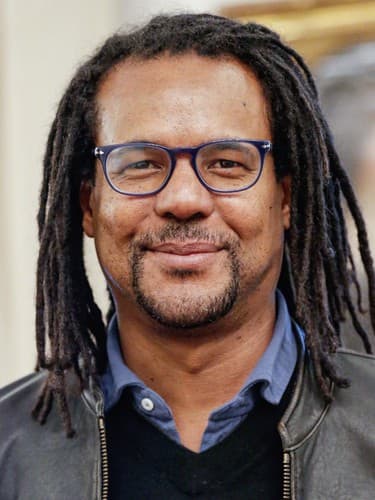
Arch Colson Chipp Whitehead is an American novelist. He is the author of eight novels, including his 1999 debut work The Intuitionist; The Underground Railroad (2016), for which he won the 2016 National Book Award for Fiction and the 2017 Pulitzer Prize for Fiction; and The Nickel Boys, for which he won the Pulitzer Prize for Fiction again in 2020. He has also published two books of non-fiction. In 2002, he received a MacArthur Genius Grant.

Ashley Antoinette
4.6

Mark McDonald
4.4
Luo Guanzhong
4.4

Mia McKenzie
4.3

Dorothy Parker
4.3

Joaquim Maria Machado de Assis
4.3
James Thurber
4.2

Terry Kay
4.2