“I'd rather have a bottle in front of me than a frontal lobotomy.”
— A classic quip often attributed to Parker, reflecting her wit and love for drink.

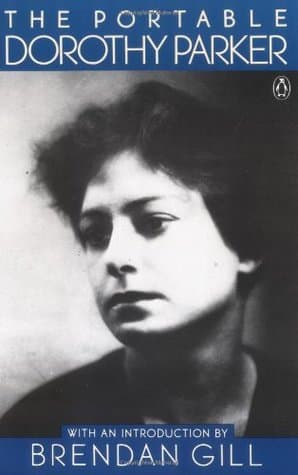
Dorothy Parker (1973)
Genre
Fiction
Reading Time
600 min
Key Themes
See below
Sign in to track this book
Dorothy Parker's sharp verse, biting short stories, and incisive journalism dissect the human condition with wit and poignant observations.
Hazel Morse, a vivacious and beautiful woman, is the life of the party, popular with men and admired for her easygoing nature. She marries Herbie Morse, a kind but somewhat dull man. Their marriage is initially happy, but Hazel's need for constant admiration and Herbie's growing disinterest lead to a slow estrangement. Hazel finds herself increasingly alone, resorting to casual affairs and heavy drinking to fill the void. Her once-bright personality dims, replaced by a weariness and a desperate search for affection. She struggles with her declining looks and the loss of her youthful energy, becoming a shadow of her former self, trapped in despair and self-pity, with alcohol as her only constant companion.
A woman is consumed by anxiety, waiting for a telephone call from a man she cares for deeply. Her internal monologue reveals a frantic, obsessive mind, replaying past conversations, questioning his intentions, and bargaining for the phone to ring. Every passing minute amplifies her despair and self-doubt. She imagines various scenarios — he's busy, he's forgotten, he's with someone else. The ringing of the telephone becomes an almost mythical event, symbolizing validation and relief, yet it never comes. Her torment is palpable, showing the vulnerability and helplessness of waiting for a sign from someone who holds power over her emotional state, highlighting the one-sided nature of her longing.
Mrs. Ames, a woman insecure about her age and appearance, is at a social gathering with her husband, Mr. Ames. She observes the younger, more vibrant women around her, feeling inadequate. Her husband, meanwhile, is openly flirtatious and dismissive of her, further increasing her anxieties. Their interactions are sharp and hostile. Mrs. Ames clings to the hope of a romantic moment, perhaps watching fireworks, but her husband's indifference crushes her spirit. The story subtly portrays the power dynamics within their marriage, the wife's desperate need for affirmation, and the husband's casual cruelty, all set against a seemingly pleasant evening.
A woman endures an agonizing waltz with a man she finds insufferable. Her internal monologue is a torrent of sarcastic, scathing observations about his clumsiness, his dull conversation, and his general unpleasantness. While outwardly polite and charming, her mind is a battlefield of witty put-downs and desperate pleas for the dance to end. She calculates the remaining time, wishing for a sudden illness or a natural disaster to rescue her. The contrast between her polite exterior and her venomous inner thoughts creates a darkly comedic portrait of social obligation and the silent suffering it often entails, showing her sharp wit and deep-seated cynicism towards forced pleasantries.
A woman, Miss Tillie, reminisces about a past love affair, painting a picture of a grand, romantic, and ultimately tragic relationship with a man named George. She describes their passionate connection, his poetic nature, and the heartbreak of their eventual separation. However, the narrator subtly undermines Miss Tillie's romanticized version of events, hinting at George's less-than-chivalrous behavior and Miss Tillie's tendency towards self-deception and melodrama. The story explores how people rewrite their personal histories to fit a desired narrative, often at the expense of reality, and the enduring power of sentimentality, even when it's built on shaky foundations. It is a poignant look at memory and self-delusion.
Mrs. Spencer, a wealthy and demanding invalid, refers to her devoted nurse, Mrs. Ames (not the same character as in 'Dusk Before Fireworks'), as 'Horsie' due to her plain appearance and tireless work. Mrs. Ames dedicates her life to Mrs. Spencer, sacrificing her own well-being and personal life, enduring the invalid's capricious demands and constant complaints. Despite her unwavering loyalty and competence, Mrs. Ames is treated with casual condescension, her efforts largely unappreciated and her humanity overlooked. The story highlights the thankless nature of certain forms of service and the emotional toll it takes, while also subtly critiquing the entitlement of the privileged class who exploit the devotion of others.
A soldier, returning home for a brief leave during wartime, finds himself in an emotionally fraught reunion with his wife. Their interactions are strained, filled with unspoken anxieties and the weight of their separation. He attempts to reconnect with her, but the shadow of war and the changes it has brought to both of them create a subtle barrier. The story captures the bittersweet nature of temporary reunions, the difficulty of bridging the emotional distance created by prolonged absence, and the underlying fear of what the future holds. It is a poignant exploration of love, loss, and the quiet struggles of those impacted by conflict, focusing on the domestic front.
A woman, identified only as 'the white woman,' attends a party where a celebrated Black singer is present. Throughout the evening, she makes a series of seemingly complimentary but deeply patronizing and racially insensitive remarks about the singer to anyone who will listen. She insists on how 'charming' and 'talented' the singer is, while simultaneously highlighting their race in a way that underscores her own prejudiced views. Her attempts to appear progressive only expose her ingrained racism, revealing the insidious nature of subtle prejudice disguised as admiration. The story is a sharp critique of performative allyship and the discomforting reality of social hypocrisy.
Mrs. Mason, a wealthy and self-important woman, is a tireless do-gooder, constantly involved in various charitable causes. However, her 'charity' is less about genuine altruism and more about personal gain and social climbing. She uses her good works to gain attention, praise, and a sense of moral superiority. Her interactions with those she supposedly helps are often condescending and devoid of true empathy. The story subtly exposes the hypocrisy in certain forms of philanthropy, where the benefactor's ego takes precedence over the true needs of the beneficiaries, painting a cynical yet accurate portrait of performative virtue.
The story centers on a family's reluctant visit from Cousin Larry, a relative known for his boorish behavior, incessant boasting, and general lack of social graces. The family members dread his arrival and endure his visit with a mixture of forced politeness and thinly veiled irritation. Larry's self-aggrandizing stories and insensitivity create an uncomfortable atmosphere, highlighting the strain of familial obligations when confronted with an unpleasant personality. The narrative captures the universal experience of dealing with difficult relatives, the internal struggle between civility and exasperation, and the quiet relief when such an ordeal finally concludes, all through Parker's sharp observational humor.
The Protagonist
Hazel transforms from a celebrated 'big blonde' into a lonely, alcoholic woman, her spirit extinguished by a life of unfulfilled longing and self-pity.
The Protagonist
Her 'arc' is confined to the immediate moment, illustrating a descent into near-madness within a short timeframe, without resolution.
The Protagonist
She remains trapped in her insecurity and the cycle of her husband's indifference, finding no escape or resolution within the story's timeframe.
The Protagonist
She endures the waltz, her wit providing an internal escape, but ultimately remains in the same social predicament.
The Supporting
She continues to live in her romanticized past, showing no sign of confronting the reality of her experiences.
The Protagonist
Her arc is one of consistent, unrewarded sacrifice, her life absorbed by her patient's needs.
The Antagonist
She remains oblivious to her own racism, continuing to make her offensive remarks throughout the social event.
The Antagonist
She consistently seeks self-affirmation through her 'charity,' showing no genuine change in her motivations.
This is a common theme throughout Parker's work, exploring the isolation individuals, particularly women, experience in a seemingly connected world. Characters often deal with unfulfilled desires, unrequited love, and the emotional void left by indifferent partners or societal expectations. This theme shows starkly in 'Big Blonde,' where Hazel Morse's initial popularity gives way to a devastating loneliness fueled by her husband's neglect and her inability to find genuine connection, leading to alcoholism and despair. Similarly, the woman in 'A Telephone Call' embodies an agonizing loneliness, her entire being consumed by the absence of a single call, highlighting the vulnerability of waiting for external validation.
“There was no way of telling when she had crossed the line from the gay and careless to the desperate and despairing. But she had crossed it.”
Parker exposes the gap between outward appearances and inner realities, especially in social settings. Characters often maintain a polite facade while harboring scathing internal judgments or prejudiced beliefs. This theme is shown in 'The Waltz,' where the narrator's outwardly charming demeanor conceals a torrent of sarcastic and critical thoughts about her dance partner. 'Arrangement in Black and White' further illustrates this with the 'white woman' who, while trying to appear progressive, reveals her deep-seated racism through patronizing compliments to a Black singer. Parker critiques the superficiality and dishonesty inherent in many social interactions.
“Oh, but you know, she’s really just like one of us! I mean, you’d never know it, would you, that she wasn’t?”
Parker often examines the restrictive roles and expectations placed upon women in her era, revealing their psychological toll. Her female characters often struggle with societal pressures regarding beauty, marriage, and domesticity, leading to insecurity, dependence, and emotional suffering. Mrs. Ames in 'Dusk Before Fireworks' exemplifies this, her anxiety over her aging appearance increased by her husband's open flirtatiousness and indifference. Hazel Morse's tragic decline in 'Big Blonde' is also partly driven by her reliance on male validation for her sense of self-worth. Parker highlights the limited avenues for female fulfillment and the often-unspoken struggles women face in navigating these roles.
“And she was not so young, now. Not so young, and not so pretty. She began to feel, at times, a terrible, lonely fear.”
Many of Parker's characters engage in self-deception, often romanticizing their pasts or refusing to confront uncomfortable truths. This theme explores how individuals create narratives to make their lives more palatable or meaningful, even if those narratives differ from reality. Miss Tillie in 'Sentiment' is a prime example, spinning a grand, tragic romance out of what the narrator hints was a far more mundane and perhaps less flattering affair. This self-delusion serves as a coping mechanism, allowing characters to maintain a desired image of themselves or their experiences, even if it means living in a fabricated reality. Memory becomes a tool for rewriting personal history.
“She was a great one for sentiment, Miss Tillie. She could get more out of a little than most people could out of a lot.”
This theme, a hallmark of Parker's writing, reflects a pervasive world-weariness and a critical view of human nature, society, and relationships. Her characters often see through pretense and expose the darker, less flattering aspects of life with sharp wit and often bitter humor. The narrator in 'The Waltz' embodies this cynicism, her internal monologue dismantling the polite facade of a social dance. Many stories end without happy resolutions, underscoring a belief that life is often unfair, unfulfilling, and that people are fundamentally flawed. This disillusionment is often expressed through biting satire and a lack of sentimentality.
“The only thing I ever learned from a man was how much I didn't want to be one.”
Direct access to a character's unfiltered thoughts and feelings.
Parker frequently employs internal monologue to reveal the true, often cynical or anxious, thoughts of her characters, contrasting them sharply with their polite external behavior. This device provides deep insight into a character's emotional state and allows for biting social commentary and humor. In 'A Telephone Call,' the entire story is an internal monologue, immersing the reader in the protagonist's frantic anxiety. Similarly, 'The Waltz' uses it to expose the narrator's scathing wit and disdain for her dance partner, creating a comedic effect by highlighting the disconnect between her inner and outer worlds.
A discrepancy between what is expected and what actually happens.
Parker often uses situational irony to highlight the absurdities and hypocrisies of life. Events or outcomes are often the opposite of what a character desires or expects, leading to tragic or darkly comedic effects. In 'Big Blonde,' Hazel Morse's initial popularity and beauty, which should lead to happiness, ironically pave the way for her tragic loneliness and despair. In 'Arrangement in Black and White,' the 'white woman's' attempts to be complimentary and progressive ironically expose her deep-seated racism, creating a stark contrast between her intentions and the actual impact of her words.
Sharp, often bitter, humor used for social critique and character expression.
Parker's work is renowned for its pervasive use of sarcasm and wit, often delivered through the narrator's voice or a character's internal thoughts. This device serves multiple functions: it provides comedic relief, sharpens social critique, and allows characters to express their disillusionment or frustration indirectly. The narrator in 'The Waltz' is a prime example, using cutting remarks and humorous observations to cope with an unbearable social situation. This wit often masks deeper pain or cynicism, making the humor both entertaining and poignant, serving as a signature element of Parker's style.
Deliberately presenting something as less important than it is.
Parker uses understatement to create a subtle yet powerful impact, often drawing attention to the severity of a situation or emotion by downplaying it. This technique can heighten the irony or the tragic undertones of a scene. For instance, a character might describe a deeply painful experience with a casual, almost detached tone, making the underlying emotion more striking to the reader. This device allows Parker to convey profound emotional states or harsh realities without resorting to overt melodrama, relying instead on the reader's interpretation of the implied meaning.
“I'd rather have a bottle in front of me than a frontal lobotomy.”
— A classic quip often attributed to Parker, reflecting her wit and love for drink.
“Brevity is the soul of lingerie.”
— A play on a famous Shakespearean line, showcasing Parker's sharp and often cynical humor.
“If you want to know what God thinks of money, just look at who he gives it to.”
— A sardonic observation on wealth and morality, characteristic of Parker's critical eye.
“The two most beautiful words in the English language are 'Check enclosed.'”
— A humorous and relatable remark about the practicalities of life and the joy of payment.
“Excuse my dust; I'm having a good time.”
— A defiant and lively statement, often used to express a carefree attitude despite potential mess or disapproval.
“Four be the things I am wiser to know: Idleness, sorrow, a friend, and a foe.”
— From her poem 'Inventory,' a concise summary of life's essential lessons.
“There's a hell of a distance between wise-cracking and wit. Wit has truth in it; wise-cracking is just mostly cynicism.”
— A distinction Parker drew between superficial humor and genuine wit, reflecting her own high standards.
“Take me or leave me; or, as is the usual order of things, both.”
— A self-deprecating yet insightful comment on the fleeting nature of relationships and human fickleness.
“This is not a novel to be tossed aside lightly. It should be thrown with great force.”
— A famously scathing book review, demonstrating her sharp critical capabilities.
“Constant use had not blunted the pleasure of its possession.”
— From her short story 'The Standard of Living,' describing the simple joy of a treasured item.
“You can lead a horticulture to water, but you can't make her think.”
— A humorous twist on an old proverb, showcasing her playful use of language and wit.
“The best way to keep children at home is to make the home atmosphere pleasant — and let the air out of their tires.”
— A dark but humorous parenting tip, reflecting her cynical yet amusing perspective.
“Heterosexuality is not normal, it's just common.”
— A provocative and insightful statement challenging societal norms, ahead of its time.
“The cure for boredom is curiosity. There is no cure for curiosity.”
— A profound observation on human nature, highlighting the insatiable desire for knowledge.
Ready to see how well you understood this book? Take our interactive quiz with 10 questions.
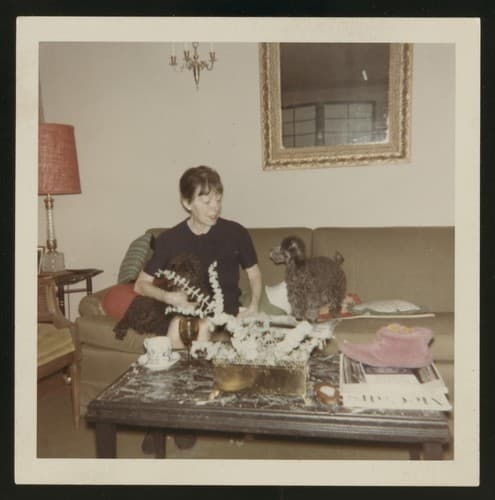
Dorothy Parker was a celebrated American poet, writer, and critic, renowned for her sharp wit and satirical observations. A founding member of the Algonquin Round Table, her most famous collection, "The Portable Dorothy Parker," showcases her mastery of short stories and verse. Her work often explored themes of love, loss, and societal hypocrisy, cementing her legacy as a prominent voice of the "Lost Generation."

Ashley Antoinette
4.6

Mark McDonald
4.4
Luo Guanzhong
4.4
Mia McKenzie
4.3

Joaquim Maria Machado de Assis
4.3
James Thurber
4.2

Terry Kay
4.2
Mario Vargas Llosa
4.2