“The empire, long divided, must unite; long united, must divide. Thus it has ever been.”
— Opening lines of the novel, setting the cyclical nature of Chinese history.

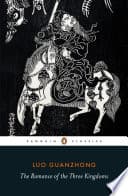
Luo Guanzhong (2018)
Genre
Fiction
Reading Time
1200 min
Key Themes
See below
Sign in to track this book
After the Han dynasty collapsed, 'The Romance of the Three Kingdoms' tells the story of nearly a century of civil war, showing how historical figures and events shaped the power struggles, strategies, and tragic fates of warlords battling to unite China.
The Han Dynasty falls apart under the Yellow Turban Rebellion and corrupt officials. Three men from humble beginnings, Liu Bei, a royal descendant, Guan Yu, a great warrior, and Zhang Fei, a fierce fighter, meet in Zhuo County. They see the people's suffering and the empire's decay, which moves them to act. In a peach garden, they promise to be brothers, vowing to live and die together to bring back peace and the Han rule. This moment sets up the main bond that drives many of the novel's conflicts and moral questions, leading them to face warlords like Dong Zhuo and Cao Cao.
Dong Zhuo, a cruel warlord from the west, enters the capital Luoyang, seizes power, and replaces the young Emperor Shao with Emperor Xian, a puppet ruler. His rule is marked by cruelty and terror. A group of eighteen warlords, including Cao Cao, Yuan Shao, and Sun Jian, rises against him, but their efforts are mostly uncoordinated. Dong Zhuo's adopted son, Lu Bu, the 'Flying General,' is a powerful fighter. However, the clever minister Wang Yun sets up a plot using Diao Chan, who seduces both Dong Zhuo and Lu Bu, turning them against each other. Lu Bu, driven by jealousy, kills Dong Zhuo, ending his rule but starting a new period of chaos as warlords fight for power.
After Dong Zhuo's death, Cao Cao, a smart and ruthless politician, starts to gain power. He saves Emperor Xian from Dong Zhuo's remaining forces and makes a new capital in Xu Chang, putting the emperor under his control. He defeats many rivals, including Lu Bu, who is executed after betraying Liu Bei, and later, Yuan Shao at the Battle of Guandu. Through military skill, political moves, and a practical, often harsh, approach, Cao Cao becomes dominant in the north. This sets the stage for the Kingdom of Wei and makes him Liu Bei's main enemy.
After the group against Dong Zhuo breaks up, Liu Bei and his sworn brothers face years of hardship, constantly moving and looking for safety from stronger warlords, especially Cao Cao. Despite his good intentions and public support, Liu Bei lacks a stable base and a clear plan. He suffers many losses, including his family. Needing advice, he hears about Zhuge Liang, a recluse known for his great wisdom. After three earnest visits to Zhuge Liang's home in Longzhong, Liu Bei convinces the planner to join him. Zhuge Liang, in his 'Longzhong Plan,' outlines a strategy for Liu Bei to establish a base in Jing Province and later conquer Sichuan, eventually forming the Kingdom of Shu Han and bringing back the Han Dynasty.
Cao Cao, having united the north, launches a large invasion south, aiming to conquer Liu Bei and Sun Quan and unite all of China. Liu Bei, with Zhuge Liang's advice, forms an alliance with Sun Quan, the young ruler of the Wu territories in the south. Though greatly outnumbered, Zhuge Liang and Zhou Yu (Sun Quan's chief planner) create a clever plan. They use fire attacks, feigned surrenders, and a manipulated easterly wind to burn Cao Cao's linked ships on the Yangtze River. The Battle of Red Cliffs ends in a devastating loss for Cao Cao, forcing him north and keeping Liu Bei and Sun Quan's forces independent. This battle is important for establishing China's three-way split.
After the Battle of Red Cliffs, Jing Province, a vital area, causes much tension between Liu Bei and Sun Quan. Though first loaned to Liu Bei, Sun Quan demands its return, leading to complex talks and near-fights. Guan Yu, in charge of its defense, is an arrogant commander. While Liu Bei focuses on conquering Shu (Sichuan), Sun Quan, seeing a chance and angered by Guan Yu, secretly allies with Cao Cao. Lü Meng, Sun Quan's general, uses a deceptive plan to take Jing Province while Guan Yu fights Cao Cao's forces. Alone and outmaneuvered, Guan Yu is captured and killed by Sun Quan's forces. This is a big blow to Liu Bei and a turning point that deepens the hatred between Shu and Wu.
After securing the rich lands of Shu and making a stable base, and in response to Cao Pi (Cao Cao's son) taking the Han throne and declaring the Wei Dynasty, Liu Bei declares himself Emperor of Shu Han, claiming to be the true successor to the Han Dynasty. Despite Zhuge Liang's advice to focus on defeating Wei, Liu Bei is filled with grief and a strong desire for revenge for Guan Yu's death. He launches a large invasion against Sun Quan's Wu. At the Battle of Yiling (or Xiaoting), Liu Bei's forces are drawn into a long campaign and then badly defeated by the young Wu general Lu Xun, who uses a fire attack like at Red Cliffs. Liu Bei retreats, heartbroken and shamed, and soon dies, leaving his son, Liu Shan, and Shu Han to Zhuge Liang.
After Liu Bei's death, Zhuge Liang works to fulfill his master's dream of bringing back the Han Dynasty by conquering Wei. He launches several Northern Expeditions, using his strategies against Wei's generals like Sima Yi. Despite some early wins, including taking key cities and the 'Empty Fort Strategy,' Zhuge Liang is hindered by supply problems, Wei's vast resources, and mistakes by his subordinates (like Ma Su at Jieting). His campaigns show his deep loyalty, careful planning, and sadness over the empire's state. Despite his efforts, he never achieves a clear victory, and his health worsens from the constant war.
During his sixth and final Northern Expedition, Zhuge Liang is in a long standoff against Wei forces led by Sima Yi at the Wuzhang Plains. Despite his continued strategic skill, his health, already weak from years of effort and worry, begins to fail. He tries a ritual to extend his life, but Wei Yan accidentally interrupts it, sealing his fate. Knowing he will die soon, Zhuge Liang carefully plans for the Shu army's retreat and even creates a posthumous strategy to deter Sima Yi. He dies peacefully in his tent, looking north, his dream of uniting China unfinished. His death marks the end of a time of strategic genius and the start of Shu Han's slow decline.
After Zhuge Liang's death, Shu Han, under the weak rule of Liu Shan (Liu Bei's son), slowly declines. While there are still capable generals and officials, internal conflicts, corrupt eunuchs, and a lack of a clear vision weaken the kingdom. The strong Wei state, now controlled by the Sima family, sees an opportunity. Sima Zhao, and later his son Sima Yan, launch a large invasion of Shu. Despite a brave defense by generals like Jiang Wei (Zhuge Liang's successor), the kingdom is overwhelmed. The final blow comes when Deng Ai, a Wei general, leads a daring cross-mountain march to take Chengdu, the capital. Liu Shan surrenders, and Shu Han falls, ending one of the Three Kingdoms and moving closer to China's eventual reunification under the Jin Dynasty.
Even as Wei fought Shu Han and Wu, an internal power struggle was happening. The Sima family, especially Sima Yi, had steadily gained power and influence in the Wei court, often serving as regents or military commanders for the Cao emperors. After Cao Rui's death, the young emperors were increasingly controlled by the Sima family. Sima Yi's sons, Sima Shi and Sima Zhao, continued this, removing rivals and strengthening their control through political moves and purges. They carried out several coups, making the Cao emperors mere figureheads. This internal takeover ended when Sima Yan, Sima Zhao's son, forced the last Wei emperor, Cao Huan, to give up his throne, establishing the Jin Dynasty and officially ending the Kingdom of Wei.
With Shu Han conquered and the Wei Dynasty replaced by the Jin Dynasty under Sima Yan (Emperor Wu of Jin), only the Kingdom of Wu remained. Wu, under a series of less capable rulers after Sun Quan's death, also experienced internal decay, corruption, and infighting. The Jin Dynasty, now a consolidated power with the resources of the former Wei and Shu territories, launched a large invasion against Wu. The Jin forces, led by capable generals, advanced by land and by the Yangtze River, overwhelming Wu's defenses. The last Wu emperor, Sun Hao, a cruel and extravagant ruler, was forced to surrender. With Wu's fall, China was finally reunited under the Jin Dynasty, ending the turbulent period of the Three Kingdoms, almost a century after the Yellow Turban Rebellion first brought chaos to the empire.
The Protagonist
From a humble straw-weaver to the Emperor of Shu Han, Liu Bei consistently struggles to maintain his ideals amidst the brutal realities of war, ultimately dying with his dream of Han restoration unfulfilled.
The Antagonist/Central Figure
Starting as a minor official, Cao Cao rises to become the de facto ruler of northern China, laying the foundation for the Wei Dynasty through sheer will and strategic brilliance, constantly battling internal and external threats.
The Supporting/Protagonist
From a reclusive scholar, Zhuge Liang becomes the architect of Shu Han, guiding Liu Bei to emperorship and leading numerous campaigns, ultimately dying with his mission unfulfilled but his legacy as a brilliant strategist cemented.
The Supporting
A loyal sworn brother to Liu Bei, Guan Yu rises to become one of Shu's Five Tiger Generals, but his pride and uncompromising nature lead to his tragic death and the loss of Jing Province.
The Supporting
From a butcher, Zhang Fei becomes one of Shu's Five Tiger Generals, a loyal and fearsome warrior whose impulsiveness ultimately leads to his own demise.
The Supporting
Inheriting his domain at a young age, Sun Quan skillfully defends and expands his territory, establishing the Kingdom of Wu and maintaining its independence for decades, eventually becoming Emperor.
The Supporting/Antagonist
From a peerless warrior serving various lords, Lu Bu's constant betrayals and lack of a stable base lead to his capture and execution, despite his immense personal strength.
The Antagonist
From a powerful frontier general, Dong Zhuo seizes control of the capital and rules as a brutal tyrant, only to be betrayed and murdered by his adopted son, Lu Bu.
The Supporting
A brilliant strategist, Zhou Yu guides Sun Quan to victory at Red Cliffs but is consumed by jealousy and rivalry with Zhuge Liang, leading to his early demise.
The Supporting/Antagonist
Initially a cautious strategist for Wei, Sima Yi patiently outlasts his rivals, including Zhuge Liang, and paves the way for his clan's usurpation of Wei and the eventual unification of China.
Loyalty, especially the sworn brotherhood between Liu Bei, Guan Yu, and Zhang Fei, is central to the novel. Their Peach Garden Oath is the emotional core, showing strong commitment through hardship and sacrifice. Guan Yu's loyalty to Liu Bei, even when tempted by Cao Cao, is an example. However, the novel also looks at the limits of loyalty, such as Lu Bu's repeated betrayals or the changing alliances between warlords, showing how honor often conflicts with political gain and ambition.
“Though we were not born on the same day, we hope to die on the same day.”
The novel starts and ends with a thought on how power and empires repeat themselves, saying that 'the empire, long divided, must unite; long united, must divide.' It shows the fall of the Han Dynasty, the split into the Three Kingdoms, and their eventual reunification under the Jin Dynasty. This idea appears in the constant shifts of power, the rise and fall of heroes and villains, and the ultimate pointlessness of many personal struggles against history. It suggests that while people can affect events, they are part of a larger, unavoidable historical process.
“The empire, long divided, must unite; long united, must divide. This has been the case since antiquity.”
This theme explores the conflict between sticking to moral rules (like Liu Bei's kindness and wish to restore the Han) and using ruthless, practical methods to gain power (like Cao Cao's 'I would rather betray the world'). Liu Bei's struggles often come from his unwillingness to compromise his ideals, while Cao Cao's successes are built on doing whatever is necessary. Zhuge Liang often has to deal with this, using clever strategies for a good cause. The novel does not always give a clear answer, showing the tragic results of both strict virtue and unchecked ambition.
“I would rather betray the world than let the world betray me.”
The novel shows different kinds of heroism: Liu Bei's righteous kindness, Guan Yu's fighting skill and loyalty, Zhuge Liang's strategic genius, and even Cao Cao's ruthless effectiveness. It celebrates military skill, strategic brilliance, and moral strength. However, it also quietly questions the limits of individual heroism against larger historical forces and the destructive nature of war. Heroes often meet tragic ends or must compromise their ideals, suggesting that even the greatest individuals cannot fully control their fate or stop the inevitable.
“To serve the Han and deliver the people from suffering is my sole desire.”
Throughout the story, there is a strong sense of fate and destiny affecting events. Characters often consult oracles, observe signs, and refer to Heaven's will. Zhuge Liang's almost supernatural foresight, his ability to 'borrow the east wind' at Red Cliffs, or his attempts to extend his life through rituals, all highlight a belief in a predetermined order. Despite their strategic brilliance and fighting skill, characters often find their goals stopped by 'Heaven's will,' suggesting that while human effort is important, history is guided by forces beyond individual control, often leading to tragic outcomes for even the most virtuous or clever.
“Man proposes, Heaven disposes.”
Zhuge Liang's deceptive tactic to ward off a superior enemy force.
This strategy involves opening the gates of a seemingly undefended fort and appearing calm and vulnerable, thus tricking the enemy into believing it's an ambush. Zhuge Liang famously uses this when Sima Yi's vast army approaches a lightly guarded city. By sitting calmly on the city wall, playing his guqin, and ordering the gates thrown open, he makes Sima Yi, known for his caution, suspect a trap and retreat. This device highlights Zhuge Liang's psychological warfare and ability to exploit an opponent's character, demonstrating that perception and reputation can be as powerful as brute force on the battlefield.
A foundational oath of brotherhood that binds three heroes.
This is the pivotal moment where Liu Bei, Guan Yu, and Zhang Fei swear to be brothers, vowing to live and die together in pursuit of restoring the Han Dynasty. It establishes the unbreakable bond between the three, serving as a moral compass and a driving force for their actions throughout the novel. This device provides a powerful emotional core, explaining their unwavering loyalty and the profound impact of any threat or loss to one of them. It also sets a high moral standard for their cause, contrasting with the treachery and self-interest of other warlords.
Clever deceptions and tactical maneuvers used to gain advantage.
The novel is replete with intricate stratagems, from 'borrowing' the east wind at Red Cliffs to 'borrowing' Jing Province, or the 'chaining of boats' by Pang Tong. These are not merely battlefield tactics but often involve elaborate psychological manipulation, espionage, and exploiting human nature. Zhuge Liang and Zhou Yu are masters of this, constantly trying to outwit each other. This device showcases the intellectual depth of the strategists and the importance of cunning over brute force, making the battles intellectual duels as much as physical ones. It emphasizes that warfare is as much about the mind as it is about the sword.
Supernatural signs and predictions that foreshadow future events.
Throughout the story, various characters, particularly Zhuge Liang, interpret celestial phenomena, dreams, and other mystical signs as indicators of future events or divine will. For example, Zhuge Liang's ability to 'borrow the east wind' or his attempts to prolong his life through ritual are tied to these beliefs. Omens often foreshadow major deaths or significant turning points, lending a sense of cosmic destiny to the narrative. This device reinforces the theme of fate, suggesting that human actions, while important, are often aligned with or constrained by larger, supernatural forces that shape the course of history.
“The empire, long divided, must unite; long united, must divide. Thus it has ever been.”
— Opening lines of the novel, setting the cyclical nature of Chinese history.
“To conquer a country on horseback, you need not dismount.”
— Liu Bei's response to a general suggesting he dismount to show respect during a siege.
“Rather let me betray the world than let the world betray me.”
— Cao Cao's infamous declaration after mistakenly killing a family that offered him hospitality.
“A hero is one who has great ambitions, and a plan for carrying them out.”
— Cao Cao's assessment of what constitutes a true hero while discussing the state of the realm with Liu Bei.
“To die for the Emperor is a soldier's highest honor.”
— A common sentiment among loyalists, particularly exemplified by figures like Guan Yu.
“The dragon is a creature that can ascend to the heavens, or dive into the abyss. It can hide in the clouds, or manifest its form.”
— Zhuge Liang's metaphor for a true hero, often applied to Liu Bei, during the 'Three Visits to the Thatched Cottage'.
“Even a journey of a thousand miles begins with a single step.”
— A proverb often invoked when discussing long-term campaigns or strategies.
“If you know yourself but not the enemy, for every victory gained you will also suffer a defeat.”
— A common strategic principle, often demonstrated in the battles and rivalries.
“Loyalty is the foundation of all good government.”
— A recurring theme, particularly in the actions and philosophies of characters like Guan Yu and Liu Bei.
“To stand against the world for the sake of one's lord is true valor.”
— Reflecting the deep personal loyalty many generals felt towards their leaders, especially Shu Han generals.
“Cleverness in stratagem is not enough; one must also have the courage to execute it.”
— Highlighting the blend of intellect and bravery needed for success in wartime.
“The truly great man is one who can make others work for him.”
— A pragmatic view of leadership and the ability to inspire or command loyalty and effort.
“A man without a worthy opponent is like a sword without a whetstone.”
— Reflecting the idea that rivalry can sharpen skills and character, often seen between figures like Zhou Yu and Zhuge Liang.
“The hearts of the people are the foundation of the state.”
— A political philosophy often espoused by benevolent rulers, particularly Liu Bei, emphasizing the importance of public support.
Ready to see how well you understood this book? Take our interactive quiz with 10 questions.

Luo Ben, better known by his courtesy name Guanzhong, was a Chinese writer who lived during the Ming dynasty. He is also known by his pseudonym Huhai Sanren. Luo is credited with writing Romance of the Three Kingdoms, one of the Four Great Classical Novels of Chinese literature.

Ashley Antoinette
4.6

Mark McDonald
4.4

Mia McKenzie
4.3

Dorothy Parker
4.3

Joaquim Maria Machado de Assis
4.3

James Thurber
4.2

Terry Kay
4.2

Mario Vargas Llosa
4.2