“Life is a disease from which we die daily.”
— A recurring pessimistic thought of Zeno's, reflecting his hypochondria and existential dread.

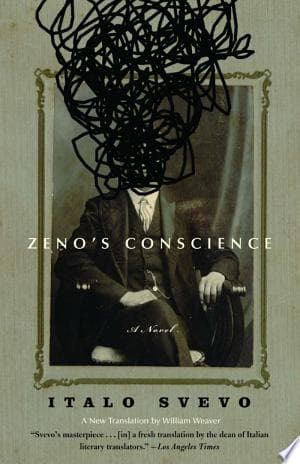
Italo Svevo (2015)
Genre
Literary Fiction / Psychology
Reading Time
10-12 hours
Key Themes
See below
Sign in to track this book
Plagued by an unshakeable smoking habit and a perpetually overthinking mind, neurotic Zeno Cosini hilariously chronicles his self-delusions, disastrous courtships, and unexpected domestic bliss in a quest for a cure that only amplifies his charmingly flawed humanity.
The novel begins with a preface from Dr. S., Zeno Cosini's psychoanalyst, who says he is publishing Zeno's memoirs out of spite because Zeno suddenly stopped therapy. Dr. S. warns the reader not to trust Zeno's story. Zeno then takes over, explaining his reason for writing: to understand himself and his 'illness.' He immediately talks about his chronic attempts to quit smoking, a habit he has tried to abandon many times since adolescence. He describes his 'last cigarette' vows, which are always broken, often with elaborate justifications or physical ailments he blames on his attempts to quit. This section establishes Zeno's self-deceptive and procrastinating nature, a main part of his character throughout the book.
Zeno thinks about his difficult relationship with his father, marked by a lack of real understanding and frequent disagreements. His father, a practical and somewhat stern man, often disapproved of Zeno's perceived idleness and indecisiveness. As his father falls ill and nears death, Zeno struggles with guilt and inadequacy, believing he has not lived up to his father's expectations. In a dramatic and traumatic scene, Zeno's dying father, in a moment of delirium or anger, raises his hand and slaps Zeno. Zeno is forever unsure whether this was an intentional act of condemnation or an involuntary spasm, a doubt that deeply affects him and fuels his sense of inadequacy and unresolved Oedipal conflict.
After his father's death, Zeno looks for a wife, focusing on the four daughters of Giovanni Malfenti, a wealthy businessman he admires. Zeno is attracted to the beautiful and intelligent Ada, the eldest sister. He often visits the Malfenti household, trying to impress Ada with his intellectual discussions and artistic pretensions. However, his awkwardness and self-consciousness often lead to mistakes. During a series of confusing and poorly executed proposals, Zeno proposes to Anna, then to Alberta, both of whom reject him. In a moment of desperation and social blundering, he finally proposes to Augusta, the plainest and most unassuming sister, whom he initially found unattractive, almost as an act of resignation after his repeated failures with her sisters.
To his own surprise and the surprise of others, Zeno's marriage to Augusta is remarkably stable and even happy. Despite his initial lack of romantic love for her, Zeno finds Augusta's deep affection, practical wisdom, and unwavering devotion. She gives him security, routine, and a tranquil home environment he had lacked. Augusta accepts Zeno's eccentricities and supports him without judgment, creating a refuge from his own anxieties. Zeno, though still prone to self-analysis and neuroses, finds a surprising degree of peace and contentment in this unexpected union, recognizing Augusta's goodness and her ability to anchor him in reality, even as he continues his internal struggles.
Despite his comfortable marriage to Augusta, Zeno has an affair with Carla, a young, poor aspiring singer. He justifies his infidelity by convincing himself that he is helping Carla financially and morally, seeing himself as a benevolent protector rather than a philanderer. Zeno's relationship with Carla is marked by his characteristic indecisiveness and self-deception. He constantly plans to end the affair, often making elaborate 'last visit' promises to himself, only to find himself drawn back to her. His attraction to Carla seems less about passionate love and more about a need for external validation, a distraction from his domestic routine, and a testing of his own perceived virility and freedom.
The affair with Carla becomes increasingly burdensome for Zeno. His guilt towards Augusta, though often suppressed, periodically surfaces, causing him distress. Carla, initially submissive, gradually becomes more demanding and emotionally invested, complicating Zeno's carefully constructed narrative of a casual, benevolent arrangement. He finds himself caught in a web of lies and excuses. The affair eventually ends, partly due to Zeno's own wavering commitment and partly due to Carla's decision to leave him for another man, a violin teacher. Zeno, in his typical fashion, manages to reframe the ending as a noble act on his part, or as a natural conclusion, avoiding full responsibility for the emotional turmoil he caused, and returning to the supposed stability of his marriage.
Zeno gets involved in a business venture with Guido Speier, Ada's husband, a man Zeno initially envies for winning Ada. The partnership is full of difficulties. Zeno, despite his wealth, lacks business skill and often makes impulsive, ill-advised decisions or simply procrastinates. Guido, though superficially charming and confident, is equally, if not more, incompetent and reckless, prone to grand schemes and risky investments. Zeno's underlying resentment towards Guido, stemming from Ada's preference for him, subtly influences his actions, sometimes leading him to sabotage the business or at least not fully commit to its success. The enterprise slowly but surely fails, made worse by both partners' flaws.
Guido's business ventures continue to fail catastrophically, leading him into severe debt and despair. Zeno, seeing Guido's decline, experiences a complex mix of schadenfreude and genuine pity. Guido tries to fake suicide to get sympathy and financial aid, but tragically, his second, or perhaps first, attempt is fatal. Zeno is left to deal with the aftermath, including managing the failing business and comforting Ada, who is devastated by her husband's death. Zeno's internal monologue shows his struggle to reconcile his past envy and subtle antagonism towards Guido with the reality of his tragic end, further complicating his understanding of life, death, and his own moral compass.
Zeno details his experience with psychoanalysis under Dr. S., which he views as largely ineffective and ultimately abandons. He finds the process frustrating, believing Dr. S. misinterprets his dreams and motivations, and resents the doctor's insistence on identifying an Oedipus complex. Zeno's departure from therapy is a central point, as it leads to Dr. S.'s decision to publish Zeno's memoirs. As World War I breaks out, Zeno views the global conflict as a metaphor for the inherent sickness of humanity, a grander scale of the neuroses he perceives in himself. He connects the chaos of war to his own internal chaos, suggesting that 'health' is an illusion and that life itself is a disease.
In the concluding sections, Zeno dramatically declares himself cured, not by psychoanalysis, but by the circumstances of life and the unfolding war. He states that the world's 'sickness' (the war, industrialization, modern life) has paradoxically made his own individual neuroses seem normal, even healthy, by comparison. He claims that his business dealings during the war, specifically profiting from wartime shortages, have given him a sense of purpose and success, which he equates with health. Zeno's final pronouncements are a triumphant, though highly self-deceptive, rejection of traditional notions of illness and cure, culminating in his famous theory that life itself is an incurable disease.
Zeno's final philosophical thoughts summarize his worldview, shaped by years of self-analysis and failed attempts at self-improvement. He concludes that humanity is inherently 'sick' and that the concept of perfect health is a myth. He posits that the modern world, with its relentless progress and artificiality, is the ultimate disease, constantly creating new forms of suffering and neuroses. Zeno imagines a future where a colossal explosion will cleanse the earth, returning it to its primordial state, free from the 'disease' of human civilization. This nihilistic yet strangely liberating conclusion allows Zeno to accept his own imperfections, not as personal flaws, but as an inherent part of the human condition, finally finding a perverse form of peace.
The Protagonist
Zeno begins as a man obsessed with curing his neuroses but ultimately concludes that life itself is an incurable disease, finding a perverse acceptance of his own 'sickness.'
The Supporting
Augusta remains a consistent source of stability and unconditional love for Zeno, her character largely unchanged by his neuroses.
The Supporting
Ada remains largely an idealized figure for Zeno, her character arc primarily unfolding through her marriage and subsequent widowhood, observed from Zeno's perspective.
The Supporting
Guido's arc is a tragic descent from an outwardly successful rival to a financially ruined man who dies by accidental suicide.
The Supporting
Carla evolves from a submissive mistress to a more assertive figure, eventually leaving Zeno for another man, thus escaping his manipulative benevolence.
The Mentioned
Dr. S.'s role is primarily as a framing device, his character arc is not explored within the narrative.
The Supporting
Zeno's father's impact is primarily retrospective, as Zeno continually reinterprets his final actions and their relationship.
The Supporting
Giovanni Malfenti remains a consistent figure of patriarchal stability and business acumen, serving as a benchmark for Zeno's aspirations and anxieties.
Zeno's narrative is a masterclass in self-deception. He constantly reinterprets events, rationalizes his failures, and convinces himself of noble intentions for selfish acts. His 'last cigarettes' are a prime example, where each attempt to quit is accompanied by an elaborate justification for its failure. This theme appears in his affair with Carla, where he believes he's helping her, and in his business dealings with Guido, where he downplays his own incompetence. The act of writing his memoirs is an attempt to understand himself, but it's filtered through his subjective, often misleading, consciousness, making him an unreliable narrator.
““I thought that the disease was an advantage because it enabled me to understand myself better than those who are healthy.””
A main theme is Zeno's preoccupation with his own 'illness' and the elusive concept of 'health.' He sees his neuroses, indecision, and smoking addiction as symptoms of a deeper ailment. However, by the novel's end, he reverses this perspective, arguing that life itself is an incurable disease, and that 'health' is merely an illusion or a temporary state of unawareness. The war becomes a larger version of humanity's collective 'sickness,' making his individual neuroses seem normal. This philosophical shift allows Zeno to find a perverse kind of peace and acceptance of his own imperfections, redefining what it means to be 'well.'
““Life is a disease from which we all try to recover.””
Zeno's inability to make firm decisions or stick to resolutions is a recurring idea. His 'last cigarette' vows are the most prominent example, symbolizing his perpetual delay and his struggle against his own will. This indecision extends to his romantic life, where he bumbles through proposals, and his business ventures, where he often avoids responsibility. Zeno's procrastination is not just a character flaw but a fundamental aspect of his being, a way of resisting the finality and commitment that life demands. It reflects a deeper anxiety about choice and consequence, and a preference for the potentiality of the future over the concrete reality of the present.
““I always lived in the hope of a last cigarette, and I always postponed it to the next day.””
Svevo critiques the artificiality and inherent absurdity of modern existence through Zeno's eyes. Zeno sees the relentless drive for progress, industrialization, and societal expectations as contributing to humanity's collective 'sickness.' World War I is a powerful symbol of this absurdity, a large-scale manifestation of the irrationality and destructive tendencies Zeno observes in individuals. His final vision of a purifying explosion reflects a deep disillusionment with the direction of human civilization, suggesting that true 'health' might only be found in a return to a primal, uncorrupted state, free from the complexities and neuroses of modernity.
““Perhaps the whole world is a disease, and the only cure is to cease to exist.””
Zeno's narration is deeply colored by his subjective memory and his overwhelming need to justify his actions and portray himself in a favorable light. He constantly revisits past events, reinterpreting them to fit his current understanding or to absolve himself of blame. The ambiguity surrounding his father's final slap is a prime example, where Zeno endlessly debates its meaning to cope with his guilt. This theme is important to understanding Zeno's character; his 'memoirs' are less an objective account and more a therapeutic exercise in constructing a palatable self-narrative, highlighting the subjective and often self-serving nature of memory itself.
““Memory is a strange thing. It doesn't have a very clear conscience.””
Zeno Cosini's subjective and often self-deceptive narration shapes the entire story.
Zeno is the quintessential unreliable narrator. His memoir is a first-person account, but it's explicitly framed by Dr. S.'s preface, warning the reader not to trust Zeno. Zeno constantly rationalizes his actions, reinterprets past events to suit his current psychological state, and often contradicts himself. This device is crucial because it forces the reader to actively engage with the text, questioning Zeno's motives and the veracity of his recollections. It highlights the subjective nature of truth and memory, and allows Svevo to explore the depths of human self-deception and the complexities of the subconscious mind without direct authorial judgment.
Dr. S.'s preface and the premise of Zeno's psychoanalysis frame the entire narrative.
The novel is framed by Dr. S.'s preface, explaining that he is publishing Zeno's memoirs out of spite after Zeno abandoned therapy. This framing device immediately establishes the context of Zeno's writing as a therapeutic exercise gone awry. It also casts a shadow of doubt over Zeno's reliability from the outset, aligning the reader with Dr. S.'s skepticism. The idea that Zeno is writing for a psychoanalyst, even if he rejects the analysis, informs the introspective and self-analytical nature of the narrative, giving purpose to Zeno's extensive self-examination and his constant quest to understand his 'illness.'
Zeno's perpetual, failed attempts to quit smoking symbolize his broader procrastination and self-deception.
The 'last cigarette' is a recurring motif that symbolizes Zeno's chronic procrastination, his inability to commit, and his pervasive self-deception. Each 'last cigarette' is a broken vow, accompanied by elaborate justifications, physical ailments he attributes to the attempt, or promises to quit 'tomorrow.' This seemingly trivial habit becomes a microcosm of Zeno's larger life struggles: his indecision in love, his incompetence in business, and his general failure to achieve self-mastery. It perfectly encapsulates his neurotic cycle of resolution, failure, and rationalization, making it a powerful and humorous representation of his character.
Zeno's unresolved feelings towards his father and his romantic choices suggest an Oedipal struggle.
The Oedipal complex is a significant, though subtly handled, plot device, particularly through Zeno's relationship with his deceased father. The ambiguous final slap from his dying father deeply traumatizes Zeno, fueling his guilt and sense of inadequacy. His subsequent pursuit of the Malfenti sisters, particularly Ada, who is unattainable, and his eventual marriage to Augusta, a more 'motherly' and nurturing figure, can be interpreted through an Oedipal lens. Zeno's attempts to impress Giovanni Malfenti, his admiration for him, and his rivalry with Guido (who marries Ada) also reflect unconscious desires and conflicts related to the father figure and romantic competition.
“Life is a disease from which we die daily.”
— A recurring pessimistic thought of Zeno's, reflecting his hypochondria and existential dread.
“Every cigarette was a tombstone to my good intentions.”
— Zeno's frequent relapses into smoking despite his vows to quit, highlighting his lack of willpower.
“The only way to be happy is to not think about happiness.”
— Zeno's observation on the elusive nature of happiness, often found when not actively pursued.
“Health is a state that does not exist.”
— Zeno's cynical view on health, believing everyone is always in some state of illness, even if latent.
“Perhaps I am truly cured, but I should not like to feel that I am.”
— Zeno's paradoxical fear of being cured of his 'illnesses,' as they provide him with a sense of identity and purpose.
“To tell the truth is to make a fool of oneself.”
— Zeno's belief that honesty often leads to vulnerability and ridicule in social interactions.
“We are not cured by doctors but by nature, and only when we are no longer afraid of her.”
— Zeno's musings on the role of nature and fear in recovery, rather than solely relying on medical intervention.
“Man's only real illness is his need to explain everything.”
— Zeno's critique of the human tendency to over-analyze and intellectualize, often leading to more confusion.
“One does not choose one's illness; one chooses one's health.”
— Zeno's reflection on agency in one's well-being, suggesting a conscious choice in how one approaches life.
“My father's death was a great tragedy, but it was also a great opportunity.”
— Zeno's complex reaction to his father's passing, revealing his self-serving nature even in grief.
“The present, unlike the past, has no shape.”
— Zeno's observation on the fluid and often ungraspable nature of the present moment compared to the defined past.
“The world is not made for the healthy, but for the sick.”
— Zeno's perspective that society's structures and comforts are often designed to accommodate and alleviate suffering.
“It is not I who am sick, but the world around me.”
— Zeno's classic inversion of his own perceived illness, projecting his maladjustment onto the world itself.
“A good memory is a great support for one's conscience.”
— Zeno notes how recalling past actions and their consequences helps in moral self-assessment.
Ready to see how well you understood this book? Take our interactive quiz with 10 questions.
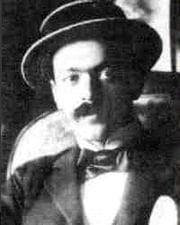
Aron Hector Schmitz, better known by the pseudonym Italo Svevo, was an Italian and Austro-Hungarian writer, businessman, novelist, playwright, and short story writer.