“Doukipudonktan?”
— Zazie's first word upon exiting the metro station and encountering the Parisian air.

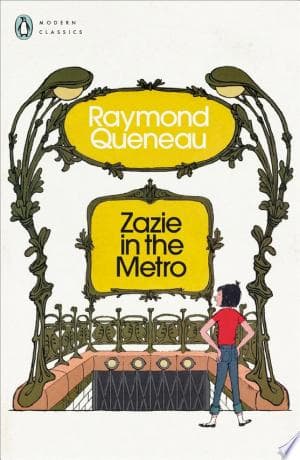
Raymond Queneau (2023)
Genre
Fiction
Reading Time
160 min
Key Themes
See below
Sign in to track this book
A foul-mouthed country girl's quest to ride the Parisian Metro during a strike devolves into a chaotic, wordplay-filled romp through the city's absurd underbelly.
Young Zazie arrives at the Gare de Lyon in Paris from the countryside, escorted by her mother, Jeanne. Jeanne promptly hands her over to her uncle, Gabriel. Zazie's sole ambition for her trip is to ride the Metro, a desire she states repeatedly. However, when Gabriel attempts to take her, they discover the Metro is on strike. This unexpected turn, a major disappointment for Zazie, sets the stage for her chaotic Parisian adventure, forcing her to seek other forms of entertainment and exploration in the bustling city.
Gabriel, Zazie's uncle, works as a female impersonator in a cabaret. Zazie quickly uncovers this, much to her amusement and slightly scandalous fascination. He lives with his lover, Marceline, who is quiet and almost catatonic. Zazie, undeterred by the Metro strike, decides to explore Paris on her own. She wanders through the streets, observing the city's inhabitants and absorbing its unique atmosphere, often engaging in precocious and challenging dialogue with anyone she encounters. This shows her independent and rebellious spirit.
During her solo wanderings, Zazie finds herself in a flea market, a chaotic hub of Parisian life. Here, she meets Charles Trouscaillon, a man with a suspicious aura, who tries to entice her. Trouscaillon, a character of dubious morality, represents a certain Parisian underbelly. His interaction with Zazie highlights her naive yet street-smart nature. Zazie, with her characteristic bluntness, manages to fend off his advances, demonstrating her resilience and an early sign of her ability to navigate the complexities of the adult world despite her youth.
Gabriel takes Zazie to a local cafe, where she meets his eccentric friends, including the taxi driver Fédor, the cafe owner Turandot, and the parrot Laverdure. This gathering introduces Zazie to the bohemian and unconventional side of Parisian life. Later, Zazie takes a ride in Fédor's taxi, experiencing the city from a different perspective. During this ride, she continues to question and challenge the adults around her, particularly regarding their language and understanding of the world, further establishing her as a disruptive yet insightful observer.
Gabriel, attempting to show Zazie a Parisian landmark, takes her to the Eiffel Tower. There, they encounter a group of tourists, and Zazie, with her usual directness, confronts them about their shallow appreciation of the monument. This scene satirizes tourism and the often superficial way people engage with cultural sites. Zazie's unpretentious and honest reaction contrasts with the performative enthusiasm of the tourists, further highlighting her unique perspective and her refusal to conform to societal expectations, even those of a simple sightseeing trip.
As the evening progresses, Gabriel takes Zazie to a dance hall, a lively and somewhat raucous establishment. The night becomes increasingly wild and drunken, with various characters from Gabriel's circle participating in the festivities. Zazie, despite her youth, observes the adult revelry with a mix of fascination and disdain. The atmosphere of unrestrained hedonism and blurred morality further immerse Zazie in the unconventional Parisian experience, challenging her preconceptions about adult behavior and societal norms.
The drunken revelry at the dance hall escalates into a full-blown brawl, involving many of Gabriel's friends and other patrons. The chaotic fight attracts the attention of the police, who intervene to restore order. This incident shows the anarchic and unpredictable nature of the Parisian underworld Zazie has stumbled into. Zazie remains a detached observer, witnessing the absurdity and violence of the adult world without fully participating, maintaining her innocent yet shrewd perspective amidst the pandemonium.
Zazie finally witnesses her uncle Gabriel's performance as a female impersonator at the cabaret, a spectacle that both amuses and slightly bewilders her. Meanwhile, a significant revelation occurs: Marceline, Gabriel's seemingly quiet and unassuming lover, is discovered to be a man named Marcellin, who also performs as a female impersonator. This disclosure adds another layer of gender fluidity and deception to the already unconventional world Zazie inhabits, challenging traditional notions of identity and appearance and further blurring the lines between reality and performance.
Trouscaillon, still pursuing Zazie, attempts to corner her in the Turkish baths. What ensues is a farcical chase, with Zazie cleverly eluding her pursuer through the steamy, labyrinthine corridors of the baths. This comical pursuit highlights Zazie's resourcefulness and her ability to navigate dangerous situations with a surprising degree of self-possession. The scene is imbued with Queneau's characteristic wordplay and absurdity, transforming a potentially threatening situation into a humorous and energetic escapade.
Before Zazie's departure, a grand feast is held by Gabriel and his friends, a final celebration of her chaotic visit. Despite all the adventures and experiences, Zazie's initial desire to ride the Metro remains unfulfilled. As she prepares to leave, her mother, Jeanne, returns to collect her. Zazie, having experienced a whirlwind of Parisian life, remains largely unchanged in her core desire, yet she carries with her the indelible impressions of her extraordinary, if un-metropolitan, journey.
The Protagonist
Zazie experiences a whirlwind of Parisian life, but her core desire for the Metro remains unfulfilled, suggesting that while her experiences are vast, her inner world is largely unchanged.
The Supporting
Gabriel tries to manage Zazie's visit while maintaining his secret life, ultimately revealing his full identity without significant personal change.
The Supporting
Marceline's true identity as Marcellin is revealed, adding to the novel's exploration of gender fluidity and performance.
The Antagonist/Supporting
Trouscaillon consistently pursues Zazie but is always thwarted, serving as a persistent, comical menace.
The Supporting
Fédor remains a constant presence, offering his philosophical observations without significant personal change.
The Supporting
Turandot maintains her role as the steady cafe owner, observing the chaos around her.
The Supporting
Laverdure remains a static, but vocal, observer throughout the narrative.
The Mentioned/Supporting
Jeanne's role is to initiate and conclude Zazie's trip, without undergoing personal development.
Queneau relentlessly deconstructs and plays with language throughout the novel, using phonetic spellings, neologisms, and dialect to challenge conventional grammar and syntax. Zazie's own foul-mouthed and direct speech, often contrasted with the more verbose and philosophical ramblings of characters like Fédor, highlights this theme. The constant questioning of word meanings and the deliberate blurring of linguistic rules reflect a deeper skepticism towards established systems of meaning, mirroring the novel's broader subversion of social norms and expectations. For example, Zazie's persistent questioning of the meaning of 'hormosessuel' (homosexual) exposes the absurdity and arbitrary nature of language and social labels.
“'Don't give a damn,' says Zazie, 'what I wanted was to go in the metro.'”
A central theme is the constant blurring of lines between how things appear and what they truly are, particularly concerning identity and gender. Gabriel's profession as a female impersonator, and the later revelation of Marceline as Marcellin (also a male performer), directly challenges rigid notions of gender identity. Zazie herself, with her precocious yet innocent demeanor, often sees through superficial appearances to a deeper, more complicated truth. The characters' fluid identities and the frequent misinterpretations of their roles underscore the idea that identity is often a performance, and reality is far more complex than it seems on the surface.
“'You're a hormone, you are,' says Zazie. 'A hormosessuel.'”
The entire narrative is steeped in an atmosphere of the absurd, where logical consequences are often ignored, and events unfold in a chaotic, dreamlike fashion. The Metro strike, Zazie's unfulfilled desire, the farcical chases, the drunken brawls, and the highly stylized dialogue all contribute to a sense of meaninglessness and randomness in human experience. The characters often engage in philosophical discussions that lead nowhere, or in mundane actions that take on exaggerated significance. This theme reflects a post-war existentialist sensibility, where traditional values and structures have collapsed, leaving individuals to navigate a world without inherent meaning.
“'To live is to be', said Fédor. 'To be is to live.'”
Paris itself is a major character and a thematic element, presented as a sprawling, chaotic, and unpredictable place. Zazie's initial desire to navigate the structured, underground Metro is thwarted, forcing her to explore the city's surface, which is anything but orderly. The streets, cafes, flea markets, and even the Turkish baths become sites of unexpected encounters, chases, and revelations. The city's winding paths and diverse inhabitants mirror the novel's complex narrative structure and the characters' often circuitous journeys, symbolizing the difficulty of finding direction or meaning in a world without clear paths.
“'Paris is very big,' said Zazie. 'Bigger than Montargis.'”
The novel imitates and satirizes various literary styles and genres.
Queneau employs pastiche and parody by mimicking and playfully subverting established literary forms, narrative conventions, and even philosophical discourse. The rapid-fire dialogue, the exaggerated character types, and the farcical plot elements often echo popular fiction, detective stories, and even classical drama, only to twist them into something absurd and uniquely Queneau's. This device allows the author to critique and comment on literature itself, while simultaneously creating a highly original and entertaining narrative that defies easy categorization.
Characters' thoughts and perceptions are presented in a fluid, often unfiltered manner.
While not strictly stream of consciousness in the Joycean sense, Queneau frequently allows characters' thoughts, feelings, and often rambling observations to spill onto the page with minimal filtering. Fédor's philosophical digressions, Zazie's blunt internal assessments, and even the collective consciousness of the Parisian crowd are presented in a fluid, associative manner. This technique provides insight into the characters' inner lives and contributes to the novel's overall sense of spontaneity and psychological realism, despite its outwardly absurd plot.
The narrator occasionally breaks the fourth wall, acknowledging the story's constructed nature.
Queneau occasionally employs metafiction, where the narrator directly addresses the reader or comments on the act of storytelling itself. These authorial intrusions serve to remind the audience that they are reading a constructed narrative, playfully undermining the illusion of reality. This device reinforces the novel's thematic concerns about appearance versus reality and the subversion of conventional literary forms, inviting the reader to be an active participant in the deconstruction of the story.
Key phrases, desires, and events are repeated with subtle or significant changes.
The novel frequently uses repetition, particularly Zazie's insistent desire to ride the Metro, which becomes a recurring motif. However, these repetitions are often accompanied by subtle variations or new contexts, highlighting the futility of her desire or the changing nature of her experiences. This device creates a rhythmic quality in the prose and underscores the cyclical, often stagnant, nature of certain desires, while also demonstrating how language and meaning can shift with each reiteration.
“Doukipudonktan?”
— Zazie's first word upon exiting the metro station and encountering the Parisian air.
“Tu causes, tu causes, c'est tout ce que tu sais faire.”
— Gabriel's retort to Charles, who is trying to explain something.
“Mon cul!”
— Zazie's frequent and defiant exclamation.
“Je suis un ange. Un ange de la mort.”
— Gabriel describing himself to Zazie, perhaps playfully, perhaps with a touch of truth.
“La réalité, c'est comme le rêve, ça ne s'explique pas.”
— Trouscaillon's philosophical musings on the nature of reality.
“Le métro, c'est pour les adultes.”
— Gabriel explaining to Zazie why she can't take the metro.
“Paris est tout petit pour ceux qui ont le cœur gros.”
— A poetic observation about the city and emotional states.
“Il y a des jours où on se sent plus vache que d'autres.”
— Charles's reflection on his mood.
“On ne voit pas ce qu'on voit, on voit ce qu'on pense.”
— Another philosophical statement, highlighting subjective perception.
“La vie, c'est un peu comme le cinéma. On est assis, on regarde, et à la fin, on rentre chez soi.”
— Gabriel's cynical view on life.
“Les jeunes filles, c'est comme les fleurs, ça se fane vite.”
— A slightly melancholic or jaded observation.
“On est tous des fantômes, des ombres. On passe, et puis on s'en va.”
— A character's musing on human transience.
“Le langage, c'est comme une bicyclette. On peut faire des acrobaties avec, mais il faut savoir tenir en équilibre.”
— A metaphor for the playful and complex use of language in the novel.
“Je suis un peu fatigué de ne rien faire.”
— Gabriel expressing a feeling of weariness despite his seemingly idle life.
Ready to see how well you understood this book? Take our interactive quiz with 10 questions.
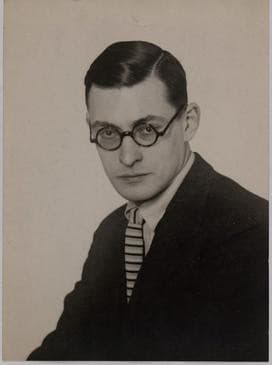
Raymond Queneau was a French novelist, poet, critic, editor and co-founder and president of Oulipo, notable for his wit and cynical humour.
Ashley Antoinette
4.6

Mark McDonald
4.4
Luo Guanzhong
4.4

Mia McKenzie
4.3
Dorothy Parker
4.3
Joaquim Maria Machado de Assis
4.3
James Thurber
4.2

Terry Kay
4.2