“I will go on living, no matter how hard it is.”
— Ann's determination to survive after the nuclear war.


Robert C. O'Brien (1989)
Genre
Science Fiction / Young Adult
Reading Time
250 min
Key Themes
See below
Sign in to track this book
In a post-nuclear world, a lone teenage girl's fragile sanctuary is threatened by the arrival of a mysterious, potentially dangerous survivor, forcing her to confront the terrifying reality that isolation might be preferable to companionship.
Sixteen-year-old Ann Burden survived a nuclear war by living in a secluded, self-contained valley that was somehow spared from the fallout. For over a year, she has managed the farm and her family's store, tending to her dog, Faro, and maintaining a routine that keeps her sane. She believes herself to be the last person alive, having seen no signs of other human life outside her valley's protective natural barrier. Her days are filled with the practicalities of survival: gardening, fetching water, and carefully rationing supplies. Despite her solitude, Ann finds a certain peace in her routine, constantly watching for any signs of danger or, more hopefully, other survivors.
One day, while scanning the horizon from a high point in her valley, Ann spots a plume of smoke in the distance. Her initial shock turns into a mix of excitement and deep fear. The smoke confirms that she is not alone, but it also shatters her carefully constructed world of solitude and safety. She watches for days as the smoke draws closer, indicating the person is heading directly for her valley. Ann grapples with the implications: a companion, a threat, or both. She begins to prepare, hiding valuable supplies and making plans for observation, unsure whether to reveal herself or remain hidden until she can assess the newcomer's intentions.
The man, later identified as John Loomis, eventually arrives in the valley, driving a strange, radiation-proof suit-vehicle. Ann observes him from a distance, noting his cautious movements and the Geiger counter he uses to check for radiation. To her horror, Loomis makes a critical error: he bathes in the contaminated stream that flows from outside the valley, despite Ann's family having always used the clean spring water within. He quickly falls ill, suffering from radiation sickness. Ann, torn between fear and compassion, watches him from afar, debating whether to help him or let nature take its course, fearing he might threaten her safe haven.
Despite her deep-seated fear and distrust, Ann's compassion wins out. She decides to help Loomis, leaving food, water, and eventually medicine at his campsite while remaining hidden. She observes his slow, painful recovery, noting his persistence and ingenuity even when weak. As he regains strength, Loomis begins to explore the valley, unaware of Ann's presence. Ann continues to monitor him, learning more about his personality and intentions through his actions, trying to discern if he is a threat or a potential companion in this desolate world. Her anonymity becomes a fragile shield.
Loomis eventually discovers signs of Ann's presence — a neatly kept garden, a small footprint. He sets a trap, and Ann, caught off guard, is forced to reveal herself. Their first direct encounter is tense. Loomis, though still weak, is clearly intelligent and manipulative. Ann, wary and defensive, tries to assert her ownership of the valley and establish boundaries. They begin a cautious co-existence, sharing meals and conversation, but an underlying current of distrust and unspoken power dynamics immediately emerges. Ann feels her control over her life and the valley slowly slipping away.
Ann and Loomis establish a routine of sorts. They work together on the farm, sharing the labor, and Loomis proves to be resourceful and capable. He fixes machinery and brings new ideas, initially impressing Ann. However, Loomis's possessive and controlling tendencies soon become apparent. He begins to make decisions without consulting Ann, appropriating her family's belongings, and subtly undermining her authority. Ann feels increasingly uncomfortable and trapped, recognizing a growing imbalance in their relationship. She misses her solitude and the complete freedom she once had, realizing that his presence, while ending her loneliness, has brought a new kind of fear.
The tension between Ann and Loomis culminates in a terrifying incident. One evening, after a day of uneasy co-existence, Loomis attempts to sexually assault Ann. She fights him off, managing to escape his grasp and flee into the night. This event shatters any remaining illusion Ann had about Loomis's good intentions or the possibility of a respectful partnership. She realizes the true depth of his predatory nature and the danger she is in. Her fear transforms into a desperate need for self-preservation, and she understands that she cannot stay in the valley with him.
Following the assault, Ann makes plans to escape the valley. She retrieves a rifle and attempts to leave, but Loomis, ever watchful, confronts her. In a struggle, Ann manages to push Loomis, causing him to fall and severely injure his leg. This accidental injury incapacitates him, temporarily shifting the power dynamic back in Ann's favor. She is momentarily relieved but also burdened by the responsibility of his injury. She knows she cannot leave him to die, but she also cannot remain a prisoner.
Ann is faced with an agonizing dilemma: stay and risk further danger from Loomis, or leave him alone, injured, and vulnerable. After much internal debate, she decides she must leave for her own survival and freedom. She carefully prepares, gathering supplies and taking Loomis's radiation-proof suit, which he had repaired. This suit represents her only chance to explore the world outside the valley safely. She leaves him food and water, a gesture of reluctant mercy, but makes it clear that she is leaving for good, hoping he will recover and perhaps find another way to survive.
Donning the cumbersome but protective radiation suit, Ann leaves the valley, venturing into the unknown and irradiated world. Her journey is filled with uncertainty and danger, but it is also filled with a new sense of purpose and a glimmer of hope. She carries with her the lessons learned from her time with Loomis, a stronger understanding of human nature, and a fierce determination to find a place where she can truly be safe and free. The book ends as Ann looks out at the wider world, a solitary figure embarking on a new, perilous quest for survival and, perhaps, other, kinder survivors.
The Protagonist
Ann transforms from an isolated, somewhat innocent survivor into a pragmatic, determined young woman who learns to trust her instincts and fight for her autonomy. She sheds her naiveté to become a more resilient and self-aware individual.
The Antagonist
Loomis's character remains largely static in his predatory nature, though his physical state changes from strong to severely injured. His actions reveal the corrupting influence of power and isolation.
The Supporting
Faro's role remains consistent as Ann's loyal companion, his presence highlighting Ann's isolation and providing emotional grounding.
The Mentioned
Their influence remains a constant moral and practical guide for Ann, even in their absence.
The novel explores how human nature, both good and evil, manifests when societal structures collapse. Ann embodies resilience, compassion, and a desire for connection, while Loomis represents the darker aspects: possessiveness, manipulation, and the urge to dominate. Ann's initial hope for companionship is shattered by Loomis's predatory actions, forcing her to confront the grim reality that not all human contact is beneficial. The valley, once a sanctuary, becomes a microcosm of the post-apocalyptic world's moral landscape, where survival often means facing not just environmental threats but also the dangerous impulses of other survivors. This theme is central when Ann weighs helping Loomis against protecting herself after he falls ill, and later when she must escape his control.
“Perhaps I was wrong to think that I was the only one. Perhaps I was wrong to think that there could be only one kind of person left alive.”
Ann's journey is a coming-of-age story set against a desolate backdrop. She starts as a relatively innocent sixteen-year-old, isolated but content. Her encounter with Loomis rapidly accelerates her transition from childhood to adulthood. She is forced to confront betrayal, sexual threat, and the harsh realities of survival without the protection of family or society. She loses her naive hope for an idyllic companionship and gains a pragmatic, wary understanding of human nature. Her decision to leave the valley and Loomis, taking his suit, marks her definitive step into independent, self-reliant adulthood, having shed the last vestiges of her childhood innocence.
“It was not easy to leave the valley, but it was harder to stay. I had learned too much.”
The novel is a stark warning about the destructive potential of nuclear warfare and humanity's impact on the environment. The world outside the valley is a wasteland, ravaged by radiation and devoid of life, a direct consequence of unchecked technological advancement and conflict. The valley itself is a symbol of pristine nature, miraculously untouched, but constantly threatened by the contaminated outside world and, ironically, by Loomis's initial careless actions with the irradiated stream. Loomis's scientific background, while enabling his survival, also hints at the very intellect that led to the world's destruction, highlighting the double-edged sword of human ingenuity. The central conflict between Ann's natural, sustainable living and Loomis's more technological, controlling approach highlights this theme.
“The valley was a green jewel in a brown waste.”
Ann constantly grapples with the tension between her desire for security and her need for freedom. Her initial solitude provides absolute freedom but also a lack of security in a dangerous world. Loomis offers a semblance of security through his skills and companionship, but at the cost of Ann's autonomy and personal safety. The core conflict arises when Loomis's presence becomes a direct threat to her freedom, forcing Ann to choose between enduring a dangerous, controlled existence and risking the unknown dangers of the irradiated world for the sake of her independence. Her ultimate decision to leave underscores the paramount importance of freedom to her.
“I would rather be alone, truly alone, than be a prisoner with company.”
A secluded, naturally protected valley that survived the nuclear apocalypse.
The valley serves as a crucial plot device, representing a pristine, untouched Eden in a post-apocalyptic world. Its unique geological features protected it from radiation, making it a rare haven. This setting provides the initial framework for Ann's survival and isolation. It also acts as a magnet, drawing Loomis to its resources. The valley's status as a sanctuary creates both hope and conflict; it's a place worth protecting, but its very desirability leads to the struggle for control between Ann and Loomis. Its eventual loss for Ann signifies her ultimate liberation and maturation.
A specialized, protective suit designed by Loomis to withstand radiation.
The radiation suit is a powerful symbol and a key plot device. Initially, it represents Loomis's technological superiority and his ability to survive the outside world, making him an intimidating figure. It also highlights the extreme dangers of the irradiated environment. Later, when Ann takes possession of the suit, it transforms into a symbol of her newfound agency and her means of escape. It enables her to venture beyond the valley, signifying her courage and determination to forge her own path in the dangerous world, thereby shifting the power dynamic and providing a tangible means for her climactic departure.
A stream flowing into the valley that carries radiation from the outside world.
The contaminated stream is a critical plot device that introduces the first major conflict and reveals Loomis's initial carelessness and ignorance. Ann's family always knew to avoid it, relying on a pure spring. Loomis's decision to bathe in it immediately leads to his radiation sickness, forcing Ann to make her first moral decision about helping him. It also serves as a constant reminder of the external dangers and the fragile boundary between the safe valley and the deadly outside world, emphasizing the importance of knowledge and caution in survival.
Ann's written record of her experiences and thoughts.
Though not explicitly a physical object within the narrative's active plot, the entire novel is presented as Ann's journal entries. This narrative structure is a significant plot device. It provides direct access to Ann's internal monologue, fears, hopes, and evolving understanding of her situation and Loomis. It allows the reader to experience the story intimately from her perspective, building empathy and suspense. It also serves as a testament to her isolation and her need to process her experiences, reinforcing her intelligence and observational skills as she meticulously records every detail.
“I will go on living, no matter how hard it is.”
— Ann's determination to survive after the nuclear war.
“It was like the end of the world, but it wasn't. It was just the end of my world.”
— Ann reflecting on the changes and isolation after the war.
“He was a stranger, and yet he was the only other human being I had seen in over a year.”
— Ann's initial reaction to seeing Mr. Loomis.
“I had always thought that if I were the last person on Earth, I would be happy. I was wrong.”
— Ann realizing the burden of being alone.
“The valley was safe, or so I thought. But safety is a relative thing.”
— Ann's initial belief in her sanctuary, later challenged by Mr. Loomis.
“He was like a god, or a devil. I couldn't decide which.”
— Ann's conflicted feelings about Mr. Loomis's presence and power.
“Fear is a terrible thing. It can make you do things you never thought you would.”
— Ann's actions driven by fear of Mr. Loomis.
“I had always loved the rain. Now it seemed to mock me.”
— Ann's changing perception of nature after the disaster.
“The silence was the worst part. The silence of everything being gone.”
— Ann reflecting on the profound absence of life.
“He wanted my valley, and he wanted me. I knew that now.”
— Ann's realization of Mr. Loomis's intentions.
“There was no good or evil anymore, just survival.”
— Ann's pragmatic view of morality in a post-apocalyptic world.
“I had to be strong. For myself, and for the valley.”
— Ann's resolve to protect her home and herself.
“Sometimes I think I'm going mad, being alone so much.”
— Ann's internal struggle with her sanity due to isolation.
“The world was dead, but I was not. And as long as I was not, there was hope.”
— Ann's enduring hope despite the bleak circumstances.
Ready to see how well you understood this book? Take our interactive quiz with 10 questions.
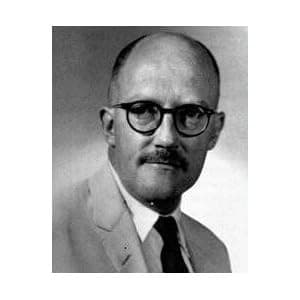
Biography coming soon.