“The past never really dies. It just waits for you to forget.”
— Reflecting on the unresolved mysteries of Freddy Fazbear's Pizza.

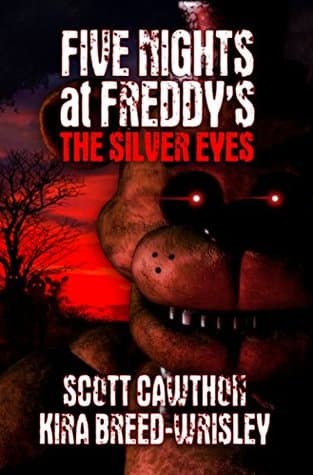
Scott Cawthon (2015)
Genre
Thriller / Mystery / Science Fiction / Young Adult
Reading Time
240 min
Key Themes
See below
Sign in to track this book
Ten years after the gruesome murders at her father's pizzeria, Charlotte and her friends return to the abandoned Freddy Fazbear's, only to discover the beloved animatronics harbor a sinister sentience and a hunger for revenge.
Ten years after the murders at Freddy Fazbear's Pizza, seventeen-year-old Charlie returns to her hometown of Hurricane, Utah, for a scholarship dedication to her childhood friend, Michael Brooks, one of the five victims. She reunites with her old friends: John, Marla, Jessica, Carlton, and Lamar. After the ceremony, John suggests they revisit the abandoned Freddy Fazbear's Pizza, a place with both fond and traumatic memories. They find the mall that once housed the restaurant is now a dilapidated, abandoned structure. However, upon closer inspection, they discover the original Freddy Fazbear's Pizza building is still standing, hidden behind a newer, unfinished construction. Driven by nostalgia and morbid curiosity, they find a way inside.
Inside the long-abandoned pizzeria, the group sees a scene frozen in time, yet decaying. Dust covers everything, and the air smells strange. They find the four main animatronics—Freddy Fazbear, Bonnie the Bunny, Chica the Chicken, and Foxy the Pirate Fox—still on their stage, but they look eerily different, almost menacing, in the dim light. Carlton, a prankster, tries to interact with Foxy, only to be startled when the animatronic unexpectedly moves. The friends explore the familiar yet unsettling environment, remembering their childhoods while a sense of dread settles over them. The animatronics seem to watch them, their silver eyes glinting in the gloom, bringing back unsettling memories for Charlie, whose father created them.
The group's initial explorations turn terrifying when Carlton, separated from the others, is ambushed and dragged away by one of the animatronics. His friends hear his screams and rush to find him, but he is gone. Panicked, they realize the animatronics are not just dormant machines. They are active, dangerous, and seem to be hunting them. The remaining friends, led by Charlie and John, decide they cannot leave Carlton behind. They must find him and understand what is happening. This makes them go deeper into the hidden corridors and secrets of the old pizzeria, a place Charlie's father, Henry, had designed with many hidden passages and rooms, which now seem to be working against them.
As they search for Carlton, Charlie, John, Jessica, Marla, and Lamar encounter the animatronics multiple times. The machines are no longer the friendly entertainers of their youth; they are aggressive and seem to have a bad intelligence. The friends are chased through various rooms, narrowly escaping attacks. Charlie uses her knowledge of the building, inherited from her father, to navigate the layout. During these encounters, Charlie begins to notice strange details: the animatronics' movements are unnaturally fluid, and their eyes, especially Foxy's, seem to hold a disturbing, almost human-like glint. They realize that these machines are connected to the past murders and that Carlton is likely being held captive inside the building.
The friends eventually find Carlton in a hidden back room. He is alive but terrified and partly paralyzed, strapped into a decaying yellow animatronic suit—a Spring Bonnie suit, one of her father's early designs, known for its spring-lock mechanisms that could malfunction and crush a person inside. Carlton explains that the animatronics were trying to 'fit' him into the suit. This discovery is a chilling revelation, suggesting that the animatronics are trying to repeat the past murders, perhaps trying to hide bodies within the suits, just as the original killer did. Charlie, remembering her father's warnings about the suits, realizes the danger Carlton is in and the urgency of freeing him.
Just as the friends are trying to free Carlton, a security guard named Dave appears, claiming to be an employee sent to check on the abandoned property. He seems familiar with the building. Charlie, however, recognizes something unsettling about him. Through tense interactions and observations, Charlie realizes the truth: 'Dave' is William Afton, the co-founder of Fazbear Entertainment and the man responsible for the murders of Michael Brooks and the other children ten years ago. His presence confirms their worst fears – the killer has returned, and he is still active within the pizzeria, manipulating the animatronics, or perhaps even possessing them. His revelation makes their escape even more dangerous.
William Afton, now unmasked, begins to taunt the group, confirming his identity as the child murderer. He reveals his fascination with death and creation, especially how he used the animatronic suits to commit his crimes and hide the bodies. He implies that the spirits of the murdered children are trapped within the animatronics, giving them their bad sentience and drive. This confession horrifies Charlie and her friends, confirming that the machines are not just broken or programmed to kill, but are actively haunted by the souls of their lost friends. Afton also reveals his continued experimentation, hinting at even darker creations and a desire to understand life and death through his acts.
Following Afton's confession, the animatronics attack the group. Freddy, Bonnie, Chica, and Foxy converge, driven by the spirits within. The friends fight for their lives, using whatever they can find to defend themselves. During the chaotic struggle, a fifth animatronic appears: a golden version of Freddy Fazbear, known as Golden Freddy. This animatronic is unsettling, appearing ethereal and able to teleport. Charlie realizes that Golden Freddy represents Michael Brooks, the fifth child murdered, whose body was never found. This realization adds tragedy and personal connection to the terror, as they are now facing the spectral embodiment of their lost friend, manipulated by Afton's dark influence.
Charlie, fueled by grief and anger over her father's legacy being twisted and her friends endangered, confronts William Afton. She uses her knowledge of the animatronics and the building to outwit him. In a final struggle, Charlie manages to activate the spring-lock mechanisms of the Spring Bonnie suit that Afton is wearing. The faulty locks fail, and the internal mechanisms violently collapse inward, impaling and crushing Afton inside the suit. His death is gruesome and final, a fitting end for the monster who caused so much suffering. His demise temporarily stops the other animatronics, as their puppet master is gone, offering a brief break for the surviving friends.
Following Afton's death, the already unstable pizzeria begins to collapse around them. The friends, including a now-freed Carlton, manage to escape the crumbling building just in time. The entire structure caves in, burying the animatronics and Afton's body under tons of rubble. As they stand outside, watching the dust settle, a sense of relief washes over them, mixed with the trauma of their ordeal. The nightmare seems to be over, and the physical manifestation of their past horrors is gone. However, as they drive away, Charlie glances back, and for a fleeting moment, she sees the glint of a silver eye among the debris, suggesting that perhaps not all the spirits have found peace, and the horror might not be entirely over.
The Protagonist
From a hesitant returnee haunted by the past, Charlie transforms into a courageous leader who confronts the source of her trauma, ultimately destroying the killer and gaining a measure of closure.
The Supporting
John evolves from a nostalgic friend to a brave companion, facing unimaginable terror to protect Charlie and his friends.
The Antagonist
Afton's arc is one of unmasking and ultimate, gruesome demise, revealing the true face of evil.
The Supporting
Carlton undergoes a terrifying transformation from a carefree prankster to a helpless victim, forcing him to confront genuine fear.
The Supporting
Jessica's arc sees her move from cautious skepticism to active participation in the fight for survival.
The Supporting
Marla's journey is one of overcoming initial fear to contribute to the group's survival.
The Supporting
Lamar's arc sees him quietly enduring and supporting his friends through extreme peril.
The Mentioned
Michael's arc is primarily symbolic, representing the innocence lost and the enduring spectral presence of the victims.
The Mentioned
Henry's arc is revealed posthumously, portraying him as a brilliant but ultimately flawed creator whose creations were corrupted by evil.
The novel explores the lingering effects of childhood trauma. Ten years after the murders, Charlie and her friends are still haunted by the events at Freddy Fazbear's Pizza. Their return to the abandoned restaurant forces them to confront suppressed memories and the emotional scars left by Michael Brooks's death. The decaying pizzeria itself is a physical representation of their collective trauma, a place where past horrors are re-enacted. The characters' attempts to make sense of the past and find closure are central to the narrative, showing how unresolved trauma can shape present actions.
“Ten years. Ten years since Michael. Ten years since the last time she saw her father.”
A central theme is the perversion of childhood symbols and places. Freddy Fazbear's Pizza, once a place of joy and entertainment for children, becomes a site of murder and terror. The animatronics, designed to bring happiness, become instruments of death and imprisonment, haunted by the spirits of murdered children. This theme is embodied by William Afton, who takes something innocent and twists it into something monstrous, corrupting childhood fun and safety. The contrast of childlike imagery with gruesome violence highlights this theme.
“They were not the friendly, familiar faces from her childhood. Their eyes, once bright and welcoming, were now dull and lifeless, yet somehow watching.”
Charlie struggles with her identity as the daughter of Henry Emily, the animatronic's creator. She struggles with her father's legacy, which is linked to both his genius and the horrific events at the pizzeria. Her knowledge of the animatronics and the building's hidden features is from him, forcing her to confront the darker side of his creations. The question of whether she can reconcile her love for her father with the monstrous outcome of his work is a key internal conflict. This theme also extends to Afton's legacy of violence.
“Her father hadn't just built these things, he had poured his soul into them. And now, they were tainted.”
The novel explores the pursuit of justice for the murdered children, even if it comes through supernatural means. The animatronics, haunted by the spirits of Afton's victims, are driven by a need for revenge against their killer and anyone who threatens them. Charlie and her friends, in turn, seek justice for Michael and Carlton. The climax, where Afton meets his gruesome end inside a spring-lock suit, is a form of poetic justice, delivered by the creations he corrupted. However, the lingering presence of the animatronics suggests that true peace or justice for the spirits remains elusive.
“He deserved to be trapped. He deserved to feel what they felt, forever.”
Sentient, haunted robots that act as both antagonists and spectral victims.
The animatronics (Freddy, Bonnie, Chica, Foxy, and Golden Freddy) are the central plot device. They are not merely machines but are implied to be possessed by the spirits of the murdered children, giving them malevolent sentience and a driving force. Their movements, 'silver eyes,' and aggressive behavior create the primary source of horror and conflict. They serve as a constant physical threat and a chilling reminder of the past tragedy, embodying the corruption of innocence and the lingering presence of trauma. Their mechanical nature combined with their supernatural possession makes them uniquely terrifying.
A decaying, labyrinthine setting that acts as a character itself, holding dark secrets.
The abandoned Freddy Fazbear's Pizza building is more than just a setting; it functions as a character. Its dilapidated state, hidden passages, and shifting layout create a claustrophobic and unpredictable environment. The building acts as a tomb, a prison, and a stage for the re-enactment of past horrors. Charlie's intimate knowledge of its design, inherited from her father, becomes both a tool for survival and a source of painful memories. The pizzeria's eventual collapse symbolizes the attempt to bury the past, though its lingering presence suggests the past is never truly gone.
Special animatronic suits with dangerous, faulty mechanisms used for both performance and murder.
The spring-lock suits, particularly the Spring Bonnie suit, are a crucial plot device. Designed by Henry Emily, these suits could be worn by humans, but their internal mechanisms were prone to violent failure, crushing anyone inside. William Afton used these suits to commit his murders and hide the bodies, and later, Carlton is trapped in one. The suits represent the ultimate corruption of Henry's creations and serve as the instrument of Afton's gruesome demise. They are a physical manifestation of the danger inherent in the animatronics and the dark secrets of the pizzeria.
A recurring symbolic motif representing the animatronics' haunted nature and the killer's cold gaze.
The 'silver eyes' are a recurring motif, particularly in the title and descriptions of the animatronics. These eyes are often described as piercing, observant, and devoid of warmth, hinting at the malevolent spirits within the machines. They symbolize the animatronics' sentience and their connection to the murdered children. The phrase also subtly refers to William Afton's cold, calculating gaze, highlighting his lack of empathy. The silver eyes serve to personify the inanimate objects, making them more terrifying and emphasizing the supernatural element of the story.
“The past never really dies. It just waits for you to forget.”
— Reflecting on the unresolved mysteries of Freddy Fazbear's Pizza.
“Sometimes the things that scare us the most are the things we can't see.”
— Discussing the eerie atmosphere of the abandoned pizzeria.
“We were just kids. We didn't know what we were getting into.”
— Charlie reminiscing about her childhood and the tragic events.
“It's not the monsters under the bed you should worry about. It's the ones that smile and wave.”
— A warning about the deceptive nature of the animatronics.
“The truth is like a puzzle. You have to find all the pieces before you can see the whole picture.”
— Charlie trying to piece together the mysteries of her past.
“Fear is a funny thing. It can make you see things that aren't there, and miss the things that are.”
— Reflecting on how fear distorts perception in the pizzeria.
“We all have our ghosts. Some are just more real than others.”
— Charlie confronting the haunting memories and literal spirits.
“The world isn't black and white. It's full of shadows and secrets.”
— Acknowledging the complexity and hidden dangers in their situation.
“Sometimes the only way to move forward is to go back.”
— Charlie deciding to return to the pizzeria to uncover the truth.
“You can't outrun your past. It always catches up to you.”
— A realization about the inevitability of facing old traumas.
“In the dark, every sound is a monster.”
— Describing the tense and frightening environment of the pizzeria at night.
“The line between reality and nightmare is thinner than you think.”
— Reflecting on the blurry boundaries in the haunted pizzeria.
“We make our own demons, and then we have to live with them.”
— A philosophical take on the consequences of past actions.
“Courage isn't the absence of fear. It's moving forward despite it.”
— Charlie finding the strength to face her fears head-on.
Ready to see how well you understood this book? Take our interactive quiz with 10 questions.
Biography coming soon.







