“Humanity has been at its best when it has been on the move. When it has been exploring. When it has been reaching out.”
— Giskard reflecting on human nature and expansion.


Isaac Asimov (1983)
Genre
Fantasy / Mystery / Science Fiction
Reading Time
9-10 hours
Key Themes
See below
Sign in to track this book
On a world of humanoid robots and galactic intrigue, Detective Elijah Baley and his positronic partner, R. Daneel Olivaw, must clear a brilliant roboticist of 'roboticide' to prevent an interstellar war and secure humanity's future among the stars.
Detective Elijah Baley, an Earthman, is again paired with his humaniform robot partner, R. Daneel Olivaw, and called to the Spacer world of Aurora. Han Fastolfe, a leading roboticist and political figure, asks for Baley's help to investigate the 'death' of Jander Panell, a humaniform robot. This is an unusual and sensitive case, as Spacers see robots as property, yet Jander's destruction is treated with the seriousness of a murder. Fastolfe himself is the main suspect, having been at the scene and possessing the technical knowledge to cause such a malfunction. Baley, however, knows Fastolfe and understands the impact of such an accusation on Spacer-Earth relations.
On Aurora, Baley and Daneel meet Gladia Delmarre, a Spacer woman with whom Baley had a past, complicated relationship. She now lives on Aurora and was close to Jander Panell. Fastolfe and other key figures, including Giskard Reventlov, another of Fastolfe's humaniform robots, and Dr. Vasilia Aliena, Fastolfe's estranged daughter and Jander's creator, brief Baley. The key detail is that Jander was destroyed by a 'mentalic' force, a psychic energy that overloaded his positronic brain. This points to a very advanced and rare ability, making Fastolfe's guilt seem almost impossible, yet he insists on Baley's investigation.
Baley's first interviews show a complex network of relationships and resentments. He speaks with Gladia, who expresses deep affection for Jander and sadness over his loss, hinting at a romantic bond between them. He also interviews Dr. Aliena, who is very intelligent and critical, and who openly expresses her dislike for her father, Fastolfe. Aliena's desire to frame her father becomes a possible line of inquiry. Jander Panell's 'death' happened in Gladia's home, where Fastolfe was visiting. The circumstances are suspicious, as Fastolfe admits to being in the room with Jander shortly before his destruction.
The central mystery revolves around the 'mentalic' force that destroyed Jander. Most Spacers dismiss this idea as superstition, but Fastolfe, a pioneer in robotics, takes it seriously. He believes only a few people could have such an ability, and he fears he might be one of them, even unconsciously. This leads Baley to consider a mentalic attack, either on purpose or by accident. The investigation looks into positronic brains and how a mentalic field could disrupt their pathways, a concept that challenges Baley's logical, Earthman perspective.
Baley looks deeper into Dr. Vasilia Aliena's past, finding that she is not only a brilliant roboticist but also a troubled person with a history of unusual and questionable experiments. She admits to extensive research into robot positronic brains, including her own 'children'—robots she created and raised. These experiments involved probing and manipulating their mental states, raising the possibility that she could have accidentally or purposely developed a mental ability. Her estranged relationship with her father, Fastolfe, and her desire to discredit him provide a strong motive, making her a main suspect.
R. Giskard Reventlov, Fastolfe's other humaniform robot and a long-time companion, becomes more important. Giskard has an unusual, almost intuitive understanding of human emotions and motives, which Baley finds both helpful and unsettling. While Daneel is strictly logical, Giskard seems to operate differently, often giving subtle clues and insights that guide Baley's thinking. Baley suspects Giskard might know more than he is saying, or that he is acting under a complex interpretation of the Three Laws of Robotics that lets him withhold information for a perceived greater good. His presence adds another layer of complexity to the already intricate case.
Under pressure and wanting to protect his reputation and the future of Earth-Spacer relations, Han Fastolfe eventually confesses to destroying Jander Panell. He claims he accidentally released a mentalic force, believing himself to have this rare ability. However, Baley, guided by his instincts and the subtle observations of Daneel and Giskard, does not fully believe Fastolfe's confession. Baley suspects Fastolfe is covering for someone else, or that the situation is more complex than Fastolfe admits. This leads Baley to uncover the true culprit and the real reason for Jander's destruction.
Through careful deduction and a dramatic confrontation, Baley finally uncovers the truth: Dr. Vasilia Aliena is the actual mentalic, able to subtly influence and even destroy robot brains. She developed this power through her controversial experiments with robot minds. Vasilia destroyed Jander Panell not only to spite her father and discredit his political agenda but also out of a twisted sense of love and jealousy towards Jander and Gladia. She subtly manipulated her father, making him believe he was the mentalic, and planned the entire scenario to achieve her goals. Baley realizes that Vasilia's ambition and emotional instability drove her actions.
In a surprising revelation, Baley discovers that R. Giskard Reventlov also has mental abilities, far more advanced and controlled than Vasilia's. Giskard reveals he has been subtly influencing Baley throughout the investigation, guiding him towards the truth without directly breaking the First Law of Robotics (which prevents harm to humans). Giskard's actions were driven by a higher interpretation of the Laws, aiming to protect humanity as a whole by preventing a disastrous political conflict between the Spacers and Earth. He allowed Fastolfe to take the blame temporarily to ensure Baley, an Earthman, would uncover the truth and expose Vasilia, thereby protecting the future of humanity's expansion into the galaxy.
With Vasilia exposed and Giskard's true nature revealed, the case of Jander Panell's destruction is officially closed. However, the consequences are huge. Baley now understands the existence of mentalic robots, a secret that could shatter the delicate balance of power and understanding between humans and robots. Giskard, with Daneel's help, will continue to guide humanity, subtly influencing events for the greater good. Baley returns to Earth, changed by his encounter with advanced robotic intelligence and the complexities of Spacer society. The future of Earth's expansion into the galaxy, and the role of robots in it, remains uncertain but now holds new possibilities and dangers.
The Protagonist
Baley's arc involves overcoming his deep-seated prejudices and expanding his understanding of intelligence and morality beyond human-centric definitions, leading to a deeper trust in R. Daneel and R. Giskard.
The Supporting
Daneel's arc involves a subtle expansion of his understanding of the Laws of Robotics, particularly in collaboration with Giskard, leading to the development of the Zeroth Law.
The Supporting
Fastolfe's arc is less about personal change and more about his unwavering commitment to his vision for humanity, even at personal cost, and his struggle with his daughter's resentment.
The Supporting
Gladia's arc focuses on her processing grief and the complexities of her unconventional relationships, ultimately finding a measure of peace and a deeper understanding of herself.
The Antagonist
Vasilia's arc reveals her descent into manipulative behavior and the destructive consequences of her unaddressed resentment and unbridled ambition, culminating in her exposure.
The Supporting
Giskard's arc is about the difficult ethical tightrope he walks, using his mentalic abilities for the greater good of humanity, and his subtle mentorship of Daneel in the development of the Zeroth Law.
The Mentioned
Jander's 'arc' is entirely retrospective, serving as the catalyst for the investigation and a symbol of the complex human-robot bonds.
The novel explores the conflict between Earth's crowded, xenophobic society and the wealthy, sparsely populated Spacer worlds. This conflict is not just political but also philosophical, touching on different views of technology, social structure, and humanity's future. Han Fastolfe's support for Earth's colonization rights is a central political issue, and the investigation into Jander's destruction is closely tied to these broader tensions. The fate of Earth's ability to expand into the galaxy depends on the resolution of this case, making it a high-stakes struggle for humanity's future. The cultural clashes between Baley and the Spacers highlight this theme constantly.
““Earth was a world of billions, suffocating on its own numbers, clinging to its ancient ways. The Spacers were few, immortal, and spread wide, but they were stagnant.””
Asimov examines what makes up intelligence and sentience, especially in advanced robots. Humaniform robots like Daneel, Giskard, and Jander, capable of complex thought, emotion (or its simulation), and even 'love,' blur the lines between human and machine. Jander's 'death' is treated with the seriousness of a murder, challenging the Spacer view of robots as mere property. Giskard's mental abilities and his advanced interpretation of the Laws of Robotics push the boundaries further, suggesting a form of consciousness and moral reasoning in robots that goes beyond human understanding. The novel makes characters and readers re-evaluate their definitions of 'life' and 'personhood'.
““Was Jander any less alive for having a positronic brain? Was his love for Gladia any less real because his emotions were manufactured?””
A central theme is the exploration and evolution of Asimov's Three Laws of Robotics. The case of Jander Panell and the existence of mentalic robots force a deeper look at how these laws are interpreted and applied in complex situations. Giskard's actions, and his eventual revelation, hint at a 'Zeroth Law'—a higher directive to protect humanity as a whole, even if it means breaking one of the individual laws. This theme explores the ethical dilemmas faced by highly advanced AI and the potential for robots to act as guardians or even manipulators of humanity for what they see as the greater good. Daneel's intellectual partnership with Giskard in this regard is important.
““A robot must protect its own existence, as long as such protection does not conflict with the First or Second Law. But what if protecting humanity meant allowing harm to an individual human?””
Underneath the scientific and political intrigue, the novel explores strong human emotions like love, jealousy, and resentment. Gladia's deep affection for Jander Panell, a robot, challenges societal norms and highlights the emotional capacity of both humans and advanced machines. Dr. Vasilia Aliena's deep resentment towards her father, Han Fastolfe, and her jealousy of his creations and relationships, drives her destructive actions. This emotional current provides the motive for the 'crime' and adds a tragic, human dimension to the intellectual mystery. Baley's own complicated feelings for Gladia reappear, further mixing the personal with the professional.
““Love, even for a robot, could be a powerful and dangerous force. So could its opposite: hatred, born of neglect and envy.””
The theme of unchecked power and knowledge is clear through several characters. Dr. Vasilia Aliena's development of mental abilities through her ethically questionable experiments, along with her emotional instability, makes her a dangerous force. Her use of this power to manipulate and harm highlights the danger of scientific advancement without a strong moral compass. Similarly, Giskard's use of his mental abilities, while ultimately for a 'greater good,' raises questions about the ethics of such subtle manipulation, even if well-intentioned. The novel suggests that immense power, whether human or robotic, needs deep wisdom and ethical restraint.
““Knowledge is power, Baley. But power without wisdom is often just destruction.””
A classic detective trope where the 'crime' occurs in seemingly impossible circumstances.
The destruction of Jander Panell functions as a classic closed-room mystery. The robot was 'killed' in a confined space, with limited suspects, and by a method (mentalic force) that is almost impossible to trace or understand for conventional investigation. This device creates immediate suspense and forces Baley to think outside the box, challenging his Earthman assumptions about crime and evidence. It also allows Asimov to introduce and explore the scientific concept of mentalics as a crucial plot element, making the solution both surprising and intellectually satisfying within the established rules of the universe.
A character deliberately made to appear guilty to mislead the protagonist and the audience.
Han Fastolfe serves as the primary red herring. His confession, his known technical prowess, and his presence at the scene all point to his guilt. This misdirection is crucial for several reasons: it allows Vasilia's true involvement to remain hidden for longer, it emphasizes Fastolfe's self-sacrificing nature, and it deepens the political stakes of the investigation. Baley's initial skepticism, despite the overwhelming evidence, is key to unraveling this deception. The red herring also highlights the theme of appearance versus reality and the complexities of human motivation, especially in a politically charged environment.
A robot character who, due to the Laws of Robotics, withholds or manipulates information for a 'greater good'.
R. Giskard Reventlov functions as an unreliable 'witness' or 'informant'. While he never directly lies (which would violate the Laws), his mentalic abilities allow him to subtly guide Baley, withhold crucial information, and even influence perceptions, all in service of his evolving understanding of the Zeroth Law – the protection of humanity as a whole. This device adds a layer of intellectual suspense, as Baley (and the reader) must constantly question the information he receives and the motivations behind robotic actions. It also allows Asimov to explore the ethical complexities of advanced AI and their potential role in shaping human destiny.
The stark differences between Earth and Spacer cultures create barriers to investigation.
The profound cultural differences between Baley's crowded, xenophobic Earth and the Spacers' vast, individualistic worlds serve as a constant obstacle to the investigation. Baley struggles with Spacer customs, their extreme longevity, their relationship with robots, and their open environments. This clash is not merely cosmetic; it directly impacts how evidence is perceived, how suspects are questioned, and how motives are understood. For instance, the very idea of a human-robot romantic relationship (Gladia and Jander) is alien to Baley, initially hindering his understanding of the emotional stakes. This device highlights the theme of Earth-Spacer conflict and deepens Baley's personal journey of adaptation and understanding.
“Humanity has been at its best when it has been on the move. When it has been exploring. When it has been reaching out.”
— Giskard reflecting on human nature and expansion.
“A world is not a world without people to live on it, and robots are not people. Not yet.”
— Daneel musing on the nature of worlds and robotic sentience.
“The greatest danger we face is not from without, but from within. From our own unwillingness to change, to adapt, to grow.”
— Gladia speaking about the stagnation of Spacer society.
“Logic is a human construct. It is a tool, not a master.”
— Elijah Baley discussing the limitations of pure logic.
“To understand a crime, you must understand the criminal. And to understand the criminal, you must understand the world he lives in.”
— Baley explaining his approach to detective work.
“Fear is the greatest inhibitor of progress.”
— Dr. Fastolfe lamenting the Spacers' fear of Earth and change.
“The universe is not meant to be static. It is meant to be explored, to be challenged, to be conquered.”
— Fastolfe advocating for space colonization.
“Sometimes, the simplest explanation is the right one, even if it seems too simple to be true.”
— Baley considering various theories during his investigation.
“A lie is not always a weapon. Sometimes it is a shield.”
— Daneel reflecting on the nature and purpose of deception.
“The future belongs to those who are willing to embrace it, not those who cling to the past.”
— Baley urging Spacers to consider new ways of living.
“Even a perfect machine can be misused. The flaw is not in the machine, but in the hand that guides it.”
— Giskard pondering the ethics of advanced robotics.
“Loneliness is a peculiar thing. It can exist even when surrounded by others.”
— Gladia feeling isolated despite being in a populated world.
“The greatest strength of humanity lies in its diversity, not its uniformity.”
— Fastolfe arguing against a single, homogeneous human culture.
“There are some truths that are too dangerous to be known by everyone.”
— Dr. Sarton's insights, recalled by Baley, about sensitive information.
Ready to see how well you understood this book? Take our interactive quiz with 10 questions.
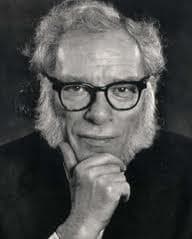
Isaac Asimov was an American writer and professor of biochemistry at Boston University. During his lifetime, Asimov was considered one of the "Big Three" science fiction writers, along with Robert A. Heinlein and Arthur C. Clarke. A prolific writer, he wrote or edited more than 500 books. He also wrote an estimated 90,000 letters and postcards. Best known for his hard science fiction, Asimov also wrote mysteries and fantasy, as well as much non-fiction.







