“The story so far: In the beginning the Universe was created. This has made a lot of people very angry and been widely regarded as a bad move.”
— Opening lines of the book, setting the tone for the absurdity.

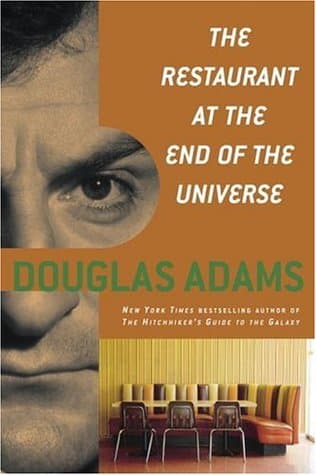
Douglas Adams (1980)
Genre
Fantasy / Science Fiction
Reading Time
250 min
Key Themes
See below
Sign in to track this book
Arthur Dent, a two-headed ex-president, and a depressed robot try to outrun cosmic destruction and navigate space's absurdities to find the best meal at the end of time.
After Earth's destruction, Arthur Dent, Ford Prefect, Zaphod Beeblebrox, and Trillian are on the stolen Heart of Gold spaceship. It runs on the Infinite Improbability Drive. A Vogon battle fleet, led by Captain Prostetnic Vogon Jeltz, chases them. Jeltz still wants to punish Arthur and Ford. During this stressful escape, Arthur tries to make tea using the ship's Nutrimatic Drink Dispenser. Despite advanced technology, it makes a drink 'almost, but not quite, entirely unlike tea.' This repeated failure shows the universe's strangeness and Arthur's wish for the comforts of his lost home, even in danger. Zaphod has strange visions and feels he must find the 'Restaurant at the End of the Universe'.
Using the Infinite Improbability Drive, Zaphod takes the Heart of Gold to Milliways, the Restaurant at the End of the Universe. This luxurious place is inside a time bubble at the very end of time. While watching the universe's final moments, Zaphod feels intense dread. He realizes his memories were changed. He deliberately erased parts of his own brain, an act linked to finding the universe's ruler. This discovery upsets him deeply. He questions who he is and what his purpose is, even as he tries to act normal. He feels an urgent need to learn the truth about his mind's manipulation.
After eating at Milliways, the crew finds the Heart of Gold is gone. They are stranded. Zaphod has to face his broken memories more directly. He tells a story about a man who ruled the universe, but whose identity was secret. Zaphod believes his erased memories hold the key to finding this person. He decides he must go on a quest to find the real ruler of the universe. He believes his past actions and his brain's alteration are connected to this cosmic secret. He feels a strong, almost basic, urge to complete this forgotten mission.
A mysterious alien ship takes Zaphod and Marvin to Frogstar World B. This planet is designed to be as unpleasant and dangerous as possible. Frogstar World B has the Total Perspective Vortex, a machine that shows anyone who enters their tiny place in the universe. Zaphod is forced into the Vortex. To everyone's surprise, he comes out unharmed and even more confident. This happens because of Zaphod's already huge ego. When faced with the universe's size, he simply sees his own existence as the most important thing in it. Meanwhile, Arthur and Ford are left behind, separated from their friends.
While Zaphod and Marvin are on Frogstar World B, Arthur and Ford are accidentally put on a B-Ark. This huge spaceship carries the 'useless third' of Golgafrincham's population, mostly middle managers, telephone sanitizers, and marketing executives. The B-Ark is meant to crash on a primitive planet, which turns out to be prehistoric Earth. The Golgafrinchans crash-land. Their incompetence and rules quickly cause the native cavemen to die out. Arthur and Ford realize they are now stranded on this early version of their own home planet, populated by these useless aliens.
On prehistoric Earth, Arthur and Ford watch the Golgafrinchans' silly attempts to settle the planet. This mostly involves endless meetings, useless paperwork, and inventing the wheel for 'executive toys.' Ford eventually figures out that the Golgafrinchans were not their planet's whole population. They were a group of the most useless citizens, deliberately sent away. He also realizes that the cavemen who were supposed to become humans all died from a plague caught from a Golgafrinchan telephone sanitizer. The key idea is that the 'original' Earth, where the supercomputer Deep Thought calculated the Answer to the Ultimate Question (42), was actually a giant organic computer made to find the Ultimate Question itself. The Golgafrinchans' arrival accidentally stopped this process.
Meanwhile, Zaphod and Marvin escape Frogstar World B thanks to Zaphod's luck and Marvin's reluctant help. A sentient robot taxi driver named Gag Halfrunt picks them up. Halfrunt reveals he is Zaphod's psychiatrist. Halfrunt explains that Zaphod himself, following instructions from the 'ruler of the universe,' deliberately changed his brain to hide the ruler's location. The ruler wants to stay hidden, and Zaphod was a suitable, though unknowing, tool. Halfrunt also says Zaphod's long-lost cousin, Zaphod Beeblebrox the Fourth, stole the Heart of Gold, making things more complex. This meeting helps Zaphod understand his manipulated past.
Zaphod, Marvin, and Trillian (who reappears with the Heart of Gold, picked up by Zaphod's cousin) eventually find the true ruler of the universe. He lives alone on a desolate planet, a simple, quiet man with a cat. He does not care about the universe or its problems. He offers no great insights or solutions. He admits to being the ruler but says he has no real power or interest in ruling. His main concern is his cat and feeding it. This disappointing meeting shows the silliness of searching for ultimate authority and the often ordinary truth behind cosmic mysteries. Zaphod is very unsatisfied.
Back on prehistoric Earth, Arthur and Ford realize that Arthur's own brain is the only remaining part of the original Earth's supercomputer. It can calculate the Ultimate Question. The Golgafrinchans' arrival stopped the final calculation. But Arthur, as a direct descendant of the original Earth's people, still has the necessary brain patterns. They try to get the Question from his subconscious. Arthur only produces 'What do you get if you multiply six by nine?' Given the Answer is 42, this is wrong. This means the original Earth's calculation was badly flawed by Golgafrinchan interference, or Arthur's mind is too simple for such a complex question.
Arthur and Ford, having failed to get the Ultimate Question from Arthur's brain, escape prehistoric Earth using a salvaged spaceship from the B-Ark. They leave the incompetent Golgafrinchans to their fate. The Golgafrinchans quickly use up the planet's resources and continue their endless rules. As they leave, they meet Zaphod, Trillian, and Marvin, who have also left the planet. The crew is together again, but the universe's big questions remain mostly unanswered. Their journey continues into the vast, strange cosmos. The book ends with them adrift again. The universe's mysteries are still there, and Arthur still wants a good cup of tea.
The Protagonist
Arthur slowly begins to accept the bizarre reality of space travel, though he never loses his fundamental Britishness or his longing for Earth.
The Supporting
Ford continues his role as Arthur's companion, adapting to new challenges with his characteristic blend of nonchalance and resourcefulness.
The Protagonist/Antagonist (at times)
Zaphod grapples with his fragmented past and manipulated mind, slowly uncovering the truth behind his hidden quest to find the universe's ruler.
The Supporting
Trillian continues to navigate her complex relationship with Zaphod and her new life in space, maintaining a cynical yet resilient outlook.
The Supporting
Marvin remains consistently miserable, continuing his journey with the crew while providing cynical commentary and unexpected assistance.
The Supporting
Gargravarr's role is largely static, fulfilling his function as the custodian of the Total Perspective Vortex.
The Supporting
The Ruler of the Universe remains indifferent and unchanging, serving as a symbol of the futility of Zaphod's quest for answers.
The Supporting
Halfrunt's role is brief but pivotal, serving to deliver key exposition about Zaphod's past.
The Antagonist
Jeltz remains a persistent, albeit ultimately ineffective, antagonist, symbolizing the bureaucratic evil of the universe.
The Mentioned
His actions serve as a plot catalyst rather than a personal arc.
The novel often shows the universe's meaninglessness and randomness. Earth is destroyed for a hyperspace bypass. The universe's ruler is an uncaring old man. Adams presents a cosmos without a grand plan or purpose. Arthur's constant search for tea amid cosmic chaos, Zaphod's quest for an indifferent ruler, and the Golgafrinchans' incompetence all show that life is largely nonsensical. Any meaning is self-made or accidental. The 'Restaurant at the End of the Universe,' where people watch the universe die, celebrates this absurdity.
“Space is big. Really big. You just won't believe how vastly, hugely, mind-bogglingly big it is. I mean, you may think it's a long way down the road to the chemist's, but that's just peanuts to space.”
A main theme is the letdown of searching for ultimate truths. The Answer to the Ultimate Question (42) is known, but the Ultimate Question itself is lost or broken. Zaphod's hard quest to find the Ruler of the Universe ends with meeting an uncaring old man. Even the Total Perspective Vortex, meant to give ultimate insight, fails for Zaphod because of his huge ego. These examples suggest that big answers and ultimate meaning are either impossible to get, not important, or less deep than expected. This reinforces the idea that the journey, or the questions, matter more than any final solution.
“The Answer to the Ultimate Question of Life, the Universe, and Everything is forty-two. But what is the Question?”
Adams makes fun of bureaucracy and human (or alien) incompetence throughout the novel. The Vogons represent oppressive, illogical rules. The Golgafrinchans, sent away as the 'useless third,' show utter incompetence. Their arrival on prehistoric Earth causes native cavemen to die out through sheer ineptitude and pointless administration. This shows how sticking to rigid, meaningless systems can be more harmful than malice. The idea of a planet only with middle managers, telephone sanitizers, and marketing executives criticizes pointless jobs and too many rules.
“On the planet Golgafrincham the telephone sanitizers of the world had been sent away. This was because it was felt that they were not contributing enough to the general well-being of the planet.”
Zaphod Beeblebrox's story heavily explores identity, especially through his changed memories. His deliberate self-brain surgery to hide the ruler's location makes him confront who he truly is when his past is literally gone. His journey to uncover his hidden reasons and the truth about his actions is a form of self-discovery. This 'discovery' mainly concerns his own cleverness and the universe's indifference. Arthur also deals with his identity as the last Earthman, always trying to connect his ordinary past with his extraordinary present, often finding comfort in what is familiar.
“There was a point where Zaphod Beeblebrox had to consider that he might be going mad, but he was a Beeblebrox, so he just considered it for a moment, then went off and found a drink.”
Despite the adventures' cosmic scale, Arthur Dent always longs for the simple comforts of his lost home, especially a good cup of tea. This longing acts as a steady point in the chaotic universe. It represents a wish for familiarity and stability in an unpredictable existence. His inability to get good tea from the Nutrimatic Drink Dispenser symbolizes his displacement and the universe's refusal to meet his basic human needs. This theme shows how humans tend to seek comfort and normal life even in the most unusual situations, contrasting with space's vast indifference.
“He desperately wanted a cup of tea. He felt that if he didn't get one soon he would probably have to kill someone.”
A propulsion system that allows instantaneous travel by passing through every conceivable point in the universe simultaneously.
The Infinite Improbability Drive is the Heart of Gold's revolutionary propulsion system. It functions by calculating the probability of the ship being in every single point in the universe at once and then generating an infinite improbability field to make the ship traverse all those points simultaneously. This allows instantaneous travel across vast distances but also leads to unpredictable, often bizarre, side effects, such as turning missiles into a bowl of petunias and a whale. It serves as a narrative device to facilitate rapid plot progression and introduce absurd, unexpected elements into the story, embodying the whimsical nature of the Hitchhiker's Guide universe.
A machine designed to show one's true insignificance in the universe.
The Total Perspective Vortex is a psychological torture device on Frogstar World B. It works by connecting the victim's mind to every molecule in the entire universe and then showing them their own minuscule, insignificant place within that vastness. It's intended to utterly crush one's ego and sense of self-importance. As a plot device, it serves to test Zaphod Beeblebrox's already enormous ego. His unexpected survival and even greater self-assurance after entering it highlight his unique, almost pathological, self-absorption, turning a device for humility into a testament to his inflated sense of self.
The galaxy's most advanced spaceship, powered by the Infinite Improbability Drive.
The Heart of Gold is a stolen spaceship, unique for being the first vessel equipped with the Infinite Improbability Drive. Its sleek, pristine appearance belies its chaotic nature, as the Improbability Drive can lead to unpredictable outcomes. The ship itself, with its 'Genuine People Personality' doors and depressed robot Marvin, acts as a character in its own right, reflecting the quirky, often melancholic, tone of the series. It serves as the primary mode of transport and a central setting for much of the crew's adventures, often becoming lost or stolen, driving further plot developments.
A highly advanced machine that consistently fails to make a good cup of tea.
The Nutrimatic Drink Dispenser is a minor but significant plot device, constantly frustrating Arthur Dent's desire for a simple cup of tea. Despite its advanced technology, it invariably produces a beverage that is 'almost, but not quite, entirely unlike tea.' This machine serves as a running gag and a symbol of the universe's indifference to Arthur's very human needs. It highlights the absurdity of advanced technology failing at the most basic tasks and reinforces Arthur's alienation and longing for the familiar comforts of his lost Earth, grounding the cosmic adventures with a touch of mundane frustration.
A colossal spaceship carrying the 'useless third' of a population, used as a satirical device.
The B-Ark is a satirical plot device: a spaceship supposedly carrying the 'useless third' of the population of Golgafrincham (middle managers, telephone sanitizers, etc.) who were deliberately exiled. Their crash-landing on prehistoric Earth and their subsequent bureaucratic ineptitude, which leads to the demise of the native cavemen and prevents the planet from evolving into the Earth that would eventually calculate the Ultimate Question, is a sharp critique of pointless bureaucracy and human (or alien) inefficiency. It provides a humorous, yet poignant, explanation for why the Ultimate Question was never found.
“The story so far: In the beginning the Universe was created. This has made a lot of people very angry and been widely regarded as a bad move.”
— Opening lines of the book, setting the tone for the absurdity.
“Time is an illusion. Lunchtime doubly so.”
— Ford Prefect's explanation of time's malleability.
“The ships hung in the sky in much the same way that bricks don't.”
— Describing the improbable flight of the Vogon Constructor Fleet.
“It is a well known fact that those people who most want to rule people are, ipso facto, those least suited to do it.”
— A philosophical observation about leadership and power.
“For a moment, nothing happened. Then, after a moment or so, nothing continued to happen.”
— Describing the lack of action or a delayed event.
“Anyone who is capable of getting themselves made President should on no account be allowed to do the job.”
— Further elaboration on the unsuitability of those who seek power.
“The idea that any intelligent species could have evolved on a planet which has to defend itself against a planet of intelligent bananas is beyond my comprehension.”
— Zaphod Beeblebrox's reaction to a bizarre scenario.
“The history of every major Galactic Civilization tends to pass through three distinct and recognizable phases, those of Survival, Inquiry and Sophistication, otherwise known as the How, Why, and Where phases.”
— A general observation on the progression of civilizations.
“The major problem — one of the major problems, for there are several — one of the many major problems with governing people is that of whom you get to do it.”
— Another reflection on the difficulties of governance.
“There is a theory which states that if ever anyone discovers exactly what the Universe is for and why it is here, it will instantly disappear and be replaced by something even more bizarre and inexplicable.”
— A meta-fictional joke about the nature of existence.
“The best way to get a drink is to be thirsty.”
— Ford Prefect's simple, yet profound, advice.
“Reality is frequently inaccurate.”
— A statement by the supercomputer Deep Thought.
“The last words spoken by the human race were 'We're all doomed!'”
— A grim and darkly humorous prediction for humanity's end.
“It was a dark and stormy night. No, it wasn't. It was a perfectly ordinary night.”
— Playing with narrative clichés and expectations.
Ready to see how well you understood this book? Take our interactive quiz with 10 questions.
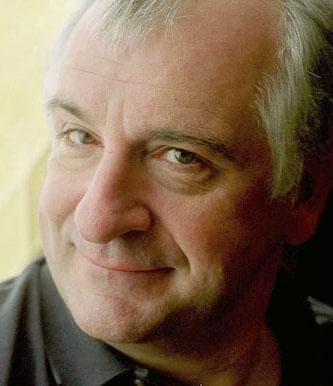
Douglas Noël Adams was an English author, humorist, and screenwriter, best known for The Hitchhiker's Guide to the Galaxy. Originally a 1978 BBC radio comedy, The Hitchhiker's Guide to the Galaxy developed into a "trilogy" of five books that sold more than 15 million copies in his lifetime. It was further developed into a television series, several stage plays, comics, a video game, and a 2005 feature film. Adams's contribution to UK radio is commemorated in The Radio Academy's Hall of Fame.







