“There are some things you can't outrun, no matter how fast you are.”
— Early in the story, reflecting on the past and the inevitability of facing certain truths.

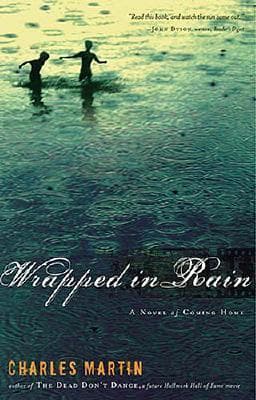
Charles Martin (2005)
Genre
Fiction
Reading Time
450 min
Key Themes
See below
Sign in to track this book
A photographer, weighed down by his Southern estate's past and his late housekeeper's wisdom, must face his estranged father and a broken family to learn how to fight life with his heart.
Tucker Mason, an acclaimed photographer, is in Paris when his estranged father, Henry Mason, calls. Henry says Tucker's younger brother, Mutt, has escaped from the mental hospital. Tucker has avoided his childhood home, Waverly Hall, for years because of a traumatic past and a bad relationship with his father. He reluctantly agrees to go back to Sopchoppy, Florida. His arrival causes tension, especially with his father, whom Tucker dislikes deeply. Soon after, Katie Miller, Tucker's high school sweetheart, reappears with her young son, Noah. Katie shows signs of abuse, making Tucker's emotional state more turbulent and bringing up old memories of his mother's death and Miss Ella Rain, the housekeeper who raised him and Mutt.
At Waverly Hall, Tucker starts the hard search for Mutt, who is known for his odd behavior and strong connection to the estate. The house holds Tucker's grief and anger, especially about his mother, Sarah's, death, which he blames on his father's neglect and affairs. He often remembers the comfort from Miss Ella Rain, their former housekeeper, whose spiritual guidance shaped his early life. Katie's presence and her own struggles with an abusive husband, whom she is trying to leave, make Tucker face his own issues of forgiveness and responsibility. He finds comfort in photographing the changed landscapes of his youth, using his camera as a way to deal with his memories.
Katie, desperate and bruised, tells Tucker about her abusive marriage. With no other place to go, she and Noah find temporary safety at Waverly Hall. Noah, innocent and watchful, starts to connect with Tucker, softening his tough exterior. Tucker feels a need to protect them, seeing similarities between Katie's situation and his mother's suffering. Katie's stories of her struggles and hope for a better life make Tucker consider a future beyond his past pain. He wants to help her but also struggles with his inability to forgive his father or move past his own tragedies.
After days of searching, Mutt unexpectedly returns to Waverly Hall, confused but holding an old, worn Bible. His return is a relief but also brings tension. Mutt, in his disjointed way, says he escaped because he felt a strong urge to protect something important, though he cannot say what. He speaks in riddles, but his words suggest a deeper secret connected to the family's history and his mother's death. Tucker realizes that Mutt's 'madness' often contains important, hidden truths, and he starts to listen more closely to his brother's statements, hoping to understand their past.
The Bible Mutt brought belonged to Miss Ella Rain. Tucker finds it filled with her handwritten notes, prayers, and underlined passages. These show Miss Ella's faith, her love for the Mason boys, and her quiet efforts to guide and protect them. The Bible also contains coded messages and hints about the circumstances of Sarah Mason's death, suggesting the official story Tucker believed might be incomplete. Miss Ella's words help Tucker, making him re-examine his beliefs about his mother, his father, and the truth of what happened at Waverly Hall.
With Miss Ella's Bible and Mutt's memories, Tucker confronts his father, Henry, demanding answers about his mother's death. The confrontation is raw, bringing up decades of unsaid anger and pain. Henry, a man broken by guilt and regret, finally tells the whole truth. He says Sarah's death was not a simple accident, but a result of his actions and a desperate attempt to protect his family from a dangerous person connected to his past. This confession shatters Tucker's long-held story, making him rethink everything he thought he knew about his parents and family history. This opens a difficult path towards understanding and possible forgiveness.
Henry tells the events leading to Sarah's death. He explains he owed a dangerous man money, and when he couldn't pay, the man threatened his family. Sarah, to protect them, confronted the man, leading to a struggle. Her death was a sacrifice, as she tried to defend her children from a threat Henry had caused. Henry covered up the truth to protect Tucker and Mutt from the details and the ongoing danger. This changes Tucker's view from anger at his father's neglect to sorrow for his mother's bravery and his father's burden of guilt and silence.
The truth about Sarah's death, along with Miss Ella's Bible, makes Tucker start to forgive his father. He sees Henry not as a villain, but as a flawed, grieving man who made bad choices under pressure, trying to protect his family. The years of anger start to fade, replaced by understanding and empathy. This reconciliation is not quick or easy, but it is a turning point for Tucker, letting him let go of his past and start healing. He realizes that real strength is not about fighting with fists, but with the heart, as Miss Ella taught him.
Inspired by Tucker's journey and finding her own strength, Katie decides to leave her abusive husband and start a new life with Noah. Tucker, having faced his past and started to heal, realizes his feelings for Katie are more than nostalgia. He sees a future where he can be a stable, loving presence for her and Noah, offering them the protection and family he wanted. The idea of a new beginning, free from Waverly Hall's past, fills him with hope. He understands that love and forgiveness go together, and he is ready to embrace both.
With the truth known, forgiveness offered, and a new purpose, Tucker, Katie, and Noah begin a new life together at Waverly Hall. The estate, once sad, starts to become a home filled with hope. Mutt, still unique, finds a calmer life with his family. Tucker, no longer defined by past traumas, takes on his role as a protector and partner. The story ends with the understanding that life is still a battle, but one to be fought with heart, faith, love, and forgiveness, leaving the Mason family on a path toward healing and a brighter future.
The Protagonist
From a bitter, estranged son consumed by the past, Tucker transforms into a man capable of forgiveness, love, and embracing a hopeful future.
The Supporting
From a distant, guilt-ridden father, Henry becomes a man who finally confronts his past, seeking understanding and a fragile reconciliation with his son.
The Supporting
Mutt remains largely consistent in his mental state but serves as a pivotal character in uncovering the family's hidden past.
The Supporting/Mentor (Deceased)
Her influence, though posthumous, guides Tucker's transformation and the family's healing.
The Supporting
From a vulnerable, abused woman, Katie finds strength and self-reliance, building a new life for herself and her son.
The Supporting
Noah's consistent innocence provides a catalyst for Tucker's emotional growth and desire for a family.
The Mentioned/Catalyst
Her story is revealed retrospectively, shifting from a victim of accident to a heroic figure.
The main theme is Tucker's hard journey to forgive his father, Henry, for his perceived role in his mother's death. This theme appears through Tucker's internal struggles, his memories of Miss Ella's lessons about fighting with the heart, and the truth coming out. The story shows that forgiveness is not about excusing past wrongs but about freeing oneself from anger, leading to healing and reconciliation within the family and within Tucker.
“Life is a battle, but you can't fight it with your fists. You got to fight it with your heart.”
The novel shows how past events and memories shape the present. Tucker is troubled by his mother's death and Waverly Hall's secrets. His photography often helps him process these memories. The story shows that facing and understanding the past, even painful truths, is necessary to move forward. Waverly Hall itself holds these memories, both good and bad, always influencing the characters.
“Sometimes the things we can't see are the most important.”
Miss Ella Rain's strong faith and spiritual lessons run through the story. Her wisdom, shown through Tucker's memories and her Bible, gives a moral and spiritual guide for life's problems. Her belief in prayer, grace, and fighting with the heart guides Tucker towards forgiveness and healing, suggesting that spiritual strength helps overcome life's hardest battles and find peace.
“And when you can't fight no more, you just stand there, and you let God fight for you.”
A main theme is the impact of long-kept family secrets and the slow, difficult process of finding the truth. The central mystery of Sarah Mason's death is hidden by lies, which have broken the Mason family for decades. The novel shows how these secrets, even well-intentioned ones, can cause great pain and stop healing. The truth, though hard at first, becomes the reason for understanding, empathy, and possible reconciliation.
“The truth is a funny thing. It hides in plain sight until you're ready to see it.”
Different kinds of love and the instinct to protect are clear throughout the story. Tucker's protective love for Mutt and Katie, Henry's mistaken but ultimately sacrificial love for his family, and Sarah's final act of protective love are all central. The theme explores how far people go to protect loved ones, and how this love, even when flawed, drives many character actions and decisions, leading to both tragedy and redemption.
“A mother's love can make her do things she never thought possible.”
A physical object symbolizing spiritual guidance and containing hidden truths.
Miss Ella's Bible serves as a powerful symbol and a crucial plot device. Filled with her handwritten notes, underlined passages, and prayers, it acts as her posthumous voice, guiding Tucker towards forgiveness and understanding. More importantly, it contains veiled clues and specific references that help Tucker piece together the true story of his mother's death, challenging his long-held beliefs and facilitating the revelation of the family's deepest secret. It represents the enduring power of faith and the wisdom passed down through generations.
The dilapidated family estate embodying the Mason family's history, secrets, and emotional state.
Waverly Hall is more than just a setting; it functions as a character itself. Its sprawling, decaying grandeur reflects the Mason family's fractured state and the secrets hidden within its walls. The house is a repository of Tucker's painful memories, a place he simultaneously loves and resents. Its physical state mirrors the family's emotional decay, and its eventual transformation (or the family's ability to inhabit it with new hope) signifies the potential for healing and a new beginning. It is a constant reminder of their past, both good and tragic.
A coping mechanism, a means of observation, and a metaphor for seeing truth.
Tucker's profession as a photographer is not merely a detail; it's a significant plot device and metaphor. His ability to 'capture things other people don’t see' contrasts with his initial inability to see the truth of his own past and forgive his father. Photography serves as his emotional shield, allowing him to observe the world from a distance. As the story progresses, his camera becomes a tool for confronting his memories, finding beauty in brokenness, and ultimately, a metaphor for his journey to see and accept the full, unvarnished truth of his family's history.
A narrative technique providing clues and foreshadowing through an unconventional perspective.
Mutt's mental illness and his often-incoherent speech and actions are a unique plot device. While seemingly nonsensical, his words and gestures frequently contain vital clues and foreshadowing related to the family's secrets and his mother's death. His perspective, unburdened by societal conventions or the need to conceal, allows him to perceive truths that others miss. Tucker must learn to interpret Mutt's 'madness' to unlock the past, making Mutt a crucial, albeit unconventional, narrator of the family's hidden history.
“There are some things you can't outrun, no matter how fast you are.”
— Early in the story, reflecting on the past and the inevitability of facing certain truths.
“Sometimes the greatest gift you can give someone is to let them go.”
— A character grappling with a difficult decision regarding a loved one's future.
“Forgiveness isn't about forgetting; it's about remembering differently.”
— Discussing the process of healing from past hurts and moving forward.
“The heart has a way of knowing what the mind tries to deny.”
— A character's internal struggle between logic and deep-seated emotions.
“We all have a story, and sometimes the hardest part is finding someone to listen to it.”
— Reflecting on the human need for connection and understanding.
“Grief is like the tide; it ebbs and flows, but it never truly leaves the shore.”
— Describing the enduring nature of loss and the process of mourning.
“Some wounds never fully heal, but they can become scars that tell a powerful story.”
— Contemplating the lasting impact of trauma and the strength found in survival.
“Love isn't always a soft landing; sometimes it's a leap of faith into the unknown.”
— A character taking a risk for love, despite uncertainties.
“The past is a stubborn thing. It clings to you, even when you try to shake it off.”
— The protagonist's struggle to escape the shadow of past events.
“Hope is a fragile thing, but it's often the only thing that keeps us moving forward.”
— In a moment of despair, a character finds a glimmer of optimism.
“Sometimes the greatest strength is found in admitting your weakness.”
— A character's moment of vulnerability leading to unexpected support.
“Family isn't just about blood; it's about the people who show up when you need them most.”
— Exploring the theme of chosen family and unconditional support.
“The truth has a way of surfacing, no matter how deep you try to bury it.”
— A secret from the past coming to light and impacting present relationships.
“It's hard to see the sun when you're wrapped in rain, but it's always there, waiting.”
— Metaphorical reflection on enduring difficult times and the promise of better days.
Ready to see how well you understood this book? Take our interactive quiz with 10 questions.

Charles Martin is a contemporary fiction author known for his poignant storytelling and exploration of faith and redemption. His notable works include the bestsellers 'Wrapped in Rain,' 'When Crickets Cry,' and 'Maggie.' Martin's writing often delves into themes of love, loss, and the human spirit, resonating with readers seeking emotionally resonant narratives.

Ashley Antoinette
4.6

Mark McDonald
4.4
Luo Guanzhong
4.4

Mia McKenzie
4.3

Dorothy Parker
4.3

Joaquim Maria Machado de Assis
4.3

James Thurber
4.2

Terry Kay
4.2