“I am a woman who has no other choice but to continue to kill, to kill, and to kill, until I die myself.”
— Firdaus reflects on her life and the forces that have driven her to murder.


Nawal El Saadawi (2015)
Genre
Fiction
Reading Time
90 min
Key Themes
See below
Sign in to track this book
Firdaus, an Egyptian woman born into poverty, defies a harsh world of male control and social hypocrisy, finding a bitter freedom in wanting nothing, fearing nothing, and hoping for nothing.
Dr. El Saadawi, a psychiatrist, studies the psychological profiles of women in prison. She becomes interested in Firdaus, a woman sentenced to death for murder, who refuses to speak. After many attempts, the prison director lets Dr. El Saadawi meet Firdaus. The first meeting is tense and quiet; Firdaus shows no interest in talking. Dr. El Saadawi notices Firdaus's striking eyes and calm manner, seeing no fear or despair despite her coming execution. This meeting sets up the story, showing Firdaus as a mysterious figure whose past is yet to be told.
Firdaus starts her story, describing a childhood of extreme poverty and constant abuse in an Egyptian village. Her father is a brutal man who regularly beats her and her mother. Her mother is submissive and powerless. Firdaus sees society's double standards from a young age, especially concerning female sexuality and honor. She remembers her uncle sexually abusing her, and her family's response focuses on secrecy and shame over her well-being. This early trauma creates a deep distrust of men and the social systems that protect them.
After her father dies, Firdaus goes to live with her uncle in Cairo, who promises her an education. At first, she enjoys learning and the city's relative freedom. However, her uncle, who seems respectable, soon exploits her. He makes her do household chores and later arranges her marriage to Sheikh Mahmoud, an old, abusive man. Firdaus feels trapped and betrayed, realizing her uncle's promises were just a cover for his own self-interest. This experience breaks her remaining beliefs about men's protection and kindness.
Firdaus's marriage to Sheikh Mahmoud is a time of great suffering. Mahmoud is an impotent, cruel man who abuses her physically and emotionally. He restricts her movements, makes her do humiliating things, and constantly tells her she is worthless. Firdaus tries to escape but is always brought back, strengthening her feeling of powerlessness in marriage. She experiences the deep isolation of being a woman with no rights or voice, further solidifying her understanding of women's subjugation in her society.
Desperate to escape Sheikh Mahmoud, Firdaus runs away and finds shelter with Bayoumi, a man she believes offers real affection. However, Bayoumi soon shows his true nature, forcing Firdaus into prostitution to earn money for him. She is horrified by this new exploitation but feels she has no other choices. This period is a turning point as Firdaus begins to understand that relationships are often about transactions and that women's bodies are treated as goods. She sees how men, regardless of their social status, view women mainly as objects for their pleasure or profit.
Firdaus eventually leaves Bayoumi and decides to become a prostitute on her own terms. She finds some freedom and power in this choice. She controls her earnings, chooses her clients, and gains a clear understanding of the hypocrisy of men and society. She realizes that all women, no matter their social status, are essentially prostituting themselves in different ways—through marriage, work, or social compliance. This period strengthens her resolve and sharpens her critical view of the social systems that limit women.
Firdaus meets Sharifa, an older, more established prostitute who has a different kind of strength and intelligence. Sharifa teaches Firdaus about their profession, how to navigate the city's hidden parts, and the importance of financial independence. Sharifa, despite her profession, maintains dignity and self-respect, becoming a guide for Firdaus. This relationship helps Firdaus better understand power dynamics and see that even in a marginalized life, one can assert agency.
Firdaus's experiences include meetings with men from different social classes, including a journalist and a wealthy businessman. The journalist, who at first acts like a champion of truth, tries to use her story for his own gain, offering her little money while planning to profit greatly. The businessman, a symbol of social power, treats her as a disposable object. These interactions confirm Firdaus's belief that all men, regardless of their outward appearance, are driven by self-interest and a desire to control women.
Firdaus reaches a breaking point when her pimp, a particularly abusive and controlling man, demands all her earnings and threatens her life. In a moment of defiance and self-preservation, she stabs him, killing him. This act comes not just from anger, but from a deep understanding that her life and dignity are worth more than any man's control. The murder is an ultimate act of rebellion, showing her refusal to be exploited further and her assertion of agency, even if it leads to her own death.
After the murder, Firdaus is arrested and imprisoned. She refuses to apologize or appeal her sentence, seeing her coming execution not as punishment but as a final act of liberation. In prison, she finds a strange peace, having lost all fear and hope. She has nothing left to lose and, therefore, is truly free. Her defiance and strong spirit captivate Dr. El Saadawi, who recognizes Firdaus's deep understanding of social oppression and her ultimate victory over it through her own radical self-assertion.
Firdaus finishes telling her life story to Dr. El Saadawi, who is deeply moved. Firdaus explains her belief: that the only free people are those who want nothing, fear nothing, and hope for nothing. She believes that society's structures are built on lies and that true freedom comes from rejecting those lies and all forms of control. Her final words resonate with clarity, leaving Dr. El Saadawi to consider freedom, justice, and the real meaning of a 'criminal' woman. Firdaus's execution is near, but her spirit remains unbroken.
The Protagonist
Firdaus transforms from a helpless victim of abuse into a self-aware, defiant woman who finds freedom in rejecting societal norms and embracing her own truth, culminating in a peaceful acceptance of death.
The Narrator/Supporting
Dr. El Saadawi's perspective on justice and female liberation is challenged and deepened by Firdaus's narrative, evolving from a clinical observer to a deeply moved and understanding chronicler.
The Antagonist/Mentioned
Remains a static symbol of early patriarchal abuse, his death marking a shift in Firdaus's immediate circumstances but not the end of male exploitation.
The Antagonist/Supporting
His initial benevolent facade quickly crumbles, revealing his true exploitative nature, serving as a catalyst for Firdaus's disillusionment with male 'protection'.
The Antagonist/Supporting
Remains a static symbol of patriarchal marital abuse, his cruelty pushing Firdaus to seek escape and ultimately embrace a life of independence.
The Antagonist/Supporting
His betrayal and exploitation solidify Firdaus's understanding of men's true intentions, prompting her to take control of her own body and earnings.
The Supporting
Serves as a temporary mentor, providing Firdaus with practical skills and philosophical insights that empower her to navigate her independent life.
The Antagonist/Mentioned
A brief but significant interaction that underscores Firdaus's disillusionment with societal 'helpers' and their hidden motives.
This is the central theme, showing how women in Egyptian society are oppressed by men and patriarchal systems. Firdaus's entire life shows this, from her abusive father and uncle to her cruel husband Sheikh Mahmoud and the various pimps and clients who exploit her. The novel highlights how women are denied power, education, and respect; their bodies and lives are treated as goods. Firdaus's story reveals that even 'respectable' institutions like marriage and family can be places of deep subjugation, as seen in her forced marriage and her uncle's betrayal. Her murder of the pimp is the ultimate rejection of this systemic oppression.
“All men are alike, my dear, whether a father, or a brother, or a husband, or a lover. The first thing a man learns is that he is a man, and the first thing a woman learns is that she is a woman.”
The novel explores the idea of freedom, suggesting that true liberation comes from within, often by defying social norms. Firdaus is physically imprisoned, yet she claims to be the freest woman, having shed all fear, hope, and desire. Her earlier life, despite moments of physical freedom, was a form of psychological and social imprisonment, bound by expectations and exploitation. Her choice to become a prostitute on her own terms, and later to kill her oppressor, are acts of reclaiming agency, changing her from a literal prisoner into a metaphorically free person. The prison walls, ironically, become a space where she can finally speak her truth without fear of further social judgment.
“I discovered that all the women in the world, without exception, are prostitutes. It is only a question of degree.”
El Saadawi shows the widespread hypocrisy that supports Egyptian society. Men who appear respectable, like Firdaus's uncle or the journalist, are just as exploitative as the pimps and abusive husbands. Society's focus on 'honor' for women is a tool for control, while men's wrongdoings are often ignored. Firdaus observes that all women, regardless of their social standing, are essentially 'prostituting' themselves in various ways to survive in a male-dominated world. This theme challenges the appearance of morality and justice, revealing the corrupt foundations of society and how it keeps power over women.
“They were all liars, all of them. The father, the uncle, the husband, the pimp, the lawyer, the journalist, the doctor, the director, the president, the king.”
The novel itself shows this theme, as Firdaus's story comes to light through Dr. El Saadawi. Despite being silenced and marginalized throughout her life, Firdaus finds her voice in prison, telling her experiences with honesty. Her story becomes an act of resistance, challenging official records and social judgments. By sharing her story, Firdaus reclaims her identity and asserts her truth, giving power to the voiceless. Dr. El Saadawi's role as the transcriber highlights the importance of listening to and amplifying the voices of those on the margins, ensuring their experiences are not erased or misrepresented.
“I would rather die than live a life of lies.”
Firdaus's story is encased within Dr. El Saadawi's initial encounters and reflections.
The novel employs a frame narrative, where Dr. El Saadawi's initial attempts to interview Firdaus and her subsequent reflections serve as the outer layer, while Firdaus's first-person account of her life forms the inner story. This structure allows for a dual perspective: Dr. El Saadawi provides an initial objective, psychiatric lens, which then gives way to Firdaus's raw, subjective truth. The frame also emphasizes the act of storytelling as a powerful form of resistance and testament, giving authority to Firdaus's voice despite her societal condemnation.
Firdaus tells her own life story directly to Dr. El Saadawi.
The majority of the novel is narrated in the first person by Firdaus. This device is crucial as it gives her immediate and unfiltered agency, allowing her to present her experiences and philosophical insights directly to the reader. It humanizes her, moving her beyond the label of 'criminal' and allowing her to challenge societal judgments from her own perspective. Her direct address creates a sense of intimacy and authenticity, making her suffering and ultimate defiance more impactful and credible.
Represents a state of having nothing to lose, leading to ultimate freedom.
The 'Point Zero' in the title symbolizes Firdaus's state of utter destitution and lack of attachment, which paradoxically leads to her ultimate freedom. When she has nothing to want, nothing to fear, and nothing to hope for, she sheds the chains of societal control and gains an unparalleled sense of liberation. This concept is central to Firdaus's philosophy, suggesting that true freedom is not found in accumulation or aspiration, but in the radical stripping away of all external dependencies and internal attachments imposed by a corrupt world.
The use of situations where reality contradicts expectation, especially regarding freedom and morality.
Irony is a pervasive device, particularly in Firdaus's observations about society. The most striking example is her finding a perverse sense of freedom and honesty in prostitution, a profession universally condemned, while seeing marriage and 'respectable' jobs as different forms of prostitution. There's also the irony of her finding peace and clarity while awaiting execution in prison, a place of confinement, contrasting sharply with the 'freedom' of the outside world that continuously exploited her. This irony serves to highlight the deep-seated hypocrisy and inverted moral compass of the society she critiques.
“I am a woman who has no other choice but to continue to kill, to kill, and to kill, until I die myself.”
— Firdaus reflects on her life and the forces that have driven her to murder.
“They said, 'You are a prostitute.' I said, 'I am a woman.'”
— Firdaus challenges the labels imposed upon her by society.
“All of them, without exception, were liars, and murderers, and hypocrites.”
— Firdaus's scathing assessment of the men she encounters throughout her life.
“My freedom was to die. My freedom was to kill.”
— Firdaus contemplates the extreme measures she takes to assert her agency.
“I do not know why I killed him. I only know that I did not regret it.”
— Firdaus's cold detachment after committing murder, highlighting her lack of remorse.
“The only way to avoid being exploited is to exploit others.”
— Firdaus observes the transactional nature of power and relationships in her world.
“I discovered that all of them, the men and the women, were nothing but pieces of paper in the hands of others.”
— Firdaus's realization about the lack of true autonomy for most people.
“Fear has never been a friend of mine.”
— Firdaus's declaration of her unwavering defiance in the face of danger.
“The world needs prostitutes. It needs criminals. It needs all those who break its laws.”
— Firdaus's cynical view of society's hidden needs and hypocrisies.
“My voice was the sound of a woman who had nothing left to lose.”
— Firdaus describes the power and raw emotion in her confessions.
“I started to understand that freedom is not just a word, but a struggle.”
— Firdaus's evolving understanding of the true nature of freedom.
“No woman can be a prostitute unless there are men who need prostitutes.”
— Firdaus points out the symbiotic relationship between prostitution and male demand.
“I had been born for a purpose, and that purpose was to be free.”
— Firdaus's ultimate declaration of her life's driving force, even in the face of death.
Ready to see how well you understood this book? Take our interactive quiz with 10 questions.
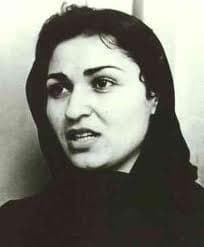
Nawal Elsaadawi was an Egyptian feminist writer, activist and physician. She wrote numerous books on the subject of women in Islam, focusing on the practice of female genital mutilation in her society. She was described as "the Simone de Beauvoir of the Arab World", and as "Egypt's most radical woman".

Ashley Antoinette
4.6

Mark McDonald
4.4
Luo Guanzhong
4.4

Mia McKenzie
4.3

Dorothy Parker
4.3

Joaquim Maria Machado de Assis
4.3

James Thurber
4.2

Terry Kay
4.2