“Everything in the world is like a roller-coaster ride, and it's all a matter of when it's your turn to get on.”
— Early philosophical reflection on life's turns.

Haruki Murakami (2015)
Genre
Fiction
Reading Time
240 min
Key Themes
See below
Sign in to track this book
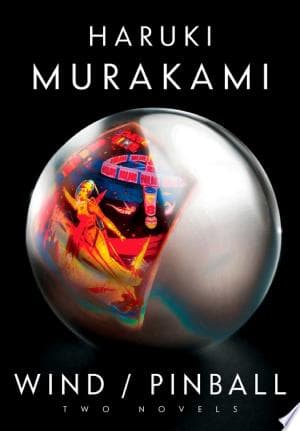
This two-sided volume features Haruki Murakami's first two novels, offering an early look at his stories of alienated youth, mysterious women, and the quiet strangeness that defines his writing.
The story begins with the unnamed narrator, a university student, back in his hometown for the summer. He spends most of his time at J's Bar, a quiet place run by a man named J. Here, he often drinks beer and talks with his friend, the Rat, a wealthy but aimless young man who dislikes his family's business and the world. The narrator recalls various memories, including his four past girlfriends, all referred to simply as 'the girl.' He thinks about writing, memory, and time, setting a reflective and somewhat sad tone for the novel.
One morning, the narrator wakes up to find a girl he doesn't know beside him. She is missing a finger on her left hand. After a brief, awkward conversation, she leaves, only to return later to get a record she left. They start spending time together, sharing meals and quiet moments. The girl is mysterious and doesn't say much about herself, yet the narrator feels a strange connection with her. Their relationship is platonic but deeply felt, a fleeting connection in his otherwise solitary life.
Throughout the summer, the Rat continues to express his unhappiness with life. He comes from a wealthy family but hates their business and the expectations on him. He drinks a lot, often arguing with J about life, art, and society. The Rat wants to escape his situation, to find something real, but he remains stuck by his own inaction and cynicism. His talks with the narrator often focus on their shared feeling of being alone and the difficulty of truly connecting with others.
As summer ends, the narrator prepares to go back to university. He has one last talk with the Rat, who is still restless and uncertain. The girl with nine fingers also leaves, creating a sense of quiet goodbye. The narrator thinks about how short the summer was and how fleeting his connections were. The novel ends with him on a train, thinking about writing and how impossible it is to truly capture experience. He reflects on a fictional writer named Derek Heartfield and his advice about writing what you want, not what others expect.
Three years after *Hear the Wind Sing*, the unnamed narrator lives in Tokyo, working as a freelance translator. He shares an apartment with two identical twin girls whose origins are never explained. His life is a detached routine until he becomes obsessed with a specific pinball machine: the 'Spaceship' pinball. He used to play this machine constantly at a bar in his college town. His longing for this machine becomes a driving force in his otherwise aimless life, symbolizing a search for something lost or a connection to his past.
The narrator lives with two identical twin girls, both named 208 and 209, who appeared in his apartment one day without explanation. They are quiet, efficient, and almost interchangeable, doing household tasks and occasionally having brief, cryptic conversations. They are a strange element in the narrator's life, a comforting yet unsettling presence that mirrors his own emotional distance. Their lack of individual identity and sudden appearance contribute to the dreamlike feel of the story, showing the narrator's isolation even when they are present.
Meanwhile, the Rat remains in his hometown, still going to J's Bar. He is increasingly isolated and sad, finding no comfort in his wealth or relationships. He tries to write a novel, believing it might be a way to express his inner turmoil and find meaning, but he struggles, constantly discarding his work. His efforts show a deep sense of loneliness and a desperate search for an authentic voice, reflecting his ongoing existential crisis first seen in *Hear the Wind Sing*.
Driven by his obsession, the narrator begins a serious search for the 'Spaceship' pinball machine. He visits arcades, talks to owners, and places ads, all without success. His quest takes on an almost spiritual meaning, as if finding the machine will unlock a part of his past or provide some closure. This journey highlights his deep nostalgia and his desire to reconnect with a simpler, more defined time in his life, contrasting with his current aimless existence.
During his search, the narrator gets a call from an unknown woman who says she is a former girlfriend of the Rat. She talks about the Rat's current state, his loneliness, and his attempts at writing. This brief, unexpected conversation links the narrator's current detached life in Tokyo with his past in his hometown, especially his connection to the Rat. It emphasizes the shared sense of loss and unspoken understanding between the two friends, even though they are separated.
Through sheer persistence, the narrator eventually finds a 'Spaceship' pinball machine in a remote, abandoned warehouse. He plays it one last time, gets a perfect score, and then leaves it, understanding that his quest was more about the search than the object. At the same time, the twin girls mysteriously disappear from his apartment, leaving only a note. The narrator accepts their departure with quiet resignation, showing a subtle shift towards accepting impermanence and life's mysterious nature. The story ends with the Rat's continued struggle with his writing, leaving his future, and the narrator's, uncertain.
The Protagonist
The narrator moves from a state of passive observation and reflection to a more active, albeit symbolic, search for meaning through his obsession with the 'Spaceship' pinball machine, ultimately finding a quiet acceptance of impermanence.
The Supporting/Protagonist
The Rat's arc is one of deepening existential crisis and a nascent, yet frustrated, attempt to find meaning through creative expression, moving from passive discontent to an active, though difficult, search for purpose.
The Supporting
J's character remains largely static, serving as a consistent, grounding presence for the protagonists.
The Supporting
Her arc is brief and symbolic, appearing and disappearing from the narrator's life, leaving a lasting impression but remaining largely unchanged herself.
The Supporting
Their presence and disappearance are symbolic rather than developmental, representing the enigmatic and transient nature of connections in the narrator's life.
A common theme in both novels is the characters' inability to form deep, lasting connections and their feeling of being separate from society. The narrator often thinks about his past girlfriends, each called generically 'the girl,' showing his emotional distance. The Rat's constant existential worry and his inability to find purpose, despite his wealth, also show this. Even when together at J's Bar, the narrator and the Rat often seem to exist in their own internal worlds, sharing space but not always truly connecting. The twin girls in *Pinball, 1973* also highlight this, as their presence is more a strange cohabitation than real companionship.
““I’m tired of living in a world where I can’t tell the difference between what’s real and what’s not.””
Both novels focus on the past, with the narrator often recalling past events, relationships, and feelings. In *Hear the Wind Sing*, he constantly rehashes memories of his four past girlfriends. In *Pinball, 1973*, his obsessive search for the 'Spaceship' pinball machine is driven entirely by a longing for a specific moment or feeling from his youth. This theme suggests a desire for a simpler, perhaps more meaningful, past that stands in contrast to the characters' current aimlessness. Writing, for both the narrator and the Rat, becomes an attempt to deal with and preserve memories.
““There’s no such thing as perfect writing, just as there’s no such thing as perfect despair.””
The main struggle for both the narrator and the Rat is their search for purpose and a clear sense of self in a seemingly meaningless world. The Rat's constant philosophical questions and his attempts to write a novel show this directly. The narrator's detached observations and his eventual obsession with the pinball machine are also forms of this search, though more passive or symbolic. They are young men adrift, trying to define themselves and their place in the world, often through self-reflection, alcohol, or brief connections. This theme explores the difficulty of moving from youth to adulthood without a clear path.
““I think that when you're young, you're always searching for something. You don't know what it is, but you know it's out there.””
The act of writing and the nature of storytelling are directly discussed and explored. The narrator thinks about the writing process, his struggles with it, and the advice of a fictional writer, Derek Heartfield, about authenticity. The Rat's failed attempts to write a novel in *Pinball, 1973* show how hard it is to turn internal experience into a clear story. This theme examines how people try to make sense of their experiences, to capture life's fleeting nature, and to communicate their inner worlds through creative expression, even when it feels impossible.
““Writing is like a disease. You can’t get rid of it. And when you’re not writing, you’re just waiting for it to come back.””
The story is told from the subjective, often detached, and sometimes forgetful perspective of the narrator.
The narrator's voice is highly subjective, often reflecting on memories that may be embellished or incomplete. He admits to his own forgetfulness and the difficulty of accurately recounting the past, particularly regarding his girlfriends. This device creates a sense of ambiguity and introspection, inviting the reader to question the absolute truth of events and to focus more on the narrator's internal state and perceptions rather than a strictly objective reality. It aligns with the themes of memory and the elusive nature of truth.
The 'Spaceship' pinball machine represents nostalgia, a lost past, and the search for meaning.
In *Pinball, 1973*, the 'Spaceship' pinball machine is not merely an object, but a powerful symbol. It represents a concrete link to the narrator's past, a time when life felt simpler and more defined. His obsessive search for it symbolizes a yearning for lost youth, a desire to recapture a sense of purpose or a specific, unidentifiable feeling. Finding and playing it one last time becomes a ritual of letting go, acknowledging that the meaning was in the search itself rather than the physical object, signifying a subtle step towards acceptance.
Long, philosophical tirades delivered by the Rat, often fueled by alcohol, that express existential angst.
The Rat's drunken, rambling monologues at J's Bar serve as a vehicle for exploring the themes of existential despair, societal disillusionment, and the search for meaning. These lengthy speeches, often directed at J or the narrator, articulate the Rat's profound dissatisfaction with life and his inability to find purpose. They provide a direct, albeit chaotic, expression of the inner turmoil that both he and, to a lesser extent, the narrator experience, contrasting with the narrator's more internal and detached reflections.
Female characters who appear and disappear, often without full explanation, serving as catalysts for reflection.
From the 'girl with nine fingers' in *Hear the Wind Sing* to the identical twin girls in *Pinball, 1973*, female characters often enter and exit the narrator's life mysteriously, their backgrounds and motivations largely unexplained. They function less as fully developed characters and more as enigmatic presences or catalysts for the narrator's introspection and emotional experience. They highlight the transient nature of human connection and underscore the narrator's own emotional detachment, as he rarely seems to fully grasp or delve into their realities.
“Everything in the world is like a roller-coaster ride, and it's all a matter of when it's your turn to get on.”
— Early philosophical reflection on life's turns.
“There are some things in this world you can never make good on, no matter how many times you try.”
— The narrator's realization about certain irreversible past events.
“If you remember me, then I don't care if everyone else forgets.”
— A poignant thought on memory and connection.
“The wind was blowing. Not a big wind, but a little wind, a little bit of a lonely wind.”
— Describing the atmosphere and a sense of solitude.
“Sometimes you just have to give up. Sometimes you just have to give in.”
— A moment of resignation and the acceptance of limitations.
“I was born on a day when the wind was blowing. I guess I've been chasing it ever since.”
— A personal reflection on the narrator's connection to the wind and his life's journey.
“The world is full of things that can't be explained.”
— A general observation on the mysterious nature of existence.
“It's not that I hate people. It's just that I feel better when they're not around.”
— A candid admission about the narrator's preference for solitude.
“Time is a river, and books are boats.”
— A metaphorical statement about the enduring nature of literature.
“There's nothing in the world that can't be solved by a good cup of coffee and a quiet place.”
— A simple solution offered for life's complexities.
“Every time you feel like giving up, remember why you held on for so long.”
— An internal monologue on perseverance.
“We're all just trying to make sense of things that don't make sense.”
— A reflection on the human condition and the search for meaning.
“The past is like a staircase we can't go back down.”
— A metaphor for the irreversibility of time and past events.
“Silence is not empty. It's full of answers.”
— An observation on the value of quiet contemplation.
Ready to see how well you understood this book? Take our interactive quiz with 10 questions.

Haruki Murakami is a Japanese writer. His novels, essays, and short stories have been bestsellers in Japan and internationally, with his work translated into 50 languages and having sold millions of copies outside Japan. He has received numerous awards for his work, including the Gunzo Prize for New Writers, the World Fantasy Award, the Frank O'Connor International Short Story Award, the Franz Kafka Prize, and the Jerusalem Prize.

Ashley Antoinette
4.6

Mark McDonald
4.4
Luo Guanzhong
4.4

Mia McKenzie
4.3
Dorothy Parker
4.3

Joaquim Maria Machado de Assis
4.3
James Thurber
4.2

Terry Kay
4.2