“The child was a convenient pretext, a blessing of sorts, a screen for the others to look at each other through.”
— Describing Maisie's role in her parents' new lives.


Henry James (2021)
Genre
Fiction
Reading Time
226 min
Key Themes
See below
Sign in to track this book
Caught in the venomous crossfire of her parents' scandalous remarriages, young Maisie navigates adult deceit with an innocence that sharpens every betrayal.
Maisie Farange, a young girl, is the focus of her parents', Ida and Beale's, bitter divorce. The court orders Maisie to spend six-month periods alternating between her mother's and father's homes. Both parents are self-centered and use Maisie in their ongoing fights, often speaking ill of the other to her. Maisie, at first confused, starts to adopt their manipulative ways and understands their superficiality and the tensions beneath it. She often lacks emotional care, becoming an observer rather than a participant in her own life, learning to navigate their conflicting stories and inconsistent affections.
After their divorce, both Ida and Beale remarry. Ida weds the charming Sir Claude, while Beale marries Miss Overmore, Maisie's former governess. Maisie now has new stepparents, who at first seem more stable and affectionate than her biological parents. However, these new relationships soon show their complexity. Sir Claude genuinely likes Maisie and gives her much-needed warmth, but he is also weak and easily swayed by Ida. Miss Overmore, now Mrs. Beale, also shows some affection for Maisie, but her main goal is Beale's attention and money.
As Maisie gets older, she becomes more aware of the tangled relationships around her. Sir Claude and Mrs. Beale, finding common ground in their shared neglect and unhappiness with their spouses, start an affair. Maisie, with her sharp observation skills, figures out their secret meetings and the unspoken understanding between them. This puts her in an even more uncertain position, as she now knows secrets her parents are unaware of, or choose to ignore. She finds herself a silent confidante to both Sir Claude and Mrs. Beale, who, despite their affair, show her more kindness than her own parents.
Over time, both Ida and Beale grow tired of their parental duties. Ida focuses on her social life and new partners, often leaving Maisie with Sir Claude. Beale, similarly, disappears for long periods, leaving Maisie with Mrs. Beale. Maisie's biological parents effectively abandon her, showing their great selfishness and lack of real concern for her. This abandonment, though painful, also strengthens Maisie's reliance on her stepparents, especially Sir Claude, who, despite his flaws, offers a sense of stability and affection her parents never truly gave.
As Maisie nears adolescence, her innocence slowly turns into a clear, if unspoken, understanding of the moral complexities and hypocrisies of the adults around her. She processes their lies, infidelities, and self-deceptions through her own unique perspective, developing a quiet wisdom beyond her years. She learns to interpret their coded language, their evasions, and their attempts to manipulate her. This growing awareness is not cynical, but a deep, almost philosophical acceptance of the flawed nature of those who should care for her. She becomes a silent witness, observing the unfolding drama with detached yet deeply felt intelligence.
Mrs. Wix, Maisie's long-suffering governess and the only consistent moral guide in her life, becomes increasingly worried by the immoral environment Maisie lives in. She suggests a solution: that Maisie should live permanently with her and Sir Claude, who, despite his affair with Mrs. Beale, Mrs. Wix sees as the most redeemable of the adults. Mrs. Wix believes that Sir Claude, with his underlying decency, could change and provide a stable, morally sound home for Maisie if he committed to her and left Mrs. Beale. This idea shows Mrs. Wix's deep concern for Maisie's moral upbringing, even if her plan seems unrealistic.
With her parents mostly absent, Maisie is in France with Sir Claude and Mrs. Beale. This change of place does little to alter the basic dynamics of their unconventional family. Mrs. Wix, always watchful, joins them, continuing to argue for Maisie's moral well-being. The trip to France is a temporary escape from Ida and Beale's direct influence, but it also increases the emotional pressure on Maisie, who is now even more closely involved with the two adults having a secret affair. The foreign setting highlights Maisie's feeling of displacement and her reliance on these two flawed figures.
The situation reaches a turning point when Maisie is given an ultimatum. Sir Claude and Mrs. Beale, now settled in their relationship, propose that Maisie live with them permanently. However, Mrs. Wix, shocked by their immorality, insists that Maisie must choose between a life with her and a morally upright existence, or a life with Sir Claude and Mrs. Beale, which she sees as a path to ruin. This forces Maisie, still a child, to make an impossible decision, one with great moral and emotional weight. She is caught between her affection for Sir Claude and Mrs. Beale and her respect for Mrs. Wix's moral principles.
Maisie, torn between her affection for Sir Claude and Mrs. Beale and her loyalty to Mrs. Wix, tries to navigate the impossible choice. Sir Claude, despite his genuine fondness for Maisie, proves too weak to resist Mrs. Beale's influence and the comfort of their established illicit relationship. He cannot make the moral commitment Mrs. Wix demands, which would involve leaving Mrs. Beale and living a proper life for Maisie's sake. His decision to stay with Mrs. Beale confirms Maisie's understanding of his weakness and the unlikelihood of any true moral change for the adults around her.
Faced with Sir Claude's inability to choose her over Mrs. Beale, Maisie makes a deep and heartbreaking decision. Despite her love for Sir Claude and the appeal of a comfortable life with him and Mrs. Beale, she chooses to leave them and stay with Mrs. Wix. This choice shows Maisie's rejection of the moral compromises and superficiality that have defined her life. It is a strong assertion of her developing moral compass and her desire for a life based on integrity, even if it means giving up the affection and material comforts offered by her stepparents. Her decision marks her true coming-of-age.
The Protagonist
Maisie evolves from an innocent pawn to a discerning observer, ultimately making a mature moral choice that defines her independence.
The Antagonist/Supporting
Ida remains consistently self-absorbed, progressively abandoning her maternal responsibilities.
The Antagonist/Supporting
Beale, like Ida, remains largely unchanged, becoming increasingly absent from Maisie's life.
The Supporting
Sir Claude struggles with his conscience but ultimately succumbs to his weaknesses, failing to provide the moral guidance Maisie needs.
The Supporting
Mrs. Beale transitions from governess to a key figure in Maisie's fragmented family, becoming increasingly entangled in the moral ambiguities.
The Supporting
Mrs. Wix remains a steadfast moral anchor, eventually becoming the only adult Maisie can truly rely on.
The Mentioned
N/A
The novel clearly shows Maisie's journey from a naive child to a morally aware young girl. At first, Maisie is an innocent pawn, unable to grasp the adult world's complexities. However, through constant exposure to her parents' and stepparents' lies, infidelities, and selfish behaviors, she develops a deep, unspoken understanding of morality. Her 'knowledge' is not cynical, but a hard-won wisdom that allows her to make a key moral choice at the end, rejecting the adults' superficiality and compromise for a life of integrity, as seen when she decides to stay with Mrs. Wix over Sir Claude.
“She was to remember in after-years that she had had a dim sense of the whole place being full of people who were all there for a purpose connected with her, but of whom she was no more than the little instrument.”
A main theme is the damaging effect of irresponsible and morally corrupt adults on a child. Maisie's parents, Ida and Beale, are examples of selfishness, using their daughter as a tool in their personal fights and neglecting her emotional needs. Their new spouses, Sir Claude and Mrs. Beale, while at first offering some comfort, eventually give in to their own moral failings, having an affair that further complicates Maisie's world. The novel shows adulthood not as a state of wisdom or protection, but often as one of great moral weakness and self-indulgence, forcing Maisie to become the moral center of her own life.
“She was a ready receptacle for anything, and she had no questions.”
The novel always highlights the difference between how adults present themselves and their true characters. Maisie's parents maintain a facade of politeness while privately engaging in bitter arguments. Sir Claude and Mrs. Beale appear outwardly charming and caring, yet they conduct a secret affair. Maisie, through her sharp observation, learns to see through these deceptive appearances, understanding the real nature of their relationships and motivations. This theme highlights the manipulative nature of the adult world and Maisie's unique ability to see past its surface.
“She was a small winged creature caught in the cross-currents of a great gale.”
The story explores different forms of 'love' and affection, often showing them to be conditional, superficial, or self-serving among the adults. Ida and Beale's 'love' for Maisie is transactional and brief. Sir Claude and Mrs. Beale offer Maisie real warmth, but their affection is tied to their illicit relationship, making it morally compromised. In contrast, Mrs. Wix's love for Maisie is pure, unconditional, and morally driven, representing the only true and lasting affection Maisie receives. This contrast forces Maisie to tell the difference between genuine care and self-interested attachment.
“She had a sense that she was not wanted—that she was rather in the way.”
The story is told almost entirely through Maisie's limited but intensely observant point of view.
Henry James employs focalization through Maisie's perspective to create a unique narrative voice. The reader experiences the complex adult world through the eyes of a child, who, while not fully grasping the explicit details of adult immorality, acutely senses its implications and consequences. This technique allows James to subtly critique societal hypocrisy without overt authorial commentary, as Maisie's innocent yet penetrating gaze reveals the moral decay around her. Her interpretations, often unspoken, are more powerful than direct exposition, forcing the reader to piece together the adult drama.
Character names often subtly reflect their personalities or roles.
While not always explicit, some character names carry symbolic weight. 'Farange' suggests 'far range' or being distant, reflecting the emotional distance and neglect of Maisie's parents. 'Wix' might imply 'wick' or a guiding light, aligning with Mrs. Wix's role as Maisie's moral compass. This device adds a layer of subtle meaning, reinforcing character traits and thematic elements without being overly didactic, inviting the reader to consider the deeper implications of the characters' identities.
The narrative is filtered through Maisie's developing understanding, making her interpretation of events a key element.
While Maisie is the focalizer, her understanding evolves throughout the novel. Her initial innocence means she doesn't fully grasp the explicit nature of the adult relationships and moral failings. The 'unreliability' comes from the reader's need to interpret and fill in the gaps of what Maisie observes but doesn't fully articulate. This creates dramatic irony and allows James to explore the nuances of perception and the gradual dawning of moral awareness in a child. The reader often understands more than Maisie initially does, but through her eyes.
“The child was a convenient pretext, a blessing of sorts, a screen for the others to look at each other through.”
— Describing Maisie's role in her parents' new lives.
“She was a ready receptacle, a perfectly empty vessel into which, day by day, convenience dropped its store.”
— Reflecting on Maisie's passive role in being passed between her parents.
“It was as if she had been a little shuttlecock, kept going by the battledores of her parents' divorce.”
— A metaphor for Maisie being tossed back and forth between her warring parents.
“She was old enough now to understand that there was a great deal that was not said, and that what was not said was often the most important.”
— Maisie's growing awareness of the unspoken truths and deceptions around her.
“Maisie knew what she knew, and she knew it better than anyone could have told her.”
— Highlighting Maisie's internal understanding despite external manipulations.
“The truth was a great, complicated ball of string that her elders were perpetually trying to untangle, or perhaps to tangle further.”
— Maisie's perception of the convoluted reality created by the adults.
“Her innocence was a sort of shield, but it was also a sort of lens, through which she saw things with a terrible clarity.”
— Describing how Maisie's innocence allows her to perceive the adults' actions sharply.
“She was a small, still point in the midst of a general agitation.”
— Maisie's quiet observation amidst the chaotic adult world.
“What Maisie knew was not a matter of what she had been told, but of what she had seen and felt.”
— Emphasizing Maisie's experiential learning over direct instruction.
“It was a world of explanations that never explained, and of reasons that were never reasonable.”
— Maisie's view of the adults' attempts to justify their behavior.
“She had become a little connoisseur of these arrangements, a critic of the conjugal and extra-conjugal.”
— Maisie's developing understanding and judgment of the adults' relationships.
“The effect of her presence was to make everyone a little more artificial.”
— How the adults behave in Maisie's presence, putting on a show.
“She was a repository of other people's history, a living record of their infidelities and their discontents.”
— Maisie as the silent witness and keeper of her parents' marital failures.
“Her little heart had learned to beat in the rhythm of their complications.”
— Maisie's internal adaptation to the complex and messy lives of the adults around her.
“To be clean, to be clear, to be free: these were the things she vaguely yearned for.”
— Maisie's unspoken desire for simplicity and escape from the moral ambiguity surrounding her.
Ready to see how well you understood this book? Take our interactive quiz with 10 questions.
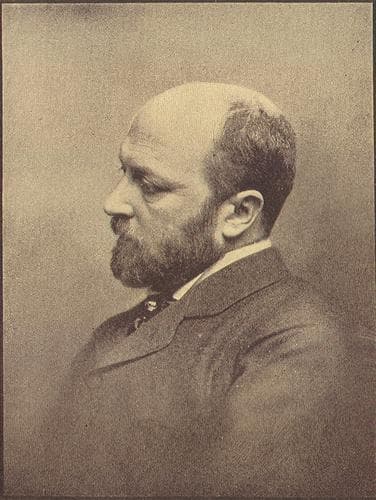
Henry James was an American-British author. He is regarded as a key transitional figure between literary realism and literary modernism, and is considered by many to be among the greatest novelists in the English language. He was the son of Henry James Sr. and the brother of philosopher and psychologist William James and diarist Alice James.

Ashley Antoinette
4.6

Mark McDonald
4.4
Luo Guanzhong
4.4

Mia McKenzie
4.3

Dorothy Parker
4.3

Joaquim Maria Machado de Assis
4.3

James Thurber
4.2

Terry Kay
4.2