“There are mysteries in life, not to be explained away by the vulgar arithmetic of the world.”
— Reflecting on the strange events and human nature.


Sheridan Le Fanu (2021)
Genre
Fiction
Reading Time
493 min
Key Themes
See below
Sign in to track this book
Trapped in the desolate mansion of her Uncle Silas, Maud Ruthyn must outwit a sinister plot by her guardian, his brutish son, and a malevolent governess who conspire to murder her for her inheritance.
Maud Ruthyn, the protagonist and narrator, describes her isolated childhood at Knowl, her family's ancestral home. Raised by her reclusive father, Austin Ruthyn, and a kind governess, Madame de la Rougierre, Maud is shielded from the outside world. Her father is a wealthy, melancholic man with peculiar habits. He is troubled by a past scandal involving his younger brother, Silas Ruthyn, who was accused, though acquitted, of murder years ago. This reputation casts a shadow over Austin, shaping his worldview and Maud's upbringing, as he often speaks of the 'evil' in the world.
Austin Ruthyn's health declines, and he becomes preoccupied with the afterlife and his wealth. In his will, he makes an unusual provision: Maud, after his death, is to live with his estranged brother, Silas Ruthyn, at Bartram-Haugh, until she comes of age or marries. This condition stems from Austin's belief that he owes Silas a chance at redemption, or perhaps to test Silas's character. Austin dies, leaving Maud a vast fortune and a unsettling guardianship. Maud is initially bewildered and fearful, having only heard whispers of her uncle's infamous past.
Maud, accompanied by Madame de la Rougierre, travels to Bartram-Haugh, a dilapidated and isolated estate. The journey feels ominous, and the house, upon arrival, is even more dismal than Maud imagined. She meets her Uncle Silas, a seemingly frail and pious old man, confined to his bed or chair, known for opium use and an unsettling intensity in his eyes. Also present are Silas's boorish son, Dudley Ruthyn, and the sinister French governess, Madame de la Rougierre, who, to Maud's dismay, quickly asserts control over Maud's daily life and correspondence.
Life at Bartram-Haugh becomes a nightmare for Maud. Madame de la Rougierre, instead of being a comfort, becomes her chief tormentor, intercepting letters, spreading rumors, and isolating her. Dudley Ruthyn, Silas's son, makes crude advances and threats, reminding Maud of her vulnerable position. Uncle Silas, despite his apparent infirmity, subtly manipulates the situation, watching Maud with chilling intensity. Maud feels trapped, her fortune now a source of extreme danger. She suspects her uncle and his accomplices are plotting against her, perhaps even her death, to get her inheritance. The house itself, with its secret passages, adds to her dread.
During her confinement, Maud meets her cousin, Milly Ruthyn, a kind young woman who lives nearby. Milly is the daughter of Silas's deceased brother and does not know the full extent of the schemes at Bartram-Haugh. Their initial meetings offer Maud hope and a rare moment of connection. Milly's presence is a temporary comfort, and Maud confides some of her fears, though she is careful not to reveal the full danger. Milly, though somewhat naive, expresses concern for Maud and offers what little solace she can, showing the contrast between her innocence and the evil around Maud.
Uncle Silas, through Madame de la Rougierre and Dudley, plots to force Maud into marriage with Dudley. Such a union would give Dudley, and by extension Silas, complete control over Maud's substantial inheritance. Maud resists, understanding that this marriage would seal her fate and effectively make her a prisoner for life, or worse. The pressure increases, with threats and psychological manipulation used to break her will. Maud's refusal only intensifies the malevolence directed at her, making it clear her life is in danger if she continues to defy their plans.
Driven by desperation, Maud tries to escape Bartram-Haugh. She attempts to use a moment of distraction or a perceived weakness in her captors' surveillance. However, her attempt is quickly discovered and suppressed by Madame de la Rougierre and Dudley. This failed escape only tightens the noose around her, leading to stricter confinement and increased vigilance from her tormentors. The incident highlights her helplessness and the control Silas and his accomplices have over her, further isolating her and deepening her despair. She realizes that physical escape is nearly impossible without outside help.
The plot reaches its climax when Maud is drugged and placed in her bed. The plan is to substitute her with another woman, a mentally ill local, whom Silas intends to murder, making it appear as though Maud has died. This scheme aims to get Maud's inheritance without directly implicating Silas. However, a crucial mistake occurs: the intended victim, the poor substitute, is mistaken for Maud and brutally murdered in her bed by Dudley and Madame de la Rougierre. Maud, still disoriented from the drug, witnesses parts of this horrifying event from a hidden spot, realizing the full extent of the evil she has escaped.
The murder of the substitute woman is soon discovered, throwing Bartram-Haugh into chaos. The local authorities are called, and an investigation begins. Maud, initially traumatized and disbelieved, eventually communicates the truth. Her testimony, combined with the evidence, exposes the plot. Dudley Ruthyn is apprehended for the murder. Uncle Silas, realizing his scheme has failed and his guilt is about to be exposed, dies of a sudden seizure, likely from stress and the failure of his plan. Madame de la Rougierre tries to flee but is also captured, facing justice for her role.
With the villains brought to justice and Silas dead, Maud is finally free from the terror of Bartram-Haugh. She inherits her fortune and can live a life free from immediate danger. The experience, however, leaves a lasting mark. She reflects on her father's will, understanding his intentions were perhaps noble but misguided, and that he ultimately placed her in grave danger. Maud finds solace in her newfound freedom and the lessons learned about human nature and evil. She eventually marries and lives a quiet life, shaped by the gothic horror she endured, but ultimately stronger and more self-aware.
The Protagonist
Maud transforms from a naive, sheltered heiress into a strong, perceptive survivor who understands the complexities of good and evil.
The Antagonist
Silas remains a consistent figure of malevolence, his outward piety a mask for his unwavering evil, until his death ends his machinations.
The Supporting
Austin's arc is completed before the main narrative, as his death and will are the catalyst for Maud's journey.
The Antagonist
Madame de la Rougierre's true malevolent nature is revealed and she remains a consistent antagonist, eventually facing justice for her crimes.
The Antagonist
Dudley serves as a physical threat throughout, his violence escalating to murder before his eventual capture and punishment.
The Supporting
Milly remains a static character, representing an untainted goodness in contrast to the pervasive evil.
The Supporting
Lady Knollys serves as a stable, albeit somewhat removed, presence of decency.
The Mentioned
Her brief, tragic appearance serves as a catalyst for the resolution of the plot.
The novel explores the insidious nature of evil, showing it not always as overt monstrosity, but as cunning and hidden beneath a veneer of piety or infirmity. Uncle Silas, with his outwardly frail and religious demeanor, embodies this deceptive evil, while Madame de la Rougierre and Dudley represent more direct manifestations. The story suggests that evil can reside in unexpected places and is more dangerous when disguised. Maud's journey forces her to confront and understand the true depravity humans are capable of, particularly when driven by greed, as seen in the elaborate murder plot against her.
“Evil, after all, is not always grand and theatrical; it is often petty, calculating, and hidden in plain sight.”
Maud Ruthyn's journey is a tale of innocence thrust into a corrupt and dangerous world. Her sheltered upbringing leaves her unprepared for the malevolence she encounters. The novel details the psychological torment and fear she endures, systematically stripping away her naivety. Her purity and vulnerability make her an ideal victim, showing how easily innocence can be exploited. Ultimately, her survival signifies the resilience of the human spirit, even when faced with overwhelming darkness, though she is forever changed by the ordeal.
“I was like a lamb, led to the slaughter, knowing nothing of the butcher's knife.”
Maud's vast fortune is both her blessing and her curse. It is the sole reason she becomes the target of Uncle Silas's scheme. The novel critiques the corrupting influence of wealth, showing how it can drive individuals to extreme acts of cruelty. The inheritance itself becomes a plot device, creating a motive for murder and shaping Maud's destiny. Her father's will, intended with a misguided sense of duty, inadvertently places his daughter's wealth and life in jeopardy, showing how even well-intentioned decisions can have dire consequences when vast sums of money are involved.
“My fortune was a golden chain, binding me to a fate I dreaded.”
Confinement and isolation are central to Maud's terror. From her sheltered childhood to her virtual imprisonment, Maud is repeatedly cut off from the outside world. At Bartram-Haugh, Madame de la Rougierre actively intercepts her mail and prevents her from contacting allies, creating a suffocating sense of helplessness. This physical and psychological isolation amplifies Maud's fear, making her feel utterly alone and vulnerable to the schemes of Silas and his accomplices. The decaying, isolated mansion itself acts as a metaphor for her trapped state.
“The great house was a prison, and its silence a torment.”
The novel plays with the deceptive nature of appearances. Uncle Silas appears as a frail, pious invalid, but is a cunning and ruthless villain. Madame de la Rougierre initially presents herself as a governess, only to reveal her cruel nature. Bartram-Haugh, while outwardly decaying, conceals hidden passages and sinister secrets. This theme keeps both Maud and the reader on edge, questioning who can be trusted and what lies beneath the surface. It shows that what is seen is often not what is true, adding to the psychological suspense.
“How often does the serpent hide its venom beneath the fairest leaves?”
Austin Ruthyn's peculiar will dictating Maud's guardianship.
Austin Ruthyn's will, which mandates Maud's residency with Uncle Silas, serves as the primary catalyst for the entire plot. It is an unusual and highly specific condition, born from Austin's complex spiritual beliefs and his desire to 'redeem' his brother. This device immediately places Maud in a vulnerable and dangerous situation, creating the central conflict. It also provides a moral ambiguity, as Austin's well-intentioned but misguided act ultimately endangers his daughter, highlighting the unforeseen consequences of controlling another's destiny, even posthumously.
The decaying, isolated mansion that serves as Maud's prison.
Bartram-Haugh is a classic gothic setting: a dilapidated, isolated, and foreboding mansion with secret passages, echoing halls, and a pervasive sense of decay. It functions as more than just a backdrop; it is an active participant in Maud's terror. Its isolation prevents escape and outside intervention, while its labyrinthine layout and hidden spaces amplify the sense of mystery and threat. The atmosphere of the house reflects Maud's psychological state and the sinister events unfolding within its walls, enhancing the novel's suspense and dread.
The use of a substitute woman to impersonate Maud for a murder plot.
The device of the 'double' or impersonation is central to the climax of the novel. Silas and his accomplices plan to substitute Maud with another woman, a mentally ill local, to murder her in Maud's bed. This not only creates a terrifying near-miss for Maud but also underscores the depravity of the villains, willing to sacrifice an innocent life to achieve their ends. The confusion and the mistaken identity elevate the tension and horror, making the eventual discovery of the true victim a shocking and pivotal moment in the narrative.
The story is told entirely from Maud's subjective perspective.
The novel is narrated entirely by Maud Ruthyn, offering a deeply personal and subjective account of her experiences. This first-person perspective allows the reader to fully immerse themselves in Maud's growing fear, confusion, and psychological torment. It builds suspense by limiting the reader's knowledge to what Maud herself perceives, making the revelations and twists more impactful. Her innocent and often naive viewpoint initially heightens the horror of the evil she encounters, making the reader experience the world through her vulnerable eyes.
“There are mysteries in life, not to be explained away by the vulgar arithmetic of the world.”
— Reflecting on the strange events and human nature.
“Suspicion, once fairly lodged, is not easily dislodged.”
— Maud Ruthyn observing the growing distrust around her.
“It is a dreadful thing to be alone, utterly alone, with a secret that may destroy you.”
— Maud grappling with her fears and the danger she perceives.
“The very air of the place seemed charged with a sinister, brooding spirit.”
— Maud's first impressions of Knowl, Uncle Silas's estate.
“There are some natures so finely strung that they vibrate to every breath of evil.”
— A general observation on sensitive individuals and impending doom.
“What a strange thing is the human heart, how easily it can be swayed by fear, and how desperately it clings to hope!”
— Maud's internal monologue about her own emotional state.
“He had that peculiar stillness which is sometimes the sign of profound thought, sometimes of profound cunning.”
— Describing Uncle Silas's enigmatic demeanor.
“A great house, like a great family, has its own tragedies, its own secrets, its own slow decay.”
— Reflecting on the decline of a once grand estate and its inhabitants.
“The past, like a haunting shadow, stretches its long fingers into the present.”
— Consideration of the historical events influencing current dangers.
“There is a kind of silent terror that is more dreadful than any spoken threat.”
— Maud experiencing psychological dread rather than overt violence.
“The truth, like murder, will out.”
— A classic adage applied to uncovering the deceptions.
“It is often the most innocent-seeming things that hide the greatest danger.”
— Maud realizing the deceptive nature of her surroundings and some characters.
“The night has a way of magnifying fears, of giving substance to the shadows of the mind.”
— Maud's experiences during the dark hours at Knowl.
“There is a fatality in some lives that seems to draw them inevitably towards their doom.”
— A philosophical reflection on predestination and tragic fates.
Ready to see how well you understood this book? Take our interactive quiz with 10 questions.
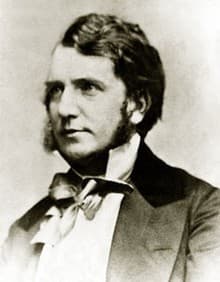
Joseph Thomas Sheridan Le Fanu was an Irish writer of Gothic tales, mystery novels, and horror fiction. He was a leading ghost story writer of his time, central to the development of the genre in the Victorian era. M. R. James described Le Fanu as "absolutely in the first rank as a writer of ghost stories". Three of his best-known works are the locked-room mystery Uncle Silas, the lesbian vampire novella Carmilla, and the historical novel The House by the Churchyard.

Ashley Antoinette
4.6

Mark McDonald
4.4
Luo Guanzhong
4.4

Mia McKenzie
4.3
Dorothy Parker
4.3
Joaquim Maria Machado de Assis
4.3
James Thurber
4.2

Terry Kay
4.2