“The only way to solve the problem of existence is to stop trying to solve it.”
— A philosophical musing on the futility of overthinking life's grand questions.


Vladimir Nabokov (1972)
Genre
Fiction
Reading Time
150 min
Key Themes
See below
Sign in to track this book
In Nabokov's "Transparent Things," a gawky publisher's four Swiss trips become a haunting spiral of love, murder, madness, and a desperate attempt to find a past as elusive and fragmented as the objects he observes.
The novel opens with an omniscient, collective narration, stating their intention to follow Hugh Person's life. They hint at his eventual death by fire. Hugh, a young American publisher, arrives in Switzerland for the first time on a business trip to interview the reclusive novelist, Mr. R. He checks into a hotel and immediately feels a connection to the landscape. During his stay, he meets Armande Chamar, a striking, enigmatic woman who captivates him. This initial visit sets the stage for the events of his life, largely defined by his pursuit of Armande and the tragic consequences that follow.
Hugh Person is deeply smitten with Armande Chamar. He observes her constantly, and is tormented by her apparent indifference and the presence of a grinning Scandinavian rival, whom he calls 'the Scandinavian.' Hugh's attempts to court Armande are clumsy. He struggles with his awkwardness and her aloof, almost cruel, demeanor. The narrators emphasize Armande's elusive nature and her tendency to manipulate, highlighting Hugh's vulnerability. Despite the obstacles, Hugh is determined to make Armande his own, driven by a powerful love.
Against the odds, Hugh manages to marry Armande, bringing her back to New York. However, their marriage is not easy. Armande remains distant and enigmatic, often refusing to engage with Hugh emotionally. She has fits of temper and a general lack of interest in domestic life. Hugh, despite his deep love, feels isolated and frustrated by her unresponsiveness. The narrators frequently interject with observations about Armande's 'transparent' nature, hinting at an emptiness or a deliberate withholding of self, which prevents true intimacy.
During a tense argument, Hugh accidentally smothers Armande with a pillow. The narrators clarify that it was an unintended act, a tragic culmination of their dysfunctional relationship rather than premeditated murder. The shock of Armande's death, coupled with guilt and stress, sends Hugh into a mental breakdown. He is arrested, tried, and, due to his disturbed mental state, is committed to an asylum rather than serving a traditional prison sentence. This period marks a significant turning point, separating him from his former life and plunging him into prolonged grief and psychological distress.
Eight years after Armande's death and his institutionalization, Hugh Person is released from the asylum. Scarred, he decides to travel alone back to Switzerland, where his life with Armande began. His motivation is complex: a blend of nostalgia, a desire to confront his past, and perhaps to find closure. This return is a pilgrimage, a deliberate revisiting of the sites of his joy and sorrow, as he tries to piece together his memories and the events that led to his downfall.
Upon his return to Switzerland, Hugh revisits the hotels, streets, and natural landscapes he shared with Armande. Each location, each 'transparent thing' he encounters—a hotel room, a mountain path, an object—acts as a way to access his memories. The narrators emphasize these objects' power to evoke the past, highlighting how ordinary items gain significance through human experience. Hugh grapples with memory's elusive nature, how the past can seem both real and out of reach, as he tries to reconstruct his first visit and his relationship with Armande.
During his return trip, Hugh finally achieves his original objective from years ago: he meets the reclusive novelist, Mr. R. This encounter is important, as Mr. R. is a philosophical counterpoint to Hugh's emotional journey. Mr. R. is a detached intellectual, offering observations on time, memory, and reality, often through literature. His musings, while abstract, reflect the themes Hugh experiences firsthand, providing a meta-commentary on the narrative and the human condition. Their brief conversation leaves a lasting impression on Hugh, offering a different perspective on his tragedy.
Hugh Person checks into a hotel, the same one where he had stayed on his first visit to Switzerland. The narrators' initial premonition of his death by fire comes true. A fire breaks out in the hotel, and Hugh, perhaps due to a mental fog or resignation, does not escape. His death is both an accident and a fated conclusion, a final act in a life defined by tragedy and a relentless pursuit of an elusive past. The fire, a destructive force, also illuminates his existence, bringing his journey to an end.
Following Hugh's death, the narrators offer final reflections, reinforcing their role as cosmic observers. They continue to dissect Hugh's life, his choices, and the interplay of fate and free will that shaped his destiny. They revisit the concept of 'transparent things,' emphasizing how every object, every moment, holds within it the past's ghosts and the potential for future events. Their commentary expands beyond Hugh's story, touching upon broader philosophical questions about time, memory, and the human attempt to find meaning in a world where everything eventually becomes transparent, revealing its inherent past and future.
The novel's conclusion reinforces the idea that time is not linear but cyclical, and that memories, like 'transparent things,' persist and influence the present. The narrators suggest that Hugh's story, though ended, continues to resonate, becoming part of the larger human experience. The narrative voice, which has guided the reader through Hugh's life and death, emphasizes that even after an individual's demise, their past continues to exist, accessible through the objects and places they touched. The final words leave the reader contemplating the interconnectedness of all things and the impact of even small moments.
The Protagonist
Hugh transforms from an earnest, lovestruck young man into a haunted, introspective individual, ultimately finding a form of peace or resignation in revisiting his past before his fated end.
The Love Interest/Catalyst
Armande remains largely static, a beautiful, enigmatic force that drives Hugh's narrative without significant personal development, embodying the 'transparent' nature of existence.
The Supporting/Philosophical Voice
Mr. R. functions primarily as a thematic device, his wisdom remaining consistent throughout, serving to articulate the novel's core philosophical concerns.
The Omniscient Entity
The narrators maintain a consistent, omniscient perspective, evolving only in the depth and breadth of their philosophical musings as Hugh's story unfolds.
The Mentioned/Minor Antagonist
The Scandinavian appears briefly as an initial hurdle for Hugh and then fades from the narrative, having served his purpose as a catalyst for Hugh's early romantic struggles.
The central theme is that every object, every moment, is inherently 'transparent,' revealing its past and hinting at its future. The narrators constantly emphasize how mundane items—a pencil, a hotel room, a specific path—are filled with layers of memory and potential. For Hugh, revisiting Switzerland makes these objects intensely transparent, each one a window into his past with Armande, showing him what was and what could have been. This theme suggests that reality is not static but a constantly shifting record of time and experience.
“When we concentrate on a material object, whatever its nature... the thing is with a little more attention, a little more knowledge, a little more tenderness, becomes transparent, as it were, and we see a blush of its past and an intimation of its future.”
The novel explores memory's non-linear and elusive nature, and how time is seen not as a straight line but as a complex, interconnected web. Hugh's journey back to Switzerland is a deliberate act of memory retrieval, but he finds that memories are fragmented, often distorted, and linked to specific places and objects. The narrators frequently disrupt the story's chronological flow, jumping between past, present, and future, showing how all moments coexist. This theme questions memory's reliability and suggests that the past is never truly gone but merely hidden.
“The past is a series of transparent layers, and these layers, like the skin of an onion, can be peeled off to reveal what lies beneath.”
Hugh's love for Armande is a central driving force, but it quickly becomes an obsessive, isolating experience. Armande's enigmatic and distant nature prevents true intimacy, leaving Hugh feeling alone even within their marriage. His love is largely unrequited, and her 'transparency' mirrors his inability to truly know her. This theme highlights how intense emotional attachment, when not reciprocated or understood, can lead to devastating personal consequences, culminating in tragedy and Hugh's subsequent isolation.
“He loved her with a passion that was both noble and absurd.”
From the beginning, the narrators foreshadow Hugh's death by fire, suggesting a predetermined fate. However, Hugh's actions, his pursuit of Armande, and his accidental involvement in her death, imply elements of free will and personal responsibility. The novel constantly moves between these two concepts, questioning whether Hugh is merely playing out a script or if his choices contribute to his destiny. This ambiguity adds philosophical depth, inviting the reader to consider the interplay between external forces and individual agency in shaping a life.
“It was not a murder in the accepted sense of the term, but an accident, or rather the logical end of a chain of events set in motion long ago.”
A disembodied 'we' that observes, comments, and foretells events.
The novel is narrated by a unique, collective 'we' that possesses complete knowledge of Hugh Person's past, present, and future. This device allows for constant meta-commentary on the story, its characters, and its themes. The narrators frequently break the fourth wall, directly addressing the reader and offering philosophical insights. Their foreknowledge of Hugh's death by fire establishes a sense of tragic inevitability, shaping the reader's perception of events and adding a layer of cosmic irony to Hugh's struggles. This narrative voice is crucial for exploring the novel's complex ideas about time and memory.
Hints and explicit statements about future events, particularly Hugh's death.
Foreshadowing is a prominent device, used from the very first paragraph when the narrators explicitly state Hugh will die in a hotel fire. This creates a sense of impending doom and allows the reader to observe Hugh's journey with a tragic awareness. Subtle hints about Armande's 'transparency' also foreshadow the lack of genuine connection in their marriage and the eventual fragility of her existence. This device reinforces the theme of fate and adds dramatic tension, even when the outcome is known.
The novel comments on its own construction and the nature of storytelling.
Transparent Things frequently engages in metafiction, with the narrators openly discussing the process of storytelling, the choices they make in presenting Hugh's life, and the very nature of fiction itself. Mr. R.'s literary theories also contribute to this, offering a commentary on the construction of narrative and the relationship between author, character, and reader. This device draws attention to the artificiality of the narrative while simultaneously deepening its philosophical impact, inviting the reader to consider the act of reading and interpretation.
Ordinary objects imbued with profound meaning and layers of time.
The concept of 'transparent things' is both a central theme and a powerful symbolic device. Ordinary objects—a pencil, a room, a landscape—become symbolic conduits for memory, emotion, and the passage of time. For Hugh, these items are not merely physical objects but repositories of his past with Armande, each revealing glimpses of what was and what could be. This device allows the novel to explore the interconnectedness of all things and how the material world is constantly imbued with human experience and subjective meaning.
“The only way to solve the problem of existence is to stop trying to solve it.”
— A philosophical musing on the futility of overthinking life's grand questions.
“In the beginning, all was a blur. The end, too, is a blur, but of a different kind.”
— Reflecting on the hazy nature of both beginnings and endings in life's narrative.
“Every object has a aura, a past, a potential future, a soul almost.”
— Describing the profound interconnectedness and history embedded within seemingly mundane objects.
“We are all transparent things, in a way, through which light and darkness pass.”
— A central metaphor of the book, suggesting human vulnerability and receptiveness to external forces.
“Memory, after all, is a form of invention.”
— Highlighting the subjective and reconstructive nature of human memory.
“The present is a film of the past, run at dizzying speed.”
— A poetic description of how past experiences constantly inform and shape the present moment.
“One never really knows another person, only the stories they tell about themselves.”
— Exploring the inherent limitations in truly understanding another's inner world.
“Death is but a change of focus.”
— A unique perspective on mortality, suggesting a shift in perception rather than absolute cessation.
“The greatest art is to conceal art.”
— A statement on the subtlety and skill required for true artistic mastery.
“To be truly alive is to be aware of the constant possibility of non-existence.”
— A meditation on the fragility of life and the heightened awareness it brings.
“Words are but shadows of thoughts.”
— Reflecting on the inadequacy of language to fully capture the complexity of human thought.
“Every secret contains a universe.”
— Emphasizing the hidden depths and intricate details within concealed information.
“The future is merely the past rearranged.”
— Suggesting a cyclical view of time where future events echo or reconfigure past patterns.
“A writer's true subject is always himself.”
— A meta-commentary on the inherent self-reflection and personal imprint in all creative writing.
Ready to see how well you understood this book? Take our interactive quiz with 10 questions.
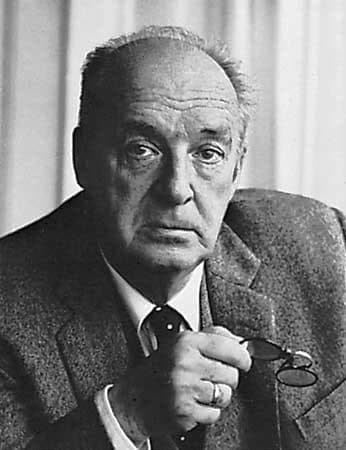
Vladimir Vladimirovich Nabokov, also known by the pen name Vladimir Sirin, was an expatriate Russian and Russian-American novelist, poet, translator, and entomologist. Born in Imperial Russia in 1899, Nabokov wrote his first nine novels in Russian (1926–1938) while living in Berlin, where he met his wife. He achieved international acclaim and prominence after moving to the United States, where he began writing in English. Nabokov became an American citizen in 1945 and lived mostly on the East Coast before returning to Europe in 1961, where he settled in Montreux, Switzerland.

Ashley Antoinette
4.6

Mark McDonald
4.4
Luo Guanzhong
4.4

Mia McKenzie
4.3
Dorothy Parker
4.3

Joaquim Maria Machado de Assis
4.3

James Thurber
4.2

Terry Kay
4.2