“He had been out too many times to be frightened by a mere twinge of cold.”
— The man's initial underestimation of the extreme Yukon cold.

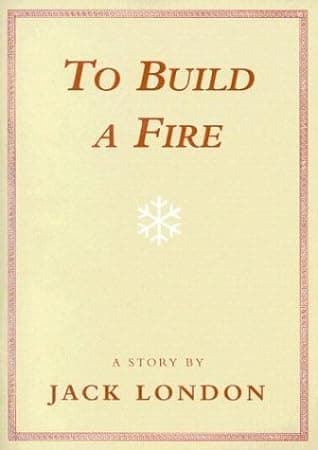
Jack London (1960)
Genre
Fiction
Reading Time
30 min
Key Themes
See below
Sign in to track this book
In the unforgiving Yukon, a lone prospector battles the brutal cold and his own hubris, learning too late that nature's power far exceeds human will.
A man, new to the Yukon and ignoring warnings, begins a journey through the sub-zero Alaskan wilderness to meet companions at an old mining camp. He is accompanied only by a large husky, which instinctively understands the danger of the severe cold, fifty degrees below zero. The man is confident in his ability to endure the cold, relying on his judgment and preparedness, despite the dog's reluctance and its fear of the biting frost. He focuses on avoiding hidden springs and misjudges the true danger of the environment, believing his experience is enough.
As the man travels, he experiences the cold's immediate effects: his beard freezes, and his spittle crackles in the air. He chews tobacco, and the frozen spittle forms an icicle on his chin. The dog, driven by instinct, occasionally licks the ice from its paws to prevent them from freezing, a behavior the man observes but does not fully take as a warning. The man thinks about the old-timer's advice about never traveling alone in such conditions but dismisses it, believing his own skill and the thought of a warm fire and bacon at camp are enough. He continues to underestimate nature's power.
Around midday, the man stops to build a fire to warm himself and eat his biscuits and bacon. He gathers small twigs, then larger branches, and skillfully ignites a fire. The dog, sensing the warmth, curls up near the flames, experiencing temporary relief. While eating, the man notices his fingers are numb, a subtle warning sign he attributes to the cold rather than a critical loss of sensation. He feels a sense of accomplishment and reinforces his belief in his own competence, further dismissing the old-timer's warnings. He believes he has successfully overcome a minor challenge.
After lunch, the man continues his journey. He is careful about the hidden springs beneath the snow, a constant danger. However, despite his care, he misjudges a section of ice. Suddenly, the ice gives way, and he plunges through, soaking his feet and lower legs in the frigid water. This incident is a critical turning point, immediately threatening his survival. The man must now build another fire quickly to prevent his feet from freezing, realizing the seriousness of his mistake and the immediate need for action. The dog instinctively knows the danger and watches him intently.
With his feet rapidly freezing, the man knows he must build a fire immediately. He finds a suitable spot under a spruce tree, where he has already gathered some kindling. His fingers, however, are now stiff and clumsy, making the simple act of striking a match and feeding the tiny flame a monumental task. He struggles to hold the matches, dropping them multiple times. The frostbite begins to set in, reducing his dexterity and his ability to control his movements. The dog watches, understanding the man's predicament and the importance of the fire for both their lives.
As the man carefully nurses the tiny flame, a critical error occurs. He has built the fire directly beneath a snow-laden spruce tree. In his haste and numbed state, he accidentally jostles the branches above, or the heat from the fire weakens the snow's hold. A large amount of snow falls from the branches, smothering the new fire. This event is devastating; the man's only hope for survival is extinguished, and he is left with no warmth and rapidly freezing extremities. He is now acutely aware of his dire situation and nature's true indifference.
With the fire gone, the man's situation becomes desperate. He tries to build another fire, but his hands are now completely frozen and useless, unable to hold matches or manipulate kindling. Panic begins to set in. He remembers a story of a man who saved himself by killing a steer and warming his hands inside its carcass. He considers killing his dog and burying his hands in its warm body, but he cannot grasp his knife. His thoughts become increasingly frantic and illogical as his body succumbs to the cold, and he starts to lose his grip on reality.
In a final, desperate attempt to generate warmth and reach his companions, the man decides to run. He imagines himself reaching the camp, surprising the men, and being praised for his endurance. He starts running, but his frozen feet and legs are unresponsive. He stumbles, falls, and struggles to get up. The effort is immense, and his body is rapidly failing him. He cannot feel his feet or hands, and his breathing becomes labored. The dog trots alongside him, observing his erratic behavior, sensing the man's impending doom with its primal instincts.
Exhausted and hypothermic, the man collapses for the final time. He lies in the snow, his thoughts drifting. He imagines himself with the old-timer from Sulphur Creek, admitting the old man was right. He experiences a strange sense of peace, a detachment from his physical suffering. He sees himself from above, a figure lying in the snow, and understands that he is dying. The cold is no longer painful; it is a gentle numbing embrace. He feels an irresistible urge to sleep, a sleep from which he knows he will not wake.
The man succumbs to the cold, his last breath a faint cloud in the frigid air. His body lies still in the snow, a stark example of the unforgiving wilderness. The dog, after waiting patiently for a while, senses the man's death. It whines once, then sniffs the body, confirming the absence of life. Driven by its instincts and the need for warmth and food, the dog turns and trots away from the lifeless form, heading towards the distant camp where it knows there will be fire and food. The wilderness remains indifferent, and life continues for the animal.
The Protagonist
The Man's arc is one of tragic downfall, from overconfidence to desperate struggle, and finally to a fatal realization of his own insignificance in the face of nature.
The Supporting
The Dog's arc is circular; it begins and ends as an animal driven by instinct, its understanding of the world unchanged by the man's tragedy.
The Mentioned
The Old-Timer's role is static; his wisdom is presented as absolute and proven true by the story's events.
This is the central theme, exploring the brutal indifference of the natural world to human life and the futility of human arrogance against its power. The Yukon wilderness is not actively malicious, but simply exists, its laws absolute and unforgiving. The man's struggle to build a fire, his frozen hands, and ultimately his death, all show nature's overwhelming dominance. London emphasizes that survival in such an environment requires more than just intelligence; it demands instinct, respect, and a deep understanding of its dangers. The man's intellectual approach fails where the dog's instinctual one would have succeeded.
“He was a man of the Yukon, who had learned to travel in the snow, and to be careful of his fire. He had never been lost, and he had never been cold. He had never been afraid. But now he was afraid.”
London clearly contrasts the man's reliance on intellect and learned knowledge with the dog's deep, innate instincts. The man calculates, plans, and dismisses warnings, believing his logic and skill are enough. He sees the cold as a problem to be solved with practical steps. The dog, however, feels the cold deeply, instinctively knowing when to seek shelter, lick its paws, or huddle by a fire. Its survival mechanism is an unthinking, ancient wisdom. The story argues that in extreme environments, instinct is a better guide than abstract thought, highlighting the man's tragic flaw in underestimating this fundamental difference.
“The trouble with him was that he was not able to imagine. He was quick and alert in the things of life, but only in the things, themselves, not in the significances.”
The man's journey is a cautionary tale about human hubris. He sets out with an overconfident attitude, dismissing the old-timer's sound advice and believing himself superior to the environment. His initial successes in building a fire and enduring the cold only reinforce this arrogance. It is only when he is utterly defeated by the cold, his body failing and his life slipping away, that he experiences a moment of humility, acknowledging the old-timer was right. This theme emphasizes that true wisdom often comes from recognizing one's limitations and respecting forces greater than oneself, a lesson the man learns too late.
“The man had been very serious, and had told him that no man must travel alone in the Klondike after fifty below zero. Well, here he was; he had had his accident; he was alone; and he had had his fire all right.”
The story explores the harsh realities of survival in a hostile environment and the certainty of death when one fails to adapt. Every action the man takes is a fight for survival, from building a fire to trying to run. London details the physical effects of the cold, from numbness to freezing, showing the gradual process of dying. The man's ultimate failure emphasizes the fragility of human life and the unforgiving nature of the wilderness. Death is presented not as a dramatic event, but as a quiet, inevitable surrender to nature's overwhelming power, a process that is both terrifying and, in its final moments, strangely peaceful.
“He would die, that was all. He would freeze to death. He would go to sleep. He closed his eyes and dreamed of the fire.”
Hints and warnings about the man's eventual demise.
From the very beginning, London employs strong foreshadowing. The old-timer's warning not to travel alone, the dog's instinctive reluctance, the man's numb fingers during the first fire, and the constant threat of hidden springs all hint at the coming tragedy. These elements create a sense of impending doom and underscore the man's fatal arrogance in ignoring them, making his ultimate demise feel inevitable rather than random.
A detached, all-knowing narrator provides insight into both human and animal perspectives.
The story is told from a third-person omniscient perspective, allowing the narrator to delve into the man's thoughts and internal struggles, while also providing insight into the dog's instinctual understanding and the objective, indifferent reality of the environment. This narrative distance emphasizes the man's isolation and highlights the contrast between his intellectual processes and the dog's primal awareness, reinforcing the story's themes of man vs. nature and instinct vs. intellect.
Fire represents life, hope, and human control against the wilderness.
Fire is a powerful symbol in the story, representing life, warmth, and the man's precarious hold on existence. Each attempt to build a fire is a struggle for survival, and its presence brings temporary relief and hope. Its extinguishing is a direct metaphor for the man's fading life force and the triumph of the cold. The man's inability to build a final fire signifies his complete defeat by nature and the ultimate loss of his life.
The Yukon wilderness itself acts as the primary opposing force.
The extreme cold and vast, indifferent wilderness of the Yukon are not merely a backdrop but the story's main antagonist. London personifies the cold as a palpable, active force that 'struck' and 'bit,' creating a relentless enemy that is neither good nor evil, but utterly unforgiving. The environment systematically strips the man of his abilities and ultimately his life, demonstrating its overwhelming power and the futility of human struggle against it.
“He had been out too many times to be frightened by a mere twinge of cold.”
— The man's initial underestimation of the extreme Yukon cold.
“The dog knew; all its ancestry knew, and it had inherited the knowledge.”
— Contrasting the man's lack of instinct with the dog's innate understanding of the cold.
“It was true cold, not the kind that numbs a little, but the kind that kills.”
— Describing the deadly intensity of the Yukon winter.
“The trouble with him was that he was not much of an imagination.”
— Highlighting the man's fatal flaw: his inability to comprehend the true danger.
“He was a man of the land, and of the sea, and of the wilderness.”
— A general description of the man, emphasizing his experience but not his wisdom.
“He was not worried. The Yukon was no stranger to him.”
— The man's initial overconfidence despite the extreme conditions.
“He had no chance whatever to build a fire.”
— The stark realization of his impending doom after his last match fails.
“He was a man who did not understand the meaning of life, and therefore, did not understand the meaning of death.”
— A philosophical reflection on the man's lack of deeper understanding.
“He was a newcomer to the land, a chechaquo, and this was his first winter.”
— The man's inexperience contrasted with the dog's ingrained knowledge.
“He had a fine contempt for the man who was afraid of the cold.”
— The man's disdain for caution, contributing to his downfall.
“It was an unthinking, primitive, and savage fear that now possessed him.”
— The man's final descent into primal panic as death approaches.
“He would die. It was like a game, and he had lost.”
— The man's acceptance of his fate, framed as a losing game.
“The dog was not concerned with the man's thoughts, but with the fire.”
— Illustrating the dog's singular focus on survival, contrasting with the man's complex thoughts.
“He was going to be all right. All he had to do was to build a fire.”
— The man's initial, naive belief that building a fire would solve all his problems.
Ready to see how well you understood this book? Take our interactive quiz with 10 questions.
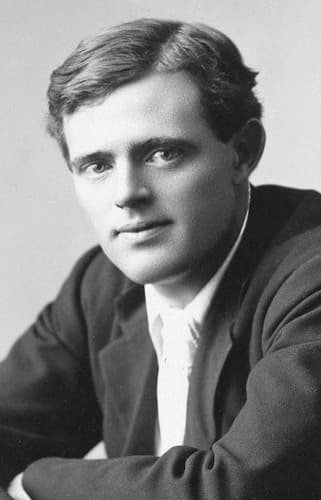
John Griffith Chaney, better known as Jack London, was an American novelist, journalist and activist. A pioneer of commercial fiction and American magazines, he was one of the first American authors to become an international celebrity and earn a large fortune from writing. He was also an innovator in the genre that would later become known as science fiction.

Ashley Antoinette
4.6

Mark McDonald
4.4
Luo Guanzhong
4.4

Mia McKenzie
4.3
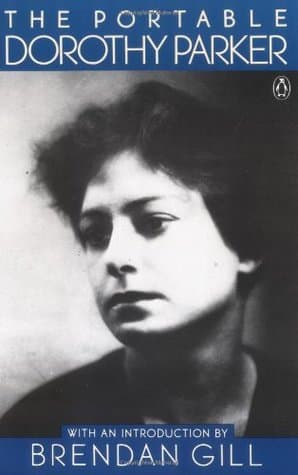
Dorothy Parker
4.3

Joaquim Maria Machado de Assis
4.3
James Thurber
4.2
Terry Kay
4.2