“The human mind is a very curious thing. It's like a jigsaw puzzle, and sometimes you have to put the pieces together in a very odd way to see the full picture.”
— Spoken by Satterthwaite, reflecting on the nature of understanding a crime.

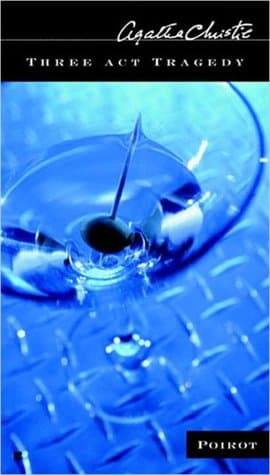
Agatha Christie (1977)
Genre
Mystery
Reading Time
336 min
Key Themes
See below
Sign in to track this book
When a seemingly natural death at a dinner party is revealed to be a meticulously orchestrated murder without a trace of poison, Hercule Poirot must unravel a web of deception where the most obvious victim might not be the true target.
Sir Charles Cartwright, a retired actor, hosts a dinner party at his country estate, Crow's Nest. Among the thirteen guests are Hercule Poirot, Mr. Satterthwaite, Hermione 'Egg' Lytton Gore, and Reverend Stephen Babbington. During pre-dinner cocktails, Reverend Babbington chokes, goes into convulsions, and dies. The immediate thought is a heart attack or stroke. Dr. Bartholomew, another guest, examines him and confirms his death, calling it natural. Poirot, watching, notes the unusual death but finds no clear signs of foul play. The evening ends on a somber note, leaving guests and hosts shaken.
After Reverend Babbington's death, no official investigation begins as Dr. Bartholomew certifies it as natural. However, Poirot, a guest at the party, feels disturbed. He remembers a slight tremor in Babbington's hand and a strange look in his eyes just before he collapsed. He discusses his unease with Mr. Satterthwaite, who often helps him. Poirot thinks that if it was murder, the poison must have been given in a way that leaves no trace or mimics natural causes. He asks for the cocktail glass to be analyzed, but no poison is found, seemingly confirming the natural death and frustrating Poirot's intuition.
Several months later, Sir Charles Cartwright stays at the home of his friend, Sir Bartholomew Strange, a neurologist, in Lyme Regis. Sir Bartholomew hosts a dinner party, and among the guests is Lady Mary Lytton Gore, Egg's mother, who was also at Sir Charles's first party. During the evening, Sir Bartholomew Strange falls ill and dies after drinking a glass of crème de menthe. This death immediately alarms Sir Charles and Mr. Satterthwaite, as the circumstances mirror Reverend Babbington's death. Poirot is contacted, and murder becomes undeniable, especially with the connection to the previous event and shared guest list.
Upon hearing of Sir Bartholomew Strange's death, Hercule Poirot believes the two incidents are linked and involve murder. He travels to Lyme Regis and begins his investigation. He interviews the remaining guests from both dinner parties, including Sir Charles, Mr. Satterthwaite, Egg, and Lady Mary. Poirot focuses on the details of both deaths: the drinks consumed (cocktail for Babbington, crème de menthe for Strange), the lack of immediate poison detection, and the unusual timing. He starts to build a profile of the killer, realizing the method is designed to appear natural and the motive might be deeply hidden or simple.
Poirot, helped by Mr. Satterthwaite and sometimes Egg, looks into the backgrounds of Reverend Babbington and Sir Bartholomew Strange, seeking connections or secrets that might provide a motive. He finds that Sir Bartholomew was a wealthy man with many acquaintances, and his will is of interest. For Babbington, a quiet vicar, a clear motive is harder to find. The poisoning method is also a major puzzle. Poirot considers various scenarios: poison in the drink, on the glass rim, or ingested earlier. The fact that the first death showed no trace of poison in the glass is a significant challenge, suggesting a sophisticated or unusual approach.
The investigation takes a shocking turn when Miss Milray, Sir Charles Cartwright's secretary, is found dead in her room at Crow's Nest, an apparent suicide by sleeping pills. A suicide note is found, confessing to the murders of Reverend Babbington and Sir Bartholomew Strange. This development initially seems to close the case, explaining the events. However, Poirot remains unconvinced. He knows Miss Milray well and finds it hard to believe she is the killer, or that she would commit suicide after confessing. He suspects this is another layer of deception meant to mislead the investigation.
Poirot carefully examines the scene of Miss Milray's death and the alleged suicide note. He finds subtle inconsistencies that strengthen his belief that she was murdered and the confession faked. The handwriting, the note's phrasing, and Miss Milray's character do not match the suicide scenario. Poirot deduces that the killer, desperate to tie up loose ends and deflect suspicion, staged her death to appear as a confession and suicide. This realization makes the case more complex, showing a ruthless killer willing to eliminate anyone who might pose a threat or reveal their identity. Poirot now understands the killer is playing a dangerous game.
With Miss Milray's death confirmed as murder, Poirot focuses more on the remaining guests from the original party, especially those also present at Sir Bartholomew's. He re-interviews everyone, paying close attention to their reactions, alibis, and any small details they might have missed or hidden. Mr. Satterthwaite and Egg help him, providing observations and insights. Poirot starts to concentrate on the relationships between the characters, their financial situations, and any personal grievances. He also re-examines the poisoning method, convinced it must be something that could be subtly introduced and then disappear without a trace quickly.
Poirot finally solves the mystery of the poisoning method. He realizes the poison was not in the drinks or on the glass rims, but on the killer's fingernail. The killer would offer a cigarette or other item to the victim, then subtly touch their hand, transferring a small amount of nicotine poison (or a similar fast-acting, easily absorbed poison) from under their fingernail. The victim, unknowingly, would then touch their lips or mouth while drinking, ingesting the poison. This method explains why no poison was found in the glasses and why the deaths appeared to be natural, as the poison would be quickly absorbed and metabolized.
Gathering all the suspects, Poirot dramatically reveals the killer: Sir Charles Cartwright. The motive was to marry Egg, who would inherit a large fortune. Reverend Babbington was killed because he had seen Sir Charles's manipulative nature and was about to expose him. Sir Bartholomew Strange was killed because he was a psychiatrist who had treated a patient with a similar psychological profile to Sir Charles and might have recognized his manipulative tendencies, threatening his plans. Miss Milray was murdered because she had become suspicious and was close to discovering the truth. Sir Charles, the charming host, used his acting skills to deceive everyone, carefully planning each death to appear as natural causes or suicide, even framing his own secretary.
The Protagonist
Poirot remains steadfast in his belief that murder has occurred, even when faced with contradictory evidence, ultimately using his unique methods to expose a highly deceptive killer.
The Antagonist
Initially appearing as a grieving friend and host, Sir Charles is slowly revealed to be the calculating, cold-blooded murderer, using his charm and acting skills as a weapon.
The Supporting
Mr. Satterthwaite consistently supports Poirot's theories, even when they seem far-fetched, and aids in the investigation, growing in his understanding of human duplicity.
The Supporting
Egg evolves from being a smitten, somewhat naive admirer of Sir Charles into a more discerning and emotionally resilient young woman as she confronts the reality of his villainy.
The Victim
Babbington dies early in the story, serving as the catalyst for Poirot's investigation and the first piece in a complex puzzle.
The Victim
Sir Bartholomew's death provides irrefutable evidence for Poirot that a killer is at work, escalating the investigation.
The Victim
Miss Milray's growing suspicion leads to her murder, which Poirot quickly identifies as a faked suicide, solidifying his understanding of the killer's ruthlessness.
The Supporting
Lady Mary remains largely unaware of the extent of the danger and deception around her, serving as a contrast to the detective's acute perceptions.
This theme is central to the novel, as the killer, Sir Charles Cartwright, is skilled at disguise and deception, both as a retired actor and in his social interactions. He presents himself as charming, kind, and grief-stricken, completely hiding his ruthless nature. The deaths themselves are made to look like natural causes or suicides, further hiding the reality of murder. Poirot's insight comes from seeing past these appearances, trusting his intuition that something is 'not right' despite all evidence, as when he insists on a chemical analysis of Babbington's glass even when no one else suspects foul play.
“''The trouble with you, Poirot, is that you see too much. And the trouble with me is that I see too little.''”
The novel explores how evil can exist within seemingly respectable and charming individuals, making it more insidious. Sir Charles Cartwright shows a type of evil driven by ambition, greed, and a lack of empathy, hidden by a perfect social facade. His willingness to murder multiple people, including his devoted secretary, for personal gain, and his ability to manipulate those around him, highlights that villains are not always easy to spot. The story suggests that true evil often hides in plain sight, using charm and trust as its most powerful tools.
“''Evil is not a thing to be trifled with. It is a force, a power, and it can take many forms.''”
Many characters, especially Hermione 'Egg' Lytton Gore, initially trust and like Sir Charles, blinded by his charm and reputation. This shows the danger of being too trusting and failing to look past surface appearances. Egg's journey includes a painful realization that the man she admired is a cold-blooded killer. The initial dismissal of Reverend Babbington's death as natural also shows how collective naiveté and a desire to believe the best can allow a murderer to operate unnoticed. Poirot's role is to challenge this naiveté and make others face uncomfortable truths.
“''It is a dangerous thing, Mademoiselle, to be too trusting. Especially when one is dealing with a serpent.''”
Given that the killer, Sir Charles, is a retired actor, the theme of performance and artifice is deeply part of the story. Sir Charles uses his acting skills not just to entertain but to deceive, manipulating situations and emotions for his murderous goals. His life becomes a grand performance where he plays the role of the grieving friend, the charming host, or the misunderstood lover. This theme also extends to how he stages the deaths, making them appear as natural 'acts' in his deadly play. Poirot, in turn, must 'read' these performances and find the true script behind them.
“''He was always an actor, you see. And a very good one. He played the part perfectly.''”
A method of poisoning designed to leave no trace in the victim's drink.
This is the central plot device that makes the murders so puzzling. The poison is not in the drink itself but administered subtly, often via a contaminated fingernail, and then ingested by the victim when they touch their lips to the glass. This method explains why chemical analyses of the drinks yield no results, leading initial investigators to conclude natural causes. It highlights the killer's cunning and the difficulty of proving murder when the evidence is so ephemeral, forcing Poirot to rely on psychological insight and meticulous observation rather than conventional forensics.
The murders unfold in a theatrical sequence, mirroring a play.
The title 'Three Act Tragedy' directly refers to the unfolding of the murders: Reverend Babbington's death (Act One), Sir Bartholomew Strange's death (Act Two), and Miss Milray's death/faked confession (Act Three). This structure is not just a narrative framework but also reflects the killer's theatrical nature, as Sir Charles Cartwright, a former actor, meticulously stages each death to mislead and create a dramatic, believable narrative. It emphasizes the performance aspect of the crimes and the killer's desire to control the 'play' of events.
A faked suicide note designed to frame an innocent party and close the case.
The staged suicide of Miss Milray, complete with a 'confession' to the previous murders, is a crucial misdirection. This device serves to deflect suspicion from the true killer and provide a convenient, albeit false, resolution to the case. Poirot, however, sees through the artifice, recognizing inconsistencies in the note and Miss Milray's character. This misdirection highlights the killer's ruthlessness and their willingness to sacrifice anyone to protect their secret, simultaneously deepening the mystery and providing Poirot with further evidence of a calculated, intelligent adversary.
Poirot's reliance on understanding the killer's mind over physical evidence.
Given the lack of physical evidence for the poisoning method, Poirot heavily relies on building a psychological profile of the killer. He observes behaviors, motivations, and the inherent 'logic' (or illogic) of the crimes to deduce the perpetrator. This device underscores Christie's emphasis on the 'little grey cells' rather than brute force investigation. It allows Poirot to consider who would benefit, who would be clever enough to devise such a method, and who has the capacity for such cold-blooded deception, ultimately leading him to the least likely suspect based on their public persona.
“The human mind is a very curious thing. It's like a jigsaw puzzle, and sometimes you have to put the pieces together in a very odd way to see the full picture.”
— Spoken by Satterthwaite, reflecting on the nature of understanding a crime.
“It's always the unexpected that happens, isn't it? One plans for one thing, and something entirely different turns up.”
— A general observation made by Sir Charles Cartwright.
“People are very apt to think what they want to think, and not what is actually the case.”
— Hercule Poirot's insight into human bias.
“One can always find a motive if one looks hard enough, but sometimes the most obvious motive is not the real one.”
— Poirot discussing the complexities of motive in murder cases.
“The little grey cells, they do not deceive. They see the truth, always.”
— Poirot's classic reference to his own deductive powers.
“It is not always the strong hand that guides, but the subtle mind that plans.”
— Satterthwaite's musing on the nature of power and influence.
“There are some things that are so simple, so obvious, that they are the very last things one thinks of.”
— Poirot explaining how an obvious detail can be overlooked.
“A man's character is often revealed by the trifles he overlooks.”
— Satterthwaite reflecting on subtle indicators of personality.
“The truth, my friend, is often stranger than fiction, and far more inconvenient.”
— Poirot's comment on the often surprising and unwelcome nature of reality.
“Sometimes the most innocent actions can have the most sinister consequences.”
— A reflection on the butterfly effect of seemingly harmless deeds.
“One must always be prepared for the unexpected twist, the sudden turn in the path.”
— A general piece of advice about navigating life's uncertainties.
“The theatre of life, my friend, has many acts, and not all of them are comedies.”
— A metaphorical statement about the dramatic nature of human existence, particularly relevant to the book's title.
“It is a dangerous thing to underestimate a quiet man. They often have the most to hide, or the most to achieve.”
— A character's observation on the deceptive nature of quiet individuals.
Ready to see how well you understood this book? Take our interactive quiz with 10 questions.
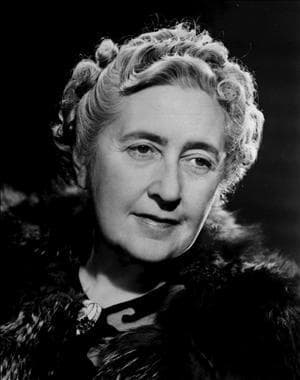
Dame Agatha Mary Clarissa Christie, Lady Mallowan, was an English writer known for her 66 detective novels and 14 short story collections, particularly those revolving around fictional detectives Hercule Poirot and Miss Marple. She also wrote the world's longest-running play, the murder mystery The Mousetrap, which has been performed in the West End since 1952. A writer during the "Golden Age of Detective Fiction", Christie has been called the "Queen of Crime". She also wrote six novels under the pseudonym Mary Westmacott. In 1971, she was made a Dame (DBE) by Queen Elizabeth II for her contributions to literature. Guinness World Records lists Christie as the best-selling fiction writer of all time, her novels having sold more than two billion copies.