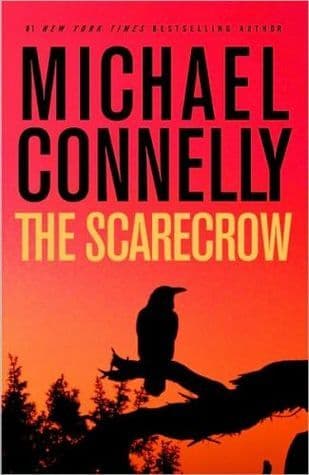
“Everybody counts or nobody counts.”
— Harry Bosch's philosophy, often quoted by Rachel Walling.


Michael Connelly (1996)
Genre
Thriller / Mystery
Reading Time
10-12 hours
Key Themes
See below
Sign in to track this book
A crime reporter, investigating his detective brother's apparent suicide, uncovers a chilling trail of poetic clues left by a serial killer who hunts cops, turning his personal tragedy into the most dangerous story of his career.
Denver crime reporter Jack McEvoy receives a devastating call: his twin brother, Sean McEvoy, a respected Los Angeles homicide detective, has apparently committed suicide. Sean is found dead in his car in the Hollywood Hills, having shot himself with his service weapon. The LAPD quickly rules it a suicide, attributing it to job stress and a recent divorce. Jack, however, struggles to accept this conclusion. He knew Sean to be a resilient man, and the circumstances feel wrong. Driven by grief and his journalistic instinct, Jack decides to write an obituary for the Los Angeles Times, intending to look into his brother's life and the events leading up to his death, hoping to find closure and honor Sean's memory.
As Jack begins his research for the obituary, he carefully examines Sean's belongings and the suicide note. He notices a peculiar phrase in the note, 'The black box is open,' which seems out of place and too poetic for Sean's usual manner of speaking. Recalling a shared childhood memory of a secret code they used, Jack suspects the note contains a hidden message. After careful analysis, he deciphers the phrase, revealing it to be a reference to Edgar Allan Poe's poem 'The Raven.' This discovery immediately raises Jack's suspicions about the official suicide ruling, suggesting that Sean might have been trying to communicate something deeper, a final clue to a truth he couldn't openly state.
Following the lead from Sean's note, Jack begins to investigate other recent police suicides across the country. His journalistic skills lead him to uncover several cases with striking similarities: police officers, often with seemingly stable lives, found dead with cryptic, poetic messages or allusions left behind. He finds another case in Las Vegas and then one in Phoenix, each initially ruled a suicide, but bearing the subtle, almost artistic signature he now recognizes. Jack realizes he is not looking at isolated incidents but at a pattern, suggesting a sophisticated serial killer targeting law enforcement officers and leaving a trail of literary breadcrumbs, specifically from the works of Edgar Allan Poe.
Jack publishes an article in the Los Angeles Times outlining his theory of a serial killer targeting police officers, linking Sean's death to the other 'suicides' he's uncovered. The article, while speculative, generates significant interest and catches the attention of the FBI. Agent Rachel Walling, a profiler, is assigned to investigate Jack's claims. Initially, Walling and her superiors are skeptical, viewing Jack's theory as sensational journalism and a grieving brother's delusion. They adhere to the official suicide rulings, reluctant to admit the possibility of a widespread, undetected serial killer within their ranks, especially one targeting law enforcement.
While Jack and Rachel are still at odds, another police officer is found dead in Miami, again an apparent suicide, but with the now familiar poetic signature. This new victim, a female detective, leaves behind a note containing a reference to Poe's 'Annabel Lee.' The undeniable pattern, along with Jack's persistent and detailed research, finally compels Agent Walling and the FBI to acknowledge his theory. They realize they are dealing with a highly intelligent, meticulous killer, dubbed 'The Poet' by Jack, who is taunting law enforcement with his literary clues. Jack is unofficially brought into the investigation due to his unique insight.
The investigation intensifies, with Jack and Rachel working together to decipher the Poet's clues. Their research leads them down a dark path, uncovering a hidden online community where individuals share and celebrate violent fantasies, particularly those involving the murder of law enforcement. This 'dark web' forum seems to be a gathering place for those with extreme anti-police sentiments. Further clues from the Poet's messages direct them to a remote, abandoned graveyard in the desert. This location proves to be a chilling discovery, revealing not just a burial site, but a place where the Poet has been disposing of his victims, indicating a much larger scale of murders than initially believed.
Through careful detective work, combining the poetic clues, forensic evidence from the graveyard, and an analysis of the online forum, Jack and Rachel finally identify 'The Poet' as Robert Backus. Backus is a former FBI agent who had been presumed dead years earlier in a classified operation. His re-emergence as a serial killer targeting his former colleagues is a shocking revelation, indicating a deep-seated grievance and a psychological break. The FBI, initially reluctant to admit their own had gone rogue, is now forced to confront the truth of Backus's existence and his deadly vendetta against law enforcement.
Jack and Rachel track Backus to a remote cabin, leading to a tense confrontation. During their encounter, Backus reveals his twisted motive: he believes his former colleagues abandoned him during a critical, covert operation, leading to his 'death' and subsequent psychological trauma. He sees his murders as an act of poetic justice, a way to expose the hypocrisy and failures he perceives within the FBI. He confesses to killing Sean, revealing that Sean was close to uncovering Backus's activities and was silenced before he could expose him. Sean's 'suicide note' was indeed a coded message, a final, desperate plea for help that only Jack could understand.
During the confrontation, Backus reveals that his killings are not merely isolated acts of revenge but part of a much larger, more elaborate plan. He intends to expose what he perceives as corruption and a cover-up within the FBI by releasing sensitive, classified information he acquired during his time as an agent. This information, if made public, could severely damage the agency's reputation and compromise numerous ongoing operations. Jack and Rachel realize they are not just dealing with a serial killer, but with a highly intelligent and dangerous individual determined to bring down the institution he once served, creating a race against time to stop his ultimate objective.
The climax sees Jack and Rachel in a desperate race to prevent Backus from executing his final, devastating plan. Backus intends to disseminate the classified information he possesses, potentially causing widespread chaos and exposing deep-seated secrets within the FBI. The pursuit leads them through a series of close calls and dangerous encounters. Ultimately, they manage to corner Backus, leading to a violent confrontation where Backus is finally stopped, though not without significant risk to Jack and Rachel. The immediate threat is neutralized, but the implications of Backus's actions and the secrets he held remain.
In the aftermath, the FBI grapples with the fallout of Backus's reign of terror and the exposure of his internal secrets. The agency must confront the uncomfortable truths about its past and the circumstances that created 'The Poet.' Jack, having played a key role in stopping Backus, is left to process the full weight of his brother's death and the horrifying reality of the serial killer. He finds a grim satisfaction in bringing Sean's killer to justice but is deeply affected by the darkness he has uncovered. The experience changes him, solidifying his resolve to pursue truth, no matter how dangerous or uncomfortable.
The Protagonist
Jack transforms from a grieving brother seeking closure into an active participant in a high-stakes FBI investigation, ultimately bringing his brother's killer to justice and uncovering deep-seated corruption.
The Supporting/Victim
Sean's arc is posthumous; he is revealed to have been actively investigating the Poet before his death, leaving clues for Jack to follow.
The Supporting
Rachel evolves from a skeptical, by-the-book agent to a trusting and effective partner, learning to value unconventional investigative approaches.
The Antagonist
Backus's arc is revealed through his past actions and motivations, culminating in his final confrontation and the exposure of his grand scheme.
The Supporting
Her arc is static; she primarily serves as a supportive figure in Jack's personal life.
The Supporting
Gordon's arc involves a shift from skepticism and adherence to protocol to accepting the extraordinary truth presented by Jack and Rachel.
The Mentioned
Static; a background character who provides context to Jack's professional life.
This theme explores the tension between an individual's pursuit of truth and the powerful forces of institutional denial and cover-up. Jack McEvoy, as a journalist, is driven to uncover the truth about his brother's death, even when the LAPD and initially the FBI dismiss his theories as grief-fueled delusion. The FBI's initial reluctance to acknowledge a serial killer targeting police officers comes from a desire to maintain public confidence and protect its image. This is evident when Agent Gordon resists Jack's claims, only to be forced to accept them as more officers die, revealing the high cost of denial.
““They want to bury it, Jack. That’s what they do. Bury the bad news and hope nobody digs it up.””
Grief is a powerful motivator for Jack McEvoy, transforming his professional curiosity into a deeply personal and obsessive quest. Sean's death is not just a story; it is a loss that fuels Jack's determination to understand what truly happened. His inability to accept the suicide ruling is rooted in his intimate knowledge of his twin brother, leading him to scrutinize details others overlook. This emotional investment allows him to see patterns and decipher clues that a detached investigator might miss, showing how personal anguish can unlock deeper insights and drive extraordinary efforts, as seen in his careful analysis of Sean's suicide note.
““Grief was a strange thing. It twisted you, turned you inside out, but it also sharpened your focus, made you see things you might have otherwise missed.””
The novel highlights the dual nature of information: its power to expose and its potential for manipulation and destruction. Jack's journalistic skills are centered on gathering and disseminating information, which ultimately leads him to the Poet. The Poet himself uses information as a weapon, using cryptic clues to taunt authorities and planning to release classified FBI data to achieve his revenge. The internet, particularly the dark web forum, is a conduit for both investigation and for the spread of dangerous ideologies, illustrating how easily information can be twisted and used for nefarious purposes, while also being the key to solving the mystery.
““Information was power. And the Poet was a master of wielding it, both as a weapon and a shield.””
This theme explores the blurred lines between seeking justice and enacting revenge. Jack McEvoy's initial drive is to find justice for his brother, a righteous pursuit. In contrast, Robert Backus, 'The Poet,' is motivated by a sense of betrayal and seeks revenge against the FBI, which he believes wronged him. Backus frames his murders as a form of 'poetic justice,' but his actions are clearly driven by a destructive desire for retribution, showing how a quest for justice can be perverted into a cycle of violence. The narrative contrasts Jack's pursuit of truth with Backus's twisted vendetta, showing the different paths individuals take when confronted with perceived wrongs.
““He called it justice. But it was just revenge, cold and bloody, dressed up in a poem.””
The novel looks into the chilling nature of evil, particularly how it can appear in intelligent, seemingly ordinary individuals. Robert Backus, a former FBI agent, becomes a sophisticated and calculating serial killer. His evil is not random but carefully planned, driven by a deep-seated grievance and a warped ideology. The story explores how trauma and perceived betrayal can twist a brilliant mind into one capable of horrific acts, and how 'evil' can hide in plain sight, even within institutions designed to fight it. The discovery of the dark web forum further illustrates the insidious nature of collective evil and violent fantasies.
““Evil wasn’t always a monster in the shadows. Sometimes it wore a suit, spoke with a calm voice, and left poems behind.””
Sean McEvoy's suicide note contains a hidden reference to Edgar Allan Poe.
Sean McEvoy's suicide note, particularly the phrase 'The black box is open,' acts as the primary inciting incident and a crucial coded message. This device immediately raises Jack's suspicions, as he recognizes it as a reference to a childhood game and, more importantly, a clue to Edgar Allan Poe. This hidden message is the key that unlocks the entire mystery, transforming an apparent suicide into a serial killer investigation. It allows the deceased Sean to guide his brother from beyond the grave, providing the initial, vital piece of information that sets Jack on his dangerous path.
The serial killer leaves literary allusions as taunts and breadcrumbs.
The 'Poet' serial killer leaves a trail of cryptic clues derived from the works of Edgar Allan Poe at each crime scene. These poetic allusions serve multiple functions: they are a taunt to law enforcement, a signature for the killer, and a complex puzzle for Jack and Rachel to decipher. This device elevates the intellectual stakes of the chase, requiring literary analysis as much as forensic science. The clues not only point towards the killer's identity and motive but also create a distinctive, macabre style for the antagonist, making the investigation a battle of wits.
A hidden online community where violent fantasies against law enforcement are shared.
The discovery of a hidden online forum on the dark web, where individuals discuss and glorify violence against police officers, serves as a crucial plot device. This forum provides a window into the killer's mindset and potential motives, hinting at a larger network of anti-establishment sentiment. It also functions as a red herring and a source of misdirection, as the investigators initially suspect a group rather than a lone individual. This device highlights the contemporary dangers of online communities and provides a chilling backdrop to the Poet's actions, demonstrating a potential breeding ground for his ideology.
Jack McEvoy's journalistic skills drive the investigation, often ahead of official law enforcement.
Jack McEvoy's profession as a crime-beat reporter is a central plot device. His investigative techniques—interviewing, researching databases, connecting seemingly disparate events, and writing compelling narratives—are what initially uncover the serial killer's pattern, long before the FBI takes the threat seriously. His access to information and his ability to publish articles also serve to pressure authorities and disseminate information, albeit sometimes controversially. This device positions the journalist as a crucial, often maverick, figure in solving a crime, highlighting the power of independent inquiry when official channels are slow or unwilling to act.
“Everybody counts or nobody counts.”
— Harry Bosch's philosophy, often quoted by Rachel Walling.
“The dead speak to us, if we listen.”
— Cassidy's belief about crime scenes and victims.
“You can't outrun the past. It always catches up.”
— Reflecting on the persistence of guilt and consequences.
“There are monsters among us, and some of them wear suits.”
— Rachel's realization about the true nature of evil.
“The truth is a stubborn thing. It doesn't like to stay buried.”
— A recurring theme about the inevitability of discovery.
“Sometimes the only way out is through.”
— Grappling with difficult choices and painful paths.
“Every secret has a price.”
— Considering the cost of hidden information and lies.
“The darkness finds its own way in, if you let it.”
— Warning about succumbing to despair or negative influences.
“The line between hunter and hunted can blur very quickly.”
— Rachel's experience in a dangerous cat-and-mouse game.
“You have to be willing to look into the abyss, even if it looks back at you.”
— The necessity of confronting profound evil in an investigation.
“Some wounds never truly heal, they just scar over.”
— Reflecting on the lasting impact of trauma and loss.
“The most dangerous lies are the ones we tell ourselves.”
— Considering self-deception and its pitfalls.
“Justice isn't always about the law. Sometimes it's about what's right.”
— Rachel's internal struggle with the limitations of the legal system.
“The past is a powerful ghost, always lurking.”
— How past events and decisions haunt the present.
Ready to see how well you understood this book? Take our interactive quiz with 10 questions.

Biography coming soon.