“The young are so often impatient of the slow workings of justice.”
— Miss Marple reflecting on the youthful desire for quick resolutions.

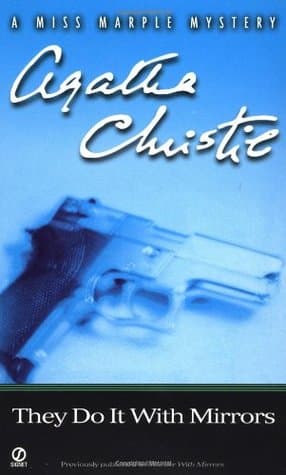
Agatha Christie (1952)
Genre
Mystery
Reading Time
240 min
Key Themes
See below
Sign in to track this book
When a seemingly errant shot at a reform home administrator coincidentally kills a mysterious visitor in another room, Miss Marple must unravel a deadly design hidden within the sprawling Victorian mansion.
Miss Marple receives a letter from her old school friend, Ruth Van Rydock, expressing concern for their mutual friend, Carrie Louise Serrocold. Ruth fears that Carrie Louise, now married to Lewis Serrocold, is in danger at Stonygates, their sprawling Victorian mansion that also is a progressive reformatory for juvenile delinquents. Concerned, Miss Marple agrees to visit Stonygates. Upon her arrival, she finds Carrie Louise to be somewhat frail and dreamy, seemingly oblivious to any potential threats. Her kind and trusting nature makes her vulnerable. Miss Marple observes the unique and chaotic environment of the reformatory, noting the various young men and staff members, all under the benevolent eye of Carrie Louise and the practical guidance of Lewis.
The family gathers for dinner, including Carrie Louise's children, Gina and Alex Restarick, and her stepson, Walter Hudd. After dinner, a peculiar incident occurs. Edgar Lawson, one of the young delinquents, stages a dramatic scene where he pretends to shoot Lewis Serrocold with a revolver, seemingly in a fit of delusion. The lights flicker, a shot is fired, and everyone is startled but Lewis is unharmed. Simultaneously, in a locked study on the floor below, Mr. Gilbrandsen, a trustee of the reformatory and a solicitor who was visiting to discuss Carrie Louise's will, is found shot dead. The two events, seemingly separate but occurring at the exact same moment, baffle everyone, especially the local police, Inspector Slack.
Inspector Slack, a gruff but astute detective, arrives to investigate the murder. Gilbrandsen was found in a locked room, with the key on the inside, which creates a classic 'locked room mystery.' Edgar Lawson, who fired the shot at Lewis, is found in a dazed state, claiming to have seen a vision of Lewis being threatened. His gun is examined, and it is clear it was not the weapon that killed Gilbrandsen. The family members and staff provide their accounts, but many details are contradictory or incomplete. Miss Marple, with her observational skills, begins to notice subtle discrepancies and tensions within the household, sensing that the theatrical shooting incident was a deliberate distraction for the real crime.
As the investigation progresses, Miss Marple pays close attention to the various family members and their relationships with Carrie Louise and Gilbrandsen. Walter Hudd, Carrie Louise's stepson, has a history of financial troubles and a strained relationship with Gilbrandsen, who managed Carrie Louise's substantial fortune. Gina, Carrie Louise's adopted daughter, and her husband, Alex Restarick, also seem to have their own secrets and motivations. Alex, in particular, appears shifty. Miss Marple considers the possibility that Gilbrandsen's visit, specifically concerning Carrie Louise's will, could have provided a strong motive for murder, as his death would prevent any changes to the will that might disadvantage certain beneficiaries.
Further details emerge about Gina's past. She was adopted by Carrie Louise after being orphaned in America and had a difficult childhood. Miss Marple learns that Gina had a close friend named Gina Hudd, and the two girls were very similar in appearance. This detail sparks a suspicion in Miss Marple's mind: what if the 'Gina' currently at Stonygates is not the real Gina Restarick, but her friend impersonating her? This theory would explain certain inconsistencies in her behavior and knowledge of the family's past. It would introduce a new layer of motive and opportunity for the murder, potentially linked to inheriting Carrie Louise's fortune under false pretenses.
The mystery deepens with a second murder. Alex Restarick, Gina's husband, is found dead, having been bludgeoned. This murder complicates the investigation significantly. The police initially suspect 'Gina' due to her increasingly erratic behavior and the fact that Alex was her husband. The motive appears to be to silence Alex, who might have known about the impersonation or other secrets. Miss Marple, however, sees this as another piece of a larger, intricate puzzle, carefully orchestrated by a cunning killer. She realizes that the murderer is attempting to divert suspicion and create confusion, possibly by framing the most obvious suspect.
Miss Marple has an epiphany, triggered by a conversation about magic tricks and illusions, specifically a stage trick involving mirrors. She remembers a parlor trick where mirrors are used to create the illusion of a wall or a person being in one place when they are actually in another. She realizes that the 'staged' shooting of Lewis Serrocold and the simultaneous murder of Gilbrandsen were not coincidental but meticulously planned using this very principle. The apparent 'locked room' was an illusion, and the shooter was not Edgar Lawson in the main hall, but someone else positioned to commit the actual murder in the study below, using the 'shooting' as a distraction.
Miss Marple confronts 'Gina' with her suspicions, revealing that she knows 'Gina' is actually Gina Hudd, the original Gina Restarick's friend, who assumed her identity to claim Carrie Louise's inheritance. The real Gina Restarick had died years ago, and Gina Hudd, seeing an opportunity, took her place. Gilbrandsen, as Carrie Louise's solicitor, was on the verge of uncovering the truth during his visit to discuss the will, making him a dangerous witness who needed to be silenced. Alex Restarick was also murdered because he either knew the truth about the impersonation or was getting too close to discovering it, and was therefore a liability to Gina Hudd's scheme.
In a revelation, Miss Marple exposes Lewis Serrocold, Carrie Louise's husband, as the true mastermind behind the murders. He had orchestrated the entire elaborate plot, using Gina Hudd as his unwitting, or perhaps willing, accomplice. Lewis, a brilliant but cold and manipulative man, had been using the reformatory as a front for his own plans. He had secretly administered drugs to Carrie Louise to make her appear more frail and confused, hoping to gain control of her fortune. He used the 'mirror trick' with a cleverly placed passage and mirrors to create the illusion of the shooting, while he himself was the one who shot Gilbrandsen from a hidden vantage point. He then murdered Alex to cover his tracks and frame Gina Hudd.
Miss Marple meticulously explains how Lewis had constructed a hidden passage behind the mirror in the great hall, allowing him to move between the hall and the study undetected. When Edgar Lawson fired his blank, Lewis simultaneously shot Gilbrandsen from the passage, making it appear as if the two events were separate and coincidental. He then murdered Alex to eliminate another witness and further muddy the waters. With Miss Marple's insights, Inspector Slack is able to piece together the evidence and apprehend Lewis Serrocold. Carrie Louise, though heartbroken by her husband's betrayal, is finally safe, and the truth about the murders and the impersonation comes to light, restoring order to the chaotic household of Stonygates.
The Protagonist
She arrives as a concerned friend and transforms into the pivotal figure who unravels the complex web of deceit and murder.
The Supporting
Starts as a vulnerable, trusting figure and ends as a betrayed but ultimately safe survivor.
The Antagonist
Begins as a respected figure and is revealed as a cunning, ruthless murderer.
The Supporting
Portrayed as a family member, she is unmasked as an impostor and implicated in the murders.
The Supporting
A suspicious character who is murdered, deepening the mystery.
The Supporting
His arrival and subsequent murder initiate the central mystery.
The Supporting
Starts as skeptical of amateur help and grows to appreciate Miss Marple's unique perspective.
The Supporting
Presented as a suspicious character, but ultimately cleared of the murders.
The Mentioned
His staged shooting creates the initial confusion that Miss Marple must unravel.
The Supporting
Initiates the plot by expressing concern for Carrie Louise.
This theme is central to the entire narrative, epitomized by the title 'They Do It with Mirrors'. The apparent shooting of Lewis Serrocold, the locked room mystery, and Gina's identity are all illusions designed to mislead. Miss Marple constantly looks beyond the surface, questioning what she sees and hears. For instance, the reformatory itself appears benevolent but hides dark secrets, and Lewis Serrocold projects an image of a kind intellectual while being a ruthless murderer. The book challenges the reader to discern truth from deception, showing how easily appearances can be manipulated.
“One often sees what one expects to see. It’s a very common human failing.”
The plot is a masterclass in manipulation, primarily orchestrated by Lewis Serrocold. He manipulates Edgar Lawson into performing the 'staged' shooting, uses Gina Hudd's impersonation for his own gain, and even subtly drugs Carrie Louise to make her appear more confused. The entire murder scheme relies on elaborate deception, creating a complex web of lies and misdirection to conceal the true killer and his motives. Miss Marple's task is to untangle these layers of manipulation to expose the underlying truth.
“It’s a very clever trick, you know, to make people look one way when you want them to look another.”
The theme of identity is explored through the character of 'Gina'. The revelation that she is not the real Gina Restarick, but Gina Hudd impersonating her, is a crucial plot twist. This deception raises questions about who we truly are and how easily one's identity can be assumed or lost. The motive for this impersonation—inheritance—shows the fragility and value placed on identity. Miss Marple's ability to discern the 'true' Gina from the imposter is key to unlocking the larger mystery, demonstrating how a false identity can be a powerful tool for crime.
“People are not always what they seem, even to those who think they know them best.”
As with most Christie novels, the pursuit of justice is a core theme. Miss Marple is driven by a strong moral compass to ensure that the killer is brought to account, not just for the sake of the law, but for the inherent wrongness of the acts committed. The moral decay of Lewis Serrocold, who uses his intelligence for evil and preys on his trusting wife, contrasts with Miss Marple's unwavering commitment to truth and fairness. The novel ultimately affirms that even the most elaborate schemes cannot escape the reach of justice.
“Evil is not something that happens in a vacuum. It grows out of human hearts.”
The book explores the nature of evil, portraying it not as a monstrous, obvious force, but as something insidious and calculating, often hidden behind a respectable facade. Lewis Serrocold embodies this, presenting himself as a benevolent intellectual while harboring a cold, manipulative heart. The reformatory setting, meant to rehabilitate delinquents, ironically becomes the stage for a sophisticated murder orchestrated by one of its most respected figures. This shows how evil can reside in unexpected places and among seemingly good people, making it all the more terrifying and difficult to detect.
“There are some people, you know, who are quite mad, but they're not mad in the way you expect.”
A classic impossible crime scenario where a victim is found in a sealed room.
The murder of Mr. Gilbrandsen occurs in a seemingly locked study, with the key on the inside, presenting a classic 'locked room' puzzle. This device heightens the mystery and makes the crime appear impossible, challenging both the police and the reader. Miss Marple's solution, involving a hidden passage and mirrors, ultimately reveals that the room was not as 'locked' as it appeared, subverting the traditional expectations of this device and revealing the killer's ingenious method of deception.
A literal and metaphorical device used to create misdirection and conceal the truth.
The 'mirror trick' is both a literal and metaphorical plot device. Literally, it refers to the hidden passage and mirrors used by Lewis Serrocold to create the illusion of the shooting in the great hall while simultaneously committing the murder in the study. Metaphorically, it represents the entire web of deception and misdirection employed by the killer. The title itself, 'They Do It with Mirrors', explicitly points to this device, signifying how appearances are manipulated to hide reality. Miss Marple's understanding of this illusion is the key to solving the impossible crime.
A deliberate distraction to divert suspicion from the true crime.
Edgar Lawson's staged shooting of Lewis Serrocold serves as a significant red herring. This dramatic, seemingly unhinged act is designed to draw all attention and suspicion away from the actual murder occurring simultaneously in another room. The chaotic nature of the incident, combined with Edgar's mental state, makes it a highly effective distraction. It misleads the police and the family into believing the events are either coincidental or that Edgar is responsible for some form of violence, thereby masking the carefully planned, cold-blooded murder of Gilbrandsen.
A character assuming another's identity to gain an advantage.
The impersonation of the real Gina Restarick by her friend Gina Hudd is a crucial plot device that introduces a significant motive for murder—inheritance. This deception complicates the family dynamics and provides a strong reason for Gilbrandsen, who was dealing with the will, to be silenced. It also allows the killer to use the 'imposter' as a pawn or a convenient scapegoat. The revelation of the impersonation is a major turning point, shifting the focus of the investigation and providing Miss Marple with a clearer understanding of the underlying motives and the intricate connections between the crimes.
“The young are so often impatient of the slow workings of justice.”
— Miss Marple reflecting on the youthful desire for quick resolutions.
“It's always the quiet ones, isn't it? The ones you'd least suspect.”
— A common observation made in the aftermath of a surprising revelation.
“Mirrors, you know, can be very deceptive. They show you what you expect to see, or what someone wants you to see.”
— Miss Marple discussing the nature of perception and illusion, hinting at the book's title.
“People always like to think the worst. It saves them the trouble of thinking at all.”
— A character's cynical view on human tendency to jump to negative conclusions.
“There are some things that even the cleverest murderer can't hide forever.”
— A statement of confidence in the eventual triumph of truth and detection.
“One often finds that the most ordinary things are used in the most extraordinary ways.”
— Miss Marple musing on how mundane objects can be crucial to a crime.
“Memory is a queer thing. Sometimes it plays tricks on you, sometimes it brings things back you never thought you'd remember.”
— A character reflecting on the unreliability and surprising power of memory.
“The past has a way of catching up with one, doesn't it?”
— A common theme in mystery where old secrets resurface.
“It is not the facts themselves that are misleading, but the way we interpret them.”
— A thought on the subjective nature of evidence and interpretation.
“Evil, you see, is a very simple thing. It's goodness that's complicated.”
— A philosophical observation on the nature of good and evil.
“One must always look beyond the obvious, my dear. That is where the truth usually lies.”
— Miss Marple advising on the art of true detection.
“There are more ways of killing a cat than choking it with cream.”
— An idiom used to suggest there are many methods to achieve a goal, or commit a crime.
“It's astonishing how little people really see, even when they're looking straight at it.”
— A comment on human inattentiveness and selective vision.
Ready to see how well you understood this book? Take our interactive quiz with 10 questions.

Dame Agatha Mary Clarissa Christie, Lady Mallowan, was an English writer known for her 66 detective novels and 14 short story collections, particularly those revolving around fictional detectives Hercule Poirot and Miss Marple. She also wrote the world's longest-running play, the murder mystery The Mousetrap, which has been performed in the West End since 1952. A writer during the "Golden Age of Detective Fiction", Christie has been called the "Queen of Crime". She also wrote six novels under the pseudonym Mary Westmacott. In 1971, she was made a Dame (DBE) by Queen Elizabeth II for her contributions to literature. Guinness World Records lists Christie as the best-selling fiction writer of all time, her novels having sold more than two billion copies.