“La bête humaine était l'âme de Thérèse Raquin.”
— Describing Thérèse's true, primal nature.


Emile Zola (2005)
Genre
Fiction
Reading Time
6-8 hours
Key Themes
See below
Sign in to track this book
Trapped in a suffocating marriage, Thérèse Raquin's affair with her husband's friend sparks a spiral of passion, murder, and inescapable guilt.
Thérèse Raquin, an orphaned girl, is raised by her aunt, Madame Raquin, alongside her delicate and often ill cousin, Camille. Madame Raquin, doting entirely on her son, raises Thérèse almost as a servant and companion to Camille, encouraging her to be submissive. Their childhood is spent in the quiet, isolated town of Vernon, where Thérèse's natural vivacity is stifled by the oppressive atmosphere and Camille's constant need for care. She develops a deep resentment and a sense of entrapment, though she rarely expresses it. Her days are filled with the monotonous routine dictated by Camille's health, and she feels a lack of freedom and emotional connection.
When Camille, now a young man, wants to move to Paris and pursue a career, Madame Raquin agrees, hoping the city air will improve his health. They settle in a cramped, stuffy shop on the Passage du Pont-Neuf, where Madame Raquin sells haberdashery. Shortly after their arrival, Madame Raquin arranges the marriage of Thérèse and Camille, believing it will provide stability for both. Thérèse, feeling no affection for Camille and seeing no escape, passively consents. Their marriage has no passion or warmth, with Thérèse enduring Camille's physical weakness and self-absorption, her life continuing its stagnant, unfulfilling course amidst the dingy Parisian setting.
One evening, Camille brings home his childhood friend, Laurent, an aspiring painter from the countryside. Laurent contrasts with Camille: strong, healthy, and radiating an earthy sensuality. He immediately notices Thérèse's quiet intensity and the stifled passion beneath her reserved exterior. Laurent visits regularly, initially to paint Camille's portrait. During these sittings, Thérèse and Laurent are drawn to each other, their unspoken desires creating tension in the small apartment. Laurent's presence introduces a disruptive energy into the previously monotonous household.
The attraction between Thérèse and Laurent quickly becomes a full-blown affair. Their clandestine meetings are frequent and intense, often taking place in the apartment where Camille and Madame Raquin live. For Thérèse, Laurent represents freedom, vitality, and the fulfillment of her long-suppressed desires. For Laurent, Thérèse offers an escape from his aimless existence and a powerful physical connection. Their passion is raw and physical, driven by instinct and a shared contempt for their mundane lives. They become consumed by their illicit relationship, the danger only intensifying their forbidden pleasure.
As their affair deepens, Thérèse and Laurent become less cautious and more audacious. Camille's presence, once an inconvenience, now feels like an unbearable obstacle to their happiness and freedom. Their initial passion begins to morph into a darker, more desperate need to remove Camille from their lives entirely. Laurent, pragmatic and ruthless, is the first to suggest murder, and Thérèse, though initially hesitant, is quickly swayed by her desire and Laurent's influence. They begin to scheme, driven by a chilling conviction that Camille's death is the only path to their future together.
The lovers act on their plan during a Sunday outing to the countryside. Camille, Thérèse, and Laurent go boating on the Seine. Laurent, feigning playfulness, pushes Camille overboard. Thérèse, initially paralyzed, eventually helps Laurent hold Camille's head underwater until he drowns. They then capsize the boat themselves to make the incident appear to be an accident. Upon returning, they fabricate a story of a tragic mishap, and Madame Raquin, devastated by the loss of her son, believes their tale. The murder, however, immediately begins to cast a shadow over their supposed triumph.
After Camille's death, Thérèse and Laurent are tormented by guilt, which appears as vivid hallucinations and psychological distress. Thérèse constantly sees Camille's ghostly face and feels his cold touch, particularly at night. Laurent is plagued by nightmares and finds himself unable to paint, his art now corrupted by the image of Camille's drowned face. The initial euphoria of their freedom quickly dissipates, replaced by agonizing paranoia and mutual suspicion. The shop, once a symbol of their confinement, now becomes a claustrophobic prison shared with a spectral presence.
After a period of mourning, and urged by the well-meaning Madame Raquin, Thérèse and Laurent marry. They hope that marriage will ease their suffering and strengthen their bond, but it only intensifies their torment. Their shared secret becomes a suffocating weight, and their physical passion turns to revulsion. They can no longer touch each other without seeing Camille's ghost between them. Their conversations become accusatory, each blaming the other for their crime and their misery. The marriage, meant to be their liberation, becomes a living hell, filled with silent hatred and constant dread.
Madame Raquin, already frail from her grief, suffers a debilitating stroke that leaves her completely paralyzed and unable to speak. She can only move her eyes. Trapped in her chair, she observes Thérèse and Laurent's deteriorating relationship, their bitter arguments, and their terrified glances. Through their unguarded confessions and haunted expressions, Madame Raquin slowly pieces together the truth about Camille's murder. Her inability to speak or act becomes a horrifying form of silent accusation, her eyes fixed on the murderers, a constant, living reminder of their crime.
The psychological torture between Thérèse and Laurent becomes unbearable. Their love has completely transformed into a deep, visceral hatred. Each begins to fear the other, believing the other might betray or even murder them. They meticulously plan ways to kill one another, imagining various scenarios to end their shared suffering and escape the other's oppressive presence. Their existence becomes a tense standoff, fueled by paranoia and a desperate desire for release, all under the watchful, silent gaze of Madame Raquin.
Driven to the brink of madness and unable to endure their torment any longer, Thérèse and Laurent simultaneously decide to end their lives. In a moment of chilling synchronicity, both reach for poison. They share one last, desperate look, acknowledging their shared fate and the inescapable consequences of their actions. They consume the poison together, collapsing onto the floor. Madame Raquin, observing their final moments, is left alone with the bodies, a silent witness to the tragic and brutal end of the two people who murdered her son. The novel concludes with their deaths, providing a grim, inevitable resolution to their crime.
The Protagonist
Thérèse transforms from a repressed, passive figure into a passionate adulteress and murderer, only to be consumed by guilt and hatred, leading to her self-destruction.
The Antagonist/Co-protagonist
Laurent, driven by lust and ambition, commits murder, only to find his desires replaced by overwhelming guilt and paranoia, leading to his demise.
The Victim/Supporting
Camille lives a sheltered, unremarkable life, becoming an unwitting victim whose death triggers the psychological destruction of his murderers.
The Supporting
Madame Raquin transforms from a doting, oblivious mother into a paralyzed, silent accuser, witnessing the full horror of her son's murder and its aftermath.
The Supporting
Grivet remains oblivious to the crime throughout the story, serving as a foil to the murderers' internal torment.
The Supporting
Michaud remains oblivious to the crime, representing the external world's ignorance of the internal horror.
The Supporting
Suzanne's character remains static, serving as a symbol of innocence and normalcy.
The novel explores how raw passion, when unchecked and leading to crime, becomes a destructive force. Thérèse and Laurent's initial intense desire for each other, which drives them to murder Camille, quickly sours into guilt, paranoia, and eventually, mutual hatred. Their love becomes a living hell, poisoning their every interaction and thought. Zola shows how murder, far from liberating them, binds them irrevocably to their victim and to each other in shared torment, as seen in their constant hallucinations of Camille and their inability to find peace or joy after the crime.
““They found themselves in a terrible solitude, face to face with their crime, shivering, full of terror, and devoured by remorse. Their passion, which had been so violent, turned to hatred.””
Zola's naturalistic approach shows the influence of environment, heredity, and instinct on human behavior, suggesting that characters are largely determined by these forces rather than free will. Thérèse's suppressed nature, Laurent's desires, and Camille's weakness appear as almost biological predispositions. The squalid, claustrophobic Paris apartment and the monotonous routine contribute to their psychological states. The characters are depicted as 'human animals,' driven by their instincts for survival and pleasure, with their actions and fates seeming to be an inevitable result of their inherent natures and circumstances, rather than moral choices.
““Thérèse and Laurent were no longer anything but two human animals, devoured by a terrible passion, which had turned into a still more terrible remorse.””
A central theme is the suffocating confinement Thérèse experiences in her life, both physically and emotionally, and her desperate longing for freedom. Her childhood in Vernon, her loveless marriage to Camille, and the dingy Parisian shop all represent different forms of imprisonment. Her affair with Laurent is an attempt to break free, a desperate grasp at personal liberty and sensual liberation. However, the murder, intended to secure their freedom, ironically leads to an even more profound and inescapable psychological prison of guilt and shared misery, showing that true freedom cannot be achieved through immoral acts.
““She had lived for twenty years in the depths of a tomb. The love of Laurent had been for her a resurrection.””
Zola portrays the murderers not as grand, villainous figures, but as ordinary people driven by base desires and weakness. The crime itself is committed almost casually, without deep philosophical reflection, and the aftermath is characterized by mundane, yet excruciating, psychological torment rather than dramatic external conflict. The murderers are haunted by the 'spirit' of Camille, which is more a manifestation of their own guilty consciences than a supernatural entity. This approach highlights how horrifying acts can arise from everyday human flaws and desires, and how the true horror lies in the internal, psychological repercussions rather than external retribution.
““They found no peace, no joy, no oblivion; nothing but agony, cold sweats, and frightful nightmares.””
The novel explores the connection between physical and psychological states. Zola describes characters' physical reactions to their emotions—Thérèse's trembling, Laurent's inability to paint, Madame Raquin's paralysis. The physical act of murder leads directly to their psychological torment and hallucinations. Conversely, their mental anguish appears physically, turning their once passionate bodies into sources of disgust and revulsion for each other. Madame Raquin's stroke, which renders her a silent, living accusation, powerfully illustrates how physical decay can amplify mental suffering and moral judgment.
““Their nerves, over-excited by the constant terror, were in a state of perpetual vibration.””
Weekly social events that serve as a mundane backdrop to the unfolding drama.
The Thursday evening gatherings at the Raquin shop, where the family and their friends (Grivet, Michaud, Suzanne) play dominoes and chat, serve as a crucial plot device. They emphasize the suffocating monotony of Thérèse's life before Laurent's arrival and highlight the stark contrast between the characters' internal turmoil and their outwardly normal existence. After the murder, these gatherings become a stage where Thérèse and Laurent must feign normalcy, adding to their psychological torture, especially when Madame Raquin's silent accusation begins. They represent the superficiality of social interaction concealing profound moral corruption.
The spectral presence of Camille, a manifestation of the murderers' guilt.
Camille's 'ghost' is not a literal supernatural entity but a powerful psychological manifestation of Thérèse and Laurent's guilt. They constantly see his drowned face, feel his cold touch, and hear his voice, particularly when they are alone or try to be intimate. This device vividly illustrates their internal torment, showing how their crime has irrevocably poisoned their minds and bodies. It externalizes their remorse and paranoia, making their suffering tangible and inescapable, and preventing them from finding any peace or solace after the murder.
A debilitating stroke that transforms Madame Raquin into a silent, living accuser.
Madame Raquin's stroke, which leaves her completely paralyzed and mute, is a powerful plot device. It transforms her from an oblivious, doting mother into a terrifying, silent witness. Her inability to speak means she cannot directly expose the murderers, but her eyes, filled with accusation and horror, become a constant, inescapable reminder of their crime. This creates immense psychological pressure on Thérèse and Laurent, making her presence an even greater torment than if she could speak. She embodies the inescapable moral judgment and the suffocating weight of their secret.
A cramped, dingy setting that symbolizes confinement and suffocation.
The small, dark, and stuffy apartment and haberdashery shop on the Passage du Pont-Neuf is more than just a setting; it is a character in itself, symbolizing the oppressive and confined lives of its inhabitants. Before the murder, it represents Thérèse's emotional and physical imprisonment. After the crime, it transforms into a claustrophobic prison of guilt and mutual hatred, where the walls seem to close in on the murderers. Its oppressive atmosphere mirrors the psychological state of Thérèse and Laurent, amplifying their torment and making escape seem impossible.
“La bête humaine était l'âme de Thérèse Raquin.”
— Describing Thérèse's true, primal nature.
“Le crime avait noué entre eux des liens terribles, des liens de haine et d'horreur.”
— After the murder, describing the bond between Thérèse and Laurent.
“Ils étaient tombés dans un gouffre de remords et de cauchemars.”
— The mental state of the murderers post-crime.
“C'était une existence de plante, sans passion, sans désir, sans aucune joie.”
— Describing Thérèse's life before Laurent, married to Camille.
“Le sang, le sang, il n'y avait que cela qui pût effacer le sang.”
— The idea of blood atonement or a cycle of violence.
“Le silence de la chambre, l'immobilité des meubles, tout prenait une signification sinistre.”
— The oppressive atmosphere in the apartment after the crime.
“Leurs mains se touchaient, se serraient, frémissaient d'une tendresse farouche.”
— Thérèse and Laurent's initial passionate connection.
“La mort de Camille était un poids qui les écrasait tous les deux.”
— The burden of their crime on Thérèse and Laurent.
“Leurs yeux ne se rencontraient plus que pour se lancer des regards de bêtes féroces.”
— Their relationship deteriorating into mutual hatred.
“Ils étaient liés par le crime comme par une chaîne de fer.”
— The unbreakable bond of their shared guilt.
“La vérité, nue et horrible, se dressait devant eux.”
— When the reality of their actions fully dawns on them.
“Les remords étaient des bêtes invisibles qui leur rongeaient les entrailles.”
— The internal torment experienced by the murderers.
“Leurs âmes étaient deux flaques de boue, où grouillaient les vers du crime.”
— A vivid, naturalistic description of their corrupted souls.
“La misère de leur existence était devenue intolérable.”
— Their lives becoming unbearable due to guilt and mutual loathing.
Ready to see how well you understood this book? Take our interactive quiz with 10 questions.
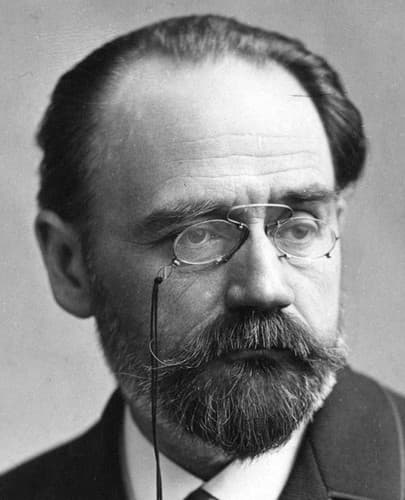
Émile Édouard Charles Antoine Zola was a French novelist, journalist, playwright, the best-known practitioner of the literary school of naturalism, and an important contributor to the development of theatrical naturalism. He was a major figure in the political liberalization of France and in the exoneration of the falsely accused and convicted army officer Alfred Dreyfus, which is encapsulated in his renowned newspaper opinion headlined J'Accuse…! Zola was nominated for the first and second Nobel Prize in Literature in 1901 and 1902.

Ashley Antoinette
4.6

Mark McDonald
4.4
Luo Guanzhong
4.4

Mia McKenzie
4.3
Dorothy Parker
4.3

Joaquim Maria Machado de Assis
4.3

James Thurber
4.2

Terry Kay
4.2