“The future is dark, which is the best thing the future can be, I think.”
— Eleanor ponders the unknown future at a family gathering.

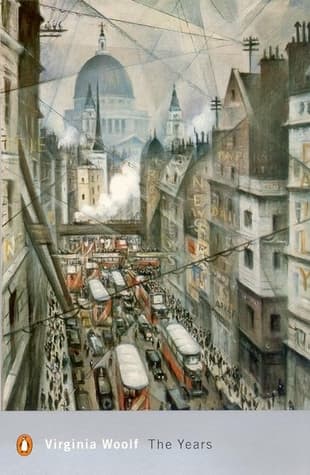
Sign in to track this book
Virginia Woolf's "The Years" follows the Pargiter family across three generations, showing London's changing society in the early 20th century and how personal lives clash with big historical events.
The novel starts in 1880, showing the Pargiter family in their London home. Colonel Pargiter is a strict, traditional father, and Mrs. Pargiter is often ill, always cared for by her daughters. Eleanor, the oldest, does her duty and manages the house. Delia is rebellious and interested in Irish politics, while Milly is shy and observant. Rose is a young girl, who has a bad experience with a man in the park. Edward, the only son, is focused on his studies. The children's lives are limited by Victorian rules and their mother's illness, creating a mood of unspoken desires and frustrations. They begin to struggle for their own identities within their family's strict structure.
By 1891, the Pargiter children are older, and their mother has died. Eleanor, still unmarried, continues to care for the family, though she secretly wants her own life. Delia is deeply involved in political action, her passion clashing with what society expects of women. Rose, now a young woman, still feels the effects of her childhood experience, making her careful and quiet. Edward is a student, following his intellectual interests. Martin, a younger brother, has joined the army. This chapter shows the siblings starting to become more individual, as they each face the limits and possibilities of their lives in a changing world, often feeling alone despite being family.
The year is 1907, and the Pargiters meet for a Christmas dinner, a scene that shows the changing society. Eleanor, now middle-aged, thinks about her life of service, feeling a quiet sadness for her lost youth and dreams that did not come true. Delia, still passionate, says she is frustrated with how slowly social change happens. Martin, back from serving abroad, brings a worldly view but also feels detached. The younger generation, like North Pargiter (Delia's son) and Peggy (Eleanor's niece), starts to express new ideas and question their elders' traditions. The dinner is a small picture of the era, showing the conflict between Victorian ways and the new modern way of thinking, with each character having their own quiet problems.
The story moves to 1914, with World War I threatening London. The Pargiter family experiences the war in different ways. Martin is in military service, while Eleanor, always caring, works for the war effort. The general mood is one of worry and uncertainty, with air raids and rationing becoming part of daily life. The war makes many characters rethink their values and priorities. It further breaks up the family, sending them to different roles and experiences, while also showing how vulnerable they all are in the face of such a huge global event. The war speeds up social change and personal thought.
In 1917, the war continues, and the younger Pargiters struggle with the past's burdens and the present's chaos. North Pargiter, now a young man, feels very disappointed with the older generation's values and the war's pointlessness. He wants a more real life, often finding comfort in nature and intellectual pursuits. Peggy, a medical student, sees the harsh realities of suffering and death daily, which shapes her cynical but determined outlook. Their talks show a growing impatience with social fakeness and a desire to make new paths, questioning the very ideas their parents and grandparents set, even as they remain part of the family's past.
The years after the war, specifically 1918-1920, see London embracing a new, though fragile, sense of freedom and modern life. The Pargiter siblings, now older, think about their lives and choices. Eleanor continues her quiet life, watching the world around her. Delia stays involved in politics, though perhaps with less fiery hope. Martin, having seen the horrors of war, struggles to get used to civilian life, finding comfort in relationships and travel. The younger Pargiters, like North and Peggy, are active in the social and intellectual excitement of the time, going to parties and having debates. This period shows the tension between the lingering past and the exciting, but uncertain, promise of the future.
The novel then focuses on a single day in 1930, showing the separate experiences of various Pargiter family members and their friends across London. Eleanor walks through the city, her mind full of memories and observations. Peggy deals with her medical career and personal relationships, feeling the weight of what society expects. North thinks about his own identity and purpose, often feeling separate from city life. Martin is seen in a more home setting, thinking about his past. The story moves between these individual thoughts, showing the everyday and important moments of their lives, highlighting how personal time and experience are, and showing how connected, yet alone, they remain in the busy city.
The novel ends with a large, somewhat disconnected party hosted by Delia in 1930. Almost all the remaining Pargiter siblings and their extended family, along with many friends and acquaintances, are there. The party is a loud mix of conversations, broken thoughts, and unspoken histories. Eleanor watches the younger generation, thinking about the many changes she has seen. Delia, still the host, tries to keep things in order amid the chatter. North and Peggy have serious discussions, representing the future. The gathering is a symbolic summary of the Pargiter family's journey over decades, a moment where past, present, and future meet, showing the lasting human need for connection despite time passing and the unavoidable changes in society and self.
As the party starts to break up in the early morning, a smaller group of Pargiters and close friends stay, sharing a moment of quiet thought and closeness. Eleanor, North, Peggy, and others have broken conversations, talking about time, identity, and the future. There is a feeling of both tiredness and hope. The morning light coming through the windows stands for a new day and, perhaps, a new era. The final scenes show how fluid human connection is and how life keeps going in cycles, suggesting that while 'years' pass, people keep looking for meaning and connection, even when things are uncertain and unknown.
The Protagonist
Eleanor moves from a dutiful, self-sacrificing caregiver to a reflective observer, finding a quiet wisdom in her unfulfilled life and the passage of time.
The Protagonist/Supporting
Delia transforms from a rebellious, politically charged young woman into a mature, yet still passionate, social activist and hostess, constantly seeking to engage with the world.
The Supporting
Martin evolves from a somewhat carefree young man to a war-weary individual, seeking comfort and connection in post-war life.
The Supporting
Rose lives a life shaped by early trauma, becoming a quiet, watchful individual who finds a measure of peace in her later years.
The Supporting
Colonel Pargiter's arc is one of decline, symbolizing the fading of Victorian patriarchal authority.
The Supporting
Mrs. Pargiter's arc is brief, serving as a catalyst for the children's early development and representing the burdens of Victorian domestic life.
The Supporting
North develops from a questioning youth to a thoughtful young man, embodying the intellectual and existential struggles of the post-war generation.
The Supporting
Peggy transforms from an idealistic young woman into a determined and realistic medical professional, grounded in the realities of life and death.
The Supporting
Edward remains largely consistent as a scholarly, introverted figure, finding his purpose in intellectual pursuits.
The novel clearly follows the Pargiter family over fifty years, from 1880 to 1930, showing how people and society change. Woolf highlights how time feels different to each person, where strong moments can feel long or short. Characters like Eleanor often think about the past, comparing their young hopes with their current lives. The changing views across generations show how historical events, from Victorian rules to World War I, shape personal stories and shared memories. There is often a feeling of loss for what was and excitement for what is coming. The novel's broken structure itself mirrors how memory is not linear.
“And the years went by, and they changed, and they did not change.”
Each Pargiter sibling tries to build their identity among society's expectations and their own desires. Eleanor gives up her own goals for family duty, quietly questioning her choices. Delia actively fights, seeking political and personal freedom. Rose is affected by childhood trauma, making her reserved. The younger generation, like North and Peggy, questions old values and searches for real selves after the war. The novel explores how identity changes, shaped by family, gender, class, and history, often staying hard to grasp even for the characters themselves.
“What does it mean, this life? What do we want?”
The novel carefully shows how British society changed from the strict Victorian era to the more free, but uncertain, time between the world wars. This is seen in everything from clothes and manners to gender roles and political ideas. The Pargiter family is like a small example of this, with the older generation holding onto tradition while the younger generation accepts new ideas, jobs (like Peggy's medical career), and freedoms. The impact of big historical events like World War I on individual lives and London's shared consciousness is a main focus, showing the big differences between eras.
“The past was over; the future was about to begin.”
Woolf strongly criticizes the strict gender roles of the Victorian and Edwardian eras, especially through the experiences of the Pargiter women. Eleanor's life is defined by caring for others and house duties, leading to her feeling unfulfilled. Delia fights against political and social limits. Rose suffers from how vulnerable women are. The novel explores the pressure on women to marry, their limited job chances, and their struggle for intellectual and personal freedom. The later generations, like Peggy, show a move toward more independence and professional action, though challenges remain.
“Women have their own lives; they have their own thoughts.”
Even though it is a large family, the Pargiters often feel very alone and have trouble truly connecting or saying their deepest thoughts and feelings. Conversations are often broken, full of unspoken feelings, or become superficial. Characters often feel lonely even when surrounded by others, especially at the main party where many voices are heard but real understanding is still hard to find. This theme shows the barriers to real communication, how personal experience is, and how alone each person's mind often is.
“Nobody understood anybody.”
Organizes the narrative around specific years, highlighting the passage of time and societal evolution.
The novel is structured into distinct chapters, each labeled with a specific year (e.g., 1880, 1891, 1907, 1914, 1917, 1918, 1920, 1930). This explicit chronological framework serves as the backbone of the narrative, allowing Woolf to demonstrate the sweeping changes in society and the Pargiter family over fifty years. It emphasizes the relentless forward march of time, creating a sense of both continuity and radical discontinuity between eras. The gaps between years also invite the reader to infer developments, contributing to the novel's expansive yet fragmented feel.
Captures the internal thoughts, feelings, and perceptions of characters, often in a non-linear fashion.
Woolf extensively uses stream of consciousness to delve into the inner lives of her characters. The narrative frequently shifts from external events to the subjective flow of thoughts, memories, and sensations within a character's mind. This technique provides deep psychological insight into characters like Eleanor and North, revealing their unspoken desires, regrets, and observations. It often results in fragmented sentences, associative leaps, and a blurring of past and present, reflecting the complex and often chaotic nature of human consciousness, particularly at the party scene where multiple internal monologues intertwine.
Moves freely between the perspectives of various characters, offering a panoramic view.
While heavily employing stream of consciousness, the narration in 'The Years' is not limited to a single character's perspective. Instead, it fluidly shifts between the Pargiter siblings and other characters, often within the same scene or even paragraph. This allows Woolf to present a multifaceted view of events and relationships, showing how different individuals perceive and react to the same situations. This shifting perspective creates a rich tapestry of experiences and opinions, contributing to the novel's comprehensive portrayal of a family and an era, while also highlighting the inherent isolation of individual consciousness.
Uses atmospheric conditions to reflect emotional states and societal moods.
Woolf frequently employs symbolism related to light, darkness, and weather to underscore the emotional tone and broader societal atmosphere of different periods. For instance, the oppressive darkness and fog of Victorian London often reflect the stifling constraints on the Pargiter children. Conversely, moments of sunlight or dawn can symbolize hope, clarity, or new beginnings, particularly towards the novel's end. The changing seasons and weather patterns mirror the internal states of characters and the shifting moods of the city, adding a poetic and atmospheric layer to the narrative without explicit commentary.
“The future is dark, which is the best thing the future can be, I think.”
— Eleanor ponders the unknown future at a family gathering.
“Life is not a series of gig-lamps symmetrically arranged; life is a luminous halo, a semi-transparent envelope surrounding us from the beginning of consciousness to the end.”
— A reflection on the nature of human experience and perception.
“She had always been a solitary; and the older she grew the more she liked to be alone.”
— Eleanor's evolving preference for solitude throughout her life.
“But what is the point of it all? What is the point of the years?”
— Eleanor's existential questioning about the passage of time.
“One could not be angry with the past, any more than one could be angry with a river.”
— Eleanor's philosophical acceptance of the past's unchangeable nature.
“She felt as if she had been left out of something, as if the party had gone on without her.”
— Eleanor's feeling of detachment and isolation at a social gathering.
“The older one grew, the more one realised how little one knew.”
— Eleanor's reflection on the humility that comes with age and experience.
“It was the first time she had ever known that there was such a thing as a private life, a life lived behind the public one.”
— A young Eleanor's realization about the hidden aspects of people's lives.
“She looked at the clock. It was still early. The whole day was before her. The whole day, the whole life.”
— Eleanor contemplating the expanse of time ahead, both daily and lifelong.
“And the world went on, whether one was happy or unhappy.”
— A character's observation on the indifferent continuity of life.
“But it was not merely a question of knowing; it was a question of feeling.”
— A distinction drawn between intellectual understanding and emotional experience.
“She felt as if she were a fish in a glass bowl, watched by everyone.”
— Eleanor's sensation of being under constant scrutiny in social settings.
“The past, she thought, is not a dead thing; it is a living power.”
— Eleanor's realization that past events continue to influence the present.
“What did it all mean? Nothing, perhaps. Or everything.”
— A character's ambiguous reflection on the ultimate meaning of existence.
Ready to see how well you understood this book? Take our interactive quiz with 10 questions.
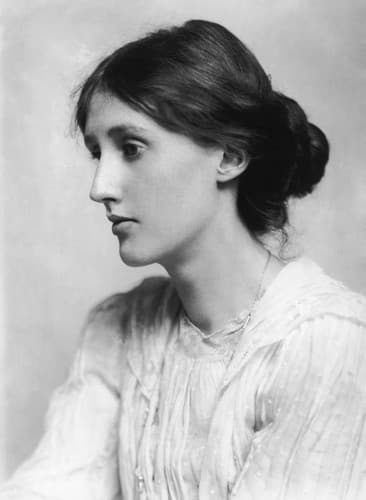
Adeline Virginia Woolf was an English writer. She is considered one of the most important modernist 20th-century authors and a pioneer in the use of stream of consciousness as a narrative device.

Ashley Antoinette
4.6

Mark McDonald
4.4
Luo Guanzhong
4.4
Mia McKenzie
4.3
Dorothy Parker
4.3

Joaquim Maria Machado de Assis
4.3

James Thurber
4.2

Terry Kay
4.2