“The world is full of things that can be done.”
— Vatanen's realization as he embarks on his journey.

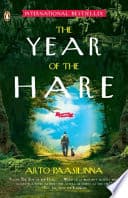
Arto Paasilinna (2010)
Genre
Fiction
Reading Time
240 min
Key Themes
See below
Sign in to track this book
After hitting a hare with his car, a disillusioned journalist abandons his old life to wander the Finnish wilderness with the rabbit, embarking on a series of uproarious, life-affirming misadventures.
Kaarlo Vatanen, a Helsinki journalist, is on assignment with his photographer friend, Leinonen, when they accidentally hit a young hare with their car. While Leinonen is indifferent, Vatanen feels responsible and goes into the forest to find the injured animal. He finds the hare and tends to its broken leg. This incident changes Vatanen, who has been dissatisfied with his mundane life, failing marriage, and unfulfilling job. He decides to abandon his car, his friend, and his entire life, choosing instead to wander into the Finnish wilderness with the recovering hare as his only companion, seeking a new path.
Vatanen, now with his hare, whom he calls 'jänis' (hare), begins his journey north. He initially struggles with food and shelter, relying on his wits and a growing self-reliance. He finds an abandoned cottage where he and the hare spend their first night, marking his break from civilization. He sells his watch for supplies and starts to adapt to a life dictated by nature and chance encounters. The hare, initially timid, slowly begins to trust Vatanen, forming a bond that becomes the foundation of his new existence, as they leave the urban world behind for the vast, untamed Finnish landscape.
Continuing their journey, Vatanen and the hare find a remote logger's cabin. The logger, an older, gruff but kind man, takes them in. Vatanen learns logging basics and experiences camaraderie and honest labor he hadn't known before. He enjoys the simplicity and physical demands of the work, finding temporary rest from his wandering. The hare becomes a familiar and accepted presence. This period is Vatanen's first true engagement with a community outside his old life, showing the contrast between his past urban existence and this new connection to nature and working-class simplicity.
Vatanen's presence in the remote areas eventually draws the attention of local authorities, specifically a game warden who finds his story unusual but not suspicious. During this time, Vatanen also gets a dog, a stray he befriends, adding another animal to his growing unconventional family. The dog, like the hare, seems to represent a connection to the wild and unburdened life Vatanen now seeks. This encounter with the law reminds him that complete anonymity is difficult, even in the vast wilderness, yet Vatanen remains committed to his chosen path.
Vatanen and the hare, along with the dog, get involved in a bear hunt. What starts as a local effort escalates into a disorganized and humorous chase that leads them across the Finnish-Russian border. The hunt becomes a chaotic adventure, with Vatanen and his animals caught up in the pursuit, meeting both Finnish and Russian border guards, and navigating international bureaucracy. This episode shows Vatanen's growing detachment from societal rules and his willingness to embrace the unpredictable nature of his new life, even if it means breaking international laws.
Through a series of unfortunate events, Vatanen accidentally causes a small forest fire. Panicked but resourceful, he contains it, but the incident forces him to move on. He then meets an eccentric old hermit, who lives deep in the woods, self-sufficient and detached from modern society. Vatanen spends time with the hermit, learning about his philosophy of life and survival. This encounter validates Vatanen's chosen path, seeing in the hermit a more extreme but successful example of independent living. The fire tests his resourcefulness and highlights the dangers of his wild existence.
Vatanen, surprisingly, is invited to a formal state dinner, an odd interlude in his wild life. He attends with his hare, causing a stir among the elite. This brief re-entry into high society shows the contrast between his former life and his current one, emphasizing the superficiality he now sees in urban existence. Uncomfortable with the artificiality and expectations, Vatanen quickly decides to leave, reaffirming his commitment to the freedom and authenticity of the wilderness. The incident is a clear rejection of his old world.
Vatanen crosses paths with a poacher, a man living on the fringes of society, like himself, but with a more illicit livelihood. Initially wary, Vatanen eventually forms an uneasy alliance with the poacher, learning about his methods and the realities of survival outside the law. This encounter forces Vatanen to confront moral ambiguities and the different ways people choose to live independently. The poacher represents another facet of wild living, one that challenges Vatanen's own developing ethical framework, while also providing him with practical survival skills and temporary, if unconventional, companionship.
With the onset of the harsh Finnish winter, Vatanen and the hare face their greatest challenge: survival in extreme cold. Food becomes scarce, and shelter is important. Vatanen's resourcefulness is tested as he learns to build stronger shelters, hunt for food, and endure the bitter temperatures. The bond with the hare deepens as they rely on each other for warmth and companionship. This period shows Vatanen's commitment to his new life, demonstrating his growing resilience and adaptation to the natural world, proving that his escape was not a temporary whim but a transformation.
Vatanen's old photographer friend, Leinonen, who has been searching for him, eventually catches up. Leinonen represents Vatanen's past life, his responsibilities, and the expectations he abandoned. The encounter is a poignant moment, as Leinonen tries to persuade Vatanen to return to his old life. However, Vatanen, having changed so much, firmly rejects the idea. This confrontation solidifies Vatanen's commitment to his newfound freedom and the wild. He has become a different person, and his past no longer holds sway over him, allowing him to continue his journey unburdened.
As the year progresses, the hare, which Vatanen found as a young, injured animal, grows into a healthy, mature adult. This transformation mirrors Vatanen's own journey of self-discovery and growth. The hare's independence and natural instincts become more pronounced, a reminder of the cycle of life and freedom. Vatanen, having spent a full year in the wilderness, has found peace and purpose. He has accepted his new identity as a wanderer, unburdened by societal expectations. The hare's maturity symbolizes the success of Vatanen's escape and his full integration into his chosen existence.
The Protagonist
Vatanen transforms from a passive, discontented urbanite into a self-sufficient, free-spirited wanderer who embraces the unpredictable nature of life in the wild.
The Supporting
The hare recovers from its injury and grows to maturity, symbolizing Vatanen's successful transition into a life of freedom and connection with nature.
The Supporting
Leinonen remains largely unchanged, serving as a static representation of the life Vatanen rejects.
The Supporting
The logger remains a steadfast figure, offering Vatanen a temporary haven and a model of a different kind of life.
The Supporting
The game warden's role is primarily to briefly introduce a touch of authority into Vatanen's free existence.
The Supporting
The hermit serves as a philosophical guide and an extreme example of Vatanen's chosen path.
The Supporting
The poacher introduces Vatanen to a different, more illicit aspect of wild living, challenging his moral framework.
The Supporting
The dog joins Vatanen's unconventional family, becoming a loyal companion.
The main theme is Vatanen's escape from modern, urban life and his pursuit of freedom. His impulsive decision to leave his job, wife, and possessions after hitting the hare symbolizes a complete rejection of societal expectations. His journey through the wilderness, unburdened by schedules, materialism, or social obligations, shows a yearning for personal liberty. This theme is clear in every step of his journey, from his initial departure to his refusal to return to civilization even when given the chance, as seen in his interaction with Leinonen or his quick exit from the state dinner.
“He felt light, as if freed from a heavy burden. The air smelled of pine and damp earth, a scent far more invigorating than the stale air of his office.”
The novel explores the power of nature and the connection a human can form with the natural world. Vatanen's journey is a gradual immersion into the Finnish wilderness, where he learns to live off the land, adapt to its rhythms, and find solace in its vastness. The hare is a constant link to this natural world, guiding Vatanen and teaching him patience and empathy. Through his encounters with loggers, hermits, and the challenge of survival, Vatanen sheds his urban disconnectedness and develops a respect for nature's harsh beauty and its ability to heal and reshape the human spirit. The bear hunt across the border highlights the raw, untamed aspects of this relationship.
“The forest was his new office, the sky his roof, and the hare his only colleague.”
Paasilinna satirizes the conventions, stresses, and superficiality of modern urban existence. Vatanen's former life as a journalist, his failing marriage, and the meaningless routines are presented as dull and unfulfilling. His encounters with civilization, such as the state dinner, highlight the artificiality and pretentiousness he has left behind. The contrast between Vatanen's wild, honest existence and the bureaucratic, materialistic world he abandoned underscores the novel's commentary on what truly makes a meaningful life. The humorous and often chaotic situations Vatanen finds himself in often result from the clash of his free spirit with societal rules.
“He wondered why he had ever thought that sitting in an office, writing about things he didn't care about, was a life.”
Vatanen's journey is one of self-discovery and transformation. By stripping away all the external parts of his identity—his job, his social status, his marital role—he is forced to confront his true self. The challenges of survival, the solitude, and the companionship of the hare all help his understanding of who he is and what he values. He develops resilience, resourcefulness, and a quiet contentment he never knew before. The physical journey through the wilderness becomes a metaphor for his internal journey, leading him to a more authentic sense of self.
“He had never felt so alive, so truly himself, as he did now, with the scent of pine and the rustle of leaves his only companions.”
Despite his isolation from human society, Vatanen finds deep companionship, primarily with the hare, but also with other animals and the occasional eccentric human. The bond with the hare is central, offering Vatanen a sense of responsibility, love, and silent understanding. This unconventional companionship shows that connection does not always require words or human interaction. His brief, yet impactful, relationships with characters like the logger and the hermit also show that genuine human connection can be found in unexpected places, often outside society's rigid structures. These connections are built on shared experiences and mutual respect rather than social obligation.
“The hare was more than a pet; it was a silent confidant, a small, warm presence in the vast, cold wilderness.”
The accidental hitting of the hare serves as the immediate trigger for Vatanen's radical life change.
The car accident involving the hare is the pivotal event that immediately propels Vatanen into his new life. It's not just an accident, but a symbolic breaking point. The injured hare represents vulnerability and a call to a different kind of responsibility than Vatanen is used to. His decision to tend to the hare, rather than ignore it, signifies his nascent desire for a more meaningful existence. This incident is concise and impactful, instantly shifting the narrative from Vatanen's dissatisfying past to his unpredictable future, establishing the central relationship and the core conflict of his internal state.
The hare acts as a constant, non-human companion and a symbol of Vatanen's new, wild life.
The hare is more than just a pet; it is Vatanen's primary companion and a powerful symbol throughout the novel. It grounds Vatanen, provides him with a sense of purpose and responsibility, and acts as a silent witness to his transformation. The hare's vulnerability and reliance on Vatanen highlight Vatanen's newfound capacity for empathy and care. As the hare heals and grows, it mirrors Vatanen's own journey of self-discovery and increasing freedom. Its presence allows for a unique form of companionship that transcends human language, emphasizing Vatanen's deep connection to nature.
Vatanen's continuous movement through different landscapes and encounters drives the plot and his internal journey.
The structure of the novel follows a classic wanderer or road trip narrative, even though Vatanen is not in a vehicle. His constant movement through the Finnish wilderness, from one remote location to another, allows for a episodic plot structure. Each new place brings new challenges, new characters, and new lessons for Vatanen. This device emphasizes his detachment from a fixed life and underscores the theme of freedom. The journey itself becomes a metaphor for his internal exploration and transformation, with the changing landscapes reflecting his evolving state of mind.
The use of dry, understated humor to highlight the absurdities of both modern life and Vatanen's misadventures.
Paasilinna employs a distinctive brand of dry, often absurd humor to lighten the narrative and make its philosophical undertones more accessible. This humor arises from the juxtaposition of Vatanen's unconventional actions with the reactions of conventional society (e.g., the state dinner, the bear hunt across the border). It also comes from the understated descriptions of Vatanen's often chaotic predicaments. This satirical tone allows the author to critique societal norms without becoming overly didactic, making the profound themes of freedom and authenticity enjoyable and relatable to the reader.
“The world is full of things that can be done.”
— Vatanen's realization as he embarks on his journey.
“A man's life is like a river, it flows where it will.”
— Vatanen reflecting on his unplanned new life.
“It is good to be lost in a forest, for then one can truly find oneself.”
— Vatanen's thoughts while wandering in the Finnish wilderness.
“The most important thing in life is to live it, not just to exist.”
— Vatanen's internal monologue about escaping his old life.
“Sometimes, the best way to solve a problem is to run away from it.”
— Vatanen's initial motivation for abandoning his routine.
“A hare is a creature of instinct, and so, perhaps, should a man be.”
— Vatanen observing his companion, the hare, and drawing parallels.
“There are more important things than money, like a good view and a warm fire.”
— Vatanen appreciating the simple pleasures of his new life.
“One can learn more from animals than from most people.”
— Vatanen's growing bond with the hare and other creatures.
“The further one travels from civilization, the closer one gets to truth.”
— Vatanen's perspective on his journey into the wilderness.
“Life is a series of adventures, if only you dare to take them.”
— Vatanen embracing the unpredictable nature of his new existence.
“Even a small creature can lead a man to a new path.”
— The hare's role in guiding Vatanen's journey.
“The quiet moments are often the loudest in meaning.”
— Vatanen's reflections during his solitary travels.
“To be truly free, one must first be free from oneself.”
— Vatanen's transformation and shedding of his old identity.
“Sometimes, the best company is no company at all, save for a hare.”
— Vatanen's contentment with his animal companion.
Ready to see how well you understood this book? Take our interactive quiz with 10 questions.

Arto Tapio Paasilinna was a Finnish writer, being a former journalist turned comic novelist. One of Finland's most successful novelists, he won a broad readership outside of Finland in a way few other Finnish authors have before. Translated into 27 languages, over seven million copies of his books have been sold worldwide, and he has been claimed as "instrumental in generating the current level of interest in books from Finland".

Ashley Antoinette
4.6

Mark McDonald
4.4
Luo Guanzhong
4.4

Mia McKenzie
4.3

Dorothy Parker
4.3

Joaquim Maria Machado de Assis
4.3

James Thurber
4.2
Terry Kay
4.2