“The only thing that makes life worth living is the possibility of experiencing a bliss so overwhelming that you can't imagine it.”
— Narrator musing on the meaning of life and happiness.


John Cheever (2021)
Genre
Fiction
Reading Time
10-12 hours
Key Themes
See below
Sign in to track this book
The Wapshot brothers leave their New England fishing village for the wider world, dealing with modern life's absurdities, their family's odd legacy, and the search for belonging, while their father fights a cousin for the family fortune.
The novel begins in the New England fishing village of St. Botolphs, Massachusetts, introducing Captain Leander Wapshot, a man tied to the sea and his family's long history in the town. He is an aging father, prone to thinking and writing a "chronicle" for his sons. Leander's wife, Sarah, is a practical woman who often balances his more imaginative ideas. Their sons, Moses and Coverly, are getting ready to leave home, representing the next generation moving from the isolated world of St. Botolphs. The town itself is a character, with its old houses, gossiping residents, and a sense of past glory, setting the scene for the Wapshot family's struggles with tradition and modern life.
The Wapshot family's money depends on the powerful Cousin Honora Wapshot, a rich and unusual single woman who lives in a large, old mansion. She controls the family's money and worries about Moses and Coverly's morals. Honora decides that the brothers must prove they are worthy of their inheritance. For Moses, this means finding a job and a suitable wife. For Coverly, it means showing dedication to a respectable career. Her demand causes the brothers to leave St. Botolphs, forcing them to face the wider world and its challenges, all while their demanding cousin watches from afar.
Moses Wapshot, the more adventurous brother, moves to New York City. He struggles to adjust to city life, working many odd jobs, including as a stripper. His attempts to find a wife are equally messy and often funny, marked by many failed relationships. Moses meets various interesting people in the city, showing the anonymity and varied experiences of city life. Despite his problems, Moses keeps his Wapshot charm and strength, though he often feels out of place and wants a sense of belonging that he cannot find in the big city.
Coverly Wapshot, the more academic and quiet brother, moves to Washington D.C. and gets a very secret government job. The exact nature of his work stays unclear, often described as involving classified papers and spying, adding to the novel's humor about bureaucracy. Despite his reserved nature, Coverly falls in love with and marries Betsy, a kind and somewhat simple woman. Their relationship contrasts with Moses's romantic troubles, showing Coverly's desire for normal life and a home. Their early married life is marked by Coverly's unusual work and their efforts to build a stable home in the capital's political world.
In St. Botolphs, Captain Leander Wapshot continues to captain his ferry, the 'Topgallant', which he sees as a symbol of his family's lasting connection to the sea. He becomes more sad and thoughtful, feeling the changes in his life and the town. In a sad turn of events, Leander takes a final, solo trip with the 'Topgallant'. He purposely sinks the ferry, choosing to go down with his beloved boat. This act is a symbolic goodbye to his time and a strong statement about his inability to adapt to the modern world, leaving Sarah and the boys to deal with his legacy and the future of the Wapshot name without him.
After more romantic and financial failures in New York, including a bad affair and a short, unsuccessful time as a gigolo, Moses Wapshot decides to escape his problems. He travels to a remote, peaceful island in the South Pacific, looking for refuge and a simpler life. On the island, he tries to find peace and a new direction, living a life far from St. Botolphs or New York. This time allows Moses to think, though his Wapshot charm and impulsiveness still lead him into various, often funny, difficulties, showing his ongoing search for self and purpose.
Coverly and Betsy settle into married life in Washington D.C., eventually having a son, whom they name Leander after Coverly's father. Coverly's government job, still secret, continues to shape their daily lives, often requiring his presence in strange ways. Despite his unusual work, Coverly tries to provide a stable and loving home for his family. He often thinks about his father's chronicle and the Wapshot legacy, trying to balance his modern, bureaucratic life with his New England upbringing. His journey shows an attempt to create a new path while respecting his roots.
In St. Botolphs, Cousin Honora Wapshot's health starts to fail, showing the slow decline of her power. Her odd behaviors become more noticeable, and her control over the family money weakens, creating uncertainty for Moses and Coverly. Her eventual death is a turning point, freeing the brothers from her direct control and conditions. However, her legacy, both financial and moral, continues to affect their lives, making them face the true meaning of inheritance and family responsibility beyond just money.
After his time on the South Pacific island, Moses Wapshot eventually returns to the mainland, bringing the experiences and lessons of his self-imposed exile. He must face the realities of his past choices, his money problems, and his relationships. His return is a step towards maturity and a desire to reconnect with his family, especially his brother Coverly and his mother, Sarah. While still adventurous, Moses shows signs of understanding responsibility better and wanting a more settled life, reflecting his ongoing journey of self-discovery and his efforts to find his place in the world.
The novel ends with Moses and Coverly, now older and having lived through many events, thinking about their father Leander's handwritten chronicle. The chronicle, full of advice, stories, and thoughts, serves as a guide and a reminder of their heritage. The brothers, despite their different paths, come to value the lasting bond of family and the unique Wapshot spirit. They consider the meaning of their father's legacy and their own roles in continuing or changing the Wapshot name, suggesting that while the world changes, certain truths about love, family, and the search for meaning remain.
The Protagonist/Patriarch
Leander moves from a nostalgic, active presence to a tragic figure, choosing to end his life and his ferry's existence as a final, symbolic act against modernity.
The Protagonist
Moses matures from a charming but irresponsible wanderer to a more reflective individual, still impulsive but with a growing understanding of responsibility and a desire for belonging.
The Protagonist
Coverly transforms from a reserved young man into a responsible husband and father, finding stability and purpose in a conventional life, while still grappling with his unique family heritage.
The Supporting
Sarah remains a steadfast and supportive figure, adapting to the losses and changes within her family with quiet strength.
The Antagonist/Supporting
Honora's influence gradually wanes with her declining health, culminating in her death, which liberates the brothers from her direct control but leaves them with her complex legacy.
The Supporting
Betsy develops from a sweet fiancée to a loving and resilient wife and mother, adapting to the peculiarities of Coverly's life and the Wapshot family.
The Mentioned
N/A
The Mentioned
N/A
The novel shows the conflict between old New England traditions and the complexities of modern life. St. Botolphs, with its odd residents and Captain Leander's attachment to the 'Topgallant', represents a dying world. The sons, Moses and Coverly, must navigate the busy, anonymous cities of New York and Washington D.C., which represent the new, often confusing, modern age. Leander's act of sinking his ferry is a strong statement about his inability to adapt, while his sons' struggles highlight the difficulties of forming an identity in a fast-changing world.
““The Wapshot family was old, and like all old families, it was rich in characters, eccentrics, and failures.””
Moses and Coverly both go on journeys of self-discovery, each looking for a place where they belong. Moses, restless, moves through various jobs and relationships, from a stripper to an island exile, always searching for meaning and connection. Coverly, more quiet, seeks stability in a secret government job and a traditional family life. Their individual quests show the human need for identity, whether found in tradition, career, love, or personal freedom. The Wapshot chronicle itself is an attempt to define and pass on a sense of identity.
““The great question of life, Leander had often observed, was not to find one’s place, but to find one’s self.””
The Wapshot family, with its mix of odd behavior, love, and duty, is central to the novel. The story explores how family history, expectations, and money ties (controlled by Honora) shape individual lives. Leander's chronicle is a literal attempt to pass on a legacy and guide his sons, even as they try to live up to it or break free from it. The brothers' relationships with each other, their parents, and their demanding cousin show the complex bonds of family, demonstrating how family can be both a burden and a source of strength, ultimately defining who they are.
““He had been born into a family that had seen its best days, and he was burdened by the weight of their past.””
The novel humorously and sometimes sadly explores the complexities of love, sex, and social morality. Moses's many romantic and sexual adventures, from affairs to working as a gigolo, show the changing sexual norms of the time and his own struggles with commitment. Cousin Honora's strict moral judgments offer a conservative contrast, setting the terms for the Wapshot inheritance. Coverly's more traditional marriage to Betsy provides a different view of love and home life. The various relationships highlight the characters' desire for intimacy and happiness, often made complicated by social expectations and personal failures.
““Love, Leander observed, was a kind of madness, but a necessary one.””
Captain Leander's handwritten journal of advice and observations for his sons.
Captain Leander's personal chronicle serves as a framing device and a recurring motif throughout the novel. It is a collection of his philosophical musings, life lessons, anecdotes, and practical advice, intended for Moses and Coverly. This chronicle provides insight into Leander's character and his worldview, and its entries often reflect or foreshadow the events and themes of the main narrative. It acts as a symbolic anchor to the Wapshot family's past and traditions, even as the sons venture into modern life, providing a continuous thread of their heritage and their father's enduring presence.
The eccentric New England village that represents fading tradition and a unique world.
The village of St. Botolphs is more than just a setting; it functions as a character and a microcosm of a dying way of life. Its eccentric inhabitants, old houses, and strong sense of community embody the traditions and peculiarities of old New England. It provides a stark contrast to the sprawling, anonymous cities where Moses and Coverly seek their fortunes. The village symbolizes the past from which the Wapshot brothers must depart, and to which they often compare their new experiences, highlighting the tension between tradition and modernity and the enduring impact of one's origins.
The financial conditions imposed by Honora Wapshot for the family inheritance.
Cousin Honora's will, and the strict conditions she attaches to the Wapshot inheritance, serve as a significant plot driver. Her demands that Moses and Coverly prove their moral worth and secure respectable lives force them out of St. Botolphs and propel them into their respective journeys. This device introduces an external conflict that shapes the brothers' early decisions and struggles, forcing them to confront societal expectations and personal responsibilities. Her will symbolizes the lingering power of tradition and the older generation's attempt to control the future of the family, even from afar.
“The only thing that makes life worth living is the possibility of experiencing a bliss so overwhelming that you can't imagine it.”
— Narrator musing on the meaning of life and happiness.
“He seemed to feel that a man's life was a kind of currency, and that he ought to spend it wisely.”
— Describing Leander Wapshot's approach to his existence.
“The whole point of things is to be in love with life.”
— Leander Wapshot's philosophical advice to his sons.
“It was a day that seemed to have been made for the express purpose of proving that happiness was not an illusion.”
— A description of a perfect summer day in St. Botolphs.
“We are a race of men who are not afraid to be happy.”
— A reflection on the Wapshot family's general disposition.
“The past is an immense darkness, and the future is an immense darkness, and the present is an immense darkness.”
— A more somber reflection on time and existence.
“He knew that the true meaning of life lay in the love of men and women, in the beauty of the world, and in the pursuit of some kind of excellence.”
— Contemplating the core values of life.
“There is a kind of happiness that can only be found in the knowledge that you are loved.”
— Reflecting on the importance of human connection.
“The greatest pleasure in life is to do what people say you cannot do.”
— Leander Wapshot's defiant spirit.
“He felt that he had been created to be happy, and that if he was not happy, he was not fulfilling his destiny.”
— Moses Wapshot's personal struggle with contentment.
“The world is full of signs and portents, but we are too busy to read them.”
— A commentary on modern life's distractions.
“He loved the feeling of being alive, of having a body that could move and feel and taste and smell.”
— Emphasizing the simple joys of physical existence.
“The sense of loss was so profound that it seemed to alter the very light of the day.”
— Describing the impact of a significant personal loss.
“Most of the great truths are simple.”
— A general observation on wisdom and understanding.
Ready to see how well you understood this book? Take our interactive quiz with 10 questions.
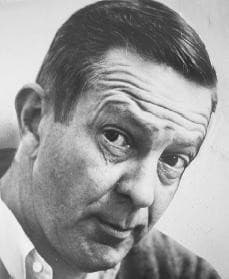
John William Cheever was an American short story writer and novelist. He is sometimes called "the Chekhov of the suburbs". His fiction is mostly set in the Upper East Side of Manhattan; the Westchester suburbs; old New England villages based on various South Shore towns around Quincy, Massachusetts, where he was born; and Italy, especially Rome. His short stories included "The Enormous Radio", "Goodbye, My Brother", "The Five-Forty-Eight", "The Country Husband", and "The Swimmer", and he also wrote five novels: The Wapshot Chronicle , The Wapshot Scandal, Bullet Park (1969), Falconer (1977) and a novella Oh What a Paradise It Seems (1982).

Ashley Antoinette
4.6

Mark McDonald
4.4
Luo Guanzhong
4.4

Mia McKenzie
4.3

Dorothy Parker
4.3

Joaquim Maria Machado de Assis
4.3

James Thurber
4.2

Terry Kay
4.2