“The village, the Russian village... it's a special world, a world of its own.”
— Reflecting on the unique and often isolated nature of rural Russian life.

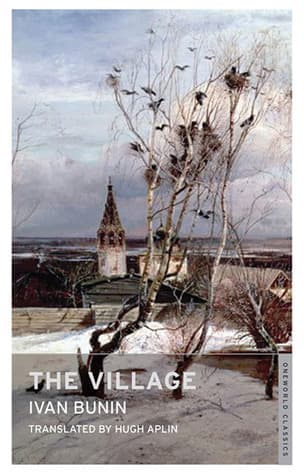
Ivan Alekseyevich Bunin (1910)
Genre
Fiction
Reading Time
240 min
Key Themes
See below
Sign in to track this book
In 1905, two peasant brothers in rural Russia show the small cruelties and ignorance of a fading era, their lives a harsh, real picture of village decline before the revolution.
The story introduces brothers Kuzma and Tikhon Krasov. As children in the poor village of Durnovka, Kuzma is more sensitive, while Tikhon is practical and wants money. An early event is a fire set by the brothers, leading to Kuzma being badly beaten by their father. This, along with the stifling village life, makes Kuzma leave Durnovka to wander and take odd jobs in towns. He thinks about how harsh peasant life is and how pointless their existence seems. Tikhon, meanwhile, stays. He slowly gets rich and becomes a small merchant and landowner, despite the village's general dirtiness and backwardness.
Tikhon Krasov, by working hard, making smart deals, and being very stingy, manages to get land and power in Durnovka. He buys out his poor neighbors, uses others' labor, and lends money at very high rates. His success comes from the village's desolation, as he profits from the bad luck and ignorance of the local peasants. He is a practical and cold man, driven by a wish for power and money, often without caring about others. His house, while better than others, still shows the village's general lack of comfort and beauty.
After years of wandering without purpose and failed plans, Kuzma Krasov returns to Durnovka, disappointed and tired. He takes Tikhon's offer to be his manager, looking after his small estate. This job puts Kuzma in the middle of the village life he once ran from. It lets him see its inherent dirt, laziness, and harshness with a distant, almost scientific eye. He thinks about how peasant life never changes, their deep old beliefs, their sudden acts of violence, and their strong sense of fate. His return marks a time of deep inner struggle and thinking about the Russian peasantry.
Kuzma's job as manager gives him a close look at the peasants' lives, which are marked by constant hard work, poverty, and a deep lack of education or understanding. He observes their old customs, their belief in superstitions, their frequent drinking, and their casual cruelty to each other and animals. Villagers, like Gray-haired Denis, show this lack of change. Their lives are set by the seasons and old habits, not by any sense of progress or ambition. Kuzma tries to make sense of his own intellectual thoughts with the hard facts of their lives. He often feels deep pity mixed with despair for their hopeless state.
The distant noise of the 1905 Revolution eventually reaches the isolated village of Durnovka, though its effect is mostly misunderstood and broken. News of trouble, strikes, and social upheaval comes in, causing a stir among the peasants. However, their understanding of these events is limited, often twisted by rumors and their own complaints. Some peasants express a vague hope for change or a wish to get even, while others remain uninterested or see it as another strange misfortune. Tikhon, always practical, sees it as a threat to his land and order. Kuzma observes the brief and mostly weak signs of rebellion, noting its lack of clear purpose or real revolutionary spirit among the villagers.
As news of the revolution gets stronger, Tikhon becomes more worried about his land and standing. He views any talk of change or peasant uprising with deep suspicion and fear. He sees it as a direct threat to his hard-earned money. He tries to keep order through threats and by using his influence, often reminding the peasants of their debts or past mistakes. His fear shows how uncertain his position is, built as it is on using others. He struggles to understand the wider political events, seeing them only through the lens of his own safety and keeping his small empire.
Amid the lack of change and brief revolutionary echoes, Kuzma's inner life becomes one of deep philosophical sadness. He thinks about the history of Russian peasants, how they never change, and the repeating pattern of their suffering and ignorance. He reads and thinks, but finds no comfort or answer. His observations lead him to believe that the village, and perhaps the Russian spirit itself, is stuck in a cycle of harshness and stopped growth. It cannot break free from its basic instincts and crushing poverty. He sees little hope for progress or understanding, strengthening his feeling of personal uselessness and the grimness of their shared fate.
The death of Gray-haired Denis, an old and largely unremarkable peasant, is a stark reminder of the harsh facts of life and death in Durnovka. His passing is handled with a mix of rough practicality and old superstitions. There is little real sadness, but more a focus on the rituals and practical parts of burial. Kuzma observes this event with his usual detachment, seeing it as another example of the raw, simple existence of the villagers. Denis's life, full of hard work, ends without much impact. It shows the anonymous and often brutal end that many in the village face.
Kuzma, despite his intellectual thoughts, has a brief, unfeeling affair with Molodaya, one of the peasant women. This relationship lacks tenderness, romance, or real connection. It reflects the harsh and transactional nature of relationships in Durnovka. It is a physical act born more from boredom and the basic urges of village life than any emotional bond. The affair ultimately leaves Kuzma feeling even more alone and disappointed. It strengthens his belief in the village's spiritual emptiness and the inability to find real human connection there. It further solidifies his despair about the chance for beauty or love in this place.
As the revolutionary passion dies down, Durnovka mostly returns to its former state of stagnation. The brief waves of unrest fade, and the peasants go back to their usual laziness, drinking, and small fights. The underlying problems of poverty, ignorance, and lack of ambition remain untouched. Tikhon continues to manage his land, making his power stronger, while Kuzma continues his observations, now with an even deeper sense of acceptance. The village, a small picture of rural Russia, seems caught in an endless, unchanging cycle. It resists outside forces of change and cannot evolve past its basic state. The future, for Durnovka, seems set to be like its past.
The Protagonist
Kuzma begins as an idealistic wanderer seeking escape, but ultimately returns to Durnovka, sinking into a profound philosophical despair about the unredeemable nature of the Russian peasantry.
The Antagonist/Protagonist's foil
Tikhon steadily rises from a poor peasant to the most powerful man in Durnovka, demonstrating the corrupting influence of unchecked ambition and the ability to thrive in a brutal environment.
The Supporting
Molodaya remains largely static, serving as a reflection of the unromantic and harsh realities of female existence in Durnovka.
The Supporting
Denis lives and dies without significant change, embodying the static and often anonymous existence of the Durnovka peasantry.
The Collective Character
The villagers as a whole remain static, resistant to change and trapped in a cycle of poverty and primitive existence, despite external revolutionary stirrings.
This is the main theme, showing the Russian village as a place of constant hard work, ignorance, and spiritual emptiness. Bunin shows the peasants as stuck in a cycle of poverty, old beliefs, and casual cruelty, without intellectual curiosity or ambition. Scenes like Tikhon's casual violence, the old customs around Denis's death, and Durnovka's overall dirtiness show this theme. Kuzma's despair comes directly from seeing this unchanging, harsh existence.
““The village was a cesspool, a stagnant pond where nothing ever changed, nothing ever grew.””
The novel questions the romantic view of Russian peasants and suggests that attempts at social or intellectual progress in this setting are useless. Kuzma, with his intellectual thoughts, represents a failed attempt to escape and then a disappointed return. The brief and confused effect of the 1905 Revolution on Durnovka further highlights this theme. It shows how outside forces of change are either misunderstood or quickly absorbed back into the village's unchanging rhythm. Bunin suggests a built-in resistance to understanding.
““They were not a people to be reformed, but a people to be endured, perhaps to be pitied, but never to be changed.””
This theme is shown by the opposing brothers, Tikhon and Kuzma. Tikhon represents pure, unfeeling focus on money, driven only by getting rich and powerful, even if it means being unkind. Kuzma, in contrast, deals with spiritual and philosophical questions, but finds no answers or comfort in Durnovka's grim reality. The village itself is shown as spiritually empty, with religion reduced to superstition and human relationships lacking real affection. This highlights how basic material needs win over any higher goals.
““One lived for the belly, the other for a soul that found no sustenance.””
Bunin uses Durnovka as a small example to explore bigger questions about Russian identity. This includes the perceived flaws and strengths of the Russian character. The novel presents a grim view, emphasizing the historical burden of serfdom, the deep-seated sense of fate, and the potential for both huge suffering and casual cruelty. Kuzma's inner thoughts often go into this national self-reflection, asking if the 'Russian soul' is naturally flawed or simply a product of its harsh conditions. It is a pessimistic look at Russia's potential future.
““This was Russia, unadorned, unidealized, a land of vast emptiness and the eternal, unchanging peasant.””
The contrasting personalities of Kuzma and Tikhon highlight key thematic elements.
The two brothers, Kuzma and Tikhon Krasov, serve as foil characters, their opposing natures illuminating the novel's central themes. Kuzma, the intellectual wanderer, embodies introspection, disillusionment, and a failed search for meaning. Tikhon, the pragmatic and ruthless landowner, represents the raw, materialistic drive for survival and power within the harsh village environment. Their differing reactions to Durnovka and their contrasting life paths allow Bunin to explore the spiritual vs. material, idealism vs. pragmatism, and the potential for both despair and exploitation inherent in Russian peasant life.
The village of Durnovka symbolizes the broader state of rural Russia.
The village of Durnovka ('Durnovka' meaning 'bad place' or 'foul place' in Russian) is not merely a setting but a powerful symbol. It represents the stagnation, ignorance, and spiritual decay that Bunin perceived in rural Russia at the turn of the 20th century. Its squalor, the unchanging nature of its inhabitants, and its resistance to progress are all symbolic of a deeper malaise within the national character. The village acts as a microcosm, its isolated existence reflecting the broader challenges and perceived backwardness of the Russian Empire.
Kuzma's thoughts and reflections provide deep insight into the novel's philosophical concerns.
Much of the novel's philosophical depth is conveyed through Kuzma's internal monologues and stream-of-consciousness reflections. These passages allow the reader direct access to his despair, his observations on peasant life, and his broader contemplation of Russian history and identity. This device is crucial for developing the theme of the failure of idealism and for presenting Bunin's critical perspective on the peasantry, as Kuzma often acts as the author's intellectual proxy, dissecting and lamenting the bleak realities around him.
“The village, the Russian village... it's a special world, a world of its own.”
— Reflecting on the unique and often isolated nature of rural Russian life.
“The muzhik is a beast, a brute, but he is also a man, a human being.”
— A character contemplating the dual nature of the Russian peasant, both coarse and inherently human.
“Life here is like a bog: you try to pull yourself out, but you only sink deeper.”
— Describing the oppressive and inescapable feeling of poverty and stagnation in the village.
“The soul of Russia is in its fields, its forests, its endless plains.”
— An observation on the deep connection between the Russian land and the national spirit.
“They live like animals, without thought, without hope, just existing.”
— A harsh judgment on the perceived lack of intellectual or spiritual life among some villagers.
“The wind howled like a hungry wolf, tearing at the thatched roofs.”
— A vivid description of the harsh Russian winter and its impact on the village.
“They drank to forget, but forgetting only brought more sorrow.”
— Commenting on the destructive cycle of alcoholism as a coping mechanism in the village.
“The old ways are dying, but the new ones are not yet born.”
— Reflecting on the transitional period in Russia, where traditional life is eroding but modernity hasn't fully arrived.
“There is a terrible beauty in this desolation, a stark grandeur.”
— An appreciation for the harsh, unyielding beauty of the Russian landscape despite its hardships.
“They were bound to the land, generation after generation, like slaves.”
— Highlighting the historical and ongoing servitude of peasants to the land and its owners.
“The silence of the village was not peaceful, but heavy, suffocating.”
— Describing the oppressive quietude that can signify stagnation and unspoken suffering.
“Every spring, the same hope, every autumn, the same disappointment.”
— Illustrating the cyclical nature of agricultural life and the recurring dashed hopes of a better harvest.
“He carried the weight of the land on his shoulders, and it was crushing him.”
— Metaphor for the immense burden and responsibility felt by a character tied to the land and its fate.
“The church bells rang, calling them to prayer, but their hearts were elsewhere.”
— Indicating a disconnect between traditional religious observance and the actual spiritual state of the villagers.
“Fear was a constant companion, a shadow that never left them.”
— Describing the pervasive sense of insecurity and apprehension among the villagers.
Ready to see how well you understood this book? Take our interactive quiz with 10 questions.
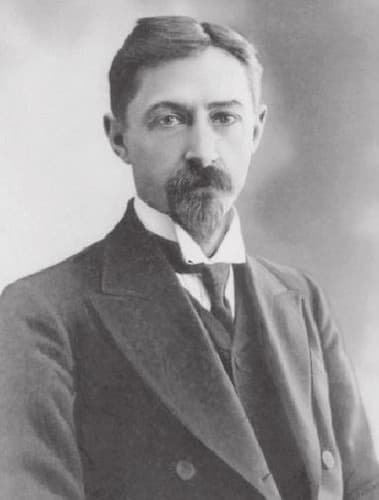
Biography coming soon.

Ashley Antoinette
4.6

Mark McDonald
4.4
Luo Guanzhong
4.4
Mia McKenzie
4.3
Dorothy Parker
4.3

Joaquim Maria Machado de Assis
4.3
James Thurber
4.2
Terry Kay
4.2