“The feeling of being useful, of contributing to something greater than oneself, was a powerful anesthetic.”
— Describing the initial mindset of the 'contributory' individuals at the Unit.

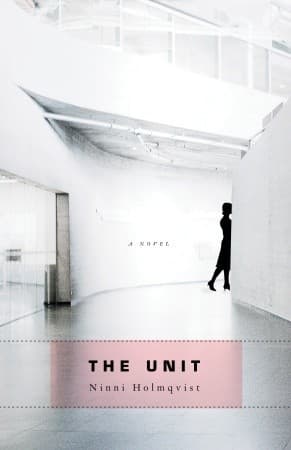
Ninni Holmqvist (2017)
Genre
Science Fiction
Reading Time
260 min
Key Themes
See below
Sign in to track this book
In a near-future where the childless and jobless are harvested for organs, an aging woman finds peace in her designated 'Unit' until an unexpected love forces her to confront the cost of her comfortable compliance.
Dorrit Weger, a 50-year-old single, childless woman without a 'progressive' job, arrives at the Second Reserve Bank Unit for biological material. She is one of society's 'dispensable' individuals, destined to live her final years in comfort while contributing her organs. The Unit is luxurious, offering private apartments, gourmet food, and recreational activities. Dorrit observes other residents, all fitting the same criteria: women over 50, men over 60, single, and childless. She gets a comprehensive tour, including medical facilities where residents have regular health checks and 'donations.' Despite the grim purpose, Dorrit finds the environment pleasant and the staff attentive, initially feeling peace and resignation.
Dorrit quickly settles into the Unit's routine. Her days are filled with leisurely activities like reading in the library, attending discussion groups, and enjoying the gardens. She makes acquaintances with some residents, including the outgoing Marianne. Residents are encouraged to participate in 'tests' and 'studies' for pharmaceutical companies, presented as enriching. These often involve new medications or psychological evaluations. Dorrit also undergoes her first 'donation' – a blood transfusion. The process is clinical and efficient, and the staff maintains a reassuring demeanor, emphasizing the residents' societal contribution. Dorrit reflects on her past life, feeling a quietude she hadn't experienced before.
After some time, Dorrit learns it is time for her first major organ donation: a kidney. The news is delivered gently, as a matter of course. She undergoes pre-operative procedures, and while she feels apprehension, her ingrained resignation to the Unit's purpose largely overrides any strong protest. The operation is successful, and she recuperates in the Unit's infirmary, receiving excellent care. During her recovery, she observes other residents who have also undergone donations, some appearing more frail. This experience brings the reality of her situation into sharper focus, yet the comfort and care temper her fear, making the process feel less like a death sentence and more like a necessary, unpleasant contribution.
A new resident, Johannes, arrives at the Unit. He is a quiet, intellectual man, a former university lecturer. Dorrit is drawn to his reserved demeanor and thoughtful presence, a contrast to some of the more boisterous residents. They first interact during a poetry reading in the library, where they discover a shared appreciation for literature. Their conversations deepen over subsequent days, often in the garden or during meals. Johannes expresses a similar quiet acceptance of their situation, but also a deeper philosophical understanding of their societal role. This new connection begins to stir feelings in Dorrit that she believed had long since atrophied, challenging her carefully constructed resignation.
Dorrit and Johannes's relationship blossoms into a quiet romance. They spend increasing amounts of time together, sharing meals, discussing books, and simply enjoying each other's company. Their connection provides companionship and intimacy that Dorrit hadn't experienced in years. For the first time since entering the Unit, Dorrit feels genuinely happy and alive. This newfound joy, however, is tinged with the dread of their impending fate. The Unit, once a place of peaceful resignation, now becomes a test for their love, making the prospect of future donations and eventual death more painful and unjust. Their love makes life worth living, but also highlights its precariousness.
As Dorrit and Johannes's relationship deepens, the Unit's purpose becomes harder to ignore. They witness the gradual decline of other residents who undergo multiple donations. Some individuals become weaker, their energy fading, their conversations more sporadic. Marianne, for instance, seems to age rapidly after her second major donation. The couple often discusses their fears and the unfairness of their situation, finding solace in each other's presence but no real answers. Johannes, with his intellectual background, tries to rationalize their society's utilitarian logic, but even he struggles to reconcile it with their personal experience of love and value. The contrast between their personal happiness and the grim future intensifies their emotional burden.
Dorrit receives notification for her second major donation, this time a lung. The news shatters the fragile peace she had found with Johannes. The prospect of further physical diminishment, and the looming reality of their eventual 'final donation,' becomes unbearable. Johannes is equally devastated, his quiet acceptance replaced by anger and helplessness. They cling to each other, their conversations now filled with whispers about 'what if' and 'if only.' The Unit, once a comfortable prison, now feels like an active threat. Dorrit undergoes the procedure, and while she recovers, the emotional toll is immense. Her body feels weaker, and her spirit is increasingly burdened by the knowledge that each donation brings her closer to the end, and further from Johannes.
The despair following Dorrit's second donation pushes them to consider escape. They begin to have hushed, secretive conversations, mostly fueled by Johannes's analytical mind and Dorrit's newfound will to live. They discuss the Unit's security, the perimeter, and the near-impossibility of blending back into a society that considers them expendable. While no concrete plan emerges, the act of discussing it is a radical defiance of the Unit's control and their prior resignation. These conversations, though fraught with fear, reignite a spark of hope and a sense of agency they thought they had lost. They know the odds are stacked against them, but the alternative—passive acceptance of their demise—is now intolerable.
A unique opportunity arises: The Unit announces a 'special project' requiring a couple for a long-term psychological study in a separate, even more luxurious facility. Dorrit and Johannes are chosen, a rare stroke of luck that seems to offer a reprieve, a chance to buy more time together. They are overjoyed, seeing it as a temporary escape from the donation cycle. However, their joy is short-lived. Just as they are preparing to leave, the Unit's administration informs them that due to a 'medical necessity,' Johannes is required for an immediate, urgent donation – his heart. The cruel twist is devastating; their brief hope is brutally extinguished, and they are ripped apart just as they imagined a future.
Johannes is taken for his final donation. Dorrit is left behind, shattered. The Unit's staff, polite and efficient, offer condolences, but their detached professionalism highlights the system's cold indifference. Dorrit experiences profound grief and despair, feeling the full weight of the Unit's oppressive purpose. The luxurious apartment, once a sanctuary for their love, now feels like a tomb. Her will to live, so recently rekindled, is extinguished, replaced by a deep emptiness. She retreats into herself, the vibrant woman who found love replaced by a shell. Her days become a monotonous wait for her own inevitable end, devoid of the meaning Johannes had brought her.
In the months following Johannes's death, Dorrit lives a solitary existence within the Unit. She avoids most social activities, preferring the quiet solitude of her apartment or the library. She continues to undergo minor tests and occasional blood donations, but her spirit is broken. She reflects deeply on the nature of their society, the ethics of the Unit, and the value of a life deemed 'dispensable.' The comfort and luxury of her surroundings now feel like a mockery. She thinks about the 'outside' world, wondering if the younger, 'productive' generations ever consider the lives of those within the Unit. Her resignation returns, but this time it is a bleak, hopeless acceptance, colored by the memory of lost love and the injustice of their fate.
The Protagonist
Dorrit transforms from a woman passively accepting her societal designation to someone who fiercely values life and love, only to have that hope tragically extinguished.
The Supporting
Johannes initially accepts his fate but finds renewed purpose and a will to live through his love for Dorrit, only to be tragically taken for a final donation.
The Supporting
Marianne's journey highlights the physical toll of the Unit's procedures, showing a gradual decline despite her initial vivaciousness.
The Mentioned
The Staff remain static, representing the unyielding and emotionless functionality of the Unit.
The Antagonist/Mentioned
The 'Outside' Society remains a constant, oppressive, and unchanging force throughout the narrative.
The central theme explores the conflict between the inherent value of an individual life and a society's utilitarian calculation that deems some lives 'dispensable.' The Unit provides luxurious comfort, yet its ultimate purpose is to harvest organs, raising questions about what truly constitutes 'care' and 'contribution.' Dorrit's journey, from quiet acceptance to fierce love and despair, shows how a system designed for the 'greater good' can dehumanize individuals. Her love for Johannes makes her life priceless to her, directly contrasting with society's assessment of her worth.
“We're here to contribute. That's what they tell us. But what if our contribution is simply our bodies, and nothing else?”
This theme explores how human connection, particularly romantic love, can transform one's perception of life and death. Dorrit and Johannes's relationship brings joy and meaning to their final years, making their predetermined end more painful. Their love reawakens a will to live and challenges the resignation they initially felt. The Unit, designed to make death comfortable, ironically makes life unbearable once love enters the equation, as it provides something too precious to lose.
“It was as if life, having been drained out of me for so long, suddenly rushed back in with a force that threatened to break me.”
The novel examines the subtle ways individuals conform to oppressive systems, even when those systems are designed for their demise. Dorrit and other residents initially accept their fate, finding comfort in the Unit's pleasant conditions. The system is pervasive and seemingly benevolent, making overt resistance seem futile or ungrateful. However, the emergence of love between Dorrit and Johannes sparks a quiet, internal resistance, leading them to contemplate escape, even if it remains largely a fantasy. This shows that true resistance can arise from the most personal human experiences.
“Sometimes, the greatest rebellion is simply choosing to want more.”
The Unit is presented as a benevolent institution, offering comfort and care, and residents are framed as 'contributing' to society. However, this benevolence masks a ruthless system of forced organ donation. Residents are given the 'choice' to enter, but society has already rendered them obsolete, leaving them no viable alternative. The pleasantries, gourmet food, and recreational facilities are all part of an elaborate illusion designed to make their slow demise more palatable, showing how oppressive systems can use comfort to disarm and control.
“They gave us everything we could want, except the one thing that mattered: a future.”
The book explores how identity and self-worth are shaped by societal values. By being deemed 'dispensable' based on their marital status, childlessness, and employment, the residents of the Unit have their identities stripped away. Dorrit initially struggles with a lack of purpose, but her connection with Johannes restores her sense of self-worth. The Unit's system reduces individuals to their biological material, forcing characters to confront what makes a life valuable beyond societal utility. This theme questions whether true worth can be assigned by external metrics.
“We were the ones who didn't fit into the grand design, the loose threads that needed to be neatly clipped.”
A luxurious, dystopian facility for 'dispensable' individuals.
The Unit is the primary setting and a central plot device. It functions as a gilded cage, providing comfort and amenities while systematically harvesting organs from its residents. Its pleasant exterior and professional staff create a deceptive sense of benevolence, making the residents' fate seem less brutal. The Unit's design highlights the insidious nature of the dystopian society, where oppression is sugar-coated with luxury and presented as a form of societal contribution. It is both a physical place and a symbol of societal control and dehumanization.
The systematic, required removal of organs from residents.
Organ donations are the core mechanism of the Unit's purpose and the driving force of the plot's tension. Each donation serves as a grim milestone, marking the residents' inevitable decline and bringing them closer to their 'final donation.' These procedures are presented clinically and efficiently by the staff, devoid of emotional weight, which further emphasizes the dehumanizing nature of the system. For Dorrit, each donation becomes increasingly agonizing after she finds love, transforming from a resigned acceptance to a terrifying countdown to separation and death.
A societal classification for individuals deemed unproductive and expendable.
This classification is the foundational plot device that establishes the dystopian world and justifies the Unit's existence. By labeling individuals as 'single, childless, and without jobs in progressive industries' as expendable, society creates a rationale for their sequestration and organ harvesting. This device highlights themes of societal value, productivity, and the arbitrary nature of worth. It forces characters like Dorrit to internalize their perceived lack of value, only to challenge it later through personal connection. It sets the stage for the entire conflict.
The unexpected romance between Dorrit and Johannes.
The love story between Dorrit and Johannes functions as a catalyst for emotional and thematic development. It shatters Dorrit's initial resignation and introduces a profound sense of purpose and a will to live that directly conflicts with the Unit's design. This romance intensifies the tragedy of their situation, transforming their quiet acceptance into desperate longing and a desire for escape. It is the emotional core that exposes the true cruelty of the system, making the comfortable Unit an unbearable prison.
“The feeling of being useful, of contributing to something greater than oneself, was a powerful anesthetic.”
— Describing the initial mindset of the 'contributory' individuals at the Unit.
“We were not prisoners, not exactly. We were just… no longer free.”
— Dorrit reflecting on the subtle nature of their confinement.
“It was the slow, insidious erosion of self that was the most terrifying.”
— Contemplating the psychological impact of the Unit on its residents.
“Love, it turned out, was not a luxury for the old and the useless. It was a necessity.”
— Dorrit's realization about the fundamental human need for connection within the Unit.
“The system was designed to be humane, they said. And perhaps, in its own twisted way, it was.”
— Sarcastic observation on the self-justifying rhetoric of the societal system.
“To be without purpose was to be without worth, and in this society, worth was everything.”
— Explaining the core principle of the society that leads to the Unit's existence.
“The small rebellions were the most important. The ones no one else saw.”
— Highlighting the quiet acts of defiance and individuality.
“Memory was a dangerous thing in a place where your future was already decided.”
— Considering the pain and futility of remembering a past life.
“We were the unwanted, the superfluous, given a final, elegant purpose.”
— A cynical summary of the Unit's role for its residents.
“The quiet acceptance was perhaps the most unsettling thing of all.”
— Reflecting on the passivity of the residents and society.
“Every new donation brought a fresh wave of fear, a reminder of what awaited us.”
— Describing the emotional toll of the organ donation process on the residents.
“It was a life, yes, but a life curated, managed, and ultimately, owned.”
— A poignant description of the controlled existence within the Unit.
“The greatest cruelty was not the end, but the slow, deliberate stripping away of everything that made you, you.”
— Dorrit's profound realization about the true nature of their suffering.
“Even in the darkest corners, a flicker of connection could ignite a hope that felt almost dangerous.”
— Highlighting the resilience of human spirit and the power of relationships.
Ready to see how well you understood this book? Take our interactive quiz with 10 questions.

Biography coming soon.