“I remember the beginning of my horror, it was here, in this amiable place; it was in the beautiful great room, where I had a seat at the table with the gentlemen and ladies.”
— The governess recalls her initial sense of unease upon arriving at Bly.

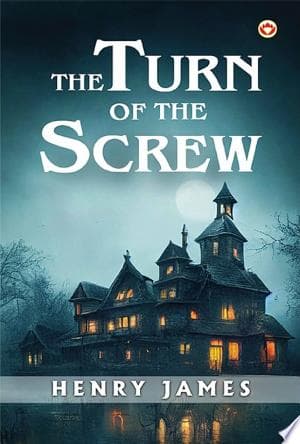
Henry James (2021)
Genre
Mystery
Reading Time
177 min
Key Themes
See below
Sign in to track this book
A young governess, caring for two angelic orphans in a secluded country estate, battles terrifying apparitions, or perhaps, her own unraveling sanity.
The story begins with friends on Christmas Eve sharing ghost stories. Douglas, one of the guests, tells a tale he heard from a governess he knew, calling it the most terrifying. He gets a manuscript she wrote and gave to him. The manuscript describes her time at Bly, a country estate. She was a young, new woman, the daughter of a poor country parson, hired by a rich, charming bachelor. His only rules were that she never bother him with the children's affairs and never write to him. Drawn by his charm and the challenge, the governess takes the job to care for his orphaned niece, Flora, and nephew, Miles, at Bly.
When she arrives at Bly, the governess immediately loves the beauty of the old house and its grounds. She meets Mrs. Grose, the kind housekeeper, who tells her that Miles, her young male ward, was expelled from school for an unknown reason. Despite this news, the governess quickly grows fond of Flora, a beautiful and angelic little girl, and later Miles, who returns from school. The children seem perfectly innocent, well-behaved, and charming, almost too perfect. The governess feels a strong sense of duty and love for them, determined to protect their innocence and keep Bly peaceful.
One afternoon, while walking the grounds, the governess sees a strange man on the house's tower. He has red hair and an intense look. She thinks he is a servant or visitor, but he disappears before she can speak to him. Later, she sees him again, looking through a window. Disturbed, she describes the man to Mrs. Grose, who immediately recognizes him as Peter Quint, the former valet to the master of Bly. Mrs. Grose reveals that Quint was a bad person who was 'too free' with everyone, and, more disturbingly, that he is dead. This news deeply unsettles the governess, confirming her growing feeling that something is wrong at Bly.
The governess's unease grows when she next sees a female figure across the lake, dressed in black and looking sad. This ghost seems to watch Flora. The governess, now sure the house is haunted, describes the woman to Mrs. Grose. With a shiver of recognition, Mrs. Grose identifies the figure as Miss Jessel, the previous governess, who also died. Mrs. Grose explains that Miss Jessel had a bad relationship with Peter Quint and was a 'bad, bad woman.' The governess now believes the spirits of Quint and Miss Jessel haunt Bly and, more frighteningly, influence or try to corrupt the innocent children, Miles and Flora.
The governess's belief about the ghosts' presence and their bad intentions toward the children becomes an obsession. She constantly watches Miles and Flora, seeing their innocent behaviors and private talks as proof of their secret communication with Quint and Jessel. She believes the children purposely hide their interactions with the spirits from her. This belief isolates her, as Mrs. Grose, though supportive, cannot see the ghosts herself and often struggles to fully understand the governess's worries. The governess feels the heavy burden of being the only protector of the children's souls against an evil, unseen force, sometimes making her question her own sanity.
The mystery of Miles's expulsion from school continues to bother the governess. She repeatedly tries to get him to tell her the reason, believing it relates to the ghostly influence. Miles, however, avoids her questions charmingly. He eventually hints that he said 'things' to 'those I liked,' suggesting a moral wrong rather than a simple prank. His sophisticated and knowing answers, along with his unsettlingly mature manner, only fuel the governess's suspicion that he works with Peter Quint. She sees his unclear remarks as further proof of the children's corruption and their part in the haunting, making her more determined to save them.
One day, the governess sees Miss Jessel sitting by the lake, and she points her out to Flora and Mrs. Grose, expecting them to confirm the vision. To her shock, Flora strongly denies seeing anything, calling the governess 'horrid' and making up stories. Mrs. Grose also does not see the ghost, which deeply shakes the governess's confidence. Flora's denial and distress are so strong that she becomes ill, with fever and delirium. This event is a major turning point, as the governess's belief in the children's innocence is broken, and she now sees Flora as actively helping the spirits, purposely deceiving her.
After her difficult encounter by the lake and subsequent illness, Flora's condition worsens. She continues to deny seeing Miss Jessel and shows a strong dislike for the governess. Mrs. Grose, worried about Flora's health and shaken by the governess's intense accusations, decides to take Flora away from Bly. She arranges for Flora to stay with the master's relatives, believing it best for the child's recovery and peace. This leaves the governess alone at Bly with Miles, further isolating her and making her focus more on saving him from the perceived evil.
Alone with Miles, the governess tries harder to make him confess his involvement with Peter Quint. She pressures him constantly, demanding he admit to the 'horrors' she believes he has done or seen. Miles, at first resistant and charming, eventually breaks down. He confesses that he 'said things' to 'those I liked' at school, suggesting a deeper wrong than previously thought, and says he wants to return to school. At this moment, the governess sees the ghost of Peter Quint appear outside the window. She points him out to Miles, demanding he acknowledge the evil presence.
In the final confrontation, the governess points out Peter Quint's ghost to Miles, challenging him to admit his knowledge. Miles, after a moment of intense struggle and terror, cries out, 'Peter Quint—you devil!' as if finally seeing and recognizing the evil spirit. As the governess hugs him in triumph, believing she has saved him from the ghost, Miles's heart stops. He collapses and dies in her arms. The story ends ambiguously, leaving the reader to wonder if the governess's actions truly saved Miles, or if her obsessive pursuit of the ghosts ultimately caused his tragic death.
The Protagonist
She begins as an idealistic, naive young woman, gradually descending into a state of paranoia and obsession, ultimately leading to a tragic outcome.
The Supporting/Central Figure
Miles's character remains ambiguous; he appears to be an innocent child but is portrayed by the governess as increasingly influenced by malevolent forces, culminating in his tragic death.
The Supporting/Central Figure
Flora is initially portrayed as perfectly innocent, but her character becomes increasingly ambiguous through the governess's lens, appearing to be corrupted before she is removed from Bly.
The Supporting
She remains a consistent, empathetic figure, serving as a foil to the governess's spiraling mental state.
The Antagonist/Ghost
As a ghost, his character doesn't develop, but his perceived influence intensifies, becoming the primary antagonist in the governess's mind.
The Antagonist/Ghost
Like Quint, her character as a ghost remains static, but her perceived influence grows as the governess's paranoia deepens.
The Mentioned
He remains a static, offstage figure, his influence primarily through his initial instructions.
The Supporting
Douglas serves a framing function and does not undergo a personal arc within the primary narrative.
The main theme is whether the ghosts are real or made up by the governess. James cleverly avoids giving clear answers, making the reader constantly question the narrator's reliability and what happens at Bly. This uncertainty grows because Mrs. Grose cannot see the ghosts, Flora strongly denies them, and the governess becomes more isolated. The novella becomes a psychological study where the reader's interpretation is as important as the 'facts' presented, as shown in the many critical discussions about its meaning.
“''The story had held us, from the first of its mystifications, by the intensity of the question of what had happened to the children.''”
The novella looks closely at how vulnerable childhood innocence is to perceived corruption. The governess is set on protecting Miles and Flora, whom she first sees as pure, from the 'evil' of Peter Quint and Miss Jessel. However, her growing paranoia makes her see the children as already corrupted, actively helping the haunting. Miles's tragic end raises the question of whether the children were truly corrupted by outside forces or if their 'innocence' was destroyed by the governess's own psychological projections and intense scrutiny.
“''They were of a beauty that carried the penalty of appearing too good to be true.''”
The governess's isolation at Bly, along with her inexperience and the master's strict rules, creates a situation ripe for psychological distress. Her inability to share her visions with anyone who can confirm them, especially Mrs. Grose and the children, makes her feel more alone against an evil force. This isolation feeds her paranoia, causing her to see every unclear event, every subtle glance, as proof of the ghosts' influence and the children's involvement. Her mental state worsens, blurring the lines between reality and her own internal struggles.
“''I was there to protect and to save the children. Was there not a purity of intention, a holy zeal in my service that should have been proof against all horrors?''”
The novella explores the hidden and sly nature of evil. It is never clearly defined or shown in a typical way; instead, it appears through hints, suggestions, and the governess's interpretations. The 'evil' of Quint and Jessel is described as a corrupting influence, a 'horrible, unspeakable' presence that preys on the innocent. The uncertainty about whether this evil is external (ghosts) or internal (the governess's mind) is central to the story's lasting power. The 'evil' is less about clear actions and more about a widespread feeling of moral decay and psychological pain.
“''The children were with me, and I was with the children. The world of evil was with us too.''”
The story is told through the highly subjective and potentially unstable perspective of the governess.
The entire narrative, after the brief prologue, is presented as the governess's manuscript, filtered through her own experiences and interpretations. This makes her an unreliable narrator, as her psychological state, increasing paranoia, and vivid imagination cast doubt on the objective reality of the ghosts. Readers are forced to question whether the apparitions are genuine supernatural entities or projections of her repressed desires, anxieties, and moral fervor. The ambiguity arises directly from the fact that her perceptions are the only source of information about the haunting.
A story within a story, where Douglas recounts the governess's tale.
The novella begins with a frame narrative where a group of friends share ghost stories, leading to Douglas introducing the governess's manuscript. This device adds a layer of distance and formality to the tale, enhancing its mystique. The frame also allows for a degree of separation between the reader and the governess's direct experience, inviting critical reflection on the story's veracity. Douglas's admiration for the governess and his belief in her tale subtly influence the reader's initial reception, but the distance also permits independent judgment.
Utilizes classic gothic tropes to create an atmosphere of suspense and dread.
Henry James employs several gothic elements, including a remote, old country estate (Bly), a sense of isolation, mysterious deaths, and spectral apparitions. The decaying grandeur of Bly, with its 'aged' feel and 'queer old houses,' contributes to the eerie atmosphere. The focus on psychological torment, the suggestion of unspeakable evil, and the vulnerable protagonist in a threatening environment are all hallmarks of gothic fiction, used to heighten the suspense and contribute to the story's unsettling nature without relying on overt horror.
Uses contrasting imagery to represent good vs. evil, innocence vs. corruption.
Throughout the novella, James employs the symbolism of light and dark to underscore the governess's perception of the unfolding drama. The children are initially described in terms of 'angelic' light and purity, while the ghosts, particularly Quint, are associated with shadowy appearances, twilight, and a sense of encroaching darkness. This binary reinforces the governess's moral framework, where she sees herself as a beacon of light protecting innocent souls from the encroaching shadows of evil, even as her own mental state descends into a darker, more ambiguous territory.
“I remember the beginning of my horror, it was here, in this amiable place; it was in the beautiful great room, where I had a seat at the table with the gentlemen and ladies.”
— The governess recalls her initial sense of unease upon arriving at Bly.
“The children were a picture—they were the very picture of health.”
— The governess's initial impression of Flora and Miles, highlighting their apparent perfection.
“I don't know what I don't know. I'm only a little boy.”
— Miles's response when pressed by the governess about his past and expulsion from school.
“The little girl was bad, but I don't know what she did. She was very bad.”
— Mrs. Grose's vague and hesitant description of Miss Jessel's past behavior.
“It was not a lady that I saw, but a gentleman—a gentleman who had been a valet.”
— The governess first describes seeing Peter Quint on the tower.
“They know, they know, they know!”
— The governess's growing conviction that the children are aware of the ghosts and are complicit.
“She was a woman of a certain appearance—a lady, certainly, of that.”
— Mrs. Grose's description of Miss Jessel, again focusing on superficial aspects.
“I was there to save them, not to suffer them.”
— The governess's declaration of her protective mission regarding the children.
“He was a horror—he was a horror, but he was handsome.”
— Mrs. Grose's contradictory description of Peter Quint, highlighting his dangerous charm.
“The story had held us, round the fire, sufficiently breathless, but not, after all, by the terror that was in it, but by the terror of the narrator's silence.”
— The frame narrator's reflection on the effect of Douglas's story on the listeners.
“If I was to be so much with them, I was to know them.”
— The governess's determination to understand the children's true nature.
“We were alone, and we were safe—and we were happy.”
— The governess's initial feeling of security and contentment at Bly before the apparitions begin.
“He was, in a word, a prodigy.”
— The governess's description of Miles's extraordinary intelligence and charm.
“It was the first time I had known a child to be so bad.”
— The governess's shock and judgment regarding Miles's expulsion from school.
“The story had been told to me by the person to whom it had been told by the governess herself.”
— Douglas explaining the chain of narration for the governess's manuscript.
Ready to see how well you understood this book? Take our interactive quiz with 10 questions.
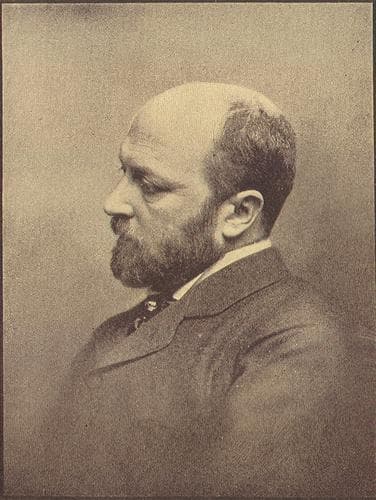
Henry James was an American-British author. He is regarded as a key transitional figure between literary realism and literary modernism, and is considered by many to be among the greatest novelists in the English language. He was the son of Henry James Sr. and the brother of philosopher and psychologist William James and diarist Alice James.