BookBrief
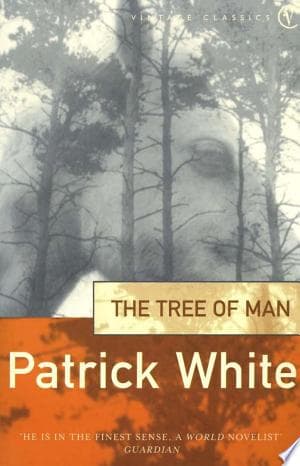
The Tree of Man cover
Archivist's Choice

The Tree of Man

Patrick White (1961)

Genre

Fiction

Reading Time

10-12 hours

Key Themes

See below

Track Your Reading

Sign in to track this book

In the Australian wilderness, one man's quiet struggle to cultivate land and family shows the poetry of an ordinary life across generations.

Synopsis

Around 1900, Stan Parker goes into the Australian wilderness to start a farm. He marries Amy, and they build a life on their land, facing the difficulties of pioneering. Their children, Ray and Thelma, bring their own problems: Ray's rebellious nature and Thelma's desire for a different life. Over the years, Stan has a deep, quiet spiritual awakening, especially after a flood tests his strength. The family goes through good times and bad; Ray becomes a criminal and dies, and Thelma marries and moves to the city. Stan and Amy's relationship changes, with moments of strong connection and quiet separation. In his later years, Stan deals with illness and a renewed sense of faith, finding peace in his farm's simple routines. The novel ends with Stan's peaceful death on his property, leaving Amy to think about their life together and the lasting impact of their struggles and quiet successes.
Reading time
10-12 hours
Difficulty
Medium
Pacing
Slow
Mood
Atmospheric, Reflective, Profound, Melancholy
✓ Read this if...
You appreciate deep character studies, explore themes of faith and the human condition, and enjoy a slow, reflective narrative set against the backdrop of early 20th-century Australia.
✗ Skip this if...
You prefer fast-paced plots, clear-cut resolutions, or find detailed descriptions of mundane life unengaging.

Plot Summary

Stan Parker Establishes His Homestead

Around 1900, a young Stan Parker rides his horse into the Australian bush, wanting to settle. He picks a spot near a creek with gum trees and starts the hard work of clearing land and building a small shack. His lonely life changes when Amy Fibbens, a shy but determined young woman from a nearby property, arrives after a short meeting. Despite little talk and an awkward courtship, Stan proposes, and Amy accepts. Their marriage is quiet, starting their shared life on the new farm, a life of hard work and silent understanding.

The Arrival of Children and Early Struggles

Stan and Amy's marriage grows with the birth of their son, Ray, then their daughter, Thelma. Farm life is constant work: clearing land, planting crops, caring for animals, and turning their shack into a larger home. They face the harsh Australian weather, with droughts threatening their farm and floods testing their strength. They often speak little, their days marked by shared work and the demands of raising children alone. Stan finds peace and purpose in his connection to the land and physical work, while Amy deals with the routine and occasional loneliness of her home life.

The Growth of the Farm and Social Connections

As years pass, the Parker farm, 'Durilgai,' slowly does better. Stan's hard work turns the wilderness into a productive farm, though it is still at the mercy of nature. The isolation of their early years lessens as other settlers arrive, forming a small community. The Parkers go to local dances, church, and farm shows, slowly becoming part of a wider social group. These events, often awkward for the quiet Stan and Amy, offer glimpses of connection. They meet different people, like the wealthy O'Dowds, who show a different kind of ambition, and the quiet, religious Mrs. Gage, who becomes a source of spiritual thought for Amy.

Ray's Rebellions and Thelma's Ambitions

Ray and Thelma grow up, each with a distinct personality different from their parents' quiet, grounded lives. Ray, restless, dislikes farm life and his father's silent nature. He looks for adventure and excitement, often getting into trouble and not caring for the land. Thelma, in contrast, is ambitious and social, wanting a life away from the bush. She is drawn to the city, wanting refinement and intellectual stimulation. Their different paths create a growing distance between them and their parents, showing the generational gap and the changing face of Australian society. Stan and Amy struggle to understand their children's desires, often withdrawing into their own silent worlds of work and thought.

Stan's Spiritual Awakening and the Flood

A bad flood covers the area, threatening to destroy everything the Parkers built. During the worst of the flood, Stan has a deep, almost spiritual awakening. Stranded on a small hill with his dog, surrounded by nature's destructive power, he feels a strong sense of unity with creation and a brief moment of divine presence. This experience, hard to explain, deeply affects him, making his connection to the land stronger and giving his quiet life a new, spiritual meaning. He tries, without success, to share this feeling with Amy, who, while strong, remains more practical in her faith. The flood, despite its damage, becomes an important moment in Stan's inner life.

The City and Ray's Downfall

After the flood, the Parkers briefly move to the city, hoping for a new start and a better life for their children. However, the city is confusing and isolating for Stan and Amy. Ray, already prone to bad behavior, falls in with a bad group and gets involved in crime. His life ends badly when he is linked to a murder and dies in a police shootout. This news devastates the family, especially Amy, who struggles to understand her son's fate. Stan, though deeply sad, becomes more stoic, dealing with the meaninglessness and suffering he sees, yet still holding onto the moments of grace he has experienced.

Thelma's Marriage and Amy's Affair

Thelma, having followed her ambitions, eventually marries Mervyn, a respectable but uninspiring lawyer. Her city life shows her desire for social standing and intellectual engagement, moving her further from her parents' country life. Meanwhile, back at Durilgai, Amy, feeling the weight of years and the unspoken distances in her marriage to Stan, is drawn to a traveling salesman named Mr. Gage (not related to Mrs. Gage). Their short, secret affair comes more from a longing for connection and emotional closeness than passion. It is a quiet act of rebellion and shows her deep loneliness, but it ultimately leaves her feeling empty and guilty, increasing her sense of isolation.

Stan's Illness and Renewed Faith

As Stan gets older, he has a stroke that leaves him partly paralyzed and unable to work the land he loves. This forced inactivity makes him think deeply. Confined to his bed, he considers life, death, and the meaning of his existence. He revisits the deep spiritual experiences he had during the flood and in other solitary moments, trying to explain the strong sense of divine presence he has felt. His illness, though physically limiting, makes his spiritual awareness deeper, bringing him closer to a quiet, personal faith that goes beyond traditional religion. Amy, always practical, cares for him with devotion, though she mostly does not know the depths of his inner journey.

Thelma's Return and Stan's Last Days

Thelma, now a sophisticated city woman, sometimes returns to Durilgai to visit her sick father. She finds the farm and her parents older and set in their simple, country ways, which she struggles to understand. Despite her efforts to connect, a gap remains between her city life and their earthy existence. Stan, weak but inwardly strong, continues his quiet thoughts. His last days are marked by a calm acceptance, a feeling of having lived a full, though often unspoken, life. He finds comfort in the familiar sights and sounds of his land, often looking at the 'tree of man' he planted years ago, a silent sign of his lasting connection to the earth.

Stan's Death and Amy's Legacy

One day, sitting under the large gum tree, Stan Parker quietly dies. His death is not dramatic but a natural end to his life's journey, a return to the earth he had worked and loved. Amy, though sad, continues with daily life, showing her lasting strength. She becomes the keeper of their shared history, the silent witness to their life's work. The novel ends with Amy watching a young boy, perhaps a grandchild, urinating on the tree Stan planted, an act that symbolizes the cycle of life, death, and renewal, and the ongoing, messy, but sacred connection between people and the land. The 'tree of man' is a monument to Stan's life and the lasting human spirit.

Principal Figures

Stan Parker

The Protagonist

Stan evolves from a young, solitary settler to an old man who, despite physical decline, achieves a profound spiritual understanding of life and his place within it.

Amy Parker (née Fibbens)

The Protagonist/Supporting

Amy transforms from a timid young bride into a formidable matriarch, enduring immense hardship and loss while maintaining her practical strength and quiet dignity.

Ray Parker

The Supporting

Ray's arc is one of escalating rebellion and ultimately tragic self-destruction, failing to find purpose or peace.

Thelma Parker

The Supporting

Thelma moves from a rural upbringing to an urban, intellectual life, achieving social standing but remaining somewhat detached from her familial roots.

Mrs. Gage

The Supporting

Mrs. Gage remains a constant, devout presence, serving as a spiritual touchstone for Amy.

Mr. O'Dowd

The Supporting

Mr. O'Dowd represents a consistent, more worldly ambition, contrasting with Stan's spiritual journey.

Mervyn

The Mentioned

Mervyn serves as a static character, representing Thelma's chosen urban life.

Mr. Gage (salesman)

The Mentioned

Mr. Gage is a transient figure, a temporary disruption in Amy's life.

Themes & Insights

The Search for Meaning and Spiritual Truth

This theme is central to Stan Parker's life. From his first decision to settle the land, he is driven by a quiet search for something beyond material things. His experience during the flood, where he feels united with creation and sees the divine, is an important moment. Throughout his life, he deals with the unexplainable, trying to understand suffering, love, and existence. This search is personal and often unspoken, different from Amy's more traditional faith. The 'tree of man' itself represents this ongoing search for roots and transcendence.

He began to understand that man is an extension of the earth, and that if he understood the earth, he would understand himself.

Narrator, regarding Stan Parker

Humanity's Connection to the Land

The Australian bush is more than a setting; it is a living part of the Parkers' lives. Stan's identity is tied to the land he clears, farms, and lives on. He finds peace, purpose, and even spiritual insight in his interactions with nature—the gum trees, the creek, the cycles of drought and flood. The land shapes their daily lives, their struggles, and who they are. The 'tree of man' he plants represents this deep relationship, showing growth, endurance, and the cycle of life and death, constantly renewed by the earth.

He knew that he was part of this earth, which was part of him. There was no division.

Narrator, on Stan Parker's connection to the land

Isolation and Communication Breakdown

Despite their shared life and strong bond, Stan and Amy often feel emotionally alone. They communicate little, relying on unspoken understandings and long silences. This inability to express their deepest thoughts creates a distance, leading to loneliness, especially for Amy, and a sense of isolation for Stan regarding his spiritual experiences. This theme also applies to their children, Ray and Thelma, who struggle to connect with their parents' world, showing the generational and experience gaps from their pioneering life.

They had lived so long in the country of their thoughts that words were not necessary, or even possible.

Narrator

The Cycle of Life, Death, and Renewal

The novel carefully follows the full course of life, from Stan's youth in starting his farm to his old age and death. It includes the birth of his children, their growing up, their problems, and the passing of the older generation. This cycle is mirrored in nature: clearing land, planting seeds, seasons of growth and harvest, and the destructive forces of drought and flood, followed by renewal. The 'tree of man' itself is a strong symbol of this theme, representing the continuous, changing nature of life and the lasting human spirit across generations.

He had seen the tree of man, which was himself, and it was a living tree, growing in the earth, and reaching for the sky.

Narrator, reflecting Stan's vision

The Nature of Love and Marriage

Stan and Amy's marriage is not one of obvious passion or grand declarations, but a deep, lasting partnership built through shared work and hardship. Their love is often shown in practical acts of care and strength rather than words. However, the novel also explores the problems in this bond, including Amy's loneliness and brief affair, and Stan's inability to fully share his inner world. Their relationship changes from necessity to a deep, often unspoken understanding that goes beyond individual desires, showing the lasting power of a shared life, even with its inherent distances.

Their love was not a thing of words, but of silences, and shared endurance.

Narrator

Plot Devices & Literary Techniques

The 'Tree of Man' Symbol

A recurring symbol representing human life, growth, and connection to the earth.

The title 'The Tree of Man' refers to a specific gum tree that Stan plants on his property, but it also functions as a pervasive metaphor throughout the novel. The tree symbolizes Stan's own life, his growth from a solitary seed to a deeply rooted individual. It represents the enduring human spirit, constantly reaching towards the divine while firmly grounded in the earth. The tree witnesses the family's joys and sorrows, endures the elements, and stands as a silent monument to their existence. Its cyclical nature—growth, endurance, and eventual decay—mirrors the human experience and the continuous cycle of life, death, and renewal on the land.

Naturalistic Detail

The use of vivid, unsentimental descriptions of the Australian landscape and its harsh realities.

White employs extensive naturalistic detail to immerse the reader in the Australian bush, portraying its beauty, its indifference, and its brutal challenges. Descriptions of droughts, floods, the scorching sun, and the relentless labor of clearing land are not merely background but integral to the characters' struggles and development. This device emphasizes the profound influence of the environment on human life and the theme of humanity's connection to the land. It creates a stark, authentic backdrop against which the internal lives of Stan and Amy unfold, highlighting their resilience and the raw, unvarnished quality of their pioneering existence.

Interior Monologue and Stream of Consciousness

Narrative technique used to reveal characters' unspoken thoughts and spiritual quests.

While dialogue is often sparse, especially between Stan and Amy, White frequently delves into the characters' inner lives through interior monologue and a stream-of-consciousness style. This allows the reader access to Stan's profound, often inarticulate, spiritual searching and Amy's quiet loneliness and practical concerns. This device is crucial for understanding Stan's mystical experiences during the flood and his later illness, as these moments defy simple verbal expression. It highlights the theme of communication breakdown while simultaneously providing deep insight into the individual consciousness of the characters, particularly Stan's complex relationship with the divine.

Cyclical Structure

The narrative mirrors the cycles of nature and human life, emphasizing continuity and renewal.

The novel's structure is cyclical, beginning with Stan's arrival and the establishment of his farm, and concluding with his death and the perpetuation of life on the land, symbolized by the tree and the presence of a child. This mirrors the natural cycles of seasons, growth, decay, and renewal inherent in the Australian landscape. Events like droughts and floods recur, testing and shaping the characters, but life always continues. This device underscores the theme of the enduring human spirit and the continuous flow of existence, suggesting that individual lives are part of a larger, ongoing process rather than isolated events.

Critical analysis

Notable Quotes

There were the trees. There was the ploughed earth. There was the sound of the axe, and the smell of the split wood. There was the taste of the bread. There was the feel of the sun on the skin. There was the wind that went through the trees. There was the rain that fell on the roof. There was the fire that burnt in the grate. There was the woman. There was the man. There was the child.

A poetic summary of the simple, elemental life of Stan and Amy Parker as they establish their home.

Man is a spirit, and his body is a cage. He is always trying to get out.

A reflection on the human condition and the struggle for freedom or transcendence.

It was the silence that was terrible, not the words. For the words were only the froth on the top of the silence.

Describing the unspoken tensions and understandings between characters, especially Stan and Amy.

He knew that he would never be able to tell her what he felt, because what he felt was too big for words.

Stan's internal struggle to express deep emotions to Amy, a recurring theme in their relationship.

Life, he had discovered, was a succession of moments, each one flowing into the next, and each one, when you looked back, seeming to have been inevitable.

Stan's contemplation of the passage of time and the unfolding of his life.

They were two people, and they were alone, and they were together, and it was a mystery.

Describing the complex and often ineffable bond between Stan and Amy.

The earth was a living thing, and he was part of it, and it was part of him.

Stan's profound connection to the land he farms and lives on.

Perhaps all life was a series of mistakes, and the trick was to make them as interesting as possible.

A more cynical or pragmatic view on the imperfections and trials of life.

There was a stillness in him, a great quiet, that was not peace, but something deeper than peace, something that was the essence of himself.

Stan's inner state of being, particularly towards the end of his life, a profound sense of self.

He saw that the world was beautiful, and terrible, and that it was all one thing.

A moment of profound realization for Stan, encompassing the duality of existence.

They had built their lives out of nothing, out of the raw earth and the empty sky.

Reflecting on the pioneering spirit and the creation of their home from scratch.

The wind was always there, shaping the trees, shaping the lives of men.

Using the natural element of wind as a metaphor for the forces that influence human existence.

He knew that he was dying, but it was not a frightening knowledge. It was only a knowledge.

Stan's calm acceptance of his impending death, devoid of fear.

And the tree stood, and the house stood, and the man and the woman stood, and the children stood, and the sun rose, and the sun set, and the moon shone, and the stars came out, and it was all a part of it.

A final, encompassing vision of the continuity of life, nature, and the human story.

Quiz

Test Your Knowledge

Ready to see how well you understood this book? Take our interactive quiz with 10 questions.

10
Questions
~5
Minutes
?
Best Score

Key Questions (FAQ)

'The Tree of Man' chronicles the lives of Stan and Amy Parker, a pioneering couple who settle in the Australian wilderness at the turn of the 20th century. It explores their ordinary existence as they build a farm, raise children, and navigate the profound yet often unarticulated experiences of marriage, faith, and the search for meaning amidst the vast, indifferent landscape.

About the author

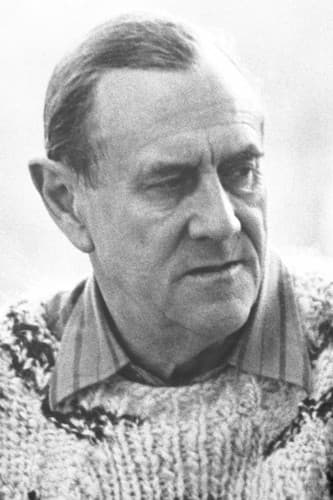
Patrick White

Patrick Victor Martindale White was a British-born Australian writer who published 12 novels, three short-story collections, and eight plays, from 1935 to 1987.