“Life is elsewhere, he thought, but he didn't know where.”
— Pondering the monotony and lack of fulfillment in his life at the Leoncio Prado Military Academy.

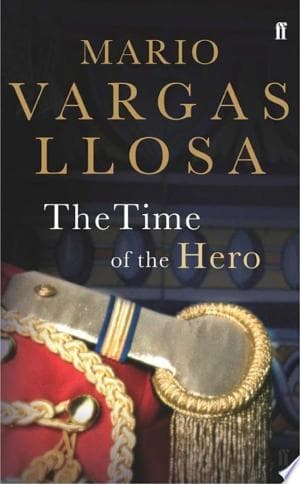
Mario Vargas Llosa (1966)
Genre
Fiction
Reading Time
10-12 hours
Key Themes
See below
Sign in to track this book
In a Peruvian military academy, cadets led by the Jaguar rebel against harsh hazing and strict rules. Their pranks turn into a tragic cycle of betrayal, murder, and revenge, revealing deep corruption within the institution and society.
The novel starts at the Leoncio Prado Military Academy in Lima, Peru, with a chemistry exam stolen by a group of cadets led by 'The Jaguar.' This rebellious act, meant to help the group, quickly becomes a problem when Lieutenant Gamboa, a strict officer, begins a thorough investigation. The cadets, especially 'The Slave' (Ricardo Arana), who is often blamed, fear the consequences. During the investigation, Cava, a member of the Circle, is identified as the thief and expelled. However, it is later revealed that Ricardo Arana, fearing the Circle's dangerous activities, told Lieutenant Gamboa about Cava. This betrayal starts a chain of tragic events.
After Cava's expulsion, tensions grow at the Academy. During a field exercise, Ricardo Arana, 'The Slave,' is shot in the head. The official story is that he accidentally shot himself. But several cadets, including Alberto Fernández (The Poet) and The Jaguar, suspect murder. Alberto, who knew Ricardo and about his betrayal of Cava, believes the shooting was revenge. This event deeply affects Alberto, who struggles with the injustice and the Academy's attempt to hide the truth. Ricardo Arana's death exposes the brutal realities and moral decay within the military institution.
Disturbed by Ricardo's death and the cover-up, Alberto Fernández, 'The Poet,' decides to investigate. He gathers evidence and tells Lieutenant Gamboa his suspicions, pointing to The Jaguar as the likely killer. Alberto also writes a report detailing the corruption, hazing, and immorality at the Academy, including officers' involvement in illegal activities. He gives this report to Colonel Lopez, the Academy's director, hoping to expose the truth and get justice for Ricardo. However, Alberto is manipulated and blackmailed by the authorities, who threaten to expose his own scandalous writings (pornographic stories) if he does not retract his accusations.
Throughout the story, flashbacks show the Jaguar's background. His real name is not directly given in this identity. These parts describe his poor and violent childhood in the Callao district of Lima. He is shown as a tough, street-smart leader who forms a gang with friends, committing small crimes and fighting to survive. These experiences shape his cynical view and his distrust of authority. His decision to join the military academy is presented as a desperate way to escape his circumstances, but he brings his street mentality into the institution, forming the 'Circle' and challenging the established order. These flashbacks explain his behavior and actions at the Academy.
Under great pressure and fearing the public exposure of his pornographic stories, Alberto Fernández is forced to withdraw his accusations about Ricardo Arana's death. He signs a statement confirming the official story of an accidental shooting, giving up his search for justice. This act is a major moral compromise for Alberto, showing the corrupting power of the institution and how hard it is to stand against it. He feels betrayed and disillusioned, realizing that individual truth is often sacrificed for institutional reputation and power. His idealism is crushed, and he becomes more cynical about life and society.
Interspersed with the main story are diary entries from 'The Boa,' another member of the 'Circle.' These entries offer a unique, often crude and animalistic, view of life at the Academy. Boa expresses his desires, his observations of his peers, and his deep, though unusual, affection for a female dog named Malpapeada, who lives in the cadets' quarters. His entries show a character driven by instinct and a primitive understanding of loyalty and friendship. Boa's perspective contrasts with Alberto's intellect and The Jaguar's stoicism, giving a raw, unfiltered look into the cadets' world and the moral ambiguity within it. His entries often cover sexuality, dominance, and the struggle to survive.
Flashback sequences show Ricardo Arana's innocent love for Teresa, a girl from his neighborhood. Ricardo, often shy, finds comfort and hope in his feelings for her. He dreams of a future with her, imagining a life away from the harsh realities of the Academy. Teresa represents purity, kindness, and a connection to a world outside military discipline and violence. His wish to be worthy of her love drives some of his actions, including his attempts to distance himself from the 'Circle' and its dangerous activities. This innocent romance contrasts with the brutality and corruption he experiences at the Academy, making his death more tragic.
After Ricardo Arana's death, Alberto Fernández is drawn to Teresa. He visits her, first to offer condolences and information about Ricardo, but their relationship gradually deepens. Alberto, more confident and articulate than Ricardo, begins to court Teresa. He uses his charm and intelligence to win her affection, often romanticizing his experiences and leaving out the darker truths of the Academy. This relationship is complex, tinged with guilt and Ricardo's memory. It shows Alberto's ability to adapt and move on, but also his capacity for self-deception and manipulation, reflecting the broader societal hypocrisy the novel explores.
Near the end of the novel, the Jaguar, after much internal struggle, confesses to Lieutenant Gamboa that he deliberately shot Ricardo Arana. He reveals he killed Ricardo in revenge for informing on Cava, seeing Ricardo's betrayal as breaking the 'Circle's' code. This confession, made years after the incident and after the Jaguar has left the Academy, marks a change for his character. It represents an acceptance of responsibility, even if late. His confession, however, receives no official action, further emphasizing the widespread corruption and the Academy's desire to protect its public image at all costs.
Lieutenant Gamboa, though a minor character, is one of the few truly honorable figures at the Academy. His pursuit of justice and refusal to compromise his principles make him an inconvenience to the corrupt military hierarchy. After the Jaguar's confession, Gamboa tries to expose the truth, but his efforts are blocked by his superiors. As a result of his integrity and inability to be manipulated, he is transferred to a remote, undesirable post in the Andes. This transfer shows how honesty is punished within the corrupt system, reinforcing the novel's critique of institutional decay.
The novel ends by showing the adult lives of the main characters after they leave the Leoncio Prado Military Academy. Alberto Fernández, 'The Poet,' becomes a successful advertising executive, using his creative talents to craft persuasive, often misleading, commercial narratives. He marries Teresa, but their relationship is somewhat empty. The Jaguar, after his confession, seems to find peace and normalcy, working as a bank employee and marrying Paulina. Boa, after military service, returns to his working-class roots, keeping his rough and practical view of the world. Their adult lives reflect how their experiences at the Academy shaped them and their ability to navigate a corrupt society, some adapting more cynically than others.
The Protagonist
Alberto transforms from an idealistic, truth-seeking youth into a cynical, morally compromised adult who uses his talents for commercial gain, losing his artistic integrity in the process.
The Antagonist/Protagonist
The Jaguar evolves from a ruthless, vengeful leader into a man who eventually takes responsibility for his actions, finding a degree of peace after leaving the Academy.
The Supporting/Victim
Ricardo's arc is tragic; he attempts to break free from the cycle of bullying and corruption but is ultimately destroyed by it, becoming a symbol of the Academy's destructive power.
The Supporting
Gamboa remains steadfast in his moral code throughout the novel, ultimately being marginalized by the corrupt system for his integrity.
The Supporting
Teresa's arc is less about personal development and more about her role as a symbol of domesticity and a catalyst for the male characters' desires and actions.
The Supporting
Boa's character remains largely consistent, embodying the unchanging, instinctual aspects of human nature that persist even after leaving the Academy.
The Supporting
Colonel Lopez remains a static character, serving as a symbol of the corrupt and self-serving institutional power.
The Mentioned
Cava's arc is brief and serves as a plot device to initiate the central conflict.
The novel shows how institutions, especially military ones, can create corruption, hypocrisy, and violence under the guise of discipline and honor. The Leoncio Prado Military Academy, a small version of Peruvian society, is full of hazing, theft, and cover-ups. Officers like Colonel Lopez prioritize the institution's reputation over truth, actively stopping investigations into Ricardo's death. This theme is clear when Alberto's attempts to expose the truth are met with blackmail, forcing him to retract his accusations and accept the official story. The transfer of the honest Lieutenant Gamboa highlights how integrity is often punished in such systems.
““They were learning to lie, to cheat, to kill, to be silent, to be cruel, to be cowardly, to be strong.””
The cadets, especially Alberto and Ricardo, enter the Academy with innocence and idealism, which the harsh environment systematically removes. Ricardo's naive hope for a future with Teresa is destroyed by his betrayal and murder. Alberto, initially seeking justice, is forced to compromise his integrity, leading him to a cynical adulthood where he uses his talents for commercial, rather than artistic, purposes. The shift from youthful idealism to adult disillusionment is a main focus, showing how people adapt, or fail to adapt, to a morally ambiguous world. The novel suggests that survival often requires some moral surrender.
““The Academy was a machine for making men, but it was also a machine for turning boys into cynics.””
The Academy explores different aspects of masculinity, often through violence and strict hierarchy. Constant hazing, the 'Circle's' dominance, and the cadets' struggles for power define their experience. The Jaguar represents a raw, street-hardened masculinity, while Ricardo is a more vulnerable figure, making him a target. The military environment reinforces a harmful masculinity where aggression, dominance, and emotional suppression are valued. The novel questions what it means to be a 'man' in such a society, suggesting that true strength is not always found in brutality, but often in integrity, which is rarely rewarded.
““Here, a man had to be tough, or he was nothing.””
The novel subtly examines how social class shapes the cadets' identities and futures. While the Academy seemingly offers a way to move up socially, especially for those from poorer backgrounds like The Jaguar, class differences remain. The 'Dogs' (first-year cadets) are often from lower classes and face the worst hazing, reflecting societal inequalities. The Jaguar's background in the Callao slums deeply influences his worldview and his distrust of the elite. Even after leaving the Academy, characters are often defined by their social origins, showing how class structures continue to impact individual lives in Peruvian society.
““The Academy was a place where the poor learned to be rich, and the rich learned to be officers.””
The story is told through shifting viewpoints, including first-person, third-person, and diary entries.
Vargas Llosa employs a fragmented narrative structure, shifting between the third-person omniscient perspective (primarily following Alberto and the general Academy events), first-person internal monologues (often Alberto's thoughts), and the raw, unedited diary entries of 'The Boa.' This allows for a multi-faceted exploration of events, revealing the subjective truths and moral ambiguities of each character. The shifts create a sense of immediacy and psychological depth, forcing the reader to piece together the full picture and question the reliability of each account. This technique effectively mirrors the fragmented and often contradictory nature of truth within the corrupt institution.
The narrative frequently jumps between past and present, revealing characters' backstories and motivations.
The novel does not follow a linear timeline. It constantly moves back and forth between the present events at the Academy (the theft, Ricardo's death, the investigation) and extensive flashbacks detailing the characters' pasts – The Jaguar's violent upbringing, Ricardo's innocent love for Teresa, and Alberto's early life. This non-linear structure gradually unveils the characters' motivations and the forces that shaped them, providing crucial context for their actions. It also builds suspense and allows Vargas Llosa to explore the lasting impact of early experiences on adult behavior, emphasizing how the past informs the present.
The Academy functions as a symbolic representation of Peruvian society.
The Leoncio Prado Military Academy is not merely a setting but a powerful symbol. It acts as a microcosm of Peruvian society, reflecting its class divisions, corruption, hypocrisy, and machismo. The hazing and power struggles among cadets, the cover-ups by the officers, and the emphasis on appearances over truth all mirror broader societal flaws. By focusing on this enclosed, hierarchical world, Vargas Llosa critiques the larger political and social structures of Peru, suggesting that the moral decay within the institution is indicative of a deeper national malaise. The Academy's walls fail to protect its inhabitants from the outside world's problems; instead, they amplify them.
Cadets are often referred to by animalistic nicknames, highlighting their primal natures.
The use of animalistic nicknames ('The Jaguar,' 'The Boa,' 'The Slave' as a sacrificial lamb) and the presence of the dog Malpapeada serve as powerful symbols. These nicknames strip the cadets of their individual humanity, reducing them to primal instincts and roles within the pack. 'The Jaguar' embodies fierce, predatory power, while 'The Boa' represents base desires and a more primitive connection to the natural world. Malpapeada, the female dog, becomes an object of affection and even sexual interest, further blurring the lines between human and animal behavior within the confined, hyper-masculine environment of the Academy, underscoring the dehumanizing effects of the institution.
“Life is elsewhere, he thought, but he didn't know where.”
— Pondering the monotony and lack of fulfillment in his life at the Leoncio Prado Military Academy.
“Nobody's born a hero. You become one, little by little, by doing things that scare you.”
— A reflection on the nature of courage and how it's developed through facing challenges.
“The worst thing about lying is that you end up believing your own lies.”
— A comment on the psychological impact of deceit, both on oneself and others.
“Freedom is a very expensive word.”
— Highlighting the cost and sacrifices often associated with the pursuit or maintenance of freedom.
“We are all prisoners of our own pasts, our own memories.”
— Reflecting on how past experiences and memories shape and constrain an individual's present and future.
“To be a man is to be alone, to be strong enough to be alone.”
— A harsh view of masculinity, emphasizing self-reliance and emotional stoicism.
“There are no good or bad people, only good or bad circumstances.”
— Suggesting that human morality is often a product of environment and situation rather than inherent character.
“The world is full of people who want to be something they're not.”
— A critical observation on ambition, pretense, and the desire for social mobility or acceptance.
“Fear is a powerful master.”
— Acknowledging the profound influence and control that fear can exert over individuals and groups.
“Books are dangerous. They make you think.”
— A sardonic comment on the subversive power of literature and critical thinking, especially in restrictive environments.
“In the end, everyone is alone. Even among friends.”
— A poignant reflection on the inherent solitude of the human experience, regardless of social connections.
“The greatest battles are fought within ourselves.”
— Emphasizing the internal struggles and conflicts that individuals face.
“Silence is also a form of lying.”
— Suggesting that withholding information or remaining quiet can be as deceptive as outright falsehoods.
“The future is always uncertain, but that's what makes it exciting.”
— A more optimistic view on the unknown, finding thrill in the unpredictability of life.
“Reality is a messy business, full of contradictions.”
— A pragmatic acceptance of the complex and often inconsistent nature of life and human experience.
Ready to see how well you understood this book? Take our interactive quiz with 10 questions.
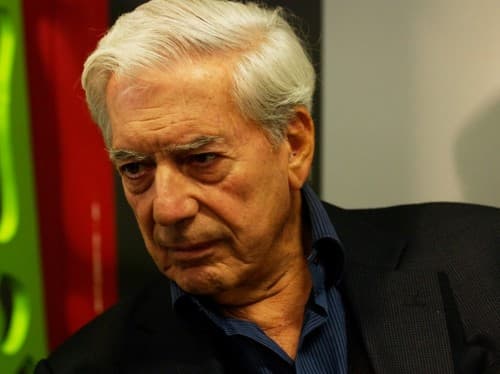
Jorge Mario Pedro Vargas Llosa, 1st Marquess of Vargas Llosa, more commonly known as Mario Vargas Llosa, is a Peruvian novelist, journalist, essayist and former politician, who also holds citizenship of Spain and the Dominican Republic. Vargas Llosa is one of Latin America's most significant novelists and essayists, and one of the leading writers of his generation. Some critics consider him to have had a larger international impact and worldwide audience than any other writer of the Latin American Boom. In 2010 he won the Nobel Prize in Literature, "for his cartography of structures of power and his trenchant images of the individual's resistance, revolt, and defeat." He also won the 1967 Rómulo Gallegos Prize, the 1986 Prince of Asturias Award, the 1994 Miguel de Cervantes Prize, the 1995 Jerusalem Prize, the 2012 Carlos Fuentes International Prize, and the 2018 Pablo Neruda Order of Artistic and Cultural Merit. In 2021, he was elected to the Académie française.

Ashley Antoinette
4.6

Mark McDonald
4.4
Luo Guanzhong
4.4
Dorothy Parker
4.3

Mia McKenzie
4.3

Joaquim Maria Machado de Assis
4.3

James Thurber
4.2
Terry Kay
4.2