BookBrief
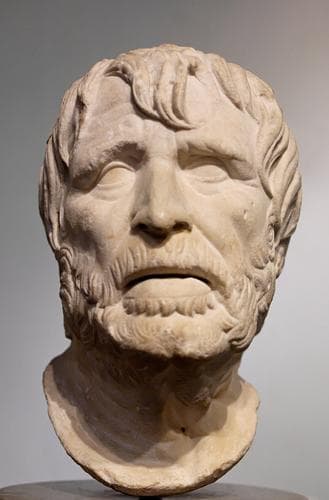
The Theogony cover
Archivist's Choice

The Theogony

Hesiod (2012)

Genre

Fiction

Reading Time

25 min

Key Themes

See below

Track Your Reading

Sign in to track this book

Before the Olympians, early gods fought a family war, creating the world and its divine rulers in Hesiod's ancient poem.

Synopsis

Hesiod's "The Theogony" is a Greek epic poem that tells how the universe and the gods came to be. It starts with a prayer to the Muses, then describes the first state of Chaos, followed by the appearance of Gaia (Earth) and Uranus (Sky). Their union produced the Titans, Cyclopes, and Hecatoncheires. Uranus imprisoned his children out of fear. Gaia then conspired with her son Cronus. Cronus castrated Uranus, took power, and began the age of the Titans. However, Cronus, warned he would face the same fate, swallowed his own children as they were born. Rhea, his wife, hid her sixth child, Zeus, on Crete. Zeus grew up, then made Cronus release his siblings, starting a ten-year war called the Titanomachy. Zeus, with his siblings and the Cyclopes and Hecatoncheires, defeated the Titans and imprisoned them in Tartarus. His last challenge came from the monster Typhon, whom Zeus also conquered. After Typhon's defeat, Zeus established his rule as king of the gods on Mount Olympus, divided the cosmos among his siblings, and solidified the Olympian hierarchy through marriages and divine births. The poem concludes with genealogies of other gods and a brief mention of heroes.
Reading time
25 min
Difficulty
Medium
Pacing
Moderate
Mood
Mythic, Ancient, Genealogic, Foundational
✓ Read this if...
You want to understand the foundational myths of Greek gods, their origins, and their family tree directly from an ancient source.
✗ Skip this if...
You prefer modern narrative styles or are looking for deep character development rather than a genealogical and cosmological account.

Plot Summary

Invocation of the Muses and Cosmogony

Hesiod begins by asking the Muses of Helicon to inspire him to sing of the gods. He describes their divine origin and their role in inspiring poets. He then establishes the initial existence of Chaos, a vast void. From Chaos come Gaia (Earth), Tartarus (the underworld), and Eros (Love), the force behind creation. Gaia then spontaneously gives birth to Uranus (Sky) to cover her completely, along with Ourea (Mountains) and Pontus (Sea). This first phase sets the stage for the next generations of gods and the unfolding of the divine family, showing the spontaneous and fundamental emergence of the world's main elements.

Uranus's Tyranny and Castration by Cronus

Gaia and Uranus have children, producing the twelve Titans: Oceanus, Coeus, Crius, Hyperion, Iapetus, Theia, Rhea, Themis, Mnemosyne, Phoebe, Tethys, and Cronus. They also give birth to the three Cyclopes (Brontes, Steropes, Arges), one-eyed giants skilled in metalwork, and the three Hecatoncheires (Cottus, Briareus, Gyges), hundred-handed, fifty-headed monsters. Uranus, disgusted by his monstrous children, imprisons the Cyclopes and Hecatoncheires within Gaia's womb. Gaia, in pain, plots with her youngest son, Cronus, to overthrow Uranus. She makes a flint sickle, and Cronus ambushes and castrates his father as he comes to lie with Gaia, throwing his severed genitals into the sea. From the blood that fell on Gaia, the Erinyes (Furies), Giants, and Meliae (ash nymphs) are born. From the foam around the genitals in the sea, Aphrodite emerges.

The Reign of Cronus and Consumption of His Children

After castrating Uranus, Cronus becomes the ruler of the cosmos. He takes his sister Rhea as his wife, and they begin to produce the next generation of Olympian gods: Hestia, Demeter, Hera, Hades, and Poseidon. However, Cronus has learned from Gaia and Uranus that he is destined to be overthrown by one of his own children, just as he overthrew his father. To prevent this prophecy from coming true, Cronus devours each of his children immediately after their birth. Rhea, heartbroken and desperate to save at least one child, asks her parents, Gaia and Uranus, for help. They advise her to hide her youngest son, Zeus, on the island of Crete.

The Birth and Upbringing of Zeus

Following Gaia and Uranus's advice, Rhea travels to Crete to give birth to Zeus in secret. She hides him in a cave on Mount Ida, entrusting him to the care of nymphs and the Kouretes, who clash their spears and shields to hide the baby's cries from Cronus. To trick Cronus, Rhea wraps a stone in swaddling clothes and presents it to him. Cronus, believing it to be his newborn son, promptly swallows the stone. Thus, Zeus is saved from his father's fate, growing to maturity in secret, destined to fulfill the prophecy and challenge Cronus's rule over the cosmos. This sets the stage for the ultimate clash between the generations of gods.

The Titanomachy Begins

Once Zeus reaches adulthood, he forces Cronus to disgorge his swallowed children and the stone. His siblings—Hestia, Demeter, Hera, Hades, and Poseidon—emerge fully grown and eager for revenge against their father. The stone, a symbol of Cronus's deception, is placed at Delphi. Zeus then travels to Tartarus and frees the Cyclopes and Hecatoncheires, whom Uranus had imprisoned. In gratitude, the Cyclopes forge powerful weapons for the Olympians: Zeus receives the thunderbolt, Poseidon the trident, and Hades the Helm of Darkness. With these strong allies and weapons, Zeus and his siblings prepare for the epic war against Cronus and the Titans, known as the Titanomachy.

The Titanomachy: Ten Years of War

The Titanomachy, the great war between the Olympian gods and the Titans, lasts for ten long years. The Olympians, led by Zeus, base themselves on Mount Olympus, while the Titans, led by Cronus, are on Mount Othrys. The battle is a catastrophic struggle that shakes the very foundations of the cosmos. The Hecatoncheires, with their hundred hands, throw massive boulders at the Titans, while Zeus uses his powerful thunderbolts. The Cyclopes provide tactical support and continuously make new weapons. Many Titans fight bravely, but the combined strength and strategic advantages of the Olympians, especially Zeus's thunderbolts and the power of the Hecatoncheires, begin to turn the tide.

Defeat and Imprisonment of the Titans

After a decade of constant warfare, the Olympians finally defeat the Titans. Zeus, with his thunderbolts, is an unstoppable force, devastating the Titan ranks. The Hecatoncheires play a key role, not only in battle but also in guarding the defeated Titans. Cronus and most of the other Titans who fought against Zeus are cast into the deepest abyss of the underworld, Tartarus, where they are eternally imprisoned. The Hecatoncheires are appointed as their unyielding wardens, ensuring that the Titans can never escape to threaten the cosmic order again. This victory solidifies the Olympians' dominance and marks the end of the early age of the Titans.

The Battle Against Typhon

Despite the Titans' defeat, Zeus's rule is not yet secure. Gaia, angered by her Titan children's imprisonment, mates with Tartarus and gives birth to Typhon, a monstrous and terrifying creature, described as having a hundred snake heads, fire-breathing mouths, and a voice that mimics all animal sounds. Typhon emerges as a direct challenge to Zeus's authority and the new Olympian order. He is a formidable opponent, capable of shaking the heavens and the earth. This battle represents the final, ultimate test of Zeus's power and his claim to supreme rule over the cosmos, a more personal and dangerous threat than the collective might of the Titans.

Zeus's Victory Over Typhon and Establishment of Olympian Rule

Zeus confronts Typhon in a massive battle that makes even the Titanomachy seem small. The entire cosmos trembles as Zeus uses his full power, wielding his thunderbolts with unmatched strength. Typhon, despite his monstrous strength and terrifying appearance, is ultimately no match for the king of the gods. Zeus strikes him down with his lightning, wounding him severely, and finally throws him into Tartarus, where he is imprisoned beneath Mount Etna, his rage still causing volcanic eruptions. With Typhon defeated, Zeus's supremacy is undisputed. He is then elected king of the gods by the other Olympians, solidifying the new divine order.

The Olympian Hierarchy and Zeus's Marriages

With his rule firmly established, Zeus organizes the Olympian pantheon. He assigns domains and responsibilities to his siblings and children, creating a structured hierarchy. He then begins a series of important marriages, which are crucial for the generation of many other gods, heroes, and divine concepts. His first wife is Metis (Counsel), whom he swallows to absorb her wisdom, fearing a prophecy that her child would overthrow him. This results in the birth of Athena from his head. He then marries Themis (Divine Law), Eurynome, Demeter, Mnemosyne, Leto, and finally, his sister Hera, who becomes his queen. These unions symbolize the establishment of order, law, and various aspects of the cosmos under Olympian rule.

Genealogy of Other Gods and Personifications

Hesiod dedicates large parts of the Theogony to detailing the family lines of various other gods, goddesses, and abstract ideas that populate the Greek pantheon and the cosmos. He describes the offspring of Night (Nyx), such as Doom, Fate, Death, Sleep, Dreams, Blame, Misery, and the Moirai (Fates). He also traces the lineage of sea deities like Nereus and his daughters, the Nereids, and the monstrous offspring of Phorcys and Ceto, including the Graeae and the Gorgons. This extensive cataloging shows how all divine beings and forces are connected, showing how even abstract concepts are personified and have a place within the cosmic family tree established by the Muses.

The Heroes and Final Invocation

Towards the end of the Theogony, Hesiod briefly mentions the lineage of divine beings who mate with mortal women, giving birth to heroes. This section bridges the gap between the purely divine world and the human realm, hinting at later heroic stories. He recounts how goddesses bore children to mortal men, creating demigods who would go on to perform great deeds. The poem concludes with a final prayer to the Muses, asking them to inspire him to sing of the human race, indicating a shift from divine origins to human history, and reinforcing the Muses' role as the source of all poetic and historical knowledge.

Principal Figures

Chaos

The Primordial Entity

Chaos is the starting point, not undergoing an arc itself, but giving rise to all subsequent creation.

Gaia (Earth)

The Primordial Mother Goddess

From primordial birth-giver, she becomes a vengeful force, challenging successive rulers who wrong her offspring.

Uranus (Sky)

The Primordial Father God

Begins as supreme ruler, but his tyranny leads to his violent overthrow and disappearance from power.

Cronus

The Titan King and Antagonist

Rises to power through violence, rules tyrannically, and is ultimately defeated and imprisoned by his own son.

Rhea

The Titaness and Mother of the Olympians

From a grieving mother, she becomes a determined protector, ensuring the survival of her last child.

Zeus

The Protagonist and King of the Gods

From a hidden infant, he rises to become the supreme ruler, establishing a new order after defeating multiple cosmic threats.

Cyclopes

The Supporting Allies

From imprisoned monsters, they become vital allies whose craft enables the Olympian victory.

Hecatoncheires

The Supporting Allies and Wardens

From imprisoned monsters, they become powerful combatants and then eternal guardians of the new order.

Typhon

The Antagonist

Born as a final, monstrous challenger, he is defeated and imprisoned, cementing Zeus's reign.

The Muses

The Divine Inspirers

They remain constant as the source of divine truth and inspiration for Hesiod's narrative.

Themes & Insights

Cosmic Evolution and the Rise of Order

The Theogony carefully shows the progress from early chaos to a structured, hierarchical cosmos ruled by the Olympians. It starts with formless Chaos, followed by the appearance of fundamental entities like Gaia and Uranus. Each generation of gods—from the Primordials to the Titans, and finally to the Olympians—represents a step towards greater complexity and, ultimately, a more stable, though still turbulent, order. Zeus's victory over Typhon is the peak of this evolution, showing the triumph of Olympian law and reason over early, monstrous chaos. The establishment of the Olympian pantheon, with each god having a specific domain, further strengthens this theme of evolving cosmic order.

First of all Chaos came into being; and then broad-breasted Gaia, the secure seat of all for ever.

Narrator

The Cycle of Generational Conflict and Usurpation

A main theme is the repeated pattern of sons overthrowing their fathers. Uranus, the first ruler, is castrated by his son Cronus. Cronus, in turn, tries to avoid the same fate by devouring his children, but Zeus eventually rises to depose him. This cycle shows a violent and unstable succession of power among the earliest gods. Zeus, however, manages to break this cycle by wisely absorbing Metis (Counsel) and strategically defeating his enemies, establishing a more lasting, though still absolute, form of divine rule. This pattern reflects ancient Greek worries about succession and the nature of authority.

But Cronus swallowed them down as each came forth from the womb to his mother's knees, with this intent, that no other of the proud sons of Heaven should hold the kingly office amongst the deathless gods.

Narrator

The Nature of Divine Justice and Power

The Theogony explores different forms of divine rule and justice. Uranus's rule is tyrannical, based on brute force and imprisonment. Cronus's rule is paranoid and cruel, driven by fear and the consumption of his own children. Zeus's reign, while still absolute and often violent, is presented as a more 'just' order, achieved through strategic alliances, overwhelming power (the thunderbolt), and the establishment of a defined hierarchy. His defeat of Typhon is a clear act of establishing order over chaos. However, Zeus's own actions, such as swallowing Metis to prevent a prophecy, show that even his 'justice' involves complex and sometimes manipulative power dynamics.

And Zeus, when he had driven the Titans from heaven, established his own dominion over the deathless gods, and divided their offices amongst them.

Narrator

The Role of Motherhood and Prophecy

Mothers, especially Gaia and Rhea, play important roles in cosmic events. Gaia, suffering from Uranus's imprisonment of her children, encourages Cronus to rebel. Later, she helps Rhea save Zeus from Cronus's hunger. Their actions come from maternal instinct and a desire for their children to thrive. Prophecy also guides these events, as both Uranus and Cronus are warned of their downfall by their offspring. This often leads to attempts to change fate, which ultimately fail and paradoxically lead to the prophecy's fulfillment. This highlights the unavoidable nature of destiny and the strong influence of maternal figures in the divine world.

But Rhea was vexed in her heart, and when she was about to bear Zeus, the father of gods and men, then she entreated her own dear parents, Gaia and starry Uranus, to devise some plan with her that the birth of her dear child might be hidden, and that the fierce Cronus might atone for the crimes of his father and of his own children whom he had swallowed down.

Narrator

Plot Devices & Literary Techniques

Divine Genealogy

The tracing of lineage and familial relationships among gods.

Hesiod uses intricate genealogies to structure the entire narrative. By meticulously detailing who begot whom, he establishes the cosmic hierarchy, explains relationships between deities, and provides a logical (within the mythological framework) progression of cosmic power. This device not only serves as a historical record of the gods but also as a way to link abstract concepts and natural phenomena back to specific divine origins, giving a sense of order and interconnectedness to the Greek worldview. It helps to explain the nature and attributes of various gods based on their parentage and siblings.

Prophecy and Fate

Foreshadowing of future events that often drives character actions and ultimately comes true.

Prophecy plays a crucial role in driving the generational conflicts. Both Uranus and Cronus receive prophecies that their children will overthrow them. Their attempts to avert these fates—Uranus by imprisonment, Cronus by consumption—paradoxically lead directly to the prophecies' fulfillment. This highlights the concept of an unchangeable fate, even for the gods, and adds dramatic irony to their struggles. It also explains Zeus's strategic actions, such as swallowing Metis, to proactively manage potential threats predicted by prophecy, demonstrating a shift towards a more cunning and proactive form of divine rule.

Monstrous Births and Allies

The emergence of powerful, often terrifying, creatures that impact cosmic power struggles.

The birth of monstrous beings like the Cyclopes, Hecatoncheires, and Typhon serves multiple functions. Initially, they are a source of disgust for Uranus, leading to their imprisonment and his downfall. Later, the Cyclopes and Hecatoncheires become crucial allies for Zeus in the Titanomachy, their unique abilities (thunderbolts, hundred hands) tipping the scales. Typhon represents a final, ultimate chaotic threat that Zeus must overcome to solidify his rule. These monsters are not just antagonists; they are often products of primordial forces and play a vital, often pivotal, role in the evolution of the cosmic order.

Divine Weapons and Artifacts

Powerful objects created by gods that are instrumental in battles for supremacy.

Key artifacts, such as Gaia's flint sickle, which enables Cronus to castrate Uranus, and the weapons forged by the Cyclopes for the Olympians (Zeus's thunderbolt, Poseidon's trident, Hades' Helm of Darkness), are instrumental in determining the outcomes of cosmic conflicts. These items are not merely symbols of power but direct tools that enable the overthrow of one ruler and the establishment of another. They represent the specialized skills and destructive capabilities that are essential in the violent struggles for dominion among the gods, highlighting the tangible aspects of divine power.

Critical analysis

Notable Quotes

First in truth came Chaos, and after him Gaea of the broad breast, the firm seat of all Immortals who dwell on the peaks of snowy Olympus, and dark Tartarus in the depths of the wide-pathed Earth, and Eros, fairest among the immortal gods, who loosens the limbs and overcomes the mind and wise counsel of all gods and all men within them.

Describing the primordial origins of the cosmos.

And Gaea first bore starry Uranus, equal to herself, to cover her on every side, and to be an ever-firm seat for the blessed gods.

Explaining Gaea's spontaneous birth of Uranus.

But his father, great Uranus, used to hide them all away in a secret place of Earth as soon as each was born, and would not suffer them to come up into the light: and he rejoiced in his evil doing.

Describing Uranus's cruel treatment of his children with Gaea.

And she made a sickle of adamant, and told her dear sons all her plan.

Gaea devising a plan with her children to overthrow Uranus.

And from them sprang the race of gods and men who are called Earth-born and dwell under the wide heaven.

Referring to the Titans as the parents of many subsequent gods and mortals.

And great Cronos swallowed down his children one after another as each came forth from the womb to the knees of their mother, and so he thought that no other of the proud sons of Heaven should hold the kingly office amongst the Immortals.

Cronos's act of devouring his children to prevent being overthrown.

But when the time came for her to bear Zeus, the father of gods and men, then she prayed to her dear parents, Earth and starry Heaven, to devise some plan with her that she might bear her child secretly, and foil the design of great Cronos, and that he might pay the penalty for the children of Heaven whom he swallowed down.

Rhea seeking help to save Zeus from Cronos.

And Zeus straightway swallowed her down, in order that the goddess Metis (Wisdom and Counsel) might advise him alike both good and evil.

Zeus swallowing Metis to absorb her wisdom, fearing a prophecy.

For from her sprang glaucopis Tritogeneia, fierce, rousing battle, leader of hosts, untiring, queen, who delights in shouts and wars and battles.

Describing the birth of Athena from Zeus's head.

And many are the terrible voices that issue from the mouth of the dreadful monster, sometimes sounds that the gods understand, and sometimes again the cry of a bull, loud and unbridled, or a lion's ruthless roar, or, at another time, a sound like a pack of hounds, wonderful to hear.

Describing the monstrous Typhon, son of Gaea and Tartarus.

And when Zeus had driven the Titans from heaven, he raised up to the gods a king, and apportioned their honours and distributed their privileges.

Zeus establishing his rule after the Titanomachy.

And when the blessed gods had finished their toil, and settled by force their right with the Titans, they pressed Zeus of the wide vision to be king and lord over them, and he dealt out their honours to them.

The gods choosing Zeus as their ruler after the war with the Titans.

And from them are sprung the race of deathless gods, and the race of men who live upon the earth.

A general statement about the lineage of gods and mortals.

And last of all she bare the youngest, Zeus, father of gods and men, whose thunder makes the wide earth tremble.

Highlighting Zeus's ultimate birth and power.

Quiz

Test Your Knowledge

Ready to see how well you understood this book? Take our interactive quiz with 10 questions.

10
Questions
~5
Minutes
?
Best Score

Key Questions (FAQ)

'The Theogony' details the origin and genealogies of the Greek gods, from the primordial deities like Chaos and Gaia to the Olympian gods. It systematically traces their lineages, power struggles, and the establishment of Zeus's supreme rule, providing a foundational narrative for Greek mythology.

About the author

Hesiod

Hesiod was an ancient Greek poet generally thought to have been active between 750 and 650 BC, around the same time as Homer. He is generally regarded by western authors as 'the first written poet in the Western tradition to regard himself as an individual persona with an active role to play in his subject.' Ancient authors credited Hesiod and Homer with establishing Greek religious customs. Modern scholars refer to him as a major source on Greek mythology, farming techniques, early economic thought, archaic Greek astronomy and ancient time-keeping.