BookBrief
The Teachings of Don Juan cover
Archivist's Choice

The Teachings of Don Juan

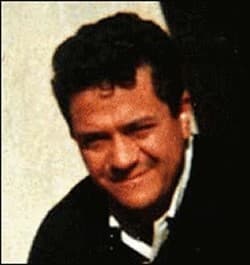
Carlos Castañeda (1968)

Genre

Fiction

Reading Time

360 min

Key Themes

See below

Track Your Reading

Sign in to track this book

An anthropologist apprentices with a Yaqui sorcerer, revealing a world where reality is fluid and ancient wisdom unlocks perception.

Synopsis

Carlos, an anthropology student, goes to Arizona to study peyote and meets Don Juan Matus, a Yaqui Indian sorcerer. Don Juan apprentices Carlos, introducing him to a world of non-ordinary reality using psychoactive plants like peyote (Mescalito), jimson weed (Smoke of the Devil's Weed), and mushrooms (Little Smoke). Carlos tries to make sense of Don Juan's mystical teachings with his Western scientific worldview. These teachings involve perceiving energy directly, meeting supernatural entities (allies), and understanding what a 'man of knowledge' is. He has terrifying visions, faces his fears, and tries to explain or escape the strange experiences. Don Juan guides Carlos through lessons, stressing 'erasing personal history,' 'stopping the world,' and confronting the 'four natural enemies' of a man of knowledge: fear, clarity, power, and old age. Despite Carlos's doubts and resistance, his perception and consciousness change, and he accepts Don Juan's challenging worldview, though he does not fully master it.
Reading time
360 min
Difficulty
Hard
Pacing
Slow
Mood
Mysterious, Philosophical, Disorienting, Esoteric, Challenging
✓ Read this if...
You are interested in ethnography, psychedelic experiences, shamanism, philosophical discussions on reality and perception, or a challenging exploration of a non-Western worldview.
✗ Skip this if...
You prefer straightforward narratives, are uncomfortable with detailed descriptions of drug use, or are looking for a clear-cut plot with conventional character development.

Plot Summary

The First Encounter and the Introduction to Mescalito

In the summer of 1960, Carlos Castaneda, an anthropology student, goes to Arizona to research medicinal plants. He meets Don Juan Matus, a Yaqui Indian from Sonora, Mexico, who is said to be a 'brujo' or sorcerer. Castaneda starts visiting Don Juan, initially to learn about peyote. Don Juan takes an interest in Castaneda and slowly introduces him to a complex world of non-ordinary reality. Their early talks show Castaneda's doubt and Don Juan's mysterious statements. Don Juan offers to teach Castaneda the 'way of a man of knowledge,' which means learning to perceive the world differently, often using psychoactive plants. Castaneda's first experience with a power plant is with peyote, which Don Juan calls 'Mescalito,' a kind teacher.

Mescalito's Lessons and the Fear of the Unknown

Don Juan guides Castaneda as he uses peyote multiple times. His experiences are intense and often scary, with vivid hallucinations and changed perceptions of reality. He sees Mescalito as a living being, a kind but demanding teacher who gives lessons directly. Castaneda struggles to fit these experiences into his scientific worldview, often feeling deep fear and confusion. Don Juan says fear is the first 'enemy' a man of knowledge must conquer. He teaches Castaneda to 'erase personal history,' 'lose self-importance,' and be 'impeccable' to handle these non-ordinary states. Castaneda tries to write down and explain these events, but Don Juan always guides him back to direct experience.

The Ally and the World of 'Diableros'

Don Juan introduces Castaneda to the idea of an 'ally,' a non-human entity a sorcerer can control and use for power or knowledge. He says getting an ally is dangerous and hard. Don Juan tells about his own experiences with allies and warns Castaneda about 'diableros' or 'sorcerers of the left hand,' who use power for selfish and bad reasons. Castaneda is both interested and scared by these stories, which challenge his understanding of reality. Don Juan starts teaching Castaneda specific practices, such as 'stopping the world' and 'seeing,' which are needed to interact with these non-ordinary phenomena, preparing him for meeting such entities.

Smoke of the Devil's Weed and the Journey to the Second Attention

Don Juan introduces Castaneda to 'Datura innoxia,' the 'devil's weed,' a strong hallucinogenic plant used to get an 'ally.' Castaneda's experiences with Datura are more physically intense and terrifying than with peyote. He says he transformed into an animal (a crow), flew, and fought invisible forces. Don Juan guides him through these difficult experiences, saying the plant's power can be a loyal ally or a destructive master. These encounters are meant to push Castaneda past his normal perception into the 'second attention,' a state of high awareness where sorcerers work. The physical and mental strain of these experiences makes Castaneda question his commitment to the path.

The Little Smoke and the Challenge of the Guardian

Don Juan introduces Castaneda to a third power plant, a mushroom preparation he calls 'humito' or 'the little smoke,' from Psilocybe mushrooms. This plant helps get a different kind of ally, one that lets the sorcerer 'fly' or move very fast. During one of these experiences, Castaneda sees a terrifying, shapeless entity that Don Juan calls the 'guardian' or 'doorway' to the non-ordinary world. This meeting tests Castaneda's courage and determination. Don Juan explains that overcoming such obstacles is needed for a man of knowledge to gain power and freedom, showing that the path is dangerous and requires strong belief.

The Path of a Man of Knowledge and the Four Enemies

Throughout his apprenticeship, Don Juan explains the main ideas of the 'way of a man of knowledge.' He says a sorcerer must gain 'power' by living well and developing 'will.' He introduces the 'four natural enemies' a man of knowledge must conquer: fear, clarity, power, and old age. Each enemy is a challenge that, if not overcome, can stop a sorcerer from becoming truly free. Don Juan stresses 'controlled folly' – acting as if things are important, while knowing they are not – and taking responsibility for one's actions without self-pity. These talks give a framework for Castaneda's often confusing experiences.

The Structure of the Teachings: A Chronological Account

The first part of the book, 'The Teachings,' is a timeline of Castaneda's notes and talks with Don Juan from 1960 to 1965. It details his first meetings, his first experiences with peyote, Datura, and psilocybin, and the philosophical discussions that went with them. This section has vivid descriptions of his altered consciousness, his struggles with fear and doubt, and Don Juan's steady guidance. Castaneda tries to keep a scientific, observational view, even as his own perceptions change. This timeline helps place the extraordinary events within a relatable timeframe, showing Castaneda's learning and his slow immersion into Don Juan's world.

The Structure of the Teachings: A Structural Analysis

The second part of the book, 'A Structural Analysis,' is Castaneda's attempt to categorize and interpret Don Juan's teachings using an anthropological framework. He breaks down Don Juan's complex worldview into distinct ideas, such as the 'three systems of understanding' (ordinary reality, non-ordinary reality, and the 'ally' system), and the 'four natural enemies.' He discusses 'stopping the world,' the role of psychoactive plants as 'power objects,' and 'losing self-importance.' This analytical section aims to give a clear structure to the seemingly different and often conflicting teachings, making them easier for academics to understand and showing the logic behind Don Juan's sorcery.

The Role of the Ally and the Acquisition of Power

In the structural analysis, Castaneda spends much time on the 'ally.' He explains how the ally is not just a hallucination but a specific, non-human entity a sorcerer must get and control through strict discipline and power plants. He lists different types of allies (e.g., Mescalito, the 'devil's weed' ally, the 'little smoke' ally) and what they do. Getting and controlling an ally is central to a sorcerer's power, letting them do things that cannot be explained. Castaneda describes the process as a demanding and dangerous spiritual journey, needing great courage and 'will' from the person doing it.

The Man of Knowledge and the Ultimate Goal

Castaneda's structural analysis ends with a look at the 'man of knowledge' – the ideal state of a sorcerer who has gone beyond normal limits. Don Juan teaches that a man of knowledge has conquered the four enemies, developed strong 'will,' and gained 'freedom' from normal perception. This freedom is not just intellectual but a deep change in being, allowing the sorcerer to 'see' the world as energy and interact with non-ordinary reality at will. The goal is to live a life of 'controlled folly,' accepting that human efforts are fleeting while acting with purpose and responsibility, showing a deep understanding of the universe's mysteries.

The End of the Apprenticeship (for now)

The book ends with Castaneda thinking about the impact of his five-year apprenticeship with Don Juan. He has not become a full sorcerer but has gained a new understanding of non-ordinary reality and its teachings. While his scientific mind still struggles to fully accept these experiences, he acknowledges Don Juan's guidance. The story leaves Castaneda at a point where he has started to 'see' and understand the world differently, changed forever by his encounters with Mescalito, the 'devil's weed,' and the 'little smoke.' He has a new view on existence, having seen beyond normal reality, though his journey continues.

Principal Figures

Carlos Castaneda

The Protagonist

Transforms from a skeptical academic to a student who has begun to 'see' and perceive non-ordinary reality, though still grappling with its implications.

Don Juan Matus

The Supporting

Remains a consistent, powerful, and mysterious teacher, guiding Castaneda through challenging spiritual transformations.

Mescalito

The Supporting

Acts as an initial guide and teacher in Castaneda's journey into non-ordinary reality, setting the foundation for further experiences.

The Devil's Weed Ally

The Supporting

Represents a powerful, dangerous, and transformative force that pushes Castaneda to his limits, requiring him to develop 'will' and courage.

The Little Smoke Ally (Humito)

The Supporting

Offers Castaneda a different facet of non-ordinary power, focusing on agility and altered perception of movement and space.

The Guardian / The Doorway

The Mentioned

Serves as a critical, terrifying test of Castaneda's resolve and 'will' on his path to knowledge.

Diableros

The Mentioned

Serves as a cautionary example for Castaneda of the misuse of power and the dangers inherent in sorcery.

Themes & Insights

Perception and Reality

The main theme is that ordinary reality is just one way to see the world. Don Juan's teachings always challenge Castaneda's usual perceptions, introducing him to 'non-ordinary reality' using psychoactive plants and practices like 'stopping the world.' The book explores how our minds build reality and how these ideas can be broken down and rebuilt to show new, expanded ways of experiencing existence. Castaneda's struggle to fit his scientific worldview with his hallucinogenic experiences shows this theme, making him question what 'real' means.

“A man of knowledge lives by acting, not by thinking about acting, nor by thinking about what he will think when he has finished acting.”

Don Juan Matus

The Path of a Man of Knowledge

This theme describes the hard, disciplined, and dangerous journey to become a 'man of knowledge' or sorcerer. It involves developing 'will,' 'impeccability,' 'losing self-importance,' and 'erasing personal history.' The path is not just about using power plants but about a basic change in how one lives and interacts with the world. Don Juan's lessons on the 'four natural enemies' (fear, clarity, power, and old age) give a framework for the challenges and temptations a sorcerer faces. It shows that true knowledge and freedom come only by overcoming these internal obstacles.

“The hardest thing in the world is to assume the mood of a warrior. It is of no use to be sad, to complain, to feel that someone is doing something to us. No one is doing anything to anyone, much less to a man of knowledge.”

Don Juan Matus

Fear and Courage

Fear is the first and most important 'enemy' a man of knowledge must conquer. Castaneda's first experiences with the power plants often involve intense fear, confusion, and panic. Don Juan constantly guides him to face and move through this fear, explaining that courage is not having no fear but acting despite it. The theme shows that true power and freedom come only by facing one's deepest worries and going beyond the comfort of normal perception, making fear a needed test for change.

“A man of knowledge is a warrior. He has to be a warrior, because he has to be fearless.”

Don Juan Matus

The Role of Psychoactive Plants

Psychoactive plants (peyote, Datura, Psilocybe mushrooms) are not just drugs but are treated as 'power plants' or 'allies' that open doors to non-ordinary reality and are teachers themselves. They are important in changing Castaneda's perception, letting him 'see' and interact with entities and forces beyond normal human understanding. The book explores the careful ritual use, respect, and dangers of these plants, stressing that they are tools for spiritual growth and gaining power, not for recreation. Don Juan's teachings show how these plants help direct experience of the 'other world.'

“Mescalito is a benevolent teacher. He teaches you the right way to live.”

Don Juan Matus

The Limits of Rationality and Language

Castaneda, as a Western academic, always tries to explain, categorize, and understand his experiences within a scientific framework. However, Don Juan's teachings consistently show that rationality and language cannot fully grasp non-ordinary reality. Many experiences are too strange to describe or analyze logically. This theme shows that intellectual understanding alone is not enough to gain knowledge, advocating for direct, experiential learning. The book itself, by trying to describe the indescribable, deals with this limit, showing the struggle to turn profound, altered states into a clear story.

“To talk about it is not enough. You must do it.”

Don Juan Matus

Plot Devices & Literary Techniques

First-Person Narrative / Ethnographic Account

Castaneda's subjective experience presented as field notes.

The book is framed as Carlos Castaneda's actual field notes from his anthropological research, presented in a first-person narrative. This device lends an air of authenticity and immediacy to the extraordinary events, making the reader feel as if they are directly experiencing Castaneda's journey and struggles. It allows for a direct insight into his internal conflicts between his scientific skepticism and his increasingly undeniable experiences. The ethnographic style, with detailed descriptions of rituals, dialogues, and Castaneda's observations, grounds the fantastical elements in a seemingly academic context, enhancing the book's impact and blurring the lines between fiction and non-fiction for many readers.

The Teacher-Apprentice Relationship

A classic dynamic for spiritual and magical instruction.

The dynamic between Don Juan Matus (the teacher) and Carlos Castaneda (the apprentice) is a fundamental plot device. Don Juan's role is not just to impart information but to guide Castaneda through direct, often harrowing, experiences. This relationship allows for the gradual unveiling of complex teachings and the demonstration of sorcery in action. Don Juan's cryptic statements and challenging tasks serve to push Castaneda beyond his intellectual comfort zone, forcing him to learn through doing rather than mere conceptual understanding. The apprenticeship structure provides a clear progression for the narrative, charting Castaneda's development from novice to a more experienced student.

Psychoactive Plants as Catalysts

Hallucinogens as tools for altering perception and accessing non-ordinary reality.

The consistent use of peyote (Mescalito), Datura ('devil's weed'), and Psilocybe mushrooms ('little smoke') is a crucial plot device. These plants act as catalysts, directly inducing the non-ordinary states of consciousness where Don Juan's teachings become tangible. They facilitate Castaneda's encounters with 'allies' and force him to confront his fears and preconceived notions of reality. Without these plants, the profound shifts in perception and the interactions with non-human entities would not occur, making them essential not just to the narrative's content but to its very structure and the transformation of the protagonist.

Structural Analysis (Meta-Narrative)

Castaneda's attempt to categorize and understand the teachings.

The inclusion of a 'Structural Analysis' section after the chronological narrative is a significant meta-narrative device. It serves to impose an academic framework on the highly subjective and often chaotic experiences described in the first part. This section attempts to bridge the gap between mystical experience and Western scientific thought, providing a conceptual map for Don Juan's complex worldview. It allows Castaneda (and the reader) to step back and analyze the teachings from a more objective, anthropological perspective, even as the narrative itself suggests that such analysis is inherently limited in grasping the full truth of sorcery.

The Enigmatic Nature of Don Juan

Don Juan's mysterious and often contradictory persona as a teaching tool.

Don Juan's character itself acts as a plot device. His enigmatic nature, his refusal to provide straightforward answers, his use of riddles, and his seemingly contradictory actions are all designed to challenge Castaneda's rational mind and force him into direct experience. He rarely explains; he demonstrates and guides. This mystery compels Castaneda to remain engaged, constantly seeking to decipher the 'brujo's' wisdom. Don Juan embodies the non-ordinary reality he teaches, making his presence a constant reminder of the world beyond conventional understanding and pushing Castaneda to 'see' rather than merely 'think.'

Critical analysis

Notable Quotes

For me there is only the traveling on paths that have heart, on any path that may have heart. There I travel, and the only worthwhile challenge is to traverse its full length. And there I travel, looking, looking, breathlessly.

Don Juan advises Carlos on how to live a meaningful life.

A man of knowledge lives by acting, not by thinking about acting, nor by thinking about what he will think when he has finished acting.

Don Juan explains the importance of action over contemplation.

We are men and our lot is to learn and to be hurled into inconceivable new worlds.

Don Juan describes the human condition as one of constant learning and transformation.

The basic difference between an ordinary man and a warrior is that a warrior takes everything as a challenge, while an ordinary man takes everything as a blessing or a curse.

Don Juan contrasts the mindset of a warrior with that of an ordinary person.

To be a man of knowledge one needs to be light and fluid.

Don Juan emphasizes flexibility and adaptability in the pursuit of knowledge.

The world is unfathomable. And so are we, and so is every being that exists in this world.

Don Juan reflects on the mysterious nature of existence.

A man goes to knowledge as he goes to war, wide-awake, with fear, with respect, and with absolute assurance. Going to knowledge or going to war in any other manner is a mistake, and whoever makes it will live to regret his steps.

Don Juan describes the proper attitude for seeking knowledge.

The aim is to balance the terror of being alive with the wonder of being alive.

Don Juan discusses the challenge of embracing life's dualities.

The thing to do when you're confused is to turn to your death for advice.

Don Juan suggests using the awareness of mortality as a guide.

A man of knowledge is one who has followed truthfully the hardships of learning.

Don Juan defines what it means to be a person of knowledge.

The world is a mystery, and it is not to be understood but to be lived.

Don Juan advises Carlos to experience life rather than analyze it.

The art of a warrior is to balance the terror of being a man with the wonder of being a man.

Don Juan reiterates the importance of balancing life's extremes.

A warrior must cultivate the feeling that he has everything needed for the extravagant journey that is his life.

Don Juan talks about the self-sufficiency required of a warrior.

The only possible course of action for a warrior is to act as if he were immortal, and yet to have the full awareness of his death.

Don Juan explains the paradoxical attitude a warrior must adopt.

Quiz

Test Your Knowledge

Ready to see how well you understood this book? Take our interactive quiz with 10 questions.

10
Questions
~5
Minutes
?
Best Score

Key Questions (FAQ)

The book chronicles Carlos Castañeda's experiences as an anthropology student apprenticing under Don Juan Matus, a Yaqui Indian sorcerer from Sonora, Mexico. Through a series of conversations and hallucinogenic rituals involving peyote, jimson weed, and psilocybin mushrooms, Don Juan teaches Castañeda about non-ordinary reality, 'seeing' versus 'looking,' and the warrior's path to knowledge.

About the author

Carlos Castañeda

Carlos Castañeda was an author known for his influential books on shamanism and mysticism, most notably 'The Teachings of Don Juan: A Yaqui Way of Knowledge.' While presented as non-fiction, his works are widely considered anthropological fiction, exploring themes of altered states of consciousness and spiritual journeys through a unique narrative style.