“The greatest enemy of truth is very often not the lie—deliberate, contrived, and dishonest—but the myth—persistent, persuasive, and unrealistic.”
— A reflection on the nature of truth and deception, particularly within a totalitarian regime.


Ismail Kadare (2003)
Genre
Fiction
Reading Time
225 min
Key Themes
See below
Sign in to track this book
In a totalitarian state where truth is a tool, the suspicious death of the Designated Successor blurs the lines between suicide and murder, dream and reality, under an oppressive regime.
On the morning of December 14th, the Designated Successor, the heir to the Leader of Albania, is found dead in his bedroom. The official announcement quickly calls it a suicide. However, the details are mysterious: his body lies on a rug, not in his bed, and the pistol is in his right hand, though he was left-handed. The news shakes the totalitarian regime's upper levels, as the Party works to control the story. The Leader is deeply affected, and a quiet investigation begins, led by the Chief Investigator, but its true goal seems to be to confirm the suicide verdict rather than find the truth.
A quick, secret autopsy is done, and the Party immediately controls the results. Dr. Litoz, a respected pathologist, examines the body, but his findings are heavily influenced by the political need to declare suicide. Details emerge about the Successor's personal life, including his recent marriage to the beautiful Ana K. and his perceived sadness. The Party's official line, reinforced by state media, portrays the Successor as a troubled individual who gave in to his own problems. Yet, whispers and doubts persist among the public and Party elite, fueled by the unusual circumstances and the regime's history of political purges.
Ana K., the Successor's young widow, becomes a focus of scrutiny and suspicion. Her background, her seemingly sudden marriage to the Successor, and her quiet manner raise questions. The Leader's daughter, a close friend of Ana, is especially upset and doubts the official story. The Successor's aide, loyal but nervous, is also questioned, offering glimpses into the Successor's last days and his state of mind. These individuals, along with members of the Successor's security detail, give conflicting accounts, further clouding the death and hinting at deeper conspiracies within the Party.
The architect who designed the Successor's elaborate, fortress-like residence is questioned. He describes the meticulous, almost paranoid, specifications for the house's construction, including soundproofing, reinforced walls, and secret passages. He reveals that the Successor himself was deeply involved in these designs, creating a home that felt more like a prison or a tomb. The architect's testimony unintentionally paints a picture of a man under immense pressure, possibly fearing for his life or withdrawing into his own world. The house itself becomes a character, a silent witness to the tragedy, embodying the regime's claustrophobic atmosphere.
While publicly supporting the suicide verdict, the Chief Investigator, a seasoned operative, conducts a separate, more discreet investigation. He re-examines evidence, interviews witnesses again, and looks into the psychological profiles of those involved. He is particularly interested in the inconsistencies around the pistol and the Successor's left-handedness. His methods are subtle, relying on observation, inference, and an understanding of the Party's power dynamics. He senses a deeper truth hidden beneath the official statements and political maneuvering, suggesting a power struggle or a planned assassination rather than a simple act of self-destruction.
The Leader, a powerful and isolated figure, becomes increasingly obsessed with the Successor's death. He often summons the Chief Investigator, asking for updates and offering his own theories. His dreams become vivid and disturbing, filled with symbols of blood, betrayal, and the Successor's presence. These dreams begin to blend with his waking reality, making it hard for him to tell fact from his own anxieties. His paranoia deepens, extending to those around him, as he deals with the implications of the Successor's death for his legacy and the stability of his regime. The Leader's internal struggle reflects the broader psychological impact of the event on the nation.
News of the Successor's death quickly reaches the international press, which, unlike the controlled domestic media, openly questions the official suicide story. Foreign journalists and intelligence agencies speculate about a political assassination, a power struggle within the Party, or even the Leader's direct involvement. This external scrutiny puts great pressure on the regime, forcing it to maintain stability while dealing with potential fallout. The international skepticism further fuels internal doubts and whispers, making it harder for the Party to control the narrative and suppress the truth.
Through his efforts, the Chief Investigator begins to piece together information pointing to a sophisticated plot. He learns of secret meetings, coded communications, and shifts in power that happened shortly before the Successor's death. He discovers that the Successor had grown increasingly unhappy with the regime and might have been seen as a threat by certain Party factions. The investigation suggests the 'suicide' was likely a carefully planned murder, made to look like self-harm, involving multiple high-ranking officials. The Chief Investigator realizes the great danger he is in, as exposing the truth could destabilize the state.
Ana K., under renewed pressure, finally provides a cryptic clue or a piece of information that, while not explicitly stating murder, strongly implies foul play and the involvement of powerful figures. Her revelation, combined with the Chief Investigator's findings, pushes the Leader to a breaking point. In a moment of vulnerability or calculated manipulation, the Leader confides in the Chief Investigator, not directly confessing to the murder, but revealing his deep anxieties about the Successor, his perceived disloyalty, and how far he would go to protect his regime. His 'confession' is less about guilt and more about the brutal logic of power in a totalitarian state, suggesting his awareness, if not direct involvement, in the plot.
Despite the evidence and the Chief Investigator's private conclusions, the official verdict of suicide is ultimately upheld and reinforced by the Party. The regime, through its control over information and its ability to suppress dissent, successfully buries the truth. The Chief Investigator, understanding the futility and danger of challenging the state, accepts this outcome, though the truth bothers him. The book ends with the lingering ambiguity of the Successor's death, leaving the reader to consider the nature of power, truth, and justice in a totalitarian society where reality is constantly manufactured.
The Central Figure (posthumous)
His arc is explored retrospectively through the investigation into his death, revealing a man increasingly at odds with his destiny and the oppressive system.
The Antagonist/Driving Force
He becomes increasingly consumed by paranoia and the need to control the narrative surrounding the Successor's death, ultimately reinforcing his tyrannical nature.
The Protagonist
He evolves from a dutiful servant of the state to a disillusioned truth-seeker, forced to confront the limits of justice under a totalitarian regime.
The Supporting
She begins as a passive, grieving widow but gradually reveals a deeper understanding of the political machinations, becoming a silent witness to the truth.
The Supporting
She grows increasingly disillusioned with her father and the regime as she struggles to reconcile the official narrative with her personal convictions.
The Supporting/Mentioned
His character serves to illustrate how expert knowledge is manipulated by the regime to serve its agenda.
The Supporting
His testimony offers a unique, structural perspective on the Successor's life and the regime's control.
The Supporting
He provides a ground-level perspective on the Successor's life, highlighting the pervasive fear within the regime.
This theme is central to the novel, exploring how truth is not an objective reality but a state construct. The regime immediately declares the Successor's death a suicide, despite inconsistencies. The Chief Investigator's private search for truth runs parallel to the public fabrication of it. The novel shows how official narratives are enforced through propaganda, fear, and suppressed voices, making it almost impossible for genuine truth to emerge. The ambiguity at the end reinforces the idea that in such a system, the 'official' truth often overrides objective reality.
““In this country, the truth was often the first casualty, especially when the dead were powerful.””
The pervasive paranoia and the Leader's absolute control are key elements. The Leader's obsession with the Successor's death, his disturbing dreams, and his constant need to monitor everyone around him show the psychological toll of absolute power. The design of the Successor's house, with its fortress-like qualities and secret passages, symbolizes the fear and lack of privacy in the regime. The novel shows how power corrupts, leading to a constant struggle to maintain control, even at the cost of human lives and moral integrity. The investigation itself is a tool of control, designed to manage perception rather than uncover facts.
““Power was a poison that seeped into every corner, distorting vision, twisting reality.””
The novel pits the individual's search for truth and autonomy against the state's power. The Chief Investigator, despite his loyalty, embodies this struggle as he subtly challenges the official narrative. The Successor himself, through his growing unhappiness and perhaps his desire for change, represents an individual chafing under the state's rigid ideology. Ultimately, the novel suggests the state's overwhelming power to crush individual agency and dictate reality, leaving characters like the Chief Investigator with only a private, unacknowledged truth. Ana K. also embodies this, as her individual story is subsumed by the political narrative.
““In the end, the state was a monster that devoured its own, leaving only the official version of events.””
Kadare blends dream sequences and the Leader's vivid hallucinations with the unfolding 'reality' of the investigation. The Leader's recurring nightmares and waking visions of blood and betrayal reflect his internal turmoil and the psychological pressure of the regime. These dreamlike elements disorient the reader, mirroring the characters' own confusion and their world's manufactured reality. They suggest that in a totalitarian state, the lines between what is real and what is imagined, what is fact and what is propaganda, become dangerously fluid, further obscuring the true nature of events.
““The border between what was real and what was merely dreamed had long since dissolved in this country.””
The entire premise revolves around the death of the Designated Successor, highlighting the theme of legacy in a totalitarian system. The Leader is obsessed with his own legacy and the continuation of his regime, seeing the Successor as both an extension of himself and a potential threat. The investigation into the death is not just about a crime, but about securing the future of the state and the Leader's historical narrative. The fragility of succession and the ruthlessness needed to maintain power are starkly portrayed, revealing how even heirs can be sacrificed for the sake of an enduring, unchallenged authority.
““A successor was not merely an heir; he was a mirror, and sometimes a rival, to the one who had chosen him.””
The story is told through multiple perspectives, none entirely trustworthy, reflecting the regime's manipulation of truth.
The novel employs an unreliable narrative, where the reader is presented with conflicting accounts, official pronouncements, and whispered rumors, making it difficult to discern the objective truth. The state's immediate declaration of suicide is challenged by the Chief Investigator's observations and the Leader's own ambiguous 'confessions' and dreams. This device mirrors the oppressive reality of a totalitarian state where official narratives are constantly manufactured and truth is subjective, forcing the reader to actively interpret and question every piece of information, much like the characters within the story.
The elaborate, fortress-like residence of the Successor serves as a metaphor for the oppressive state and the Successor's isolation.
The Successor's house is not just a location but a powerful symbol. Its meticulous design, with its soundproofed walls, hidden passages, and reinforced structure, reflects the paranoia of the regime and the Successor's own psychological state. It functions as a prison, a tomb, and a silent witness to the tragedy. The house embodies the claustrophobic and controlled environment in which the characters live, suggesting that even the most powerful individuals are trapped within the system. Its architectural details provide clues about the Successor's fears and the nature of the power dynamics at play.
The Leader's vivid dreams and waking visions blur the lines of reality, reflecting his paranoia and potentially revealing subconscious truths.
The inclusion of detailed dream sequences and the Leader's hallucinations serves to disorient both the characters and the reader. These surreal moments, filled with symbolic imagery of blood, betrayal, and the Successor's ghost, reflect the Leader's deep-seated anxieties and guilt, hinting at truths he cannot consciously acknowledge. This device blurs the boundary between the internal psychological landscape and external reality, emphasizing how the oppressive political climate warps perception and makes it difficult to distinguish between objective fact and subjective experience. They are a window into the subconscious mind of the dictator.
The initial official verdict of suicide is a deliberate misdirection designed to mask a more sinister truth.
From the outset, the 'suicide' of the Successor is presented as the official truth, yet the narrative immediately introduces inconsistencies and doubts (e.g., the left-handed Successor holding the pistol in his right hand). This serves as a classic red herring, drawing the reader's attention to a seemingly simple explanation while the true, more complex and sinister plot unfolds beneath the surface. This device highlights the regime's control over information and its ability to construct a false reality, forcing the Chief Investigator and the reader to look beyond the obvious for the real story, which is likely murder.
“The greatest enemy of truth is very often not the lie—deliberate, contrived, and dishonest—but the myth—persistent, persuasive, and unrealistic.”
— A reflection on the nature of truth and deception, particularly within a totalitarian regime.
“There are times when the fate of an entire nation seems to hang on the precise, almost surgical, placement of a single word.”
— Contemplating the power of language and rhetoric in political discourse and its consequences.
“Every secret, no matter how carefully guarded, carries within it the seed of its own betrayal.”
— Exploring the inherent instability of secrets and their eventual tendency to be revealed.
“In a land where even the air is thick with suspicion, every gesture, every silence, becomes a message.”
— Describing the pervasive atmosphere of paranoia and surveillance in a dictatorial state.
“The past, like a shadow, follows you, sometimes stretching long and distorted, sometimes shrinking to a dark spot beneath your feet, but always there.”
— A meditation on the inescapable influence of history and past events on the present.
“He lived in a world where reality was a constantly shifting landscape, sculpted by decrees and whispered interpretations.”
— Illustrating the malleability of truth and reality under a repressive regime.
“Power is not just the ability to command, but also the ability to define what is real and what is not.”
— A profound observation on the ultimate nature of power in a totalitarian system.
“Silence, in that world, was not merely the absence of sound, but often a form of communication, a coded message, a dangerous agreement.”
— Highlighting how silence itself could be charged with meaning and peril in a climate of fear.
“The weight of unspoken words can be heavier than any spoken decree.”
— Reflecting on the psychological burden of censorship and the unexpressed thoughts of individuals.
“To be a successor in such a system was not merely to inherit a position, but to inherit a labyrinth of secrets, suspicions, and inevitable doom.”
— Describing the perilous and predetermined fate awaiting anyone in the role of the 'successor'.
“The greatest art of a dictator is to make people believe that they are free, even as their chains grow tighter.”
— An insight into the insidious methods of maintaining control through psychological manipulation.
“He felt like an archaeologist digging through layers of official lies to uncover the fragile bones of truth.”
— The protagonist's struggle to discern reality from the pervasive state-sponsored falsehoods.
“In a country where history was constantly being rewritten, the only stable thing was its instability.”
— A paradox describing the continuous revision of historical narratives to suit political agendas.
“The past was not merely a collection of events, but a living, breathing entity, capable of striking back.”
— Emphasizing the powerful and often dangerous repercussions of historical events on the present.
“The very act of seeking the truth became an act of rebellion, a dangerous defiance against the established order.”
— Illustrating the high stakes involved in pursuing truth in a totalitarian society.
Ready to see how well you understood this book? Take our interactive quiz with 10 questions.
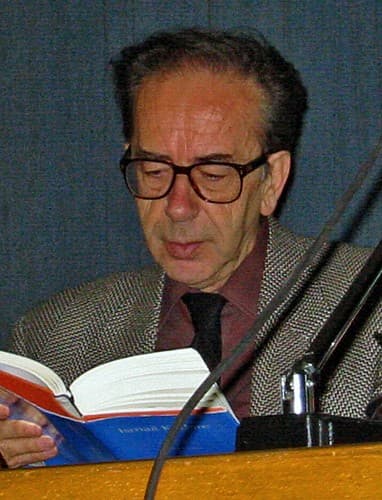
Ismail Kadare is an Albanian novelist, poet, essayist, screenwriter, and playwright. He is a leading international literary figure and intellectual. He focused on poetry until the publication of his first novel, The General of the Dead Army, which made him famous internationally.

Ashley Antoinette
4.6

Mark McDonald
4.4
Luo Guanzhong
4.4

Mia McKenzie
4.3
Dorothy Parker
4.3
Joaquim Maria Machado de Assis
4.3

James Thurber
4.2

Terry Kay
4.2