“The old man was not a mountain, but a man who had lived too long, and was now only a shadow of himself.”
— Reflecting on Shingo's aging and his physical and mental decline.

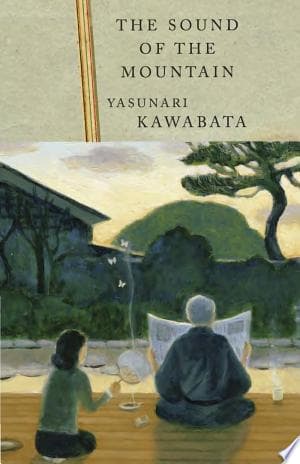
Yasunari Kawabata (2013)
Genre
Fiction
Reading Time
6-8 hours
Key Themes
See below
Sign in to track this book
An aging Tokyo businessman hears the mountain's rumble, a sign of his approaching death, as he navigates the subtle desires and disappointments within his fractured family, finding solace in his daughter-in-law's quiet presence.
Ogata Shingo, a sixty-two-year-old Tokyo businessman, worries about his age. He often forgets names and appointments, which he tries to hide. One night, he hears a deep sound from the nearby mountain, which he connects with death. This sound becomes a recurring sign of his growing awareness of his mortality. He lives with his wife Yasuko, his son Shuichi, who often cheats, and his gentle daughter-in-law Kikuko. Shingo sees Kikuko's quiet suffering, as Shuichi often neglects her, and feels a growing sympathy and a more complex, unsettling attraction to her.
Shingo is very aware of Kikuko's quiet suffering. His son, Shuichi, is openly unfaithful, frequently staying out late with affairs, especially with a woman named Kinuko. Kikuko endures this silently, which increases Shingo’s pity and concern. He often compares Kikuko's gentle nature and beauty to his wife, Yasuko, and even to his deceased first love. He appreciates Kikuko's thoughtfulness and how she cares for their home. These observations create complex feelings in Shingo, where paternal affection mixes with an unsettling, unspoken desire, causing him inner conflict and guilt.
Shingo's daughter, Fusako, unhappily married, returns home with her two young children after a fight with her husband. Her presence adds tension to the already strained household. Fusako is resentful and critical, often complaining about her husband and life, and frequently argues with her mother, Yasuko. Shingo sees his daughter's unhappiness and sharp tongue with a mix of sympathy and disappointment, recognizing his wife's more bitter traits in Fusako. Her return shows the fragility of family relationships and the unhappiness within the Ogata family.
Shuichi's infidelity becomes more obvious. He makes little effort to hide his relationship with Kinuko, often calling her from home or staying out late. This open disrespect deeply affects Kikuko, who, despite her quiet nature, reaches a breaking point. She tells Shingo about her unhappiness, hinting at wanting to leave Shuichi. Shingo feels a deep conflict, wanting to protect Kikuko but also aware of the social impact of divorce and his son's reputation. He is caught between his son's selfish desires and Kikuko's gentle suffering, unable to directly help but deeply troubled.
As Shingo deals with his current family problems, his mind often goes to the past. He clearly remembers his deceased sister-in-law, whom he believes was his true love, and his first love, a woman he never married. He remembers their beauty, kindness, and the choices he didn't make. These memories are not just nostalgic; they contrast sharply with his current home life, which he sees as full of disappointment and unhappiness. He often compares Kikuko to these idealized women, further complicating his feelings for his daughter-in-law and highlighting his regrets about his own life choices and relationships.
Kikuko has a pregnancy scare, which she tells Shingo about. This adds a new layer to her difficult situation with Shuichi. Shingo is concerned, as a child would tie Kikuko more firmly to his unfaithful son, possibly trapping her in an unhappy marriage. He considers what this would mean for Kikuko's future and happiness. The scare turns out to be false, but the incident forces both Shingo and Kikuko to face the idea of a child and its impact on their family's already complex dynamics, showing Kikuko's vulnerability and Shingo's protective instincts.
Shingo, usually quiet, tries to subtly intervene in Shuichi's affairs. He makes veiled comments and shows his disapproval, but Shuichi largely ignores him. Shingo also meets Kinuko, Shuichi's mistress, observing her appearance and manner. He notes her commonness, which further puzzles him about Shuichi's attraction to her. This observation strengthens his preference for Kikuko's gentle elegance and fuels his quiet disappointment in his son's choices, solidifying his protective feelings for Kikuko.
Shingo often watches the cherry tree in his garden, especially when it blooms and fades. The cherry blossoms, with their fleeting beauty, become a strong symbol for him, representing life's transient nature, beauty, and love. He finds quiet comfort in nature's cycles of growth and decay, which mirror his own journey towards old age and death. The cherry tree in the garden is a constant, gentle reminder of time passing and inevitable changes, in both nature and human lives, offering a contrast to the domestic turmoil.
Kikuko's unhappiness reaches a peak, and she seriously considers leaving Shuichi, even discussing it with Shingo. This possibility deeply upsets Shingo. While he understands her reasons and sympathizes, the thought of Kikuko leaving creates a deep sense of loss and emptiness in him. He struggles with his conflicting emotions: his wish for her happiness versus his own unspoken attachment and the stability she brings to his life. Her potential departure forces him to confront the depth of his feelings for her and the quiet role she has come to play in his emotional well-being.
As the story ends, Shingo continues to hear the mysterious sound of the mountain. It no longer brings him the initial shock or fear, but rather a quiet acceptance of his death and time's passage. The family's situation remains unresolved, with Shuichi's infidelity continuing and Kikuko's future uncertain. However, Shingo's inner journey has progressed. He has come to terms with his own aging, his regrets, and his complex feelings for Kikuko. The sound of the mountain is a constant, subtle reminder of the natural order, a deep, resonant hum against human frailty and lasting affection.
The Protagonist
Shingo moves from a state of denial and fear regarding his aging and mortality to a more resigned acceptance, finding a quiet understanding of life's transience.
The Supporting
Kikuko evolves from passive endurance of her husband's infidelity to a quiet contemplation of her own agency and potential for a different future.
The Supporting
Yasuko remains largely static, embodying the enduring, if unfulfilling, aspects of Shingo's long marriage.
The Supporting
Shuichi shows little to no development, remaining a consistent source of conflict and disappointment throughout the narrative.
The Supporting
Fusako's character arc is largely static, reflecting her ongoing marital unhappiness and critical disposition.
The Mentioned
Kinuko remains a background figure, a symbol of Shuichi's infidelity.
The main theme is Shingo's struggle with his own aging, memory loss, and the certainty of death. The 'sound of the mountain' is a constant, personal sign of his mortality. He experiences physical decline and mental lapses, which he tries to hide. His thoughts on past loves and his current unhappiness are tied to his awareness of time running out, seen when he observes the fleeting beauty of cherry blossoms, which symbolize life's briefness.
“He felt that the sound of the mountain was the sound of his own death.”
The novel carefully shows the strained and unhappy relationships within the Ogata family. Shingo's marriage to Yasuko lacks warmth, his son Shuichi is unfaithful, and his daughter Fusako is resentful. The family home, despite its physical presence, is a place of emotional distance and unmet expectations. Shuichi's infidelity and Kikuko's quiet suffering are central to this theme, showing the breakdown of traditional family values and Shingo's disappointment in his children's lives.
“His son was a man of forty, but he was still a child.”
A deep and unsettling theme is Shingo's growing, complex affection for his daughter-in-law, Kikuko. This feeling is more than paternal care, bordering on an unspoken, almost sexual desire, which fills him with guilt and inner conflict. He often compares Kikuko to his idealized past loves, highlighting his deep regrets and the emotional emptiness in his own marriage. This unspoken desire is never acted upon but colors his every interaction with Kikuko, creating a subtle, touching tension in the story.
“He felt that Kikuko's youth was beautiful, but it was a beauty that made him sad.”
Nature is important in reflecting Shingo's inner state and providing him with comfort and philosophical thought. The cherry blossoms, the moon, and the sound of the mountain itself are not just backdrops but active parts of the story. The fleeting beauty of the cherry tree, for instance, symbolizes life's and beauty's brief nature, reinforcing Shingo's awareness of his own death. Nature's cycles offer order and peace amid the domestic chaos and emotional trouble.
“The cherry blossoms were in full bloom, but they would soon fall.”
A recurring auditory motif symbolizing mortality and the subconscious.
The 'sound of the mountain' is a powerful symbolic device. Initially, it is a mysterious, deep rumble that Shingo interprets as an omen of his own death. It recurs throughout the novel, evolving from a source of fear to a quiet acceptance of mortality. It represents the inescapable presence of the subconscious and the natural world's indifferent power, echoing Shingo's internal anxieties and his slow journey towards understanding his place in the grand scheme of life and death. It's a constant, subtle reminder of the inevitable.
Shingo's fragmented memories of past loves and events.
Shingo's failing memory is a direct manifestation of his aging, but his vivid recollections of past loves (his deceased sister-in-law, his first love) serve as a narrative device to contrast his present, disappointing life with an idealized past. These nostalgic episodes offer insight into Shingo's character, his regrets, and the roots of his current emotional landscape. They highlight the gap between what was and what is, and subtly explain his complex feelings for Kikuko, who often reminds him of these lost figures.
Symbolic use of natural elements to reflect internal states and themes.
Kawabata frequently employs nature imagery, such as the cherry tree, the moon, and various flowers, not merely as descriptive elements but as symbolic reflections of the characters' emotions and the novel's themes. The cherry blossoms, with their transient beauty, symbolize the fleetingness of life and love. The moon often represents solitude and contemplation. These natural elements provide a serene counterpoint to the domestic turmoil, offering Shingo moments of peace and profound reflection on the cycles of life, death, and beauty.
“The old man was not a mountain, but a man who had lived too long, and was now only a shadow of himself.”
— Reflecting on Shingo's aging and his physical and mental decline.
“The sound of the mountain was the sound of his own death.”
— Shingo's recurring dream of a mountain collapsing, symbolizing his fear of death.
“He felt as if he were standing on the edge of a precipice, looking down into a bottomless abyss.”
— Shingo's sense of existential dread and uncertainty about the future.
“The silence of the house was more oppressive than any noise.”
— Shingo's feelings of loneliness and isolation within his own home.
“Beauty, even if it is only a momentary flicker, can illuminate the darkness of life.”
— Shingo's appreciation for small moments of beauty amidst his anxieties.
“He was like a tree whose roots were slowly decaying, while its branches still reached for the sky.”
— A metaphor for Shingo's physical decline contrasting with his enduring spirit.
“The past was a dream from which he could never fully awaken.”
— Shingo's constant dwelling on past memories and regrets.
“Love was a fragile thing, easily broken, but capable of mending itself, given time.”
— Reflecting on the complex and sometimes strained relationships within the family.
“Even in old age, the heart could still feel the pangs of desire.”
— Shingo's lingering attraction to Kikuko, his daughter-in-law.
“The world was full of shadows, and he was one of them.”
— Shingo's feeling of insignificance and being overshadowed by younger generations.
“He longed for a peace that seemed forever out of reach.”
— Shingo's constant internal turmoil and search for tranquility.
“The sound of the cicadas was a reminder of the fleeting nature of life.”
— Observing nature and connecting it to the transient quality of existence.
“Perhaps all human relationships were built on a foundation of unspoken understandings and misunderstandings.”
— Shingo pondering the complexities of communication and connection with his family.
“He was a man caught between two worlds: the fading past and the uncertain future.”
— Shingo's struggle to adapt to changing times and his own place in them.
Ready to see how well you understood this book? Take our interactive quiz with 10 questions.
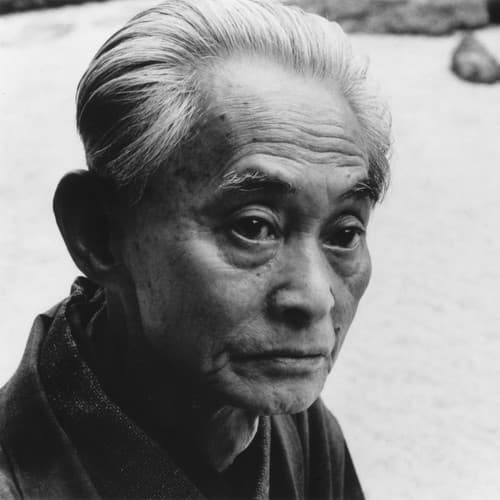
Yasunari Kawabata was a Japanese novelist and short story writer whose spare, lyrical, subtly shaded prose works won him the Nobel Prize in Literature in 1968, the first Japanese author to receive the award. His works have enjoyed broad international appeal and are still widely read.

Ashley Antoinette
4.6

Mark McDonald
4.4
Luo Guanzhong
4.4

Mia McKenzie
4.3

Dorothy Parker
4.3

Joaquim Maria Machado de Assis
4.3

James Thurber
4.2

Terry Kay
4.2