“The sky was so heavy it felt like it might collapse onto the earth at any moment.”
— Opening line describing the ominous atmosphere after a nuclear disaster.

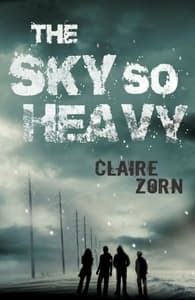
Claire Zorn (2013)
Genre
Science Fiction / Young Adult / Romance
Reading Time
5-6 hours
Key Themes
See below
Sign in to track this book
In a world suffocated by nuclear winter, a resilient teen forges a harrowing path through a frozen, food-scarce city, clutching to the faint hope of finding her family amidst the ruins.
The Protagonist
Finn transforms from a typical teenager concerned with school and family into a hardened survivor, constantly battling despair while trying to maintain his humanity and protect his group.
The Supporting
Lucy develops from a somewhat passive follower into a resilient and crucial member of the group, demonstrating significant inner strength and adaptability.
The Supporting
Rose gradually becomes more aware of the harsh realities of their world, slowly shedding her childlike innocence while still retaining a glimmer of hope.
The Supporting
Kas's arc highlights the moral compromises necessary for survival in a brutal world, often pushing the boundaries of what the group considers acceptable.
The Minor Antagonist/Symbolic
Serves as a static character whose actions highlight the breakdown of morality and the danger posed by desperate individuals.
“The sky was so heavy it felt like it might collapse onto the earth at any moment.”
— Opening line describing the ominous atmosphere after a nuclear disaster.
“We were just kids, but we had to be adults now.”
— Reflection on the sudden maturity forced upon teenagers in a crisis.
“In the silence, you could hear the world holding its breath.”
— Observation of the eerie quiet after societal collapse.
“Hunger makes you do things you never thought you were capable of.”
— Commentary on the moral compromises in a resource-scarce world.
“The cold wasn't just in the air; it was in our bones.”
— Description of the pervasive chill following a nuclear winter.
“Memories of before were like ghosts, haunting every empty street.”
— Nostalgic reflection on the lost normalcy of pre-disaster life.
“Trust is a luxury we can't afford anymore.”
— Realization about the dangers of relying on others in a crisis.
“We weren't fighting for a future; we were fighting for today.”
— Shift in perspective from long-term goals to immediate survival.
“The stars were gone, swallowed by the heavy sky.”
— Poetic description of the obscured night sky post-disaster.
“Sometimes, the hardest part isn't the danger, but the waiting.”
— Insight into the psychological toll of uncertainty and inaction.
“Home wasn't a place anymore; it was a feeling we carried with us.”
— Reinterpretation of 'home' as an emotional state rather than a location.
“In the end, it's not the big things that break you, but the small silences.”
— Reflection on how subtle absences and quiet moments amplify despair.
“We learned to find hope in the smallest things: a shared smile, a warm meal.”
— Finding resilience and connection in minor comforts during hardship.
“The world didn't end with a bang, but with a slow, suffocating whisper.”
— Contrast to apocalyptic expectations, emphasizing gradual decay.
Ready to see how well you understood this book? Take our interactive quiz with 10 questions.