“I often thought of my father as a man with a lot of unfinished business.”
— The narrator reflecting on his deceased father's life and legacy.

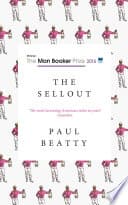
Sign in to track this book
A young Black man, raised as a psychological experiment, tries to save his erased hometown by bringing back slavery and segregation, leading to a funny, absurd Supreme Court trial that criticizes American racial politics.
The story begins with the narrator, called 'Bonbon' by his father, at the U.S. Supreme Court. He is accused of trying to bring back slavery and racial segregation in his hometown of Dickens, California. Bonbon's lawyer, an old, nearly senile civil rights figure named Hominy Jenkins, cares more about being Bonbon's slave than defending him. The Court, especially Justice Harlan, does not understand Bonbon's actions or Hominy's strange behavior. Bonbon thinks about how absurd the situation is. He realizes his extreme actions, meant to get his erased community recognized, have instead brought him to the highest court, where he must explain his old-fashioned social experiments.
Bonbon tells about growing up in the poor, mostly Black farming community of Dickens, a fictional 'agrarian ghetto' outside Los Angeles. His father, a self-proclaimed and often misguided social scientist, used Bonbon as the main subject for his racially charged psychological experiments. These experiments included forced exposure to classical literature and art, and strange social interactions designed to test Bonbon's reactions to racial stereotypes and expectations. Bonbon's father believed he was raising a 'new black man' free from the psychological burdens of systemic racism, but his methods were often abusive and isolating. This left Bonbon with a complicated and often contradictory understanding of his own identity and race.
Bonbon's father dies in a drive-by shooting, a random act of violence in the neglected community of Dickens. This event is a major turning point, leaving Bonbon without his main, though flawed, mentor. After his father's death, Bonbon finds out that his father's promised memoir, which was supposed to secure their money, never existed. Adding to his despair, the city of Los Angeles, citing a bureaucratic error and a wish to remove a stain on its image, officially disincorporates Dickens and removes it from all maps and records. The town's residents, including Bonbon, are left in legal and existential uncertainty; their home is no longer recognized.
Filled with grief, anger, and a desperate wish to bring Dickens back into existence and give its residents an identity, Bonbon plans an outrageous scheme. He believes that by bringing back the most offensive symbols of racial oppression—slavery and segregation—he can force the world to acknowledge Dickens. He argues that if Black people are to be treated as second-class citizens, they might as well get the 'benefits' of being a recognized underclass. This radical idea, born from despair and a twisted sense of cultural pride, puts him against societal norms and the law.
Bonbon's first 'slave' is Hominy Jenkins, an elderly, forgotten actor from the 'Golden Age of Hollywood' who played subservient Black characters. Hominy, feeling irrelevant in modern society, actively seeks out Bonbon, begging to be his slave. He wants the defined role and recognition, however demeaning, that his past roles gave him. Bonbon first resists, but Hominy's persistence and Bonbon's own growing belief lead him to accept Hominy as his 'property.' This unusual relationship forms the emotional center of Bonbon's experiment, showing the complexities of identity, history, and the desire for belonging, even at a high cost.
To help bring Dickens back into public awareness, Bonbon decides to segregate the local high school. He paints a white line down the middle of the school's common areas, designates separate entrances, and even tries to create separate water fountains. This act immediately causes outrage and confusion among students, parents, and the wider community. While some residents, especially older Black residents, find a strange sense of nostalgic comfort in the familiar, though oppressive, structures, many others are appalled. The segregation of the school becomes the most visible and controversial part of Bonbon's social experiment, drawing the attention of local authorities and eventually the federal government.
Bonbon sets up the 'Dum Dum Donut Cart' as a front for his growing agricultural collective, which he runs with Hominy. The donut cart serves as a mobile base for their activities, which include growing marijuana and other crops in the now-unrecognized lands of Dickens. This venture is part of Bonbon's larger effort to create an independent economy and community for the displaced residents of Dickens. The donut cart also becomes a symbol of their defiance and a meeting point for those drawn to, or simply curious about, Bonbon's increasingly radical ideas. It represents a small, self-sustaining world within the chaos.
Bonbon's childhood sweetheart, Marry Me, is important in his life. She is strong-willed and independent, often questioning Bonbon's radical ideas while also being drawn to his passion. Their relationship is complicated by Bonbon's experiments and his inner struggles. Marry Me represents a connection to a more conventional life and a source of emotional stability for Bonbon, but she is also caught up in the absurdity of Dickens and Bonbon's attempts to 'fix' it. Their interactions provide moments of tenderness and conflict, showing the personal cost of Bonbon's grand, controversial project.
As Bonbon's experiments in slavery and segregation become known, they attract the attention of various civil rights organizations and the federal government. A class-action lawsuit is filed against him, accusing him of breaking constitutional rights and trying to reverse racial progress. The legal battle quickly grows, moving through lower courts and eventually reaching the U.S. Supreme Court. Bonbon becomes a reluctant public figure, forced to defend his actions on a national stage. This legal challenge forms the main story structure of the novel, with the Supreme Court hearing serving as both the beginning and end of his story.
During the Supreme Court hearing, Bonbon, with Hominy Jenkins beside him, tries to explain the complex reasons behind his actions. He argues that his experiments were not about real oppression but about forcing a discussion about race, identity, and the erasing of Black history and communities. He explains that by bringing back the symbols of segregation and slavery, he aimed to make Dickens visible again and to provide a clear, if shocking, identity for its forgotten residents. The Court struggles to understand his reasoning, moving between outrage, confusion, and a hint of understanding about the deeper societal issues Bonbon is trying to show.
The Supreme Court, after much thought and internal debate, gives a verdict as unconventional as Bonbon's case. While the exact legal outcome is somewhat unclear, it implies that Bonbon's actions, though extreme, have succeeded in forcing a national conversation. The ruling acknowledges the historical injustices faced by communities like Dickens, even if it does not approve of Bonbon's methods. Bonbon is left to consider the true impact of his 'sellout' performance, questioning whether his radical approach truly helped his community or simply made the already difficult situation of race relations in America more complicated.
The Protagonist
Bonbon evolves from a passive subject of his father's experiments to an active, albeit controversial, agent attempting to define his community's identity, ultimately grappling with the consequences and effectiveness of his radical actions.
The Supporting/Mentor (Posthumous)
His character's arc is primarily revealed through Bonbon's flashbacks, showing a man whose well-intentioned but harmful experiments ultimately fail to protect his son from racial realities, instead fueling his unique rebellion.
The Supporting
Hominy's arc shows a man clinging to a past, however painful, to gain relevance, ultimately finding a strange form of agency and purpose within Bonbon's radical experiment.
The Supporting
Marry Me's arc shows her navigating her love for Bonbon amidst his increasingly controversial actions, ultimately standing by him while maintaining her own moral compass.
The Supporting
Justice Harlan's arc shows him moving from initial shock and disbelief to a grudging, if incomplete, understanding of the deeper societal issues Bonbon's actions expose.
The Mentioned
Foy's character primarily serves to provide context for Bonbon's past, illustrating different paths taken by those from Dickens.
The Mentioned
Dumbass's arc is minor, primarily serving as a foil and an example of a Dickens resident affected by Bonbon's schemes.
Beatty uses exaggeration and satire to show the absurdity and lasting nature of racism in America. Bonbon's choice to bring back slavery and segregation, while shocking, is presented as a logical, though twisted, response to the ongoing systemic neglect and dehumanization of Black communities. The novel suggests that even in a 'post-racial' society, the psychological and social structures of racism continue, often in subtle but equally harmful ways. The Supreme Court's confusion shows how deeply ingrained and often unacknowledged these issues are, making the 'outrageous' seem the only way to demand recognition. For example, Hominy Jenkins' desire to be a slave shows the tragic search for identity within historically oppressive roles.
““I'd tried to make Dickens a black utopia, and instead I'd only highlighted the fact that you can't build a utopia on a foundation of pain, no matter how much you try to sugarcoat it.””
A central theme is the struggle for identity, both individual and communal, when history and culture are erased. The literal removal of Dickens from the map symbolizes the broader historical practice of making Black communities and their stories invisible. Bonbon's extreme actions are an attempt to regain visibility and define an identity, even if it is controversial. The novel explores how people cope when their history, home, and very existence are denied, forcing them to face what it means to be 'seen' in a society that would rather forget them. Hominy's situation as a forgotten actor also speaks to the erasure of Black contributions and the desperate need for recognition.
““You can't be a great nation,” I said, “without a great black neighborhood.””
The novel directly addresses the lasting psychological and social effects of slavery and segregation. Bonbon's experiments are not just abstract ideas; they make characters and readers confront the historical weight of these institutions. Hominy Jenkins' strong wish to be a slave is a stark and disturbing example of this legacy. It shows how deeply ingrained the desire for a defined, even demeaning, role can become in a society that offers little else. The segregation of the school, while absurd, also brings up the very real trauma of Jim Crow, asking whether progress is truly achieved or just renamed.
““I'd never really thought about it before, but the most subversive thing a black man could do was to be a slave.””
Paul Beatty uses the novel itself as a performance, a sharp satire meant to provoke thought and discomfort. Within the story, Bonbon's actions are a form of performance art, a shocking spectacle designed to force society to confront itself. Hominy Jenkins, as a former actor, embodies this theme; his life is a continuous performance of racial stereotypes. The novel suggests that sometimes the most effective way to criticize society is through exaggerated, confrontational, and often humorous performance, pushing limits to reveal uncomfortable truths. The entire Supreme Court hearing is a grand performance, showing how justice itself is performed.
““The only thing more frustrating than slander is truth.””
Bonbon's childhood, shaped by his father's strange and often cruel psychological experiments, forms his worldview and his later actions. His father's attempts to 'protect' Bonbon against racism paradoxically leave him deeply scarred and uniquely able to understand and use racial dynamics. This theme explores the lasting impact of parental methods, however well-intended, and how they can shape a person's identity and their view of the world. Bonbon's own 'experiments' with Dickens can be seen as a direct, though radical, continuation of his father's legacy.
““My father was a social scientist, which is to say he was a black man in America with a clipboard.””
Uses extreme exaggeration and humor to critique societal norms.
Beatty employs satire and absurdism as the primary vehicles for social commentary. Bonbon's decision to reinstate slavery and segregation is an extreme, darkly humorous exaggeration of racial tensions and the desire for identity. This device forces readers to confront uncomfortable truths by presenting them in a ludicrous, yet disturbingly logical, fashion. The absurdity of Hominy Jenkins' desire to be a slave, or the official erasure of Dickens, highlights the inherent ridiculousness of real-world racial injustices and bureaucratic indifference, making the critique sharper and more memorable than a straightforward narrative.
The story is told from Bonbon's subjective and often biased perspective.
The novel is narrated entirely from Bonbon's first-person perspective, offering an intimate look into his complex mind. However, Bonbon is an unreliable narrator, his perceptions and judgments colored by his unique upbringing, trauma, and radical ideology. This device allows Beatty to explore the nuances of racial identity and the subjective nature of truth. Readers are forced to question Bonbon's motivations and interpretations, engaging critically with his arguments and the events he describes, rather than simply accepting them at face value, thus deepening the thematic exploration of race and perception.
The novel self-consciously draws attention to its own status as a fictional construct.
Beatty occasionally breaks the fourth wall, making references to the act of storytelling and the nature of fiction itself. This metafictional element serves to remind the reader that they are engaging with a constructed narrative, enhancing the satirical effect and inviting critical reflection on the book's themes. It also parallels Bonbon's own 'performance' within the story, blurring the lines between reality and artifice. For example, the narrator's awareness of his own story being told to the Supreme Court, or his father's failed memoir, adds layers to the exploration of narrative and truth.
Characters who highlight the protagonist's traits through contrast.
Characters like Hominy Jenkins and Marry Me serve as foils to Bonbon. Hominy, in his desperate desire for a defined, subservient role, highlights Bonbon's own struggle with identity and his more active, albeit controversial, attempts to define it. Marry Me, with her grounded perspective and more conventional desires, contrasts with Bonbon's radicalism, questioning his methods while still caring for him. These contrasts illuminate different facets of Bonbon's character and the complex responses to racial injustice within the novel's world, providing a richer understanding of the protagonist's motivations and the broader societal context.
“I often thought of my father as a man with a lot of unfinished business.”
— The narrator reflecting on his deceased father's life and legacy.
“There are three things you can’t buy in life: love, happiness, and a good lawyer.”
— A cynical observation early in the novel about life's unpurchaseable necessities.
“Sometimes you have to go backward to go forward.”
— The narrator's philosophy, often applied to his experimental and controversial social 'reforms'.
“I was raised in a small agrarian community that, despite its bucolic setting, was a hotbed of intellectual and social experimentation.”
— Describing the unique upbringing in Dickens, a fictional town where the narrator grew up.
“If you don't have a plan, you become part of somebody else's plan.”
— A recurring theme, emphasizing agency and self-determination in the face of societal pressures.
“Humor is a defense mechanism against the absurdities of life.”
— The narrator's understanding of humor's role in coping with the challenges and ironies of his world.
“You can't legislate morality, but you can certainly legislate behavior.”
— A pragmatic view on the limits and possibilities of law and social engineering.
“The past is never dead. It’s not even past.”
— A Faulknerian echo, reflecting the persistent influence of history, especially racial history, on the present.
“There’s nothing more dangerous than a man with nothing to lose.”
— A character's observation about the desperation and potential for disruption when people are pushed to their limits.
“To be truly free, one must first be truly enslaved.”
— A provocative statement reflecting the novel's exploration of freedom, oppression, and their complex relationship.
“I don't mind being the target, as long as I get to choose the weapon.”
— Demonstrates the narrator's desire for control and agency even when facing adversity or criticism.
“America is a nation of immigrants, but we're also a nation of amnesiacs.”
— A critical commentary on America's selective memory regarding its own history and identity.
“Sometimes the only way to get people to listen is to make them uncomfortable.”
— The rationale behind some of the narrator's more provocative and controversial actions.
“A good story doesn't need to be true, it just needs to be believed.”
— An insight into the power of narrative and perception, especially in shaping social realities.
Ready to see how well you understood this book? Take our interactive quiz with 10 questions.

Paul Beatty is an American author and an associate professor of writing at Columbia University. In 2016, he won the National Book Critics Circle Award and the Booker Prize for his novel The Sellout. It was the first time a writer from the United States was honored with the Man Booker.

Ashley Antoinette
4.6

Mark McDonald
4.4
Luo Guanzhong
4.4
Mia McKenzie
4.3
Dorothy Parker
4.3

Joaquim Maria Machado de Assis
4.3
James Thurber
4.2
Terry Kay
4.2