“He knew only that the child was his warrant. He said: If he is not the word of God God never spoke.”
— The man's unwavering devotion to his son.

Cormac McCarthy (2006)
Genre
Science Fiction
Reading Time
240 min
Key Themes
See below
Sign in to track this book
In an ash-choked future, a father and son travel across a ruined America, their bond a fragile light against the cold, cannibals, and a world without hope.
The Man and the Boy, unnamed, begin their journey south toward the coast in a post-apocalyptic world. The landscape is dim, ash-filled, and very cold. Flashbacks show an unknown disaster that destroyed civilization and most life. The Man, with a persistent cough and dreams of his dead wife, fiercely protects his son, calling him a god and his 'reason to be'. They push a shopping cart with their few belongings: scavenged food, blankets, and a pistol with two bullets. Their lives are a constant fight against hunger, cold, and the threat of other survivors, many of whom are cannibals.
While traveling, the Man and Boy encounter menacing, thin men on the road. The Man, always alert, hides the Boy and prepares his pistol. One of the men finds them, and the Man, in a desperate act, holds the man at gunpoint. He forces the man to strip naked and leaves him exposed on the road, taking his clothes. This harsh act deeply bothers the Boy, who questions his father's actions. This shows the moral compromises needed for survival and the loss of innocence in their world. The incident highlights the constant danger and the Man's commitment to protecting his son, even if it means sacrificing some of his own humanity.
Looking for shelter, the Man and Boy find an abandoned house. Inside, they see chilling proof of its past residents: a cellar full of naked, thin captives, clearly held for cannibalism. The Man quickly understands the horror and, disgusted, hurries the Boy away before he can fully grasp the atrocity. This discovery is a stark reminder of the depravity that has taken over humanity and the constant threat they face. It strengthens the Man's resolve to keep his son safe from such horrors and helps the Boy understand the 'bad guys' in their world.
The Man and Boy surprisingly find a hidden bunker under a collapsed house. Inside, they discover many supplies: canned food, clean water, blankets, clothes, and a working lamp. This discovery gives them a rare moment of comfort and safety. They spend several days in the bunker, eating well, cleaning themselves, and resting, a short break from their difficult journey. The bunker is a temporary haven, a glimpse of the 'good' that still exists, allowing the Man to nourish himself and his son, preparing for the hard road ahead.
After leaving the bunker, a lone thief robs the Man and Boy of their shopping cart and all their remaining supplies. The Man confronts the thief at gunpoint, forcing him to return their belongings. He then makes the thief strip naked and leaves him to survive in the bitter cold. This act, though necessary for survival, again deeply troubles the Boy, who asks his father to show mercy. The incident shows their constant vulnerability and the harsh choices the Man must make to ensure their survival, further eroding the Boy's innocence and making him face the moral complexities of their world.
The Man and Boy meet an old, blind man named Ely on the road. They share some of their limited food with him, a rare kind act in their desolate world. Ely, a cynical and tired survivor, shares his grim view, believing there are no 'good guys' left and that humanity has become 'ghosts'. He questions the Man's hope and their journey's purpose. The Boy, however, keeps his innate goodness, showing compassion toward Ely. This meeting shows a clear difference between the Man's fading hope, the Boy's lasting empathy, and Ely's deep despair, reflecting different ways of reacting to the apocalypse.
After months of hard travel, the Man and Boy finally reach the coast. Their hope for a better life there quickly disappears. The ocean is gray and lifeless, the beaches are covered with debris, and the air is still thick with ash. There is no sign of life, no safe place, only the vast emptiness they had left behind. The disappointment is clear, a crushing blow to their enduring hope. The Man's cough worsens, and his health declines further, signaling his approaching end. The coast, once a symbol of possible salvation, becomes another sign of the world's irreversible destruction.
While on the coast, they see another family, a man, woman, and two children, in the distance. The Man, cautious and protective, decides to avoid them, fearing they might be a threat. The Boy, however, wants to help them, showing his natural compassion and the 'fire' he carries. This brief encounter highlights the widespread fear and distrust in their world, where even seeing other survivors can cause suspicion instead of hope. It also emphasizes the difference between the Man's practical survival instincts and the Boy's consistent moral compass.
The Man's illness quickly progresses, his cough worsening and his strength failing. He knows his time is short and begins to prepare the Boy for a future without him. He teaches the Boy how to survive, to 'carry the fire,' and to be careful of others. He gives his final lessons, stressing the importance of goodness and the need to continue the journey. This time is filled with touching conversations where the Man tries to give the Boy the strength and moral courage needed to face the world alone, a sign of his deep love and his wish for his son's survival.
The Man's journey ends by the roadside. He dies peacefully, holding the Boy's hand. The Boy is left alone, grieving but determined. He stays with his father's body for several days, unable to fully let go. This moment is the ultimate test of the Boy's resilience and the culmination of the Man's sacrifice. The Boy's commitment to his father's memory and his continued adherence to their shared moral code show the lasting impact of the Man's love and the 'fire' he so carefully fostered in his son, even after unimaginable loss.
After his father's death, another family – a man, a woman, and two children – approaches the Boy. They are 'good guys' and offer to take him with them. The Boy, after a moment of hesitation, accepts. The woman comforts him, assuring him he is safe and that they will protect him. This ending offers a hint of hope, suggesting that goodness and connection can still exist in the devastated world. The Boy, who carried humanity's 'fire' throughout his journey, finds a new family, implying that the cycle of protection and compassion might continue, even in the bleakest futures.
The Protagonist
The Man's arc is one of relentless sacrifice and gradual physical decline, culminating in his death, secure in the knowledge that he protected his son to the very end.
The Protagonist
The Boy's arc is one of maintaining his innocence and carrying the 'fire' of humanity despite the world's horrors, ultimately finding a new family to continue that legacy.
The Mentioned
Her arc is complete before the narrative begins, representing the loss of hope and the ultimate surrender to despair.
The Supporting
Ely's arc is static; he is a representation of the ultimate despair and loss of hope in the post-apocalyptic world.
The Mentioned
The Thief's arc is brief and serves to illustrate the harsh realities of survival and the Man's protective instincts.
The Antagonist
The Road Gangs have no individual arcs; they serve as a constant, faceless threat embodying the depravity of the world.
The Supporting
Their arc is brief but significant, providing a resolution and a glimmer of hope for the Boy's future.
The main theme of 'The Road' is the deep, unconditional love between the Man and the Boy, and the Man's sacrifice for his son. This love drives their survival, giving meaning to their otherwise bleak lives. The Man faces extreme hardship, performs morally questionable acts, and eventually gives his life, all to protect his son. The Boy, in turn, is sustained by his father's love and the 'fire' he instills in him. This is clear in every interaction, from the Man's constant vigilance to his final instructions to the Boy before his death.
“If he is not the word of God God never spoke.”
The novel constantly explores the struggle between keeping hope in a hopeless world and giving in to despair. The Man fights his own growing despair, often troubled by dreams of his dead wife who chose to end her life. The Boy, however, mostly embodies persistent hope and a natural belief in 'good guys.' Characters like Ely represent ultimate despair, believing humanity is lost. The Man's decision to keep going, to 'carry the fire,' is an act of hope, even as he knows his own end is near, making the Boy's eventual adoption a fragile symbol of hope's survival.
“You have to carry the fire. I don't know how to. Yes you do. Is it real? The fire? Yes it is.”
In a world where civilization has collapsed and cannibalism is widespread, the novel considers what it means to be 'good' and to keep one's humanity. The Boy often questions his father's harsh decisions, showing an innate moral sense. The Man, while performing brutal acts for survival, tries to teach his son to tell 'good guys' from 'bad guys' and to 'carry the fire' of compassion. Encounters with other survivors, like the road gangs or the thief, show the range of human behavior, from depravity to rare acts of kindness, and the constant effort to uphold moral principles in an amoral world.
“We're going to be okay, aren't we Papa? Yes. We are. And we're going to be good guys, aren't we? Yes. We're going to be good guys.”
The post-apocalyptic setting itself is a major theme, showing the devastating effects of an unknown disaster on human civilization and the natural world. The ash-filled air, the lifeless landscape, the lack of resources, and the complete breakdown of social order all highlight how fragile the world we take for granted is. The novel is a stark warning about environmental destruction and the thin layer of order that separates humanity from savagery. The constant cold and the absence of thriving life emphasize the irreversible damage.
“The world was a dead world but for them.”
The Man is always haunted by memories of the past world and his dead wife. These memories are often painful, representing everything lost – comfort, beauty, and love. He struggles to reconcile the ideal past with the brutal present. The Boy, with few memories of the world before, relies on his father's stories and the remnants they find. The theme of loss is everywhere, not just of loved ones and civilization, but also of innocence, hope, and the very color of the world.
“He knew only that the child was his warrant. He said: If he is not the word of God God never spoke.”
A metaphorical symbol of goodness, humanity, and hope.
The 'fire' is a recurring metaphorical symbol throughout the novel. It represents the spark of humanity, goodness, and hope that the Man and Boy try to keep alive in a desolate world. It's not a literal fire, but rather an internal moral compass, an empathy that distinguishes them from the 'bad guys.' The Man constantly reminds the Boy that they are 'carrying the fire,' emphasizing the importance of compassion and not succumbing to the world's depravity. It becomes the Boy's legacy after his father's death, guiding his actions and ultimately leading him to the new family.
The ambiguous nature of the world's destruction.
The novel deliberately leaves the cause of the apocalypse ambiguous, referring only to an unspecified 'fire' or 'flash.' This lack of explanation serves to universalize the story, making it less about a specific disaster and more about the human response to ultimate destruction. It also heightens the sense of dread and helplessness, as the characters are living in the aftermath of an event they can't comprehend or prevent. The focus shifts from 'what happened' to 'what now,' emphasizing survival and the human condition.
Characters are referred to by generic titles.
The main characters are never given names, referred to simply as 'the Man' and 'the Boy.' This anonymity serves several purposes. It universalizes their struggle, making them archetypal figures representing humanity itself. It also strips them of individual identity, reflecting the dehumanizing effects of the apocalypse where personal histories and names have lost their significance. Their relationship is defined purely by their roles as father and son, emphasizing the primal bond that transcends individual identity in their world.
A symbol of their meager possessions and relentless journey.
The shopping cart is a constant physical presence and a significant symbol. It represents their few worldly possessions, their constant struggle for survival, and the relentless, burdensome nature of their journey. It's a mundane object transformed into a life-sustaining vessel. Its loss and recovery highlight their vulnerability and the Man's desperate measures to protect their scant resources. It's a stark reminder of the collapse of consumerism and the repurposing of everyday items for sheer survival in the post-apocalyptic world.
“He knew only that the child was his warrant. He said: If he is not the word of God God never spoke.”
— The man's unwavering devotion to his son.
“What if it doesnt get any better? I'll make it better. What if it gets worse? I'll make it better.”
— A conversation between the man and boy about their future.
“Borrowed time and borrowed world and borrowed eyes with which to sorrow it.”
— The man's reflection on their precarious existence.
“You forget what you want to remember and you remember what you want to forget.”
— The man contemplating his past memories.
“The world was tottering at the margin of an ice age, an age which in its deepest part would be ice.”
— A description of the post-apocalyptic world.
“He knew that the child was his only argument.”
— The man's internal justification for continuing.
“They sat by the fire and the boy was soon asleep. He watched him. The boy's breath coming soft and even. I will not leave you. I will not.”
— The man's silent promise to his sleeping son.
“There was no order to the days, no order to the seasons. He'd long since lost all distinction between them.”
— The man's perception of time in the ruined world.
“He knew what was in the boy's heart. He'd seen it there. To the last. The last dark day.”
— The man's understanding of his son's inherent goodness.
“Can you do it? When the time comes? Can you put the pistol in your mouth? Yes. Can you help us if we need it? Yes.”
— A chilling conversation about their ultimate contingency plan.
“He walked the road with the boy, watching for anything, for everything. The world was a vast and indifferent machine.”
— The man's constant vigilance in the desolate landscape.
“He thought the boy was a prophet. He thought the boy was a messenger.”
— The man's deep faith in his son's special nature.
“Keep a little fire going, however small, however hidden.”
— The man's internal mantra for enduring hardship.
“And the dreams so real he was afraid to sleep. And afraid to wake.”
— The man's struggle with vivid, often disturbing dreams.
“The last instance of a thing takes the heart out of it.”
— The man's reflection on the finality of loss and experience.
Ready to see how well you understood this book? Take our interactive quiz with 10 questions.
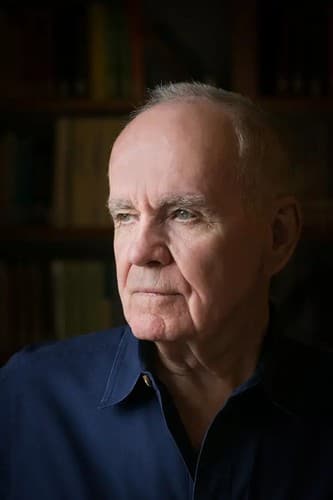
Cormac McCarthy was an American writer who authored twelve novels, two plays, five screenplays, and three short stories, spanning the Western and postapocalyptic genres. He was known for his graphic depictions of violence and his unique writing style, recognizable by a sparse use of punctuation and attribution. McCarthy is widely regarded as one of the greatest American novelists.