“I'm not a writer, I'm a man of the theatre. I want to write plays, not just words.”
— Henry justifying his craft and distinguishing it from Annie's more political writing.

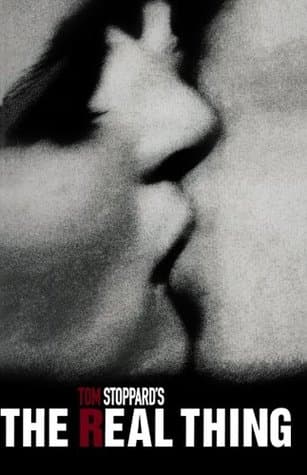
Tom Stoppard (1982)
Genre
Fiction
Reading Time
120 min
Key Themes
See below
Sign in to track this book
A playwright, struggling with the difference between theater and his failing marriage, learns that love, like a good script, can be both an act and a harsh truth.
The play begins with a tense domestic scene between Max and Charlotte. Max accuses Charlotte of cheating, suspecting a relationship with Henry. He examines a train ticket stub and a scarf as proof, leading to a heated argument about trust. Charlotte admits to the affair, revealing complicated emotions. This entire scene, however, is quickly revealed to be a play called 'House of Cards,' written by Henry and starring Charlotte and Max. The audience is immediately disoriented, as the opening's 'reality' is exposed as a performance, setting up the play's main themes of truth and artifice.
After the play-within-a-play, the audience meets Henry, a playwright, and Annie, an actress married to Max. They are in the early stages of an affair, meeting secretly and discussing their relationship. Henry, good at witty talk, tries to define their love using literary comparisons. Annie, more practical, challenges his intellectualizing. Their talks show the excitement and guilt of their new connection, contrasting with the 'performance' of infidelity seen earlier and establishing the actual romantic conflict.
Henry's wife, Charlotte, an actress who often acts in his plays, confronts him about his affair. She has found proof of his affair with Annie, much like Max's character did in the opening scene. Charlotte's reaction is a mix of anger, hurt, and a surprising intellectual detachment, similar to Henry's tendency to analyze emotions. Their conversation is sharp and revealing, looking at their marriage and the effects of Henry's betrayal. This confrontation is a turning point, as the secret affair becomes public, changing both marriages forever.
Max, Annie's husband and Charlotte's acting partner, eventually finds out about Annie's affair with Henry. His confrontation with Annie is deeply emotional and raw, unlike the more intellectual discussions of Henry and Charlotte. Max is heartbroken and struggles to understand Annie's betrayal, feeling a 'real' emotional wound. Their marriage falls apart, leading to their painful separation. This scene shows the devastating impact of infidelity on the betrayed partner, revealing a different side of love and loss.
After their marriages end, Henry and Annie move in together, starting a new life as a couple. Their initial happiness is soon affected by the realities of living together and the lingering shadows of their past relationships. Henry, used to a certain domestic order, finds Annie's more relaxed lifestyle challenging. Annie, meanwhile, struggles with Henry's intellectualizing and occasional insensitivity. They try to build a 'real' relationship, but their different personalities and expectations create friction, showing that love, even "the real thing," requires constant effort beyond initial passion.
Annie becomes deeply involved in a political campaign to free Brodie, a soldier jailed for damaging a war memorial during a protest. She is passionate about his cause, believing he is a political prisoner, and asks Henry to help rewrite Brodie's poorly written play. This commitment adds a new dimension to Annie's character and creates tension with Henry, who initially dismisses Brodie's talent and the political cause. Henry's intellectual snobbery clashes with Annie's heartfelt activism, forcing him to face the limits of his own view and the importance of causes beyond art.
At Annie's request, Henry reluctantly agrees to help rewrite Brodie's play, which is amateurish and politically charged. Henry, a careful writer, struggles with the poor quality of the original text, finding it hard to balance artistic merit with political intent. He tries to improve the play while keeping Brodie's voice, leading to heated discussions with Annie about the purpose of theater and the value of different forms of expression. This collaboration highlights Henry's artistic principles and his struggle to engage with art that doesn't meet his high standards, even for a cause Annie believes in.
Throughout their relationship, Henry and Annie have many witty debates about love, language, and art. Henry, with his love for wordplay and intellectual analysis, often tries to define their love, while Annie prefers a more intuitive and emotional understanding. These discussions, often with Stoppard's wit, explore the play's main themes. They show the different ways people see and express love, and how language can both clarify and obscure true emotion, revealing the complexities of human connection.
As Annie's involvement with Brodie's cause deepens, she develops a close, even flirtatious, relationship with him. Henry observes this with a mix of jealousy and intellectual curiosity, analyzing her reasons and his own reactions. Annie's growing independence and her willingness to connect with others outside Henry's circle challenge his sense of security in their relationship. This tension forces Henry to confront his own possessiveness and the vulnerability of love, showing that even "the real thing" is not immune to outside pressures and the changing needs of individuals in a partnership.
Towards the end of the play, Henry begins writing a new play, inspired by his own experiences with Annie, Brodie, and the complexities of love and infidelity. This new work shows a change in his perspective; he is no longer just an observer, but a participant whose emotions have been deeply involved. The play suggests growth in Henry's understanding of love, moving beyond just intellectualizing to a more deeply felt experience. This meta-theatrical element brings the story full circle, showing how art can both imitate and inform life, ultimately revealing a deeper "real thing" in his own heart.
The Protagonist
Henry evolves from an emotionally detached intellectual to someone who embraces the vulnerability and messiness of 'real' love, learning that emotional truth transcends linguistic cleverness.
The Protagonist/Love Interest
Annie remains true to her emotional and political convictions, serving as a catalyst for Henry's growth while navigating the complexities of her own desires and independence.
The Supporting
Charlotte navigates the dissolution of her marriage with a degree of intellectual detachment and self-preservation, maintaining her wit and composure.
The Supporting
Max experiences profound heartbreak and betrayal, representing the immediate, painful consequences of infidelity.
The Supporting/Mentioned
Brodie's circumstances and amateur play serve as a catalyst for Annie's activism and a point of contention and growth for Henry.
The Mentioned
Debbie offers an external, youthful perspective on Henry's life and relationships.
The main theme explores what makes love 'real' versus infatuation, performance, or an idea. Stoppard contrasts the passionate, often messy, love between Henry and Annie with the more intellectual love between Henry and Charlotte. The play asks the audience to tell the difference between true emotion and cleverly spoken sentiment, especially through Henry's tendency to analyze rather than simply feel. The opening scene, a play within a play, immediately blurs the lines between acted and authentic emotion, setting up this core question. Annie often pushes Henry to engage with the 'real thing' emotionally, beyond his words.
“What is it about the real thing that makes you want to cry?”
The play constantly blurs the lines between art and life. Henry, as a playwright, sees life through the lens of literature and theater, often trying to express his emotions in eloquent ways. The opening scene is a prime example, where a seemingly real marital crisis is revealed to be a play. This theme questions whether art can truly capture the complexity of human experience or if it merely provides a stylized imitation. Conversely, it also explores how life itself can be a performance, and how artistic expression can be a deeply personal and 'real' act, especially seen through Henry's eventual writing of a play inspired by his own experiences.
“I don't think art is a mirror. It's a hammer. It smashes the world into pieces and then puts it back together in a new way.”
Stoppard, a master of wordplay, uses language as both a tool for connection and a barrier to true understanding. Henry's witty, articulate dialogue often serves to intellectualize his feelings, preventing him from fully experiencing them. He believes in the precision and beauty of words, often dismissing less articulate forms of expression. Annie, however, values emotional truth over linguistic skill, highlighting the limits of words to convey the full range of human emotion. The debate over Brodie's poorly written play further emphasizes this, questioning whether eloquence is always necessary for a message to be 'real' or impactful.
“Words are for the writer. For the actor, there's just the truth.”
The play explores different forms of loyalty—not just marital, but also loyalty to oneself, to one's art, and to one's political beliefs. The multiple instances of infidelity (Charlotte and Henry, Henry and Annie, Annie and Brodie's flirtation) drive the plot and force characters to face the results of their choices. It examines the pain of betrayal, as seen in Max's reaction, and the complex reasons people create for their actions. Beyond romantic loyalty, Henry's struggle with Brodie's play questions his loyalty to artistic standards versus Annie's loyalty to a political cause, showing that 'betrayal' can appear in many forms.
“Infidelity is a betrayal of trust. Not love.”
A theatrical device where a play is performed as part of the narrative of a larger play.
The play opens with a scene that appears to be the main plot, only to reveal it's a performance from Henry's play 'House of Cards,' starring Charlotte and Max. This device immediately establishes the central theme of artifice versus reality, blurring the lines between what is 'real' and what is 'acted.' It forces the audience to question the authenticity of emotions and situations presented throughout the entire play, setting a meta-theatrical tone and constantly reminding them of the constructed nature of storytelling and human interaction.
Extensive use of clever, articulate, and often philosophical conversations.
Stoppard's signature witty dialogue and intricate wordplay are prominent throughout the play, especially in Henry's lines. This device serves multiple functions: it showcases the characters' intelligence, provides comedic relief, and, most importantly, highlights the theme of language's power and limitations. The characters often use words to intellectualize emotions, dissect relationships, and engage in philosophical debates, sometimes using language as a shield or a means to control a situation rather than genuinely connect. It's a key element in exploring how people articulate, or fail to articulate, 'the real thing.'
The mirroring of romantic and marital dynamics between different couples.
The play features parallel relationships, most notably the two marriages that dissolve (Henry/Charlotte and Max/Annie) and the new relationship formed (Henry/Annie). These parallels allow for a comparative study of love, fidelity, and betrayal. The 'affair' in Henry's play mirrors the actual affair between Henry and Annie, and Max's discovery of Annie's infidelity parallels Charlotte's discovery of Henry's. This device deepens the exploration of the themes, showing how similar situations can elicit different emotional responses and challenging the audience to consider the nuances of each relationship.
Self-referential elements that acknowledge the play as a theatrical production.
Beyond the 'play within a play,' the entire structure of 'The Real Thing' is meta-theatrical. Characters frequently discuss acting, playwriting, and the nature of theatre. Henry, as a playwright, constantly analyzes life as if it were a script, and the actors within the play often comment on their craft. This device keeps the audience aware that they are watching a constructed reality, intensifying the examination of authenticity and performance. It invites reflection on how we perform roles in our own lives and how art can both reflect and shape our understanding of reality.
“I'm not a writer, I'm a man of the theatre. I want to write plays, not just words.”
— Henry justifying his craft and distinguishing it from Annie's more political writing.
“Words are innocent, it is the person who uses them who is not.”
— Henry discussing the power and neutrality of language, particularly in relation to censorship.
“If you are a writer, you are a writer. If you are not, you are not. And if you are not, you can't be made into one.”
— Henry's firm belief in inherent talent, often in contrast to Annie's more activist approach to art.
“It's like love. You don't know what it is until you're in it. And then you don't know what it is until you're out of it.”
— Henry reflecting on the nature of love and understanding, often after a relationship has ended.
“Being clever is like being good at tennis. If you're clever, you can hit the ball. If you're a writer, you can make it bounce.”
— Henry's distinction between mere cleverness and true literary artistry.
“I don't think I'm a good person. I think I'm a person who tries to be good.”
— Annie's self-assessment, revealing her awareness of her own flaws and aspirations.
“The thing about art is that it's not a democracy. It's a monarchy. It's about what the artist says, not what the audience wants.”
— Henry's strong opinion on the integrity and autonomy of artistic creation.
“It's not enough to be in love. You have to be in love with the right person.”
— Annie's pragmatic view on relationships, emphasizing compatibility beyond mere affection.
“If you're going to write about love, you have to write about the real thing. Not just the idea of it.”
— Henry's challenge to other writers, and perhaps himself, to depict genuine human experience.
“You can't just throw words at a problem and expect it to go away. You have to choose them.”
— Henry's meticulous approach to language and his belief in the precision of words.
“Marriage is like a long conversation that you keep having over and over again.”
— Henry's cynical yet insightful view on the enduring nature of marital communication.
“It's not about being right or wrong, it's about being true.”
— Annie's perspective on personal integrity and sincerity, especially in political or emotional contexts.
“The only thing that's real is what you feel. Everything else is just words.”
— Billy, a young actor, expressing a more emotional and less intellectual view of reality.
“A writer is someone who can make a sentence sing.”
— Henry's simple yet profound definition of what makes a true writer.
“Love is not a matter of choice, it's a matter of destiny.”
— Brodie, a character from Henry's play, expressing a romantic and fatalistic view of love.
Ready to see how well you understood this book? Take our interactive quiz with 10 questions.
Biography coming soon.
Ashley Antoinette
4.6

Mark McDonald
4.4
Luo Guanzhong
4.4
Mia McKenzie
4.3
Dorothy Parker
4.3

Joaquim Maria Machado de Assis
4.3
James Thurber
4.2
Terry Kay
4.2