“The disease was an invisible army, moving through the streets of San Diego, a silent, deadly conqueror.”
— Describing the initial outbreak and spread of the plague in San Diego.

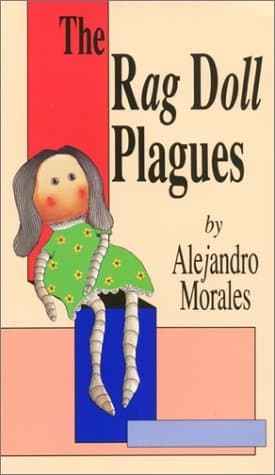
Alejandro Morales (1990)
Genre
Science Fiction
Reading Time
240 min
Key Themes
See below
Sign in to track this book
A doctor and his descendants are caught in a haunting, cyclical struggle against an evolving plague across colonial Mexico, contemporary California, and a future nation. This magically real disease mirrors the social decay of each era.
In 1799, Dr. Gregorio Revueltas arrives in Los Angeles, Alta California, a new colonial outpost. He is a humble physician dedicated to his work and soon faces a terrifying epidemic. The plague has strange symptoms, including the appearance of 'rag dolls'—grotesque, doll-like figures that seem to predict or embody the illness. Gregorio, despite his scientific training, cannot understand its rapid spread and unusual traits, which defy common medical knowledge. He works tirelessly to treat the sick, often clashing with the limited resources and superstitious beliefs of the colonial people. The plague devastates the community, leaving a deep mark on Gregorio and the new settlement.
After the devastating plague of 1799, Dr. Gregorio Revueltas continues his medical practice, forever haunted by the epidemic. He marries and starts a family, but the plague's shadow seems to linger over his descendants. The story then explores later generations of the Revueltas family. Though they do not experience the same plague directly, they inherit a sense of unease and a subtle connection to the mystical events of the original outbreak. This section introduces the cyclical nature of the narrative, hinting that the family's fate is tied to the recurring threat of disease and social upheaval. The descendants carry the weight of their ancestor's struggle, often feeling a pull to understand the unexplainable.
In the 1980s, in Los Angeles, Dr. Greg Revueltas, a descendant of Gregorio, is a public health physician. He faces a new, equally baffling epidemic that mirrors the first plague. This modern disease, first thought to be a new flu strain, quickly proves more virulent and mysterious. Patients show unusual neurological symptoms, and the same unsettling 'rag doll' figures begin to appear, echoing the past. Greg, with modern medical knowledge and technology, is as frustrated as his ancestor by the plague's resistance to treatment and its seemingly supernatural elements. He races to understand and contain the outbreak, while subtly experiencing echoes of his family's past.
As Dr. Greg Revueltas investigates the contemporary plague, he starts to notice disturbing similarities with historical accounts of epidemics, especially from colonial times. He feels an uncanny connection to the past, almost a sense of déjà vu, as if events are repeating. His research leads him to old family records and historical documents that hint at the 'rag doll' phenomenon in previous centuries. These discoveries fuel his determination but also instill a deep sense of dread. Greg's scientific mind struggles to reconcile empirical evidence with the plague's increasingly supernatural undertones, pushing him to question reality and the nature of time.
The narrative jumps to the next century, to an unnamed nation that has emerged from a fragmented world. Here, Dr. Gregory Revueltas, another descendant, is a physician in an advanced but troubled society. He faces the most devastating version of the plague yet—a global pandemic that threatens to wipe out humanity. This plague is even more insidious, affecting not only the body but also consciousness, leading to widespread societal collapse. The 'rag doll' figures are more common and menacing, seemingly acting as harbingers of destruction. Gregory, with the collective wisdom and suffering of his ancestors, must make a desperate stand against this ultimate threat.
In the future, the plague's impact goes beyond physical illness, causing deep spiritual and psychological despair. The new nation, despite its technology, crumbles under the epidemic. Dr. Gregory Revueltas witnesses the breakdown of social order, the rise of desperate cults, and the erosion of hope. The 'rag dolls' are no longer just symbols; they seem to have a malevolent will, influencing the afflicted and driving them to madness. Gregory struggles not only to find a cure but also to maintain his sanity and moral compass in a world spiraling into chaos. The plague forces humanity to confront its deepest fears and the fragility of its existence, blurring the lines between science and the supernatural.
As the story progresses through the three time periods, the cyclical nature of the plagues and the Revueltas family's involvement becomes clear. Each Dr. Revueltas, though in different centuries, shares an uncanny resemblance and a similar destiny: to confront the mysterious 'rag doll' plague. The narrative structure reinforces this cyclicality, with events and symbols recurring. This suggests that the plague is not just biological but a timeless, perhaps mythical, entity that humanity is doomed to battle repeatedly. The Revueltas family is not just a line of physicians but guardians, or perhaps victims, of this eternal struggle, bound to a fate that transcends individual lives.
The 'rag dolls' are a central, enigmatic element in all three plague outbreaks. In 1799, they appear as grotesque figures, seemingly predicting the illness and adding to the colonial settlers' terror and superstition. In the 1980s, their reappearance is a chilling echo of the past, suggesting a deeper, non-biological origin for the contemporary plague. By the future, the 'rag dolls' are no longer just symbols; they seem to have a malevolent sentience, actively influencing the afflicted and embodying the plague's destructive force. They bridge the physical and the supernatural, challenging the scientific understanding of each Dr. Revueltas and highlighting the magical realist elements of the narrative. Their evolution shows the escalating threat of the plague over time.
Across the three time periods, the human response to the plague is deeply intertwined with prevailing beliefs, blending science with faith and superstition. In colonial Mexico, Dr. Gregorio Revueltas battles not only the disease but also the fear and religious interpretations of the indigenous and Spanish settlers. In contemporary California, Dr. Greg Revueltas, despite modern medicine, faces the unexplainable and a resurgence of spiritual anxieties. In the future, amidst advanced technology, humanity still succumbs to desperate cults and mystical interpretations of the apocalyptic plague. The narrative consistently shows the limits of purely rational approaches and the enduring human need to find meaning and solace in the face of overwhelming, seemingly supernatural, suffering.
Despite the relentless and seemingly eternal nature of the plagues, a spirit of resistance endures across all three time periods. Each Dr. Revueltas, though facing impossible odds and deep despair, continues to fight, driven by their medical oath and an innate human will to survive. They represent humanity's persistent struggle against forces beyond its complete comprehension, whether scientific or supernatural. Even as societies crumble and hope dwindles, there are always those who strive to understand, to heal, and to protect. This enduring resistance, though often met with failure, shows a core message of resilience and the cyclical nature of hope and despair in the face of an unyielding destiny, emphasizing the eternal human spirit.
The plagues in each era expose and worsen the inherent power dynamics and social inequalities of their societies. In colonial Mexico, indigenous populations and the poor are disproportionately affected and receive less adequate care, highlighting brutal class and racial hierarchies. In contemporary California, despite advancements, the plague reveals flaws in the healthcare system, impacting marginalized communities more severely. In the dystopian future, the plague accelerates the collapse of an already stratified society, with the powerful trying to isolate themselves while the masses suffer. Morales uses the plagues to critique the social fabric, showing how disease not only attacks the body but also preys on vulnerabilities created by injustice and unequal access to resources, revealing the true nature of power.
The Protagonist
From a rational physician, he becomes a survivor haunted by the inexplicable, establishing a lineage bound to the plague.
The Protagonist
He evolves from a purely scientific doctor to one who acknowledges the mystical, connecting his present to a deep past.
The Protagonist
He becomes the final, desperate hope for humanity, embodying the culmination of his family's struggle against an eternal plague.
The Antagonist/Plot Device
From symbolic harbingers, they evolve into active, malevolent manifestations of the plague's escalating power.
The Supporting
He grapples with the limitations of faith against an overwhelming, inexplicable horror, finding both comfort and despair in his beliefs.
The Supporting
From a supportive community member, she becomes a symbol of continuity and the foundation of the Revueltas family.
The Supporting/Mentioned
She remains a consistent, enigmatic presence, embodying timeless, intuitive wisdom against the plague's mystery.
The Supporting/Antagonistic
They consistently demonstrate the limitations and failures of institutional power in the face of overwhelming, inexplicable crises.
The novel shows that history does not just move forward but repeats in cycles. The recurrence of the 'rag doll' plague across three centuries (1799, 1980s, future) with a Revueltas doctor in each era is the main example of this theme. This cyclicality suggests that humanity is condemned to face similar challenges repeatedly, perhaps without ever truly learning or escaping them. The echoes between past, present, and future imply a timeless struggle, where specific details change, but the core conflict remains, blurring the lines between linear progress and eternal return.
“The past is not dead. In fact, it's not even past.”
Morales blends scientific inquiry with magical and supernatural elements. The plagues, while having physical symptoms, come with inexplicable phenomena like the 'rag dolls' that defy purely rational explanation. Each Dr. Revueltas, despite scientific training, must confront the limits of their knowledge and the unsettling presence of forces beyond their understanding. This theme is central to the novel's magical realism, where the fantastical is presented as an ordinary part of reality, challenging the reader (and characters) to accept a world where logic and magic coexist and influence each other, suggesting that some truths lie beyond empirical observation.
“The disease was not merely a physical affliction; it was a spiritual malady, a curse that clung to the very air.”
Throughout the three historical periods, the novel shows how plagues disproportionately affect the most vulnerable and marginalized people, highlighting existing social inequalities. In colonial Mexico, the indigenous and poor suffer most, reflecting the brutal power dynamics of the Spanish conquest. In contemporary California, the plague reveals systemic failures in healthcare and society that disadvantage certain communities. In the future, the global pandemic further fractures an already stratified society, with the privileged trying to isolate themselves. The plagues act as a magnifying glass, revealing inherent injustices and exploitative structures within each society, showing how disease not only attacks the body but also preys on vulnerabilities created by human power systems.
“The plague, like a hungry beast, always sought out the weakest, the most forgotten.”
The Revueltas family line is central to the novel, exploring how identity is shaped not only by individual experience but also by ancestral memory and destiny. Each Dr. Revueltas, though living in different eras, shares a common name, a similar profession, and an inescapable connection to the 'rag doll' plague. This suggests that certain fates or burdens can be inherited across generations, forming a collective identity that transcends individual lives. The doctors often feel an uncanny sense of déjà vu or a pull from the past, indicating that their ancestors' experiences are not entirely forgotten but live on within them, influencing their actions and understanding of the recurring crisis.
“He felt the weight of centuries, a lineage of struggle pressing down upon his own shoulders.”
The novel consistently portrays human capacity for both deep despair and remarkable resilience in the face of overwhelming disaster. Each plague brings immense suffering, death, and societal breakdown, pushing humanity to the brink of hopelessness. Yet, through each Dr. Revueltas and the communities they serve, there is an enduring spirit of resistance, a determination to fight, heal, and rebuild. This theme explores the psychological and emotional toll of living through repeated apocalyptic events, but also celebrates the persistence of hope, compassion, and the will to survive, even when confronted with a seemingly eternal and unconquerable enemy, highlighting the duality of the human spirit.
“Hope was a flickering candle in a hurricane, but it was a candle nonetheless.”
The story unfolds in repeating patterns across different historical periods.
The novel employs a cyclical narrative structure, presenting three distinct yet strikingly similar plague outbreaks in 1799, the 1980s, and the distant future. Each cycle features a Dr. Revueltas battling the 'rag doll' plague, creating a sense of inescapable destiny and recurring history. This structure emphasizes the theme that certain events and struggles are not linear but eternally repeating, blurring the lines between past, present, and future and suggesting a timeless, perhaps mythical, conflict that humanity is condemned to relive. It forces the reader to draw parallels and understand the interconnectedness of seemingly disparate historical moments.
The integration of fantastical elements into a realistic setting.
Magical realism is a defining plot device, seamlessly blending the mundane realities of medical practice and societal struggle with inexplicable, supernatural occurrences. The 'rag dolls' themselves are the primary example, evolving from symbolic effigies to seemingly sentient, malevolent entities. This device challenges the reader's perception of reality, presenting the fantastical as an ordinary, unquestioned part of the world. It allows Morales to explore themes of fate, spirituality, and the limits of scientific understanding without resorting to pure fantasy, deepening the sense of mystery and the profound impact of the plague on both the physical and metaphysical realms.
Recurring grotesque effigies that symbolize and embody the plague.
The 'Rag Dolls' serve as a powerful and evolving motif throughout the novel. Initially, they are disturbing, grotesque effigies found near the afflicted, acting as a visual symbol of the plague's horror and its mysterious origins. As the story progresses and the plagues recur, the 'rag dolls' seem to gain a more active, almost malevolent presence, suggesting they are not just symbols but perhaps manifestations or even agents of the disease itself. This motif ties the three distinct time periods together, acting as a consistent, enigmatic element that defies rational explanation and underscores the supernatural dimension of the plagues, driving both fear and narrative cohesion.
A recurring family name and profession linking the protagonists across centuries.
The consistent lineage of the 'Dr. Revueltas' across the three time periods is a crucial plot device. It creates a sense of inherited destiny, suggesting that the family is either cursed or chosen to confront the recurring plague. This device allows Morales to explore themes of ancestral memory, the weight of history, and the cyclical nature of human struggle through a personal, familial lens. The shared name and profession create an immediate connection for the reader, emphasizing the timelessness of the conflict and the idea that certain battles are passed down through generations, shaping their identity and purpose.
“The disease was an invisible army, moving through the streets of San Diego, a silent, deadly conqueror.”
— Describing the initial outbreak and spread of the plague in San Diego.
“History is not a straight line, but a series of circles, spirals, and abrupt turns, often returning to the very place it sought to escape.”
— A philosophical reflection on the cyclical nature of history and human suffering.
“He was a man caught between two worlds, the dying past and the uncertain future, struggling to find his place in either.”
— Referring to Dr. James Toledo's predicament as he grapples with the plague and societal changes.
“The memory of the past, like a persistent phantom, haunted the present, shaping its fears and its desperate hopes.”
— Reflecting on how historical trauma influences contemporary responses to crisis.
“When the structures of society crumble, what remains is the raw, unvarnished human will to survive, or to perish.”
— Observing the breakdown of social order during the height of the plague.
“The city became a graveyard of dreams, each empty house a tombstone for a life that once thrived.”
— Describing the desolation and abandonment of San Diego during the plague.
“Science, for all its brilliance, was often a candle in a hurricane, offering light but little shelter from the storm.”
— A commentary on the limitations of scientific understanding in the face of overwhelming catastrophe.
“He carried the weight of generations on his shoulders, the unfulfilled promises, the unspoken grievances, the enduring spirit.”
— Highlighting Dr. Toledo's connection to his ancestral past and its influence on his present actions.
“The border, once a line on a map, became a living, breathing wound, constantly festering, constantly demanding attention.”
— Metaphorically describing the intensifying political and social tensions at the U.S.-Mexico border.
“In the face of annihilation, humanity revealed its most profound contradictions: immense cruelty and boundless compassion.”
— Observing the varied human responses to the existential threat of the plague.
“The future was not a destination but a constant act of becoming, shaped by every choice, every regret, every lingering hope.”
— A reflection on the dynamic and uncertain nature of the future, especially in times of upheaval.
“The silence was not empty; it was filled with the echoes of what had been, and the terrifying questions of what would never be again.”
— Describing the eerie quietness of depopulated areas and its psychological impact.
“He learned that sometimes, the greatest act of defiance was simply to continue, to breathe, to remember.”
— Dr. Toledo's internal realization about resilience in the face of overwhelming despair.
“The earth itself seemed to weep, its dry rivers and parched fields mirroring the desolation of the human heart.”
— Connecting environmental degradation with the emotional and spiritual state of humanity during the crisis.
Ready to see how well you understood this book? Take our interactive quiz with 10 questions.