“We have solved it, but in a manner which will be of service and interest to you.”
— Dupin's initial statement to the narrator, setting up the mystery's resolution.

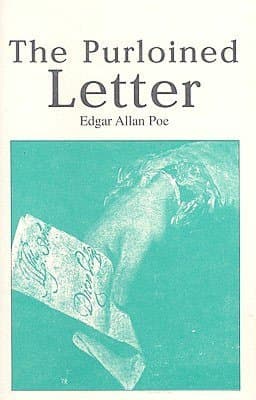
Edgar Allan Poe (1931)
Genre
Mystery
Reading Time
45 min
Key Themes
See below
Sign in to track this book
In the streets of Paris, a powerful stolen letter hides in plain sight, baffling the police until C. Auguste Dupin uncovers its disguise through psychological deduction.
The story begins in C. Auguste Dupin's private library in Paris, where he, the unnamed Narrator, and Monsieur G., the Prefect of Police, are talking. G. has a puzzling case: a politically important letter was stolen from the royal boudoir. Minister D. is the thief, and the theft happened right in front of the victim. Despite many thorough searches of D.'s home, the police have not found the letter. G. describes the careful, systematic searches, stressing their completeness and how impossible it seems for the letter to still be hidden. He offers a large reward for its return, admitting his failure and inability to use his usual methods for this unusual situation, as the letter's absence threatens a powerful person.
Monsieur G. explains the police's search methods. They divided Minister D.'s house into sections, carefully checking every possible hiding spot: furniture, books, floorboards, walls, and even the building itself. They used magnifying glasses, poked with needles, and used chemical tests for secret compartments. Every item was inspected, every seam and crack explored. D. himself was watched constantly, but the letter never appeared. G. believes the letter is still in the house because D. needs it close by to use his power. However, the police's 'scientific' and systematic approach found nothing, leaving him confused and desperate for a solution beyond his normal policing.
During G.'s detailed story of the police's exhaustive search, Dupin seems mostly uninterested, smoking his pipe and watching the Prefect without emotion. He offers no immediate ideas, which frustrates G. However, as G. finishes, emphasizing how impossible the situation is, Dupin casually asks G. to describe the letter exactly. G. gives a clear description of its appearance, including the royal seal. Dupin then advises G. to go back to D.'s home and search again, even more thoroughly. G., doubtful but desperate, agrees and leaves, promising to tell Dupin about any progress, though he expects nothing different.
A month later, Monsieur G. returns to Dupin's library, looking even more dejected. He reports that his second, more intense search of D.'s property, done with more officers, was just as fruitless. The letter is still missing. G. repeats his belief that the letter must be in the house, but he cannot imagine where. Dupin listens patiently, then casually asks G. if the reward for the letter has increased. G. confirms it has, now a significant amount, and says he will pay it to anyone who can help. Dupin then calmly states that he believes he can get the letter for the Prefect.
Monsieur G. does not believe Dupin, thinking he is joking. Dupin, however, is serious. He tells G. to write a check for the reward. When G. hesitates, still disbelieving, Dupin assures him he is not joking. Once the check is written, Dupin calmly takes the stolen letter from his desk drawer and hands it to the astonished Prefect. G. is speechless, unable to understand how Dupin, without police resources, succeeded where they failed. He quickly checks the letter's authenticity and leaves in shock and relief, leaving Dupin and the Narrator alone.
Dupin begins to explain his method to the Narrator, pointing out the police's basic mistake. He argues that G. and his officers, while good at their job, lack the flexibility and imagination needed for unusual cases. They assume D., being a poet and mathematician, would hide the letter in a complex, secret place, because he is intelligent. However, Dupin believes D.'s intelligence would lead him to do the opposite: hide it in plain sight, knowing the police would miss the obvious while looking for the complex. Dupin stresses that G.'s mistake comes from judging D.'s intellect by his own, and by the limits of standard police procedure.
To further explain intellectual empathy, Dupin describes a game schoolboys play. One boy hides a marble, and others guess its location. The best guesser is not the one who thinks of the most obscure spots, but the one who best predicts the hider's thoughts. Dupin explains that this ability to 'identify' with an opponent's intellect, to understand how they might think differently, is vital. He compares it to mirroring someone's expression to gain insight into their thoughts. The Prefect, he argues, could not do this with Minister D. because his thinking was too rigid.
Dupin describes his actions. After G.'s first report, he visited Minister D.'s apartment, pretending he had forgotten his snuff-box on a fictional previous visit. This allowed him to observe D.'s apartment without suspicion. He wore green glasses to hide his true focus, which was scanning the room for anything that seemed out of place in its very 'ordinariness.' He was not looking for hidden compartments but for something *not* hidden, something obvious that the police, given their ideas about how stolen items should be concealed, would overlook.
During his visit, Dupin saw a flimsy, dirty card-rack on the mantelpiece. Inside it, he noticed a crumpled, dirty-looking letter. This letter, unlike the one G. described, was torn, re-sealed with a common black seal, and addressed in a feminine hand. Its trivial appearance immediately seemed suspicious to Dupin because it was so ordinary. He recognized D.'s cleverness: the letter had been turned inside out, re-folded, re-sealed, and re-addressed to appear worthless and insignificant, placed where it would be seen but not recognized by anyone looking for something carefully hidden. Its very obviousness was its best disguise.
Dupin left D.'s apartment, leaving his snuff-box, knowing he would have a reason to return. The next morning, he went back. While D. was distracted by a planned disturbance outside from a street musician, Dupin swapped the disguised letter for a copy he had made. The replica was the same weight and appearance but contained a note from Dupin, mentioning D.'s past offense against Dupin in Vienna. Dupin ensured D. would only discover the deception later, after the police had the real letter, thus getting subtle revenge on his old enemy, who would now face ruin without understanding how he was outsmarted.
The Protagonist
Dupin's character remains consistent, serving as the static genius who demonstrates his superior intellect by solving a case that baffles professional authorities.
The Supporting
The Narrator's understanding of Dupin's methods deepens, but his own intellectual capacity remains distinct from Dupin's.
The Supporting
G. learns, reluctantly, to trust Dupin's unorthodox methods after repeatedly failing with his own, though his fundamental approach remains unchanged.
The Antagonist
Minister D. is a static character whose cunning is ultimately outmatched by Dupin's superior psychological insight.
The Mentioned
Not applicable, as the character is only mentioned.
This theme is central, showing how rigid thinking fails when facing unusual problems. Monsieur G., representing the police, shows this limitation. His methods are thorough and logical within their framework, but they fail to find the letter because he cannot imagine a hiding place that is not complex or secret. Dupin criticizes G.'s inability to understand Minister D.'s intellect and his reliance on 'scientific' procedures without imagination. The story suggests that true genius involves adapting one's perspective and understanding the opponent's mind, rather than just following standard rules.
“''There is a species of ingenuity, however, which is altogether distinct from the ingenuity of the Prefect. The latter, for example, has a peculiar capacity for minute investigation, when the objects are within his sphere of action. His ratiocination is good, but he is unable to adapt it to new conditions.'”
Dupin's success depends on his ability to understand Minister D.'s mind, figuring out how someone with D.'s mix of mathematical and poetic intelligence would hide something. He does not just look for physical clues; he analyzes D.'s character and predicts his actions. This psychological empathy allows Dupin to deduce that D. would hide the letter in plain sight, using the police's expectation of secrecy. The schoolboy's game analogy clearly illustrates this: success comes from understanding the opponent's thought process, not from complexity. Dupin's method shows that understanding human nature is as important, if not more so, than physical evidence in solving crimes.
“''When I wish to find out how wise, or how stupid, or how good, or how wicked is any one, or what are his thoughts at the moment, I fashion the expression of my face, as accurately as possible, in accordance with the expression of his, and then wait to see what thoughts or sentiments arise in my mind or heart, as if to match or correspond with the expression.'”
The story relies heavily on how appearances can deceive. The stolen letter, initially described with a royal seal, is disguised to look like a trivial, dirty document. This change is so effective that the police, looking for something that *looks* important and hidden, do not see it. Minister D. understands that the best way to hide something is not to put it away, but to make it seem like something else entirely, something so ordinary it goes unnoticed. Dupin, however, sees through this disguise, recognizing the oddness of the 'worthless' letter in D.'s sophisticated apartment.
“''The officer, in fact, has been denied success through the very perfection of his search. He has failed to find the letter because he has not looked for it in the right place, and the right place is where it is most obvious.'”
Poe uses "The Purloined Letter" to promote Dupin's method of 'ratiocination' – a mix of logic, intuition, and psychological insight – over the police's more mechanical methods. Dupin's success is not just about solving the crime; it is about showing the intellectual superiority of his approach. The story contrasts the police's 'scientific' but unimaginative thoroughness with Dupin's ability to 'read' the situation and the criminal's mind. His method suggests that true intelligence in problem-solving involves a flexible mind that can go beyond conventional wisdom and accept counter-intuitive solutions.
“''I am not now to be understood as hinting that the Prefect is a fool. I mean only to say that he is a good officer, and nothing more. He is a man of method and of system, but he is not a man of genius.'”
The central conceit where the object of the search is openly displayed but unrecognized.
This is the primary plot device, as Minister D. conceals the letter by placing it in an obvious, seemingly insignificant location, disguised to appear trivial. The police, expecting an elaborate secret hiding place, overlook it entirely. This device highlights the limitations of conventional thinking and the power of misdirection, making the solution counter-intuitive and surprising. It forces the reader and the characters to question their assumptions about where a valuable object would be hidden.
The story is told through the eyes of a friend who lacks Dupin's genius, creating dramatic tension.
While not strictly 'unreliable' in the sense of deception, the Narrator's limited intellectual capacity compared to Dupin serves as a crucial device. He acts as the reader's proxy, sharing their confusion and astonishment, thereby amplifying Dupin's brilliance. The Narrator's inability to immediately grasp Dupin's reasoning creates suspense and allows Dupin's explanations to unfold gradually, revealing the detective's genius in a more impactful way than an omniscient perspective might.
Monsieur G. serves as a contrast to Dupin, highlighting the detective's superior intellect.
Monsieur G., the Prefect of Police, functions as a foil to Dupin. His systematic, thorough, but ultimately unimaginative approach to detection stands in stark contrast to Dupin's intuitive, psychological, and ratiocinative methods. G.'s repeated failures, despite his best efforts, serve to underscore Dupin's extraordinary genius and the limitations of purely conventional policing, making Dupin's eventual triumph all the more impressive.
Dupin's subtle act of retribution against Minister D. adds a layer of motivation.
Dupin's decision to leave a note for Minister D. in the swapped letter, referencing D.'s past 'evil turn' in Vienna, introduces a personal motive beyond simply solving the case. This subtle act of intellectual revenge adds depth to Dupin's character, showing that his brilliance is not purely altruistic. It also provides a satisfying, albeit understated, comeuppance for the cunning antagonist, demonstrating Dupin's mastery even in the final act of the retrieval.
“We have solved it, but in a manner which will be of service and interest to you.”
— Dupin's initial statement to the narrator, setting up the mystery's resolution.
“The more I reflected upon the subject, the more satisfied I became of the utter impossibility of the minister's concealing the letter upon his person.”
— Dupin explaining his reasoning against conventional search methods.
“There are cases in which the student of physics is apt to fail at the first glance of a problem.”
— Dupin discussing the limitations of purely mathematical or conventional thinking.
“The best chess-player in Christendom may be little more than a good chess-player after all.”
— Dupin critiquing the limitations of highly specialized, but inflexible, intelligence.
“The Minister D—, I soon found, had a well-earned reputation for acumen.”
— Dupin acknowledging the intelligence of his adversary, the Minister D—.
“It is by no means an axiom in physics, that the larger the object, the more readily it is seen.”
— Dupin explaining his theory that obvious things can be overlooked.
“I had been long satisfied that the cleverness of the Minister was of a kind very different from that of the Prefect.”
— Dupin distinguishing between the Minister's subtle cunning and the Prefect's more direct approach.
“It is true, that I am not altogether a fool.”
— The Minister's casual remark, revealing his self-awareness and cunning.
“I had a keen eye, and a good glass, but I saw nothing.”
— The Prefect describing his thorough but ultimately fruitless search.
“The solution of the mystery, in fact, was in its very obviousness.”
— Dupin's final explanation of why the letter was so hard to find.
“There is a game of puzzles, which is played upon a map. A child will often find a given word when the most acute adult cannot.”
— Dupin illustrating how different perspectives can lead to solutions.
“The police are defeated by the very intensity of their own research.”
— Dupin explaining why the Prefect's exhaustive search failed.
“I knew that the Minister D—, like myself, was a poet.”
— Dupin revealing a key insight into the Minister's mind, connecting it to his own.
“In a word, I have been going on a wrong scent altogether.”
— The Prefect's frustrated admission of his failure.
Ready to see how well you understood this book? Take our interactive quiz with 10 questions.
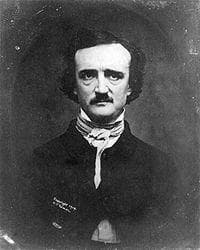
Edgar Allan Poe was an American writer, poet, editor, and literary critic who is best known for his poetry and short stories, particularly his tales of mystery and the macabre. He is widely regarded as a central figure of Romanticism in the United States, and of American literature. He was one of the country's earliest practitioners of the short story, and is considered the inventor of the detective fiction genre, as well as a significant contributor to the emerging genre of science fiction. He is the first well-known American writer to earn a living through writing alone, resulting in a financially difficult life and career.