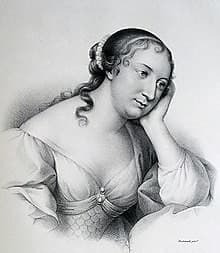
A Young Lady's Debut at Court
Mademoiselle de Chartres, a young lady of great beauty and virtue, is brought to the French court by her mother, Madame de Chartres. Her mother, a wise woman, educates her daughter on the dangers and deceptions of courtly life, especially regarding love and marriage, emphasizing fidelity and prudence. Mademoiselle de Chartres quickly captures the attention of many, including the Prince de Clèves, who falls deeply in love with her at first sight. Despite his fervent admiration and proposal, Mademoiselle de Chartres, though respectful, does not feel a passionate love for him, only esteem. Her mother encourages the match, and she agrees, marrying him and becoming the Princesse de Clèves.
An Unforgettable Encounter
After her marriage, the Princesse de Clèves meets the Duc de Nemours at a ball. Their meeting is a moment of destiny; they are instantly drawn to each other, feeling an undeniable connection. The Duc de Nemours, known for his charm, wit, and numerous conquests, is captivated by the Princesse's unique beauty and reserved demeanor. The Princesse, who has never before experienced such a powerful emotion, is deeply disturbed by the intensity of her feelings. This encounter starts her internal struggle, as she realizes she is falling in love with a man who is not her husband, directly contradicting her mother's teachings and her own moral principles.
A Mother's Dying Counsel
Madame de Chartres falls gravely ill. On her deathbed, she delivers an urgent warning to her daughter. Recognizing the growing attraction between the Princesse and the Duc de Nemours, and fearing the consequences of such a passion, she implores the Princesse to avoid anything that might compromise her virtue and honor. She advises her to seek refuge from the temptations of the court if necessary, and to remember her duty to her husband. Her mother's death leaves the Princesse de Clèves feeling isolated and vulnerable, intensifying her internal conflict and her resolve to resist her feelings for Nemours, out of respect for her mother's memory and her own moral code.
The Diamond Bracelet and Growing Suspicion
The Duc de Nemours, deeply in love with the Princesse, begins to pursue her discreetly. He finds reasons to be near her, and his devotion becomes apparent to those around them. One incident involves a diamond bracelet belonging to the Queen, which Nemours is accused of stealing. The Princesse de Clèves, witnessing his distress, secretly believes him innocent and is troubled by the thought of him being disgraced. Later, it is revealed he took the bracelet as a keepsake from a lady, but the incident shows his boldness and his focus on her. The Princesse's husband, the Prince de Clèves, though trusting, begins to notice the subtle signs of Nemours's admiration and his wife's increasing melancholy, stirring jealousy and concern.
The Stolen Portrait and a Confession of Love
During a court event, the Duc de Nemours manages to steal a miniature portrait of the Princesse de Clèves from her husband's study. The Princesse discovers the theft and, though she doesn't confront Nemours directly, her awareness of his actions heightens her distress. Later, Nemours visits her, and they engage in a conversation where he subtly confesses his feelings for her, using the metaphor of a man in love with an unattainable woman. The Princesse, though understanding his meaning, maintains her composure and does not acknowledge his declaration directly. This incident further complicates her emotional state, making it clear that Nemours's love is strong and increasingly difficult to ignore or conceal, pushing her closer to a breaking point.
The 'Aveu' - A Dangerous Confession
Overwhelmed by her internal struggle and fearing she cannot control her feelings for Nemours, the Princesse de Clèves makes an extraordinary confession to her husband. She admits that she is in love with another man, though she carefully refrains from naming him. She explains the torment she endures and asks for her husband's help in maintaining her virtue and avoiding the object of her affection. This 'aveu' (confession) is a crucial moment, born of her extreme honesty and her desire to uphold her moral integrity, even at immense personal cost. The Prince de Clèves is devastated by the revelation but also touched by his wife's sincerity and trust, promising to help her.
Nemours Overhears the Confession
Unbeknownst to the Princesse and her husband, the Duc de Nemours is hiding in the garden, having followed the Princesse to her country estate, Coulommiers. He overhears the Princesse's confession to her husband. Although she does not name him, Nemours, through a series of logical deductions and his own self-assurance, correctly infers that he is the man she is in love with. This discovery fills him with both joy and despair – joy at knowing her true feelings, and despair at the obstacle of her virtue and her husband's knowledge. He realizes the immense sacrifice she is making and feels a complex mix of triumph and respect for her unwavering integrity.
The Spread of the Secret
Unable to contain his astonishment and complicated emotions, Nemours confides in his close friend, the Vidame de Chartres (who is also the Princesse's uncle). He recounts the entire scene, though without explicitly naming the Princesse, describing it as a story he heard. The Vidame, intrigued, eventually pieces together the truth and, despite Nemours's initial caution, shares the story with others. The unique and scandalous nature of the confession ensures its rapid spread throughout the court, becoming the subject of widespread gossip and speculation. This public exposure of such a private and vulnerable moment deeply wounds the Princesse and further complicates her situation, revealing the destructive power of courtly intrigue.
The Prince's Fatal Jealousy
The Prince de Clèves, already tormented by his wife's confession and the subsequent court rumors, becomes consumed by jealousy. A misunderstanding arises when he is informed that Nemours has been seen at a house near Coulommiers at night. He mistakenly believes that his wife has met Nemours in secret, betraying her earlier promise and his trust. Overwhelmed by this perceived infidelity and his broken heart, the Prince de Clèves falls gravely ill. Despite his wife's desperate attempts to explain the misunderstanding and assure him of her innocence, his despair is too profound, and he dies, leaving the Princesse de Clèves consumed by guilt and sorrow, believing her confession indirectly caused his death.
A Final Confrontation and Renunciation
After her husband's death, the Princesse de Clèves retreats from court life, consumed by grief and guilt. The Duc de Nemours, now free to pursue her openly, visits her and renews his declarations of love, proposing marriage. The Princesse, however, explains that while she still loves him, she cannot marry him. She argues that their marriage would be built on the foundation of her husband's death, a constant reminder of her transgression. She also fears that the intensity of their passion would lead to its decay, and that his past reputation as a philanderer would always leave her vulnerable to jealousy and unhappiness. She ultimately chooses a life of religious devotion and solitude, renouncing the world and Nemours, to preserve her virtue and peace of mind.
A Life of Austerity and Reflection
Following her final refusal of the Duc de Nemours, the Princesse de Clèves withdraws completely from society and the court. She dedicates herself to a life of austerity and religious devotion, spending her remaining years in a convent and later in a country house, far from the temptations and intrigues of the world. She maintains her resolve, finding solace and peace in her chosen path. Though Nemours continues to love her and is deeply affected by her decision, she remains steadfast. Her final years are marked by a commitment to virtue and a deep reflection on the nature of love, duty, and human passion, solidifying her reputation as a woman of integrity and moral strength, even in her suffering.