“What thou lovest well remains, the rest is dross What thou lovest well shall not be reft from thee What thou lovest well is thy true heritage”
— A recurring theme of enduring love and value amidst loss, often seen as Pound's self-reflection.

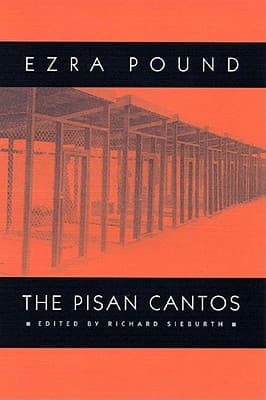
Ezra Pound (1949)
Genre
Fiction
Reading Time
300 min
Key Themes
See below
Sign in to track this book
From a Pisan cage, a disgraced poet's breakdown becomes an elegiac modernist epic, grappling with personal pain, political ideas, and civilization.
Canto LXXIV starts with Ezra Pound's direct experience of the Disciplinary Training Center (DTC) near Pisa, specifically the open-air cage, or 'gorilla cage,' where he is held. He describes the harsh conditions: the ground, no shelter, and constant exposure to the weather. This physical discomfort mixes with his mental state, as he begins to remember parts of his past, literary references, and economic theories. He watches nature around him—ants, birds—finding small comforts or symbols in their strength. The canto sets the scene and Pound's first emotional and intellectual reaction to his confinement, establishing the mood for the reflective journey that follows.
In Canto LXXV, Pound continues his detailed observations of nature within the DTC. He focuses on small creatures: ants, wasps, and birds, especially a magpie. These observations are not just descriptions; they become a source of deep thought and a way to escape the immediate horror of his imprisonment. He finds order and beauty in their movements and actions, which contrasts sharply with the chaos and unfairness of his human situation. This canto shows Pound's strong connection to nature and his ability to find meaning and a sense of ongoing life from it, even in bad times.
Canto LXXVI shows Pound's mind increasingly turning to memories and literary references. He mentions many historical figures, artists, and writers, from Confucius and Homer to Guido Cavalcanti and Ford Madox Ford. These figures are not presented in order but appear as a flow of thoughts, showing Pound's wide knowledge and his personal relationships. He struggles with the weight of his past actions, his intellectual pursuits, and the accusations against him, often putting these grand thoughts next to the everyday realities of his imprisonment. The canto reveals the rich fabric of Pound's mind, a mind both burdened and supported by culture.
In Canto LXXVII, Pound's focus moves more clearly to his long-held economic theories, especially his criticism of usury and his belief in social credit. He recalls talks with figures like Major Douglas and A.R. Orage, and restates his beliefs about the destructive power of financial manipulation. This intellectual engagement acts as both a defense of his past political activities and a regret for what he sees as the world's moral and economic decline. The canto also touches on his disappointment with the war's results and the perceived failures of Western civilization, linking his personal suffering to a wider societal problem.
Canto LXXVIII further mixes Pound's immediate surroundings with a complex network of personal memories and historical figures. He recalls moments with his wife, Dorothy, and his daughter, Mary, as well as meetings with various literary and artistic contemporaries. The past is strongly present, offering both comfort and pain. He thinks about art and creation, often finding similarities between his own struggles and those of artists throughout history. The canto reinforces the idea that Pound's mind is a place where personal experience, historical knowledge, and artistic rules are constantly being re-evaluated.
In Canto LXXIX, despite his harsh captivity, Pound continues to seek and find moments of beauty and grace. He describes the changing light, the sky's colors, and subtle shifts in nature, often giving these observations a divine or spiritual quality. There is a sense of strength and a firm commitment to appreciating beauty. He thinks about 'light'—both literal and symbolic—as a source of truth, beauty, and discovery. This canto highlights Pound's lasting ability to see and express beauty, even when facing deep personal suffering and injustice.
Canto LXXX shows Pound's ongoing struggle to bring order and meaning to his scattered thoughts and experiences. He grapples with the accusations against him, the complexities of his political involvement, and the broad scope of his intellectual project. There is a constant effort to connect different ideas—economic theory, classical literature, personal stories—into a unified view of the world. This canto shows the intellectual rigor that underlies his work, even as his personal situation worsens. He aims to justify his life's work and find coherence amid the chaos of his imprisonment and the world.
Canto LXXXI is arguably the emotional and main point of The Pisan Cantos, famously containing the lines 'Pull down thy vanity' and 'To confess wrong without losing rightness.' Here, Pound engages in deep self-reflection, admitting his own arrogance, mistakes, and failures. He struggles with the limits of his vast knowledge and the destructive results of his actions. This moment of humility is placed next to his continued assertion of certain core beliefs, particularly regarding art and tradition. The canto represents a key turning point, where personal regret and a more nuanced understanding of his own intellectual journey begin to appear.
In Canto LXXXII, Pound turns his attention to the lasting power of love, friendship, and the creative spirit. He recalls tender moments with his family and expresses thanks for his friends' loyalty. The canto also stresses the importance of art as a way to preserve truth and beauty across generations. He finds comfort in the act of creation itself, seeing it as a defiance of despair and a connection to a higher order. This canto highlights a softer tone, a greater focus on human connection and the redeeming qualities of artistic effort, even amid his personal and political trouble.
Canto LXXXIII again shows Pound observing nature around him—the plants, insects, and birds within the DTC. These observations are not just descriptions but serve as a source of strength and a symbol of continuity. He finds a deep sense of resilience in life's natural cycles, contrasting with the arbitrary and temporary nature of human imprisonment. The canto reinforces the idea that, despite his confinement, Pound remains strongly connected to life's broader rhythms, drawing comfort and philosophical insight from nature's enduring power.
The final canto, LXXXIV, ends The Pisan Cantos with Pound reflecting on his legacy, the future of his large poetic project, and the chance for redemption. He restates his commitment to his artistic vision, despite the debates and personal cost. There is a sense of both tiredness and lasting purpose. He admits the 'imperfections' of his work but also its necessity. The canto ends with a strong desire for understanding and a continued belief in poetry's transformative power, leaving the reader with a deep sense of Pound's complex and ultimately human struggle.
The Protagonist
Pound undergoes a journey from initial despair and intellectual defense to a profound moment of self-reflection and humility, acknowledging his vanity while still asserting his core artistic and intellectual values.
The Mentioned
Her presence in the cantos remains consistent as a symbol of enduring personal connection and a reminder of the life Pound left behind.
The Mentioned
Her character serves as a stable symbol of personal love and future hope within Pound's fragmented memories.
The Mentioned
Homer remains a constant literary and philosophical touchstone, representing an unchanging ideal of epic poetry.
The Mentioned
Confucius consistently embodies Pound's ideal of ethical governance and a stable, ordered society.
The Mentioned
Cavalcanti's role is consistent, representing a pinnacle of poetic achievement and a link in Pound's literary lineage.
The Mentioned
Ford remains a consistent figure of mentorship and intellectual companionship from Pound's past.
The Mentioned
Douglas remains a consistent intellectual touchstone for Pound's economic and political convictions.
The clearest theme, confinement, shows up in Pound's physical imprisonment in the DTC cage, a stark 'gorilla cage' open to the elements. This physical limit directly contrasts with his mind's boundless freedom, which travels through history, literature, and personal memory. The tension between the literal bars and the free intellect is constant throughout the cantos, showing how outside events cannot fully hold the human spirit. For instance, in Canto LXXIV, the stark description of the cage is immediately followed by many literary references, showing the mind's escape.
“What thou lovest well remains, / the rest is dross / What thou lov'st well shall not be reft from thee / What thou lov'st well is thy true heritage”
Pound's imprisonment forces a deep look into personal and historical memory. The cantos are a mix of recollections: childhood moments, literary meetings with figures like Ford Madox Ford, and historical events. This theme is not just nostalgic; it is an attempt to understand his own life and the course of Western civilization. He constantly places his current suffering next to past glories and failures, looking for patterns and explanations for his situation. Canto LXXVI, for example, is a rich mix of historical figures and literary references, showing memory as both a comfort and a burden.
“And the dream flowered in sleep / The dream of the past, the present and the future / all one.”
Despite the artificial and harsh environment of the prison camp, Pound consistently observes and finds comfort in nature. Ants, wasps, birds, and the changing light become symbols of resilience, order, and beauty. These observations provide a grounding reality and a sense of continuity that contrasts with the chaos of his human situation. Nature offers moments of grace and a reminder of lasting cycles beyond human mistakes. Canto LXXV, with its detailed focus on insects and birds, shows how nature provides a source of peace and deep thought for Pound.
“The ant's a centaur in his dragon world. / Pull down thy vanity, it is not man / Made courage, or made order, or made grace, / Pull down thy vanity, I say pull down.”
Key to Pound's work, this theme explores the lasting power of art and beauty, even when facing great suffering and political criticism. Pound confirms his belief in the poet's role as a preserver of culture, a critic of society, and a channel for truth and beauty. He thinks about the craft of poetry, the importance of language, and the legacy of great artists throughout history. The act of writing itself becomes an act of defiance and a testament to the human spirit's ability to create. Canto LXXXII, with its thoughts on love and friendship, ultimately lifts art creation as a redeeming force.
“To have gathered from the air a live tradition / or from the richness of the earth a love / of good things / to have seen the light in a world of darkness / is not to be despised.”
A major development in The Pisan Cantos is Pound's confrontation with his own pride and past errors. While he continues to defend his intellectual positions, Canto LXXXI marks a deep moment of self-reflection and humility, famously urging 'Pull down thy vanity.' He admits the limits of his knowledge and the destructive results of his actions. This theme introduces a layer of personal regret and a more nuanced understanding of his complex character, moving beyond just intellectual defense to a recognition of human error.
“Pull down thy vanity, it is not man / Made courage, or made order, or made grace, / Pull down thy vanity, I say pull down. / Learn of the green world what can be thy place.”
Pound's fragmented thoughts, memories, and observations flow non-linearly.
The entire structure of The Pisan Cantos is built upon the stream of consciousness technique. There is no linear narrative; instead, Pound's thoughts, memories, historical allusions, and immediate observations in the DTC flow freely, mimicking the workings of the human mind under duress. This allows for rapid shifts between personal introspection, economic theory, literary criticism, and natural description, creating a complex and multi-layered experience of Pound's consciousness. It reflects the fragmented nature of his experience and his vast intellectual landscape.
Extensive references to classical and historical texts, figures, and languages.
Pound heavily employs allusion, drawing from a vast array of historical figures, literary texts, philosophical concepts, and languages (Greek, Latin, Chinese, Italian, French). These allusions are not merely decorative; they serve to contextualize his thoughts, create layers of meaning, and place his personal suffering within a broader historical and cultural narrative. They also reflect Pound's immense erudition and his belief in the continuity of tradition, inviting the reader to engage with a rich intertextual web that deepens the cantos' intellectual and emotional resonance.
Contrasting elements placed side-by-side to highlight differences and create tension.
Pound frequently uses juxtaposition to create thematic and emotional tension. He places the harsh reality of his 'gorilla cage' imprisonment next to sublime literary memories or profound philosophical insights. The mundane observations of ants and wasps are set against grand historical narratives or complex economic theories. This technique highlights the contrast between the external, debilitating circumstances and the internal, resilient activity of his mind, emphasizing the fragmented yet interconnected nature of his experience and thought process.
Recurring phrases, images, and ideas that create thematic resonance.
Pound uses repetition of certain phrases, images, and thematic ideas as leitmotifs throughout the cantos. Words like 'light,' 'vanity,' 'usury,' and specific historical figures reappear, creating a sense of unity and reinforcing central themes. These repetitions act as anchors in the fluid stream of consciousness, allowing Pound to revisit and re-examine key concepts from different angles, deepening their impact and demonstrating the persistence of certain ideas in his mind during his incarceration. They also give a musical, almost incantatory quality to the verse.
“What thou lovest well remains, the rest is dross What thou lovest well shall not be reft from thee What thou lovest well is thy true heritage”
— A recurring theme of enduring love and value amidst loss, often seen as Pound's self-reflection.
“Pull down thy vanity, I say pull down. Rather than build new cities Build a little beauty, build a little truth.”
— A direct address to himself, urging humility and focusing on aesthetic and moral purity.
“Yet, in the end, it is not the past that matters But the continuity of the past Which is the living present.”
— Reflecting on the relationship between history and the present moment, emphasizing historical continuity.
“The great error is to mistake the 'I' for the 'eye'.”
— A philosophical distinction between the subjective self and objective perception, hinting at a broader understanding.
“To be without pity, to be without envy, To be without malice, to be without avarice, To be without fear, to be without shame.”
— A list of virtues or states of being, suggesting an ideal of emotional detachment and purity.
“And the sun high over the mountain And the sun high over the water And the sun high over the city.”
— Repetitive imagery of the sun's omnipresence, symbolizing a universal, unchanging force.
“Misericordia, for the lost in the dark Misericordia, for the lost in the light”
— A plea for mercy, extending to those lost in both ignorance and presumed enlightenment, highlighting universal suffering.
“The ant's a centaur in his dragon world.”
— A vivid, imaginative metaphor illustrating how perspective can transform the mundane into the mythical.
“It is not the dead who rule us, but the living Who choose to be ruled by the dead.”
— A commentary on tradition and the choices made by the living to adhere to or break from the past.
“That the body of man is a temple And the spirit of man is a flame And the mind of man is a mirror.”
— A tripartite metaphor for the human condition, emphasizing the sacredness of the physical, spiritual, and intellectual.
“No man is an island, entire of itself; Every man is a piece of the continent, a part of the main.”
— A famous line (though often attributed to John Donne, Pound re-contextualizes it) emphasizing interconnectedness and shared humanity.
“The wind's in the olive trees, and the sun's in the sky. And the mountains are blue, and the sea is green.”
— Evocative natural imagery, grounding the abstract thoughts in concrete sensory details of the Pisan landscape.
“As a lone ant in a wilderness of ants.”
— A poignant image of isolation and insignificance within a vast, undifferentiated mass.
“The past is not dead, it is not even past.”
— A powerful statement on the enduring influence and presence of historical events and their impact on the present.
Ready to see how well you understood this book? Take our interactive quiz with 10 questions.
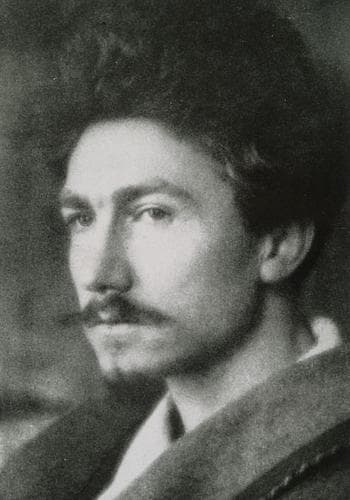
Biography coming soon.

Ashley Antoinette
4.6

Mark McDonald
4.4
Luo Guanzhong
4.4
Dorothy Parker
4.3
Mia McKenzie
4.3
Joaquim Maria Machado de Assis
4.3
James Thurber
4.2
Terry Kay
4.2